2011 - The Friends Era
Bobby Jones Golf Club News Archives
Friends of Bobby Jones Golf Club looks into the archives of newspapers and newsmakers, with selected articles that bring history alive
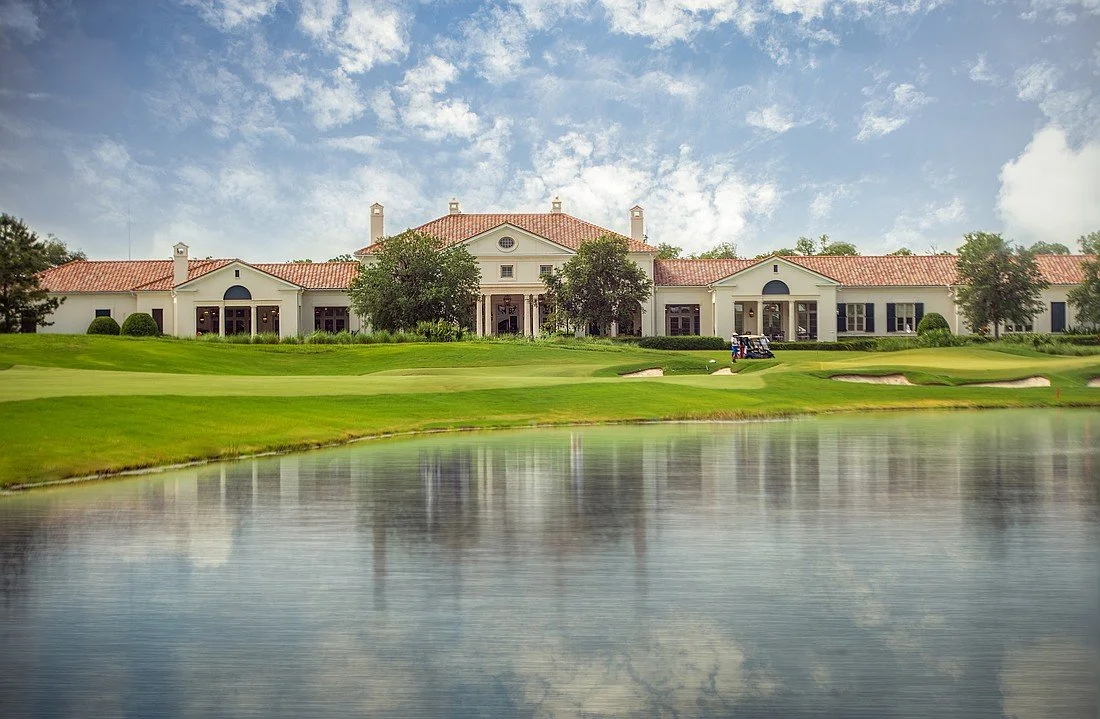
The Concession Golf Club is hosting the Senior PGA Championship April 16-19. Image Courtesy of The Concession Golf Club.
Sarasota OKs $1.5 million for golf tournament tourism promotion
MARCH 6, 2026
SARASOTA OBSERVER
BY ANDREW WARFIELD
The three-year run of the Senior PGA Championship locally presents a golden opportunity to promote tourism to the Sarasota-Bradenton area. Visit Sarasota County, the county’s contracted tourism vendor, now has $1.5 million for each of those years at its disposal to maximize those prospects.
During its March 3 meeting, with little discussion, the Sarasota County Commission unanimously approved the allocation to VSC, which has entered into a sports marketing sponsorship agreement with the Lakewood Ranch-area's The Concession Golf Club, the host of the event for 2026, 2027 and 2028.
Scheduled for April 16-19, the Senior PGA Championship is considered one of golf's major annual tournaments.
The tournament will bring 78 of the best-known names in men’s golf, whose past champions include Jack Nicklaus, Bernhard Langer, Lee Trevino, Tom Watson and Steve Stricker.
It will also bring a global television audience with 12-plus hours of broadcast time on NBC, reaching 130 countries plus additional broadcasts on Golf Channel and Peacock.
“We're working with our hotels and their sales teams so that they can entertain meeting planners and folks who can bring business to Sarasota County,” VSC President and CEO Erin Duggan told commissioners.
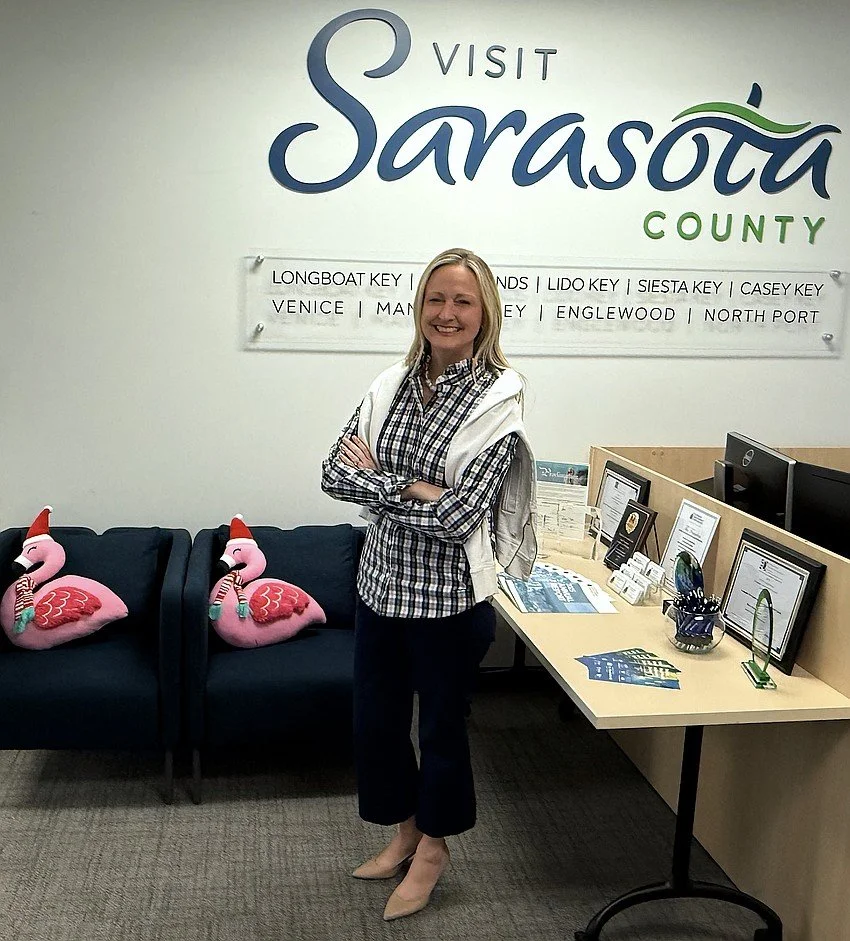
Erin Duggan is president and CEO of Visit Sarasota County. Photo by Andrew Warfield.
In addition, VSC is coordinating with the Economic Development Corporation of Sarasota County President and CEO Erin Silk to connect with opportunities to leverage the tournament to attract businesses to the region.
“They're reaching out to site selectors and businesses that are looking to relocate,” Duggan said.
“So (both EDC and VSC) are looking at these benefits and just trying to figure out how can we use these benefits in a way to keep bringing business to Sarasota County, and then figuring out an agreement for 2027 and 2028 based on what we learned."
The $1.5 million will be paid directly to The Concession. In exchange, VSC will receive:
Visit Sarasota County logo and/or VisitSarasota.com included on Senior PGA Championship and Concession Golf Club websites
VSC access to official press events to maximize exposure as a tourism destination.
Digital campaign by PGA Digital.
A 12-person suite for VSC on Hole 18 to host meeting planners, site selectors, etc.
Twenty general admission tickets per day to host influencers who can bring tourism and business to Sarasota County.
Sarasota County Visitor Information van located near the main spectator entrance.
Additional benefits such as destination video inclusion may be provided based on availability and programming considerations.
Rather than the county's general fund, the money is allocated from the county’s tourism development tax revenues, a 6% surcharge on accommodation rentals of six months or less, including hotel rooms.
Manatee County has pledged $1.5 million a year for the event's three-year run.
CONTENTIOUS MEETING RESULTS IN PARED DOWN GOLF COURSE CLUBHOUSE
IDEOLOGIES CLASHED AS A DIVIDED SARASOTA CITY COMMISSION VOTES TO PURSUE A SMALLER CLUBHOUSE AT BOBBY JONES GOLF CLUB.
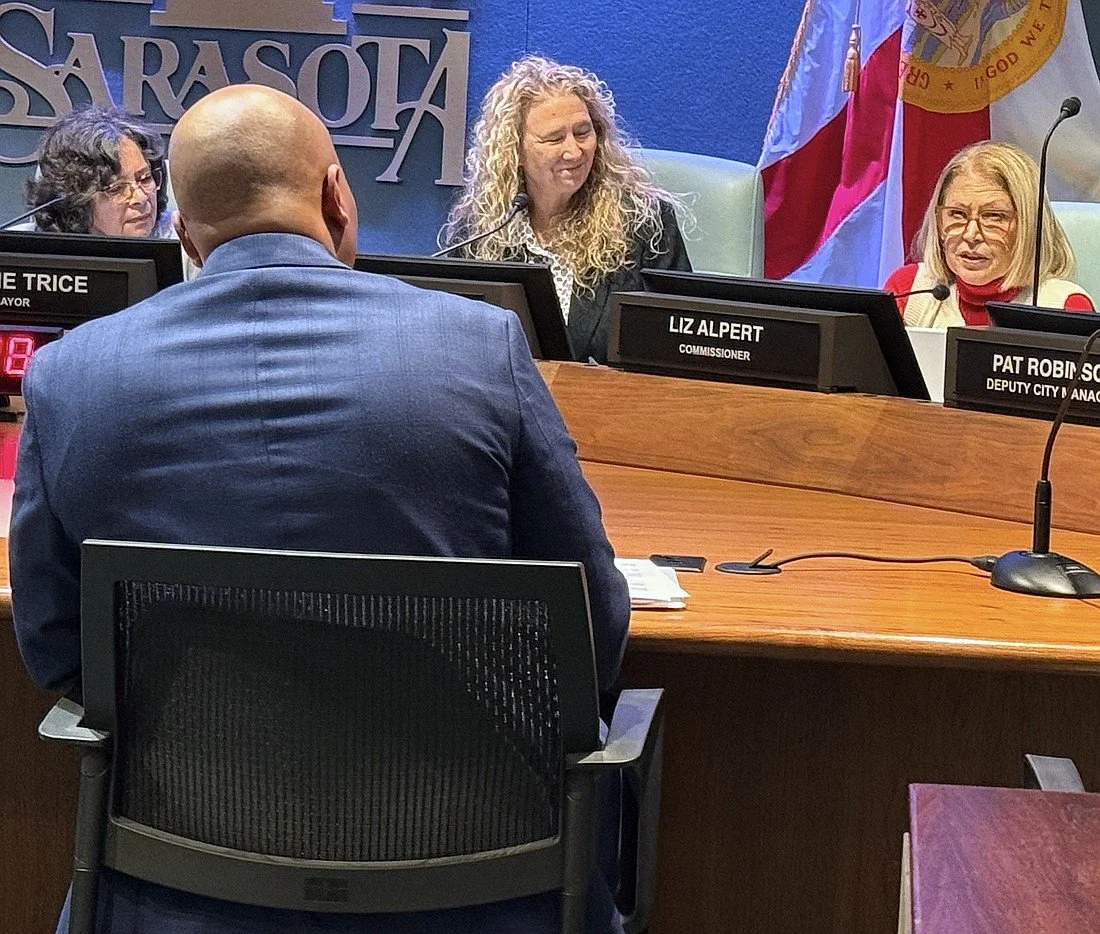
Commisisoner Liz Alpert (right) questions Parks and Recreation Director Jerry Fogle during the hearing about the Bobby Jones clubhouse design as Commissioner Jen Ahearn-Koch looks on. Photo Courtesy of Andrew Warfield
february 4, 2026
sarasota observer
BY Andrew Warfield
Gone is the vision of a two-story Bobby Jones Golf Course clubhouse with wraparound veranda offering a panoramic view of the course and, farther in the distance, the adjacent nature park.
Gone is the second-floor restaurant sized to accommodate special and private events with the cart barn below. In addition, gone is $544,211 the city already paid Jon F. Swift Construction to design all that as the blueprints are shelved, perhaps applied to another project for another client in another location. That figure does not include $126,071 added for two on-course bathroom structures and golf cart storage for a total of $670,282.
And also gone, at least for one meeting of the Sarasota City Commission, is the traditionally collegial atmosphere at the dais.
At its Feb. 2 meeting, a divided commission voted 3-2 to scrap plans for a two-story, $11.5 million clubhouse at Bobby Jones and to instruct Swift Construction to embark on designing a one-story design with separate cart barn at a not-to-exceed cost of $7.2 million. The cost to, quite literally, go back to the drawing board — another $514,957.
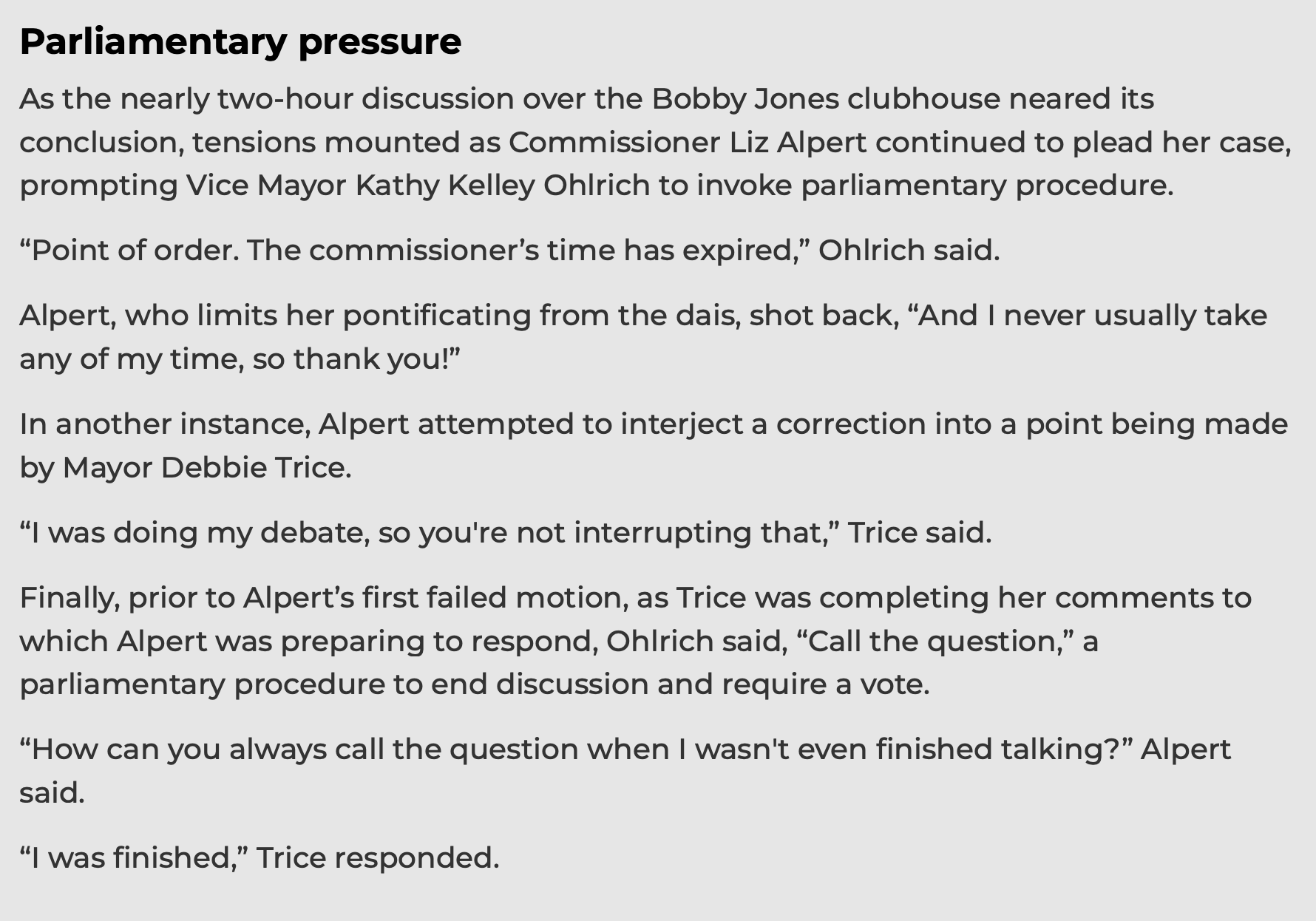
Commissioner Liz Alpert, an attorney who from the beginning has been a proponent of the larger clubhouse design for what she believes would be its ability to generate additional revenue by appealing to a wider audience, tried to drive that point home in her cross examination-style questioning of Parks and Recreation Director Jerry Fogle.
Through her questioning, she also made the case that, after four years of planning — which during that time costs ballooned from a preliminary estimate of $9 million — the clubhouse has a firm price today while the not-to-exceed cost for a new design that may face another two years of planning is unrealistic. So much so, she added, that by the time a design can be considered it may cost millions more, or otherwise be pared even further.
“If this is extended out to one, two, three or four years, construction prices are going to go up,” Alpert said, providing to her colleagues a document of elevated cost estimations based on recent history. “If it's delayed two years it could be anywhere from $7.9 million to $8.3 million. We're talking about a timeline — the best case scenario 29 months — how is that (not-to-exceed cost) guaranteed? Are they going to have to continue to shrink the building because they aren't going to be able to construct it at $7.2 million as designed?”
Alpert was joined in her opposition to shrinking the project by Kyle Battie, who said a future commission may adopt a completely different approach by the time a new final design is brought for approval, one that could even determine the course operates just fine with its three attached mobile units serving as a clubhouse.
“The next time that it's brought before us, the composition of this commission could be totally different,” Battie said. “We could go in a totally, completely different direction. Please take into consideration that this is going to be coming before us again with a totally different commission, the third or fourth different commission.”
Joining forces to oppose two Alpert motions — one to deny a new Swift design and, having failed, a second to propose a smaller two-story design with separate cart barn — Mayor Debbie Trice, Vice Mayor Kathy Kelley Ohlrich and Commissioner Jen Ahearn-Koch argued fiscal prudence in the face of budgetary challenges left by the 2024 storms and uncertainty regarding the future of property taxes statewide dictate clubhouse belt tightening.
That, and the capital needed to build the larger clubhouse would result in delays in funding other Parks and Recreation projects.
The matter of moving forward with a redesign settled, by a 3-2 vote with Alpert and Battie opposed, the commission also authorized using the Bobby Jones fund balance in the amount of $1.18 million, for costs related to the construction of the clubhouse.
Manatee County tees up for Senior PGA Championship
The generated championship dollars are expected to include impressive dividends for the county.
By Lesley Dwyer
Sarasota Observer
January 28, 2026
Manatee County is less than 100 days away from hosting its first Senior PGA Championship, which will be held at The Concession Golf Club from April 16-19.
The county committed $4.5 million from its tourism tax revenue to bring the event to East County over the next three years — $1.5 million per year. Sarasota County matched that investment.
“I can take my whole budget (his marketing budget is about $6.2 million) for a year and not be able to afford what the PGA of America is bringing us,” said Elliott Falcione, director of the Bradenton Area Convention and Visitors Bureau.
The tournament will be broadcast by NBC and the Golf Channel, reaching about 800,000 households globally.
Falcione said he normally couldn't get access to many of those markets, but what makes hosting the Senior PGA Championship even more valuable to Manatee County is that its demographics align with the county's target market.
Falcione said he's not going to cut a deal on an event that attracts a Gen Z market because the demographics don’t align with the characteristics of the county, but an event like the Senior PGA Championship is a perfect fit.
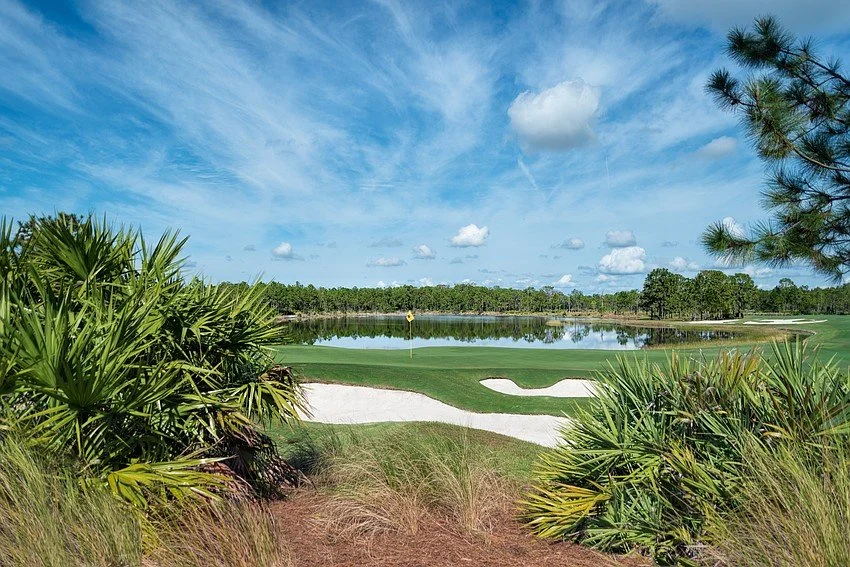
Some of the vegetation surrounding the course had to be trimmed back to provide wider pathways for spectators and golf carts. Image Courtesy The Concession Golf Club.
With the caveat of “we don’t know what we don’t know,” Falcione estimates that the championship will bring considerable “direct dollar infusion” into Manatee County by way of restaurant visits and hotel stays. He said he didn't want to talk numbers because a Senior PGA Championship hasn't been held in Florida since 2000.
The indirect stimulus will come from the event attendees and television viewers who want to visit Manatee County again or for the first time after watching the championship.
Falcione said research shows that 74% of the time, attendees and viewers of sporting events will visit that same area within the next 12 months.
Tickets for the championship are on sale on SeatGeek.com or at SrPGAChampionship.com/2026.
This year’s event will mark the 86th Senior PGA Championship.
Manatee County commissioners cleared the way for the event in May 2025 by releasing a 3-acre conservation easement so The Concession could meet the PGA’s criteria for hosting an event of this caliber.
The club was lacking the space to provide a proper entrance, which partly acts as a bus terminal because guests will be shuttled to the site.
But beyond functionality, Championship Director Eric Nuxol said there needed to be a “championship feel” that makes people say “Wow” when stepping off the shuttle.
Organizers also needed the space for merchandise tents, the box office, entry gates, a volunteer headquarters and a media center.
The golf course had to be tweaked, as well.
Nuxol noted that the natural beauty of The Concession is what makes it such a standout course, but as palmettos and other vegetation have grown in over the years, there were some pinch points along the pathways that needed to be widened to get the spectators and carts through more easily.
“To the naked eye, most people won’t be able to tell,” Nuxol said. “It’s just given us a little more of a buffer.”
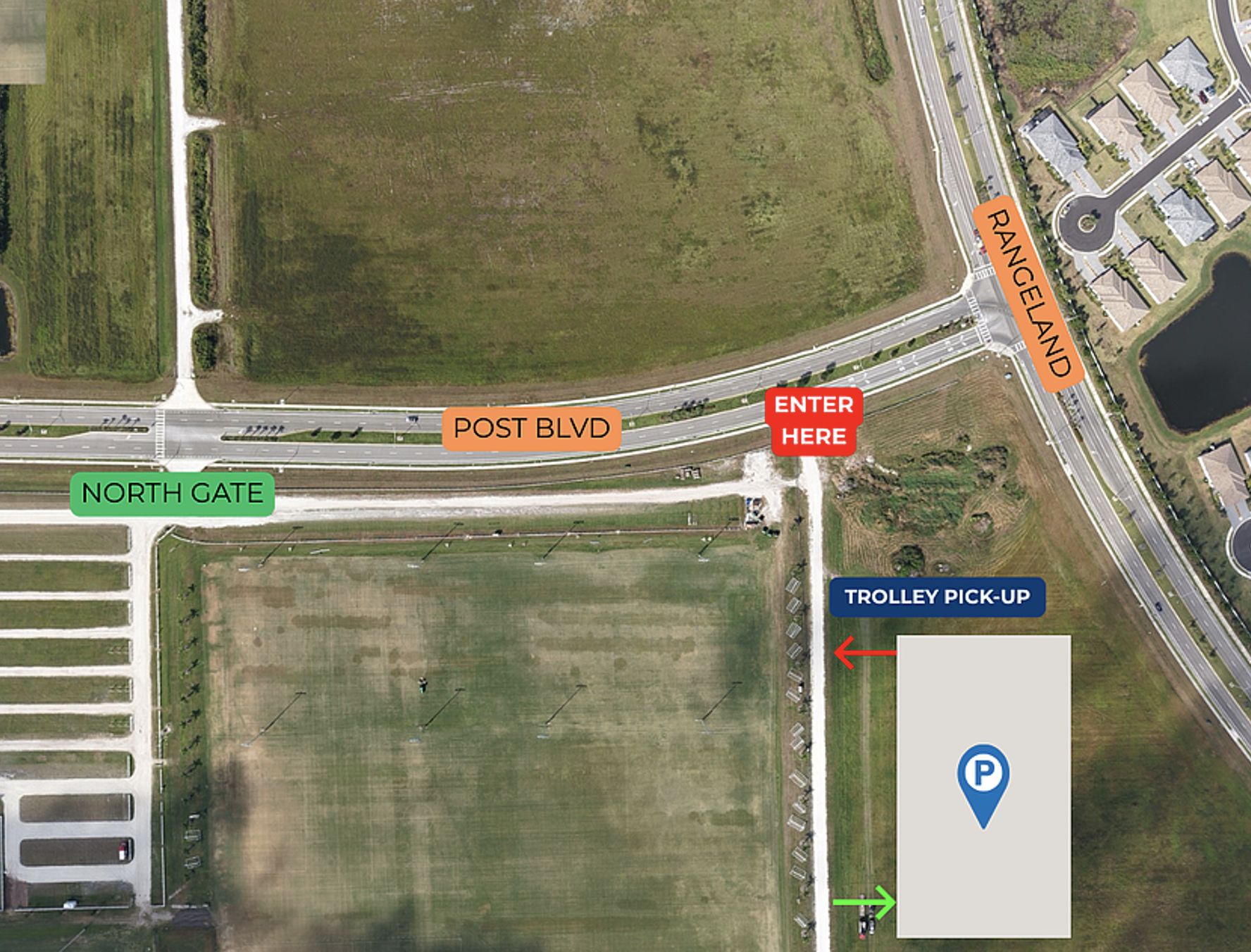
Attendees will park at the Premier Sports Campus and be shuttled to The Concession Golf Club. Image Courtesy of The Concession Golf Club.
Saturday, which is typically the biggest day of the event, could attract up to 5,000 people.
The main parking will be set up at the Premier Sports Campus, but negotiations are ongoing with some other landowners in the area in case there’s a need for overflow parking.
Much of the $4.5 million investment from Manatee County will go straight back into Manatee County and its businesses over the next three years.
The Manatee County Sheriff’s Office is just one example. Sheriff deputies will be paid to ensure public safety. Most of the deputies will be stationed outside the event, controlling vehicle and pedestrian traffic.
But public safety at high-profile events also requires bomb sweeps with the K-9 unit and assigning deputies to walk the course with the bigger name golfers.
EMTs will also be on site.
Regular operational meetings are taking place between county and PGA staff to keep everything running smoothly.
Falcione noted that part of growth is the need for experience, and the county’s ultimate goal is to host the PGA Championship or the Ryder Cup.
Having a three-year commitment makes that goal achievable because now the “Eric (Nuxol’s) of the world” know that Manatee County understands what it takes from a public safety standpoint to host a major championship.
“To have that experience is powerful,” Falcione said.
'Grandiose' Bobby Jones clubhouse design lands short of the green
More than a year after approving a two-story clubhouse at Bobby Jones Clubhouse, the Sarasota City Commission opts for a scaled-down version.

A schematic drawing of a one-story clubhouse at Bobby Jones Golf Club. Rendering courtesy City of Sarasota
December 3, 2025
sarasota observer
BY Andrew Warfield
More than a year ago, authorities cautiously approved moving the final piece of the restoration of the city-owned Bobby Jones Golf Club, the clubhouse, to the final design phase at an estimated $9.5 million.
In Sept. 2024, then-City Attorney Robert Fournier told commissioners may choose to reduce the scale of the clubhouse once there is a formal presentation and simultaneous with site plan approval. The commissioners voted unanimously to continue the matter to an uncertain date.
That date was Nov. 1, 2025, and the final design of the clubhouse remains unsettled.
The 2024 decision came just after Tropical Storm Debby hit a few weeks earlier, impacting mostly areas outside the city limits.
Then came hurricanes Helene and Milton, and the tens of millions of dollars worth of damage, in large part to the city’s parks and other recreational spaces.
“The fund balance was depleted, projects have been pushed out, and those funding sources are used to repair mostly parks,” Parks and Recreation Director Jerry Fogle told the Sarasota City Commission Monday. “So obviously the city is in a different financial position than it was.”
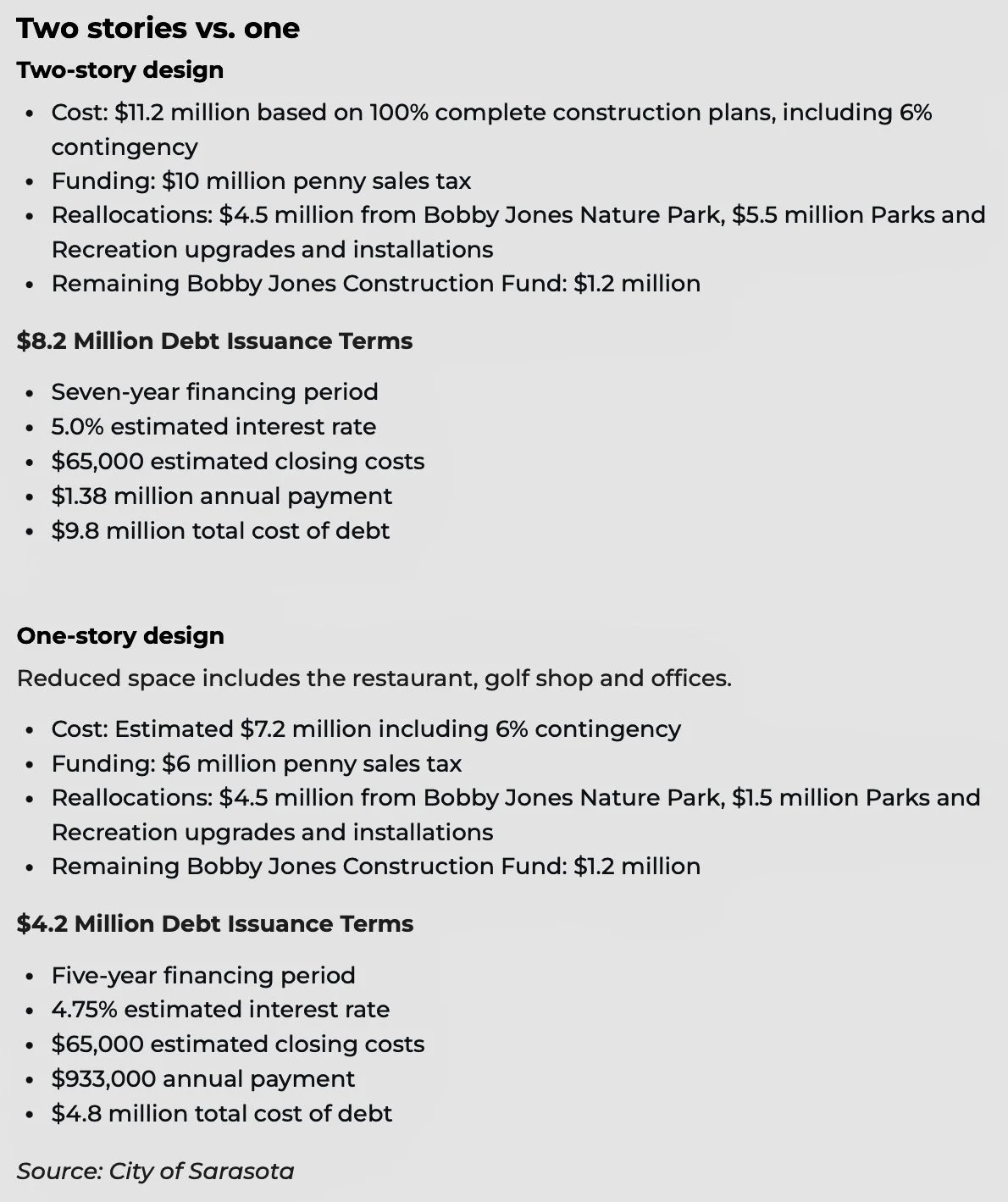
Thus was the impetus for Fogle and staff to bring a one-story option especially now, another 15 months later, that the cost of the two-story clubhouse with a full-service restaurant and wrap-around elevated veranda has ballooned to $11.2 million. Add the fact that funding would have to be reallocated from other parks projects, including the adjacent Bobby Jones Nature Park, leaving four of the five commissioners with no appetite for a more country club experience.
Over the objections of Commissioner Liz Alpert, the board opted to pursue a new one-story clubhouse plan, which at an estimated $7.2 million with design work starting from scratch could eventually, Alpert warned, leave the city facing a cost similar to the 60% design phase estimate of the two-story building of $9.2 million.
“You're talking about at least another year to go through the process,” Alpert said. “A year from now, what's to say that the cost wouldn't be the same as doing a two-story right now that's already designed? If this had been done sooner, it could have been done for less. I don't see how we help ourselves by delaying it another year with prices continuing to go up.”
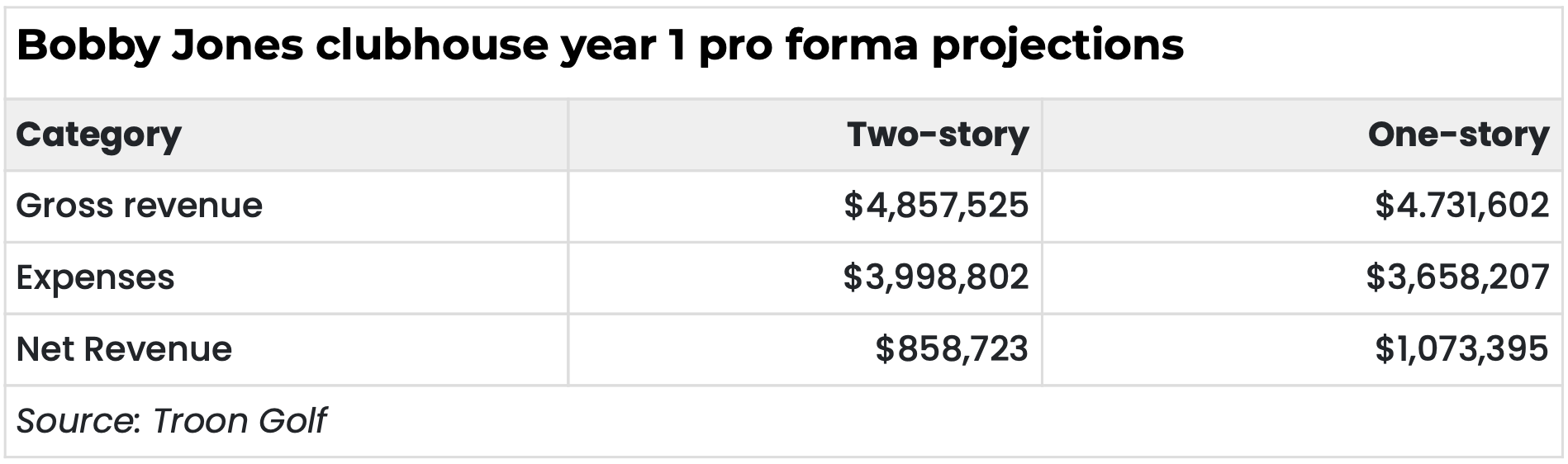
Brian Rhodes, regional director of operations of Troon Golf — the management company contracted by the city to operate Bobby Jones — told commissioners net revenue generated by a one-story clubhouse would exceed that of the two-story. The bigger the building, the more it costs to staff and operate.
The one-story plan will accommodate 60 to 70 for dining with outdoor seating under a temporary shelter for special events. Like the two-story building, the one-story clubhouse would offer the same standard features such as pro shop, offices, restrooms, etc., separated from a cart barn by a breezeway.
Otherwise, the vision from Sept. 2024 of a two-story building with a large second-floor restaurant and elevated views over the golf course toward the nature park is no longer.
“I look at municipal golf course and a nature park, and I don't see in my mind a grandiose two-story golf clubhouse as being appropriate for that type of situation,” said Mayor Debbie Trice.
Vice Mayor Kathy Kelley Ohlrich and Commissioner Kyle Battie agreed that through their interactions with golfers at Bobby Jones — Ohlrich refers to the complex as being in her “back yard” — rarely broached is the topic of the clubhouse, which is currently a triple-wide trailer.
For Commissioner Jen Ahearn-Koch, her motion to pursue the one-story design is based on prudence and preserving Park and Recreation Department funds.
“The parks department suffers far too often from sticking hands in their funds and using it for other things,” she said. “This is not something that I'm in favor of doing.”
Alpert, meanwhile, fell short of convincing her colleagues that the two-story clubhouse is the better business decision.
“I don't think this is the fiscally responsible thing to do,” she said. “Yes, it's a municipal course, but why the old clubhouse was such a failure is because it was just simple. It was basic and it sat there and languished and lost money. I think this is a total mistake to do this.”
Following the vote to pursue the single-story clubhouse, commissioners voted 4-1, again with Alpert opposed, to deny the site plan application for the two-story building.
CHANGING THE CHANNEL

Photograph of Paul Azinger by James Gilbert courtesy Links Magazine
Paul Azinger and the Construction of Miakka Golf Club
January 2025
Links Magazine
By Steve Eubanks
Having dialed down his TV career, Paul Azinger is tuning into course architecture at a new community right around the corner from where he grew up
In his book Generation of Swine, Hunter S. Thompson wrote of television: “The TV business is uglier than most things. It is normally perceived as some kind of cruel and shallow money trench through the heart of the journalism industry, a long plastic hallway where thieves and pimps run free and good men die like dogs, for no good reason.”
Paul Azinger is too kind to go that far. His parents taught him to make his words soft and sweet in case he had to eat them, so Zinger will either say good things about the people he worked with in his almost-two-decade television career, or he won’t say anything at all. “Dan Hicks is such a pro,” Azinger says of the guy who sat next to him in the NBC booth for years. “He made me better.” And of his former ABC partner, Azinger says, “Mike Tirico is a genius.”
He won’t go into detail about his unceremonious separation as the lead golf analyst for NBC that came near the end of 2023, even though the details are simple. New leadership made an offer to renew Zinger’s contract. The offer wasn’t very good. Azinger’s agent countered. That’s the way negotiations work. But Sam Flood, the president of NBC Sports, said thanks but no thanks, we’ll go in a different direction. Zinger’s last broadcast was the Ryder Cup in Rome.
A year later, the door Flood closed allowed Zinger to open a floodgate into a life the 12-time PGA Tour winner and major champion had never fully experienced, one that includes never missing his grandson’s baseball games or golf tournaments. “He’s a good little athlete,” Zinger says of daughter Sarah Jean Collins’s son. “But he was in tears the other day after having a bad day on the golf course. That’s what the game will do to you. No matter your age, it’ll bring you tears.”
There’s also the boat. Most mornings he can be found on the water wearing water-resistant khakis and a silver hoodie. There’s a honey hole in a lagoon between Anna Maria Island off the west coast of Florida and the mainland that locals call “the bijou,” where fishermen like Zinger catch their limit of snook and redfish before breakfast.
After piloting the dual-outboard pontoon boat back to his dock, Zinger jumps in his old Porsche Carrera turbo and heads into town. He’s sold all the Harley-Davidsons and other toys that might get a 65-year-old killed, including the GT40 that had 1,000 horsepower and would go 100 mph in second gear and a 5.0 Mustang convertible with aftermarket diffusers, boot cover, and downforce spoiler. His current ride is his third throwback Porsche, which he traded two 911s to get. He drives it to the Azinger Family Compassion Center, a 10,000-square-foot facility he and wife Toni built as part of One More Child and Guardian Angels of Southwest Florida. Toni is a human-trafficking advocate, working with the state’s Attorney General to stem the tide of trafficked women and children through the state. So far, the Compassion Center has served more than 12,000 women and children.
From there, he heads inland to his latest venture, Miakka Golf Club, where Zinger is on the design team with course architects Jason Straka and Dana Fry. It is likely to be the grandest Florida development in more than a decade.
In late 2024, Azinger signed a one-year deal to replace Lanny Wadkins as the lead analyst for the PGA Tour Champions, a television product he hopes to shake up with some innovative ideas. But that gig—one event every three weeks from a studio in Ponte Vedra Beach, Fla., instead of on the road—won’t cut into his fishing, charity work, or new passion for course design.
Miakka owner Steve Herrig, an entrepreneur and CEO of Sunz Holdings, isn’t a golfer, but he is a father. When his daughter Hannah asked for a horse, Herrig bought 100 acres in Manatee County and built one of the most elaborate equestrian facilities in the world. Once that project was done, he bought more land for steeplechase. One thing led to another, and before it was over Herrig had almost 5,000 acres master-planned with 120 10-acre ranch homesites and 1,100 acres devoted to golf. There will be one 18-hole course, a 12-hole par-3 course, 10 member cabins (four- and eight-bedroom floorplans), a 2.5-acre lighted putting green, a 365-degree driving range, a short-game area, a 38-acre lake, and a performance center with a putting lab and indoor/outdoor hitting bays. Nelly Korda inquired about membership before the groundbreaking. And conversations have begun for the course, which measures 7,700 yards and features both Stadium and Lazer Zoysia, to host a professional event.
“This is one of the great opportunities to return to the area of my youth and build a spectacular golf course that will probably be a big part of my legacy,” Azinger says. “Thankfully, I was invited to do it. The reason I’m doing it is because Steve Herrig, who is an old family friend, asked me. Nobody else had asked me to be involved in design, and this area is so special to me. I grew up in those woods and on that river, so this is perfect.
“I grew up 15 minutes from the entrance to Myakka State Park. We were there all the time. That river is so diverse. It’s full of saltwater tarpon and snook and then it has freshwater bass and bluegill. It’s so unique in how far inland tarpon will be swimming into that river. You realize how great Florida is. You can catch saltwater fish from a riverbank up in the middle of the state.”
Nobody knows more about fishing than Azinger. But he understood that his friends knew more about design. So, his first calls were to Ben Crenshaw and Tom Kite. Both offered sage advice about drainage and playability. But Zinger also had some ideas. Unlike a lot of modern architects who are creating treeless moonscapes, Zinger loves trees. He was heartbroken when Inverness, where he won the 1993 PGA Championship, went through a renovation that removed thousands of hardwoods and native pines.
“You can’t believe how many trees we’re adding to this site,” he says of Miakka Golf Club. “It was originally supposed to be about 330 plantings. Now, we’re probably going to move or add 1,000 trees. And we’re moving some live oaks that are epic.”
Both of Paul and Toni’s daughters and sons-in-law live close and his grandchildren spend a lot of time at their home on Palma Sola Bay in Bradenton, where he knows and loves every tree. He’s the kind of naturalist you enjoy being around, because none of it is pompous or preachy. You learn about your surroundings through his passion.
Paul taught the grandkids to fish from the boat dock, just as his father, Ralph, a retired lieutenant colonel, did for him in Sarasota. Ralph ran a marina where Paul and his brothers washed boats and pumped gas. Paul’s mom was the serious golfer. When the boys were in high school, she arranged for her son to caddie at the LPGA event at Bent Tree, their neighborhood club. Paul drew Mickey Wright.
“I learned so much from her,” he says. “She only missed one tee shot. She hooked it in the left rough. When we got to the ball, she said, ‘The shot that gets you into trouble is usually the one that’ll get you out.’ So, she takes out a 7-iron and hits another hook around a tree and right onto the green. She two-putted for a par like it was nothing. I remembered that my entire career.”
That career took off later than most. Azinger wasn’t one of the can’t-miss kids coming out of high school. He walked on the golf team at Brevard Community College and took a summer job at Bay Hill in Orlando so he could practice. Even after earning a scholarship at Florida State, he never thought much about a career in golf until 1980 when, at age 20, he won the Sarasota City Championship at Bobby Jones Golf Course, a Donald Ross-designed muni. That week Zinger’s father told him, “You’ve got the sound. It sounds different when you hit it.”
He married his college sweetheart, Toni, the daughter of a judge from Blackshear, Ga., a tiny railroad town on the Okefenokee swamp. The newlyweds bought a used Vogue motorhome and, with no permanent address and so little money they lived off bologna sandwiches and $1 canned soup, they lit out on the mini-tour circuit where Paul earned a reputation as a short-game wizard.
It took a long time to win, but in January of 1987 he broke through with a one-shot victory over Hal Sutton at the Phoenix Open. His winning scores were 67–69–66–67, which was remarkable when you consider that seven years before he’d never broken 70 two rounds in a row in his life.
That victory in Phoenix propelled Azinger to three total wins in 1987, and a runner-up at the Open Championship, an event he should have won but let slip away late.
The rest of his career reads like something that should at least put him in the Hall of Fame conversation—wins every year from 1987 to 1993, including the 1992 Tour Championship and that PGA Championship. And he was on three Ryder Cup teams. Cancer and comeback stories have been well chronicled, and if you need a good cry, go watch the eulogy he gave at Payne Stewart’s memorial service.
His Ryder Cup captaincy has also been covered extensively (full disclosure: this author co-wrote Azinger’s book, Cracking the Code, on the successful team-building plan that catapulted the U.S. to victory in 2008). But what most have forgotten is that the Zinger-Nick Faldo captaincies that year were kind of a PR stunt. They’d shared the broadcast booth together at ABC where they sometimes bumped heads. As players, their interactions had been barely cordial. So, having them head opposing teams in Louisville was a way to keep the hype going for two full years. No one expected Azinger to revolutionize the event with a management system he learned from the Navy SEALs.
College freshmen today were born the year of Azinger’s Ryder Cup at Valhalla, but people still thank him at airports. He also still speaks at corporate leadership summits about the system he created—another part of life he’s enjoying now that there’s a limited television schedule to work around.
Get him out at Miakka on a Gator, which he drives with the same ferocity he used to apply to his Yamaha dirt bikes, and you see the passion. “You have to appeal to every level of player,” Zinger says of a good golf course. “You must design for the best player and for the worst player. Augusta National can be played by any level of player. So, it’s a balance. You want to make it a challenge, but you can’t make it so hard that nobody wants to play.”
From the clubhouse site, a manufactured hilltop with a view of the entire property, Zinger turned to the river where the snook and tarpon of his youth flourished in brackish water. “This place is going to be unbelievable,” he says. “I can’t believe I get to come out here all the time now.”
He paused as if his entire career had suddenly flashed before his eyes. Then, staring down toward the water, he repeated: “All. The. Time.”
Paul Azinger returning to broadcasting in 2025 as lead for PGA Tour Champions

Paul Azinger photograph courtesy Getty Images.
November 11, 2024
Golfweek
By Adam Schupak
Paul Azinger is returning to the broadcast booth in 2025.
Golfweek has learned that the 64-year-old former 12-time PGA Tour champion and winner of the 1993 PGA Championship will replace Lanny Wadkins, who announced his retirement on Friday, as the lead analyst on Golf Channel’s coverage of PGA Tour Champions for 10-12 tournaments next season as part of a one-year deal.
“It’s not like a full-time gig or anything, which I don’t want, but to be able to go in there and part-time some golf, some really great golf, it’ll be kind of fun,” Azinger told Golfweek in a phone interview on Monday. “I’ll just be as candid as I can and enjoy it.”
Peter Jacobsen and John Cook will split time in the analyst chair when Azinger is off. [Cook will serve as on-site walking reporter when he’s not an analyst.]
“Paul brings a lot of credibility to that seat and has a lot of creative ideas that we think can just add to our overall telecast,” Miller Brady, president of PGA Tour Champions, said. “It’s hard to replace a Hall of Famer like Lanny week in and week out, but, I think Paul will be tremendous for us.”
Azinger was the lead golf analyst for NBC Sports’ coverage of the PGA Tour for five years until the network stunned him by electing not to renew his contract last December.
“I thought I would do at least one more year and then sign a four-year deal. They made the offer, my agent said ‘No, we’ll counteroffer the next day.’ And they said, ‘Sorry, we’re moving on.’ You know, it wasn’t a conversation with me, like, ‘What do you need Zinger? What do we need to do? Here’s our situation. You know, this is why we need you to accept this deal.’ There was no reason, it just was it’s complicated, it’s complicated. I was like, ‘How complicated can it be, bud?’ It’s money,” Azinger told Golfweek in March.
The Peacock still hasn’t hired a replacement for Azinger, instead rotating this season through a cast of veteran players including Kevin Kisner and Luke Donald, Golf Channel commentators Paul McGinley and Brandel Chamblee, who did the U.S. Open, and caddie Jim “Bones” Mackay, who has since rejoined Golf Channel as an on-course commentator.

September 24, 2022; Charlotte, North Carolina, USA; Paul Azinger holds up a fish at the lake near the 14th hole during the foursomes match play of the Presidents Cup golf tournament at Quail Hollow Club. Photography Credit: Peter Casey-USA TODAY Sports
While Azinger will appear on Golf Channel, he isn’t employed by the network but rather by PGA Tour Entertainment, which has final say on talent for PGA Tour Champions coverage. All parties involved said that the relationship has been reconciled despite the messy parting nearly a year ago.
“I hope that that’s water under the bridge and that everyone just moves on. I know Paul wants to move on, and we want to move on,” Brady said.
“Paul has called some of golf’s biggest events and has been a part of the PGA Tour as a player or analyst for more than four decades, and we’re excited to have him bring that experience to the PGA Tour Champions telecasts on Golf Channel,” an NBC Sports spokesperson said.
During his interview with Golfweek in March, Azinger hinted that he’d be interested in calling the 50-and-over tour.
“I’d rather call the Senior Tour than the PGA Tour to tell you the truth. I’m over the PGA Tour. To call the best senior players in the world, at least they’re the best,” Azinger said, a not-so-subtle jab at the Tour’s loss of talented players to LIV Golf.
Brady said he and Greg Hopfe, the Tour’s senior vice president and executive producer of live programming, met with Azinger in February to feel out his interest in the Champions Tour.
“And, you know, he wasn’t quite sure,” Brady said. “It took a lot of time to think about it. We continued to answer questions that he had, and we said, look, at the end of the day, we’re not asking you to come do a full schedule. We’re asking you to dip your toe in the water and let’s see if you like it.”
Wadkins has been the lead analyst of Golf Channel’s coverage of the Champions Tour for the last 13 years. He told Golfweek on Friday that he would do his final broadcast in January at the Mitsubishi Electric Championship, the kickoff to the 2025 Champions Tour season, and Brady said the tour would honor Wadkins’ contributions in a special ceremony to be held before the tournament. At his newsletter, The Quadrilateral, Geoff Shackelford called Wadkins “one of the most underrated analysts in golf television history.”
Azinger, who was the winning U.S. captain at the 2008 Ryder Cup, started in television in 2005 with ABC and ESPN, sharing analyst duties with Nick Faldo in a three-man booth with Mike Tirico. When ESPN lost its right to the British Open in 2015, Azinger signed with Fox Sports as lead analyst when it outbid NBC for the U.S. Open and other USGA championships. NBC hired him in 2018 to replace Johnny Miller when he passed the baton and signed off from the 2019 WM Phoenix Open. Azinger’s final broadcast was the 2023 Ryder Cup in Rome.
In January, Golfweek asked Brady about Azinger and he noted that he had seen him shortly after his departure from NBC at the World Champions Cup, which was played not far from Azinger’s home at The Concession in Bradenton, Florida. Brady wondered if he could talk Azinger into bringing his vast talents to the booth on the senior circuit.
“At the right time, I want to go see if maybe he’ll jump in the booth here. Why not? But the money’s vastly different. He has to want to do it. So I’ve got to find the right time,” Brady said. “If I’m with him, just to say, hey, do you want to do a couple events? It’s too raw now.”
Turns out, the time is right for Azinger.
“For Paul, it’s not about the money and he’ll tell you it’s not about the money,” Brady said, “it’s about just staying involved in the game and being close to a lot of his contemporaries.”
When Azinger was reminded that if he enjoys it enough to stick around for a second year, he may have the opportunity to call Tiger Woods again, Azinger’s voice lit up.
“I hope he does,” Azinger said. “He says he will. I mean, if I could do five or six or seven of Tiger’s events, I would be thrilled. I’ll be thrilled anyway. Trust me, it’s gonna be good fun.”
Bobby Jones Golf Club financially outperforming expectations
Budget projections anticipate the newly renovated city-owned golf course to end next fiscal with a nearly $1.3 million fund balance.
JULY 29, 2024
Sarasota observer
By Andrew Warfield

The Donald Ross course at Bobby Jones Golf Club works in harmony with adjacent wetlands to contain and filter stormwater.
Eight months removed from its grand opening, the Bobby Jones Golf Club is projecting self-sustainability through the end of fiscal year 2025, even banking an additional $290,000 into its fund balance.
During last week’s Sarasota City Commission budget workshop, city staff reported that the city-owned golf complex is projected to earn revenues of $4.1 million against expenses of $3.8 million, ending the year $289,777 in the operational black.
That’s including the $10,000 per month management fee paid to Indigo Sports and an $800,000 transfer to cover the debt service on $16.8 million in bonds that financed the restoration of the original 1926 Bobby Jones layout plus the par-3 Gillespie Course, the latter opening in June.
The Bobby Jones fund balance is expected to end this fiscal year with a fund balance of $933,298, and in the proposed FY 2025 budget is projected to end the year at $1,283,075.
“There has been tremendous interest from the public to play the newly renovated courses,” City Manager Marlon Brown told the Observer. “It’s early, but so far Bobby Jones is exceeding earned net revenue projections. We anticipate a natural slowdown during the hot, rainy summer months, but the early numbers are strong and very encouraging.”
A large swath of the formerly 36-hole course was reclaimed as a nature park, which also serves a wetlands to capture runoff from the golf course. Working together, the golf course and wetland are removing hundreds of pounds of nitrogen and phosphorus as stormwater works its way through the property from north to south.
Vice Mayor Jen Ahearn-Koch remarked that the greens fees, which are subject to a dynamic pricing model similar to that of hotels and airlines based on demand at the time of booking, are higher than expected and that perhaps some the projected fiscal cushion could be returned to city residents in the form of lower fees.
“Like any of the enterprise funds, for example like the Van Wezel, we want to make sure that we have enough of a fund balance,” Brown, said “So let's make sure that we do have a good, successful program before we start thinking about lowering fees because the last thing you want is a drop in the economy and we're struggling to make ends meet. Be careful of trying to jump to lowering fees.”
Ahearn-Koch acknowledged Brown’s caution, suggesting that fees be reconsidered when a longer data sample is available.
But she wasn’t done yet. Ahearn-Koch has been consistent in her opposition to the plans to build a $9 million permanent clubhouse, three times the originally budgeted amount, and pointed out the difference between the debt service and the original capital budget is enough to build a scaled-down facility.
“My other question is about the debt service,” she said. “We have outstanding $16,835,000, but the amount of the total debt was for $20 million. That leaves a balance of a little over $3 million. There's the potential debt for a future clubhouse and maybe that item is not necessary if we just worked within this.”
“Meaning that if the budget for the clubhouse is $3.8 million?” asked Brown. “That’s a commission policy because you all directed us to build a clubhouse for $9 million, and that's what we're going to be bringing back to you in August.”
Ahearn-Koch was otherwise complimentary of the work at Bobby Jones, describing the combination of golf course and nature park as “an incredible amenity” for golfers and nature enthusiasts.
“And to keep it a great amenity, we need a great clubhouse,” added Mayor Liz Alpert.
Commissioner Debbie Trice pointed out that with the upgrading of the city’s bond ratings — as discussed earlier in the workshop — by Moody's and Fitch to the second highest availale, perhaps if the city floats a new bond for difference in the clubhouse cost it would be at a lower interest rate.
“Maybe that would be a better approach anyway,” she said.
“I doubt it,” Ahearn-Koch responded. “Incurring more debt is not a greater thing than just sticking within your budgeted amount. I'll disagree with you on that.”
There will be more opportunity to disagree publicly as a hearing is scheduled for Tuesday, Sept. 3, and a second on Monday, Sept. 16, when the budget will be adopted.
Permanent clubhouse at Bobby Jones approved by Planning Board
The 17,000-square-foot building at Bobby Jones Golf Club will house a golf shop, offices and a full-service restaurant.
April 16, 2024
Sarasota observer
By Andrew Warfield
One more hurdle remains for the construction of a permanent clubhouse at Bobby Jones Golf Club. Having run the staff gauntlet, the city, which owns the golf course, received a unanimous recommendation for approval from the Planning Board during its April 10 meeting.
Now it’s up to the Sarasota City Commission to decide if it still wants to invest some $9 million into the new clubhouse, and whether the design meets its approval.
The restored Donald Ross layout off Circus Boulevard opened in November, currently operating out of a temporary clubhouse composed of three portable buildings. The new clubhouse will be built immediately adjacent to the temporary building, which will be removed when no longer needed.

The proposed Bobby Jones Golf Course clubhouse features Old Florida architecture reminiscent of the original Gillespie Clubhouse. Courtesy Image.
At 17,000 square feet of indoor space, the two-story structure will incorporate architectural features that pay homage to the original clubhouse. In addition to a golf shop and offices, the proposed design includes a full-service restaurant and a wrap-around veranda with cart barn beneath.
“What we have done for this proposed structure is taking the uses and, generally speaking, the square footage that was on site previously in three structures and consolidate that into this one new footprint and stacking that vertically,” said Chris Cianfaglione of project consultant Kimley Horn. “The cart barn and the clubhouse and locker rooms that were all kind of disjointed previously are now in one new structure.” Planning Board member Daniel Clermont said the design appears to be in keeping with the City Commission’s vision for the clubhouse.

The view from the outdoor dining balcony at the proposed new Bobby Jones Golf Club clubhouse. Courtesy Image
“Some may wonder, and myself may wonder, why we're going with quite so large of a building, but that’s not our call here,” Clermont said. “It may be a bit supersized, but I really don't have much objection to it.”
Added fellow board member Terrell Salem, “I like the building and it looks very nice. It’s a very large building. I just hope that the building is financially self-sustaining the whole park once it's done and I hope that works out well for the city.”
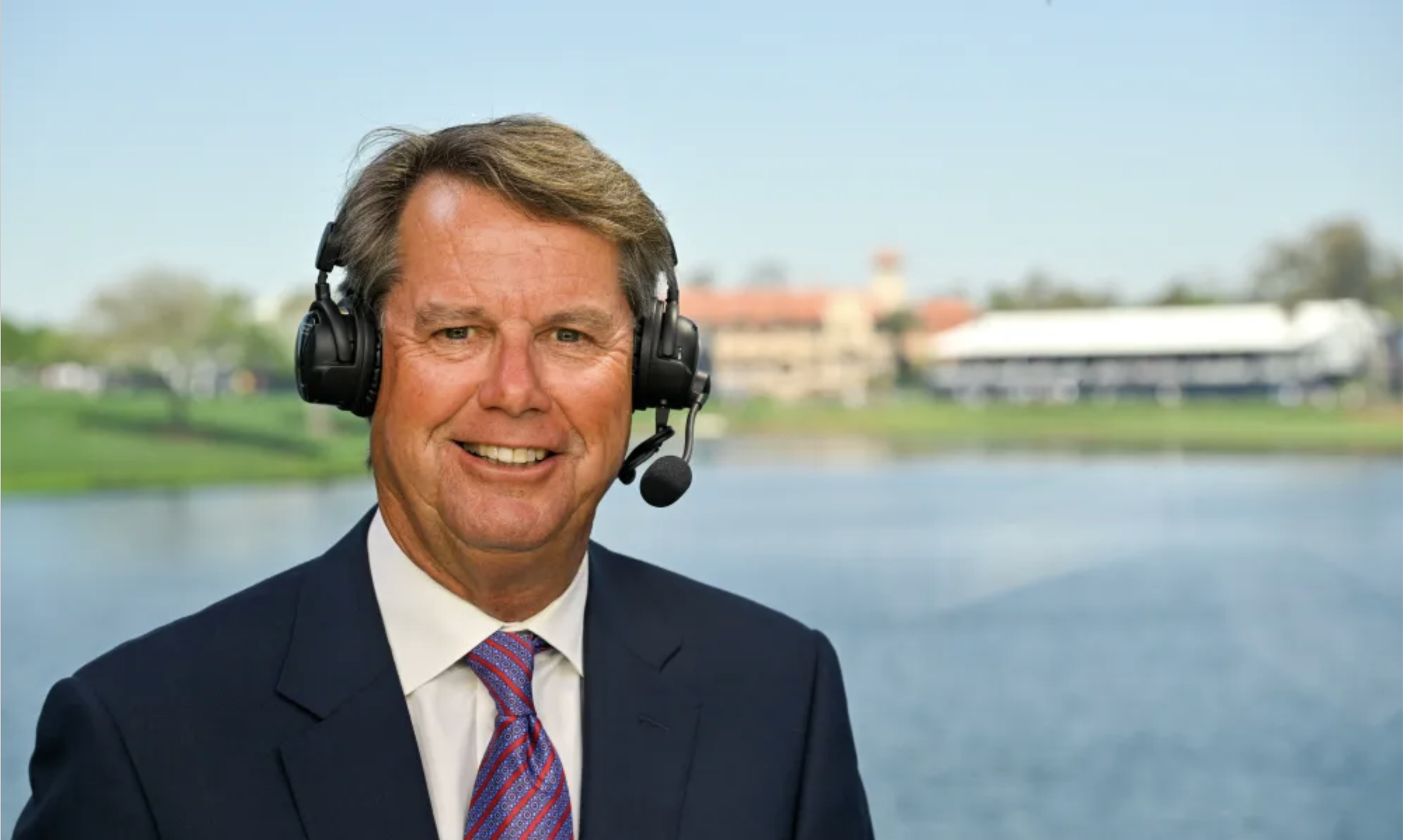
Photograph courtesy Golfweek / Ben Jared/PGA tour via Getty Images
Paul Azinger doesn’t hold back about his breakup with NBC
(and suggests who should replace him)
March 3, 2024
GolfWeek
By Adam Schupak
Paul Azinger is driving to Gator Creek Golf Club in Sarasota, Florida. He brought the fish for a fish fry and then he’s planning to peg it with his son-in-law and a couple of friends.
His mind is miles away from the Cognizant Classic in the Palm Beaches, what should’ve been the start of four straight weeks in his home state calling out whoever might be choking his guts out on the PGA Tour for NBC. But in November, the network elected not to renew his contract, ending his four-year stint as its lead golf analyst. (NBC Sports declined to comment for this story.)
Instead, Azinger has been hanging on his boat, fishing frequently, and getting ready to get “his elbows dirty” partnering with Fry/Straka Global Golf Course Design to build the new riverside Miakka Golf Club in Myakka City, Florida.
“There’s always something to do, wash the wheels of your car,” he says during a phone conversation on Sunday. “It’s not too bad, and I’m not looking for a job either. I’ve had two full careers. I played the Tour for 30 years, I broadcast for about 18 years. I’m enjoying my life right now. I didn’t know I could enjoy it this much. I’m serious, I wake up with no schedule. It’s weird and it’s nice.”
And before he can be asked the obvious follow-up question, he adds, “I’m not missing golf in any capacity at all as a broadcaster. It’s hard work to be an analyst. It’s always stress and pressure. So I don’t really miss it that much. I just don’t like the way it ended.”
Before calling Azinger, one of my favorite people to talk about the game with, I wondered if it still might be too soon for him to talk on this topic.
It was not.
The inside story of NBC walking away from the negotiating table

Paul Azinger and Dan Hicks on set during the second round of the 2019 Tour Championship at East Lake Golf Club in Atlanta. (Photograph courtesy Sam Greenwood/Getty Images)
“They offered me the job,” Azinger said. “We had the weeks, the amount of days. Essentially, I was going to be on the road for two more weeks, and I wasn’t gonna make the same amount of money. So we’re making a counteroffer.”
Azinger was seeking a one-year renewal, which would line up contract talks with that of lead announcer Dan Hicks, whose contract expires at the end of 2024, Azinger says.
“Dan and I already had talked about it. I was ready to keep going. I thought I was gonna go for about five more years to be honest,” Azinger said. “I thought I would do at least one more year and then sign a four-year deal. They made the offer, my agent said ‘no, we’ll counteroffer the next day’. And they said, ‘Sorry, we’re moving on.’
“You know, it wasn’t a conversation with me, like, ‘What do you need Zinger? What do we need to do? Here’s our situation. You know, this is why we need you to accept this deal.’ There was no reason, it just was it’s complicated, it’s complicated. I was like, ‘How complicated can it be, bud?’ It’s money.
“For me to be able to do NBC was the greatest opportunity and blessing. I was the lead analyst at ABC, at ESPN, and at NBC and that was awesome. I’ve had two full careers and it was a great run. I’m so grateful that I had the chance to do NBC. I wish it could have ended up better for me. I was ready to keep going and I thought we were negotiating in good faith.”
Those negotiations were led by Sam Flood, NBC Sports executive vice president & president of production, who took over day-to-day oversight of Golf Channel production in August, replacing Mark Loomis. They also didn’t include Molly Solomon, executive vice president of content and executive producer, Golf Channel, from 2012-2023, who shifted her focus exclusively to the upcoming Summer Olympics as executive producer & president, NBC Olympics production.
Azinger had lost another advocate in Pete Bevacqua, who left his role as president of NBC Sports in March to become the athletic director at Notre Dame, his alma mater, and Azinger hadn’t had a chance to develop a relationship with his replacement, Rick Cordella, who was hired on Sept. 23.
“Sam Flood came in and was just, you know, just an a-hole about it. All we were doing was making a counteroffer, and they said, ‘No, that was take it or leave.’ And I said, ‘Sam, was that presented to us as take it or leave it?’ ‘It’s complicated, Zinger,’ he said. I talked to him for 23-24 minutes and every time I would ask him a question, it would be like, ‘Are you upset or something?’ We had [the parameters of a deal] done. Are we not supposed to negotiate with you? And he wouldn’t say anything. And it was like, ‘nope, we’re moving on.’ There was never anything like ‘Zinger, this is all we can do. This is our best shot.’
“My poor manager he’s sitting there like, ‘What happened?’ That’s how it went down. We just wish it would have ended differently, because honestly, I’m kind of happy it ended.”
Azinger addresses his replacement

Mike Tirico and Paul Azinger. (Photograph courtesy Golfweek / ESPN)
Why is Azinger in retrospect “happy it ended?” Well, that opened up another can of worms. Add Azinger to the list of former greats who isn’t pleased with the state of professional golf and what money has done to scatter players to PGA Tour and LIV camps.
“The best players aren’t all playing PGA Tour tournaments. That’s over. Suddenly, the LIV Tour, let’s just say it like this: the PGA Tour has fast become the qualifier for LIV and it’s a sad day for golf,” Azinger says. “Yeah, I’ve watched a little bit and I’m not missing it that much. I’m not missing it at all.”
NBC/Golf Channel has yet to name a permanent replacement for Azinger. So far, this season it has rotated analysts from those already employed by the network – Brandel Chamblee and Paul McGinley – and current tour pros – Luke Donald at the Cognizant Classic and the Arnold Palmer Invitational and Kevin Kisner, who did The Sentry and WM Phoenix Open and is rumored to be in line to do the Players Championship.
“Well, there was no plan going forward except to make the broadcast less expensive,” Azinger says. “I think they’re going to settle on whatever is less expensive. Everything since I got there was just budget cut after budget cut. Everything was to make the broadcast cost less money. We went from having towers to all in the same booth. We eliminated a couple of drones. Occasionally, you lose the airplane or the blimp and then you lose the speed shots, that one big camera that covers the ball, you know from the tee as it flies over the water. You know they’re gonna pour all their money into the Players.”
Who would Azinger hire to take his place?

Commentators Christina Kim and Charles Barkley look on during Capital One’s The Match IX at The Park West Palm on February 26, 2024, in West Palm Beach, Florida. (Photograph courtesy Golfweek by Cliff Hawkins/Getty Images for The Match)
“Charles Barkley should be the analyst,” Azinger says. “He understands what it’s like for an athlete to try to pull it off at the end when his whole life is committed to something and he’s got his chance and the world’s watching. Barkley knows what that feels like. But Barkley probably is going to be more expensive, so that’s not what they’re shooting for… that’s the reality. Everything is about making it less expensive. It’s a shame.”
Replacing a legend

NBC’s golf broadcasters Johnny Miller, Paul Azinger, and Dan Hicks following Miller’s final live broadcast, the third round of the 2019 Waste Management Phoenix Open at TPC Scottsdale. (Photograph courtesy Golfweek / Jared C. Tilton/Getty Images)
Azinger had the unenviable task of following Johnny Miller. Whether viewers loved him or hated him, they waited with bated breath for the next provocative opinion from Miller’s beautiful mind during three decades for NBC. Miller passed the baton to Azinger, a 12-time Tour winner including the 1993 PGA Championship winner, during the third round of the 2019 WM Phoenix Open.
“I was a nervous wreck about it because I played golf with Gary Koch and with Roger Maltbie. We’re competitors against each other, and they’re used to Johnny and I’m supposed to step in and be some expert. It was stressful for me,” Azinger says. “I would say it took me about a year and a half before I quit having kind of the cold sweats.”
Azinger also says that he was guarded against saying too much from the very beginning.
“Even just the very first week,” he recalls, “I make a comment about the rough being deeper than the hair on Don King’s head and I got shut down. ‘Don’t say that,’ and I’m like, ‘Why not?’
“The last three years, I started to really enjoy it, got to know the younger players really well. I mean, I made mistakes in the booth, which I think mistakes are kind of great because people can roast you and give themselves some content and I can handle it.”
Azinger may not miss being at the Cognizant and sitting out a rain delay and coming back for a Monday finish, but he’ll miss the U.S. Open in June.
“That’s the biggest win that an American can have, certainly any player, it makes their career,” Azinger says. “The stress, pressure, preparation, all that goes in to four night’s sleep, getting ready to play that tournament, and being able to have control of your game, it’s the hardest tournament so I’m gonna miss that the most.”
Azinger’s ‘over’ the PGA Tour but what about LIV (and PGA Tour Champions)?

Greg Norman, LIV Golf CEO, walks down the 18th fairway during day one of the LIV Golf Invitational – Jeddah at Royal Greens Golf & Country Club in Jeddah, Saudi Arabia. (Photograph courtesy Golfweek / Francois Nel/Getty Images)
Azinger wants to make clear he isn’t bitter and adds, “I just see it as it is.” He has no plans to call pro golf again, but what if Greg Norman came calling and asked him to do LIV?
“I would not rule that out. But it ain’t gonna happen,” he says laughing and repeating that it won’t be happening. “It would be stupid for me to say, ‘oh, no, I’m ruling that out.’ I don’t rule anything out except the Tour.”
Without mentioning if CBS, the other network that shares the PGA Tour’s TV contract, has reached out to him, Azinger says he wouldn’t be interested in calling the Tour under the current leadership. Azinger, who won the Memorial in 1993, is a member of the Memorial’s Captain’s Club and sits on Jack Nicklaus’s Captain’s Council.
Last May, during tournament week, Tour Commissioner Jay Monahan delivered a report on the state of the Tour and efforts to grow the game and junior golf to the council. Just a matter of days later, on June 6, Monahan was grinning on TV alongside Yasir Al-Rumayann, the head of Saudi Arabia’s Public Investment Fund, announcing a commercial agreement.
“He didn’t even tell Jack,” Azinger says. “[Jay] gave that report in front of Jack and the heads of the USGA, R&A, PGA, the Masters. There’s about 15 of us in there and I think understandably, everyone in that room is a little down on Jay. He’d been negotiating with [PIF] for six months. What the heck, why didn’t you tell everybody that? Why didn’t you just say that? That could have been when he let it out but he didn’t and he started the battle and then he switched teams in the middle of it and Rory’s fallen on the sword for him, you know?”, Azinger says.
“He’s working his butt off, you got to give him credit that he’s hung in there somehow, I guess, and you got to give him credit that he’s putting together billions of dollars because it appears to be the case. His intentions are to do the best for the players, but he just didn’t handle it right.”
That’s half the reason that Azinger has no interest in calling the PGA Tour. Here’s the other half: “I don’t want to get in too much hot water and make big headlines or anything, but the best players aren’t on the PGA Tour,” he says. “They’re scattered all over the place and that’s a sad day that’s similar to what happened in tennis. The best players are going to be at the four majors, just like tennis, and it’s unfolding right before our eyes.
“I’d rather call the Senior Tour than the PGA Tour to tell you the truth. I’m over the PGA Tour. To call the best senior players in the world, at least they’re the best.”
Azinger, 64, only played four times on PGA Tour Champions and none since 2010. Asked if there’s any chance he’ll try to play senior golf, he says, “I’ll let you know after today if I make seven birdies.”
THE NEW BOBBY JONES
October 11, 2023
The Bobby Jones Golf Club Reopens in November
The historic municipal golf course has undergone major changes. Here’s what to expect.
SARASOTA MAGAZINE
By Cooper Levey-Baker
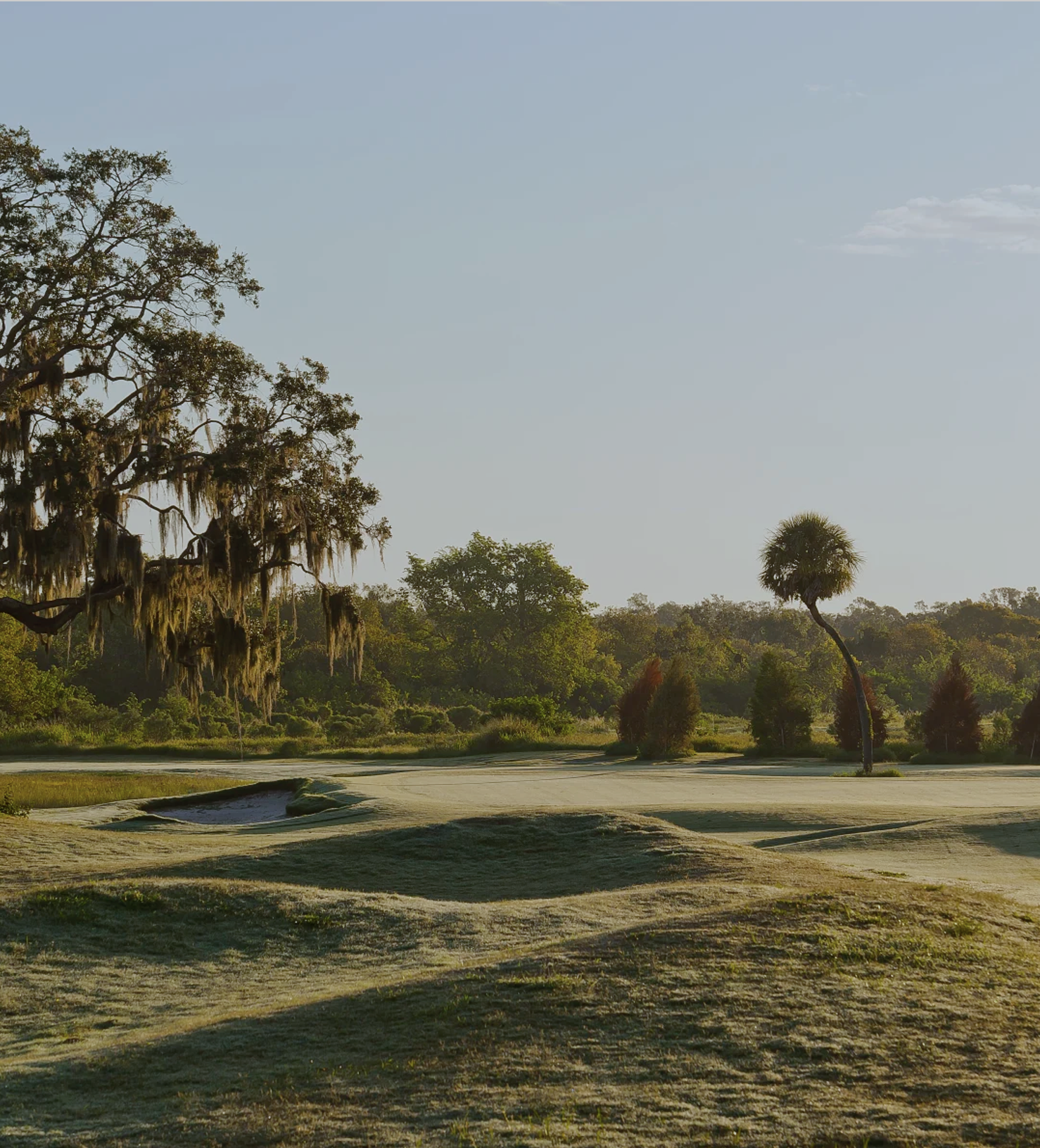
Image Courtesy of Gene Pollux
Sarasota’s city-owned Bobby Jones Golf Club — located between Fruitville Road and 17th Street—has seen many changes since it first opened to the public nearly a century ago, but it’s on the cusp of maybe its biggest makeover yet. After years of neglect, followed by a long process of rehabilitation and reinvention while it was closed for business, the club is set to reopen in early November with a major new element: a public nature park.
Making the Cut
Bobby Jones used to be home to 45 holes, but that number has been reduced as part of the City of Sarasota’s plan to revamp the facility. The new layout will feature one 18-hole course and a driving range with 65 hitting stations that will open in early November, plus a nine-hole, par-three “short course” that will open at a later date. According to city parks and recreation team member Sue Martin, it’s just a matter of waiting for the grass to grow in before the extra holes will be available.
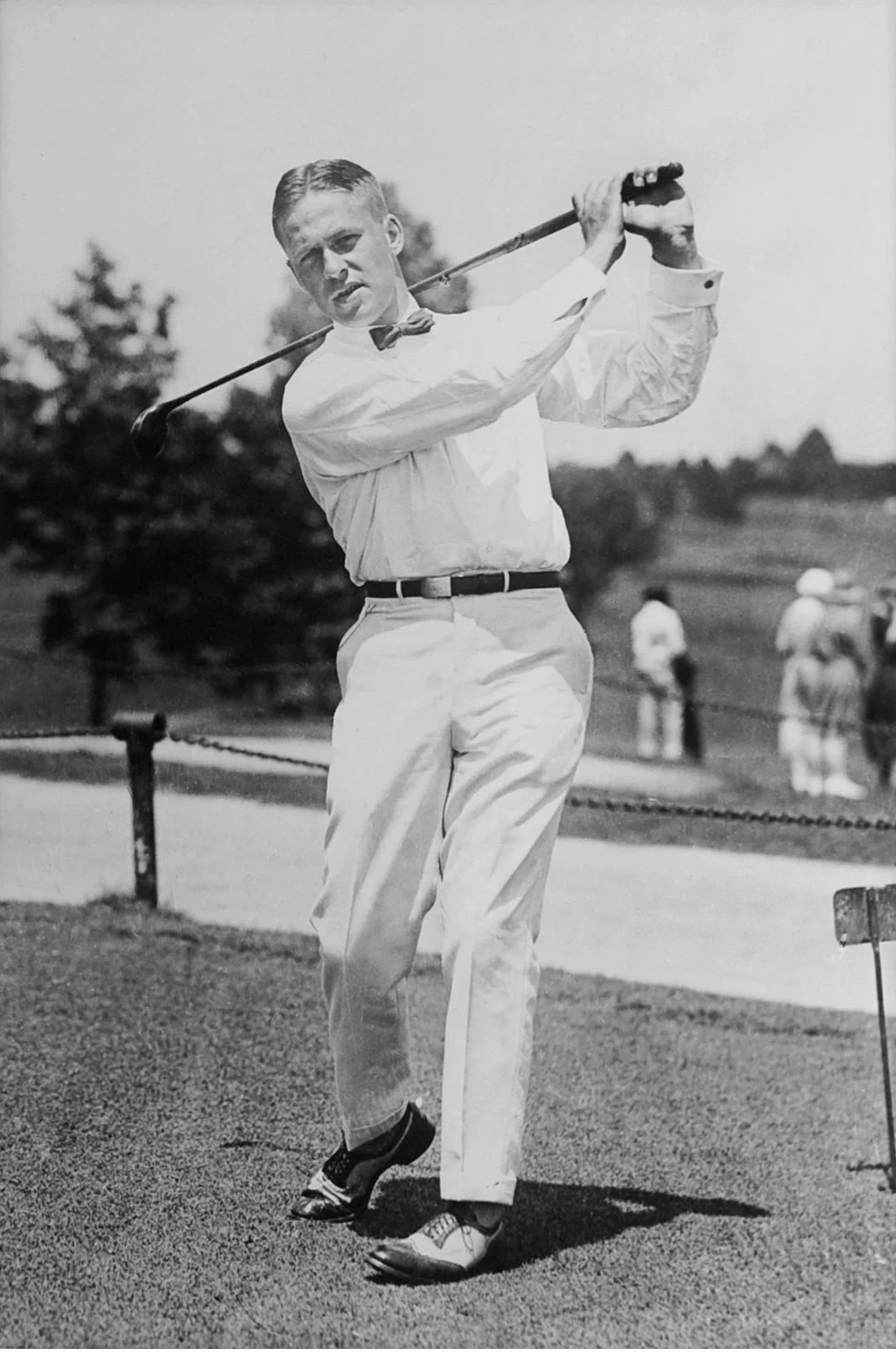
Robert Tyre “Bobby” Jones, Jr.
Freshening Up
The original Bobby Jones opened in 1926 and was mapped out by influential course designer Donald Ross. As part of the rehab process, course architect Richard Mandell was hired to add subtle tweaks to Ross’ original design. Holes are being lengthened, for example, because advances in club design have made it easier to hit the ball farther than it was 100 years ago. Each hole will also have seven tee boxes to allow people of all ages and abilities to compete—creating what is known in the industry as “tee shot equity.”

Image Courtesy of Gene Pollux
Transitional Housing
Don’t expect a full clubhouse at the new course just yet. While future plans do call for a permanent clubhouse, a temporary modular building will serve as the clubhouse when it reopens. Still, you can expect all the normal amenities, like restrooms, food and beverage service, and more.
Short and Sweet
Mandell designed the new nine-hole short course so it can be played in multiple ways. That means the configuration of the holes can change from week to week or even day to day. The goal is to offer golfers a different experience each time they play, and to give them a reason to return for multiple rounds.
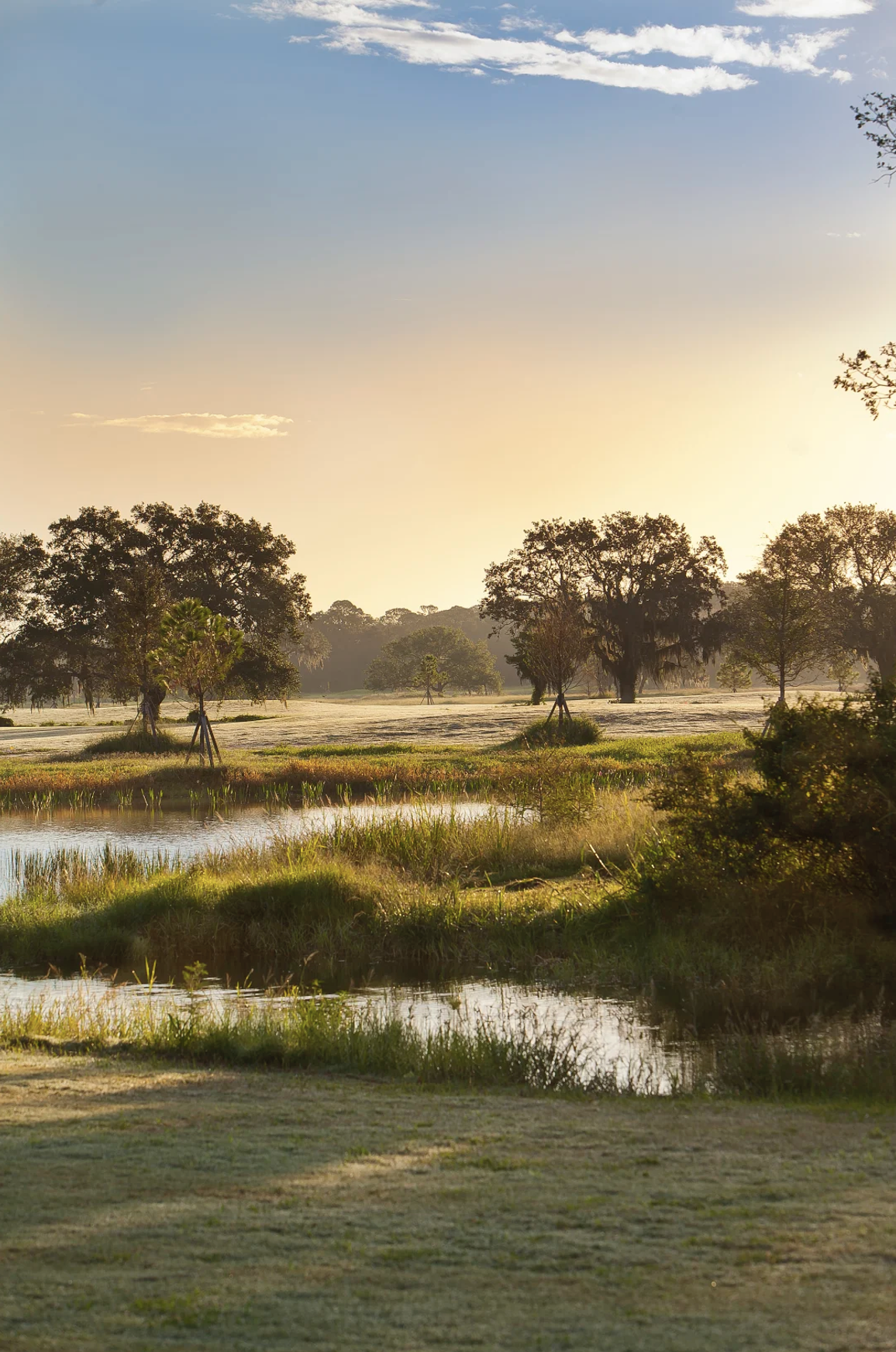
Image Courtesy of Gene Pollux
Take a Walk
Besides golf, the property will also be home to a nature park streaked with concrete and crushed shell paths for walking and biking. The park will be free and open to the public from sunup to sundown, with water features and plenty of natural elements to attract wildlife. (In addition to alligators and several bird species, predators like bobcats have been spotted on the property.) The park is also designed to act as a natural filter for water that flows from the north into a canal that eventually leads to Phillippi Creek, providing an ecological benefit to the whole region.
Bobby Jones restoration reaches last major milestone
JUNE 29, 2023
Sarasota observer
by andrew warfield
Sprigging the greens at the city-owned golf course means rebuilding the Donald Ross design is nearing completion.
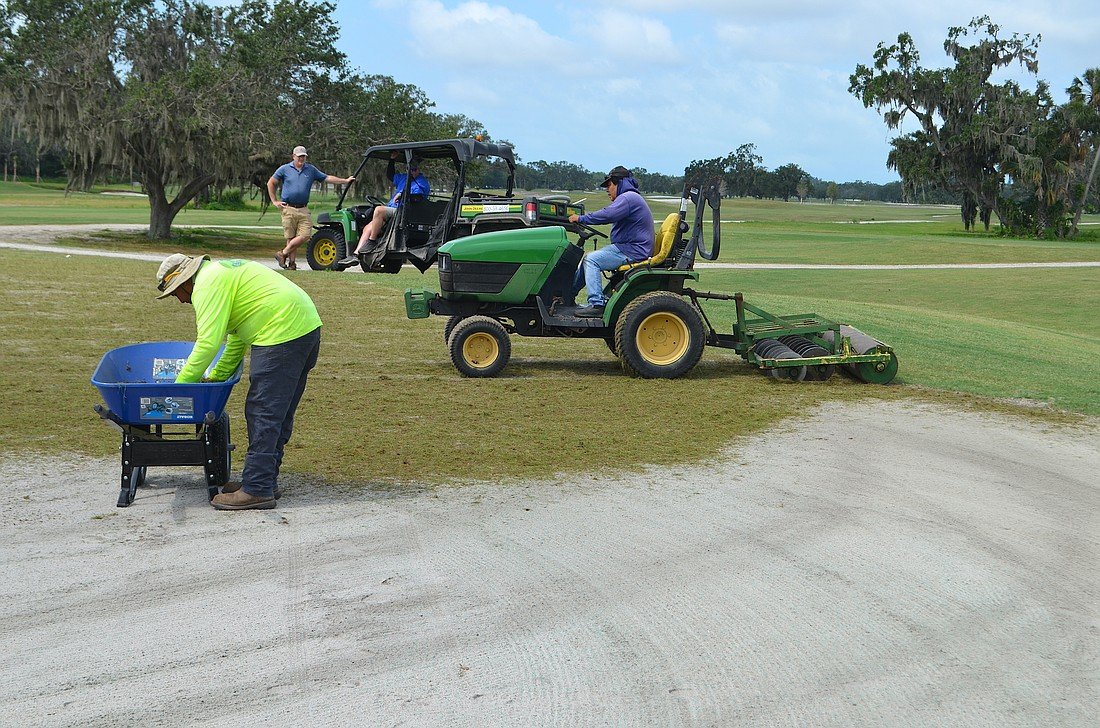
The first green, No. 15, is sprigged at Bobby Jones Golf Club. Photo by Andrew Warfield.
Riding in a maintenance vehicle from the No. 8 tee box toward the green at Bobby Jones Golf Club, Richard Mandell said one of his favorite features of the golf course lay just ahead.
The architect hired to design the $12.5 million project to restore the city-owned course to its original Donald Ross layout has seen it all — he’s restored 10 Ross courses and had rebuilt or designed from scratch 64 others — so it’s often what's imperceptible to the uninitiated that captures his attention.
The feature doesn’t affect the play of the par-3, unless a duffed tee shot stops on the downward slope of it leaving an awkward stance, but after the cart crossed a small rise and stopped, he pointed back to the mound complex between the tee and the green.
“That mound right behind you,” he said. “You can’t see it from the tee, but it’s there.”
Like all other elements included in the reimagining of the original Donald Ross 18 holes that were later incorporated into 36, the diminutive mound is all about drainage, the topography designed to turn the floodplain that was the Bobby Jones Golf Complex into a properly draining course, directing stormwater into a newly created wetland that will eventually become a nature park. That and other subtle contours around the course, which replicates the layout and signature Donald Ross greens when it opened in 1926, also add character to an otherwise flat piece of land.
It’s been seven years since the city awarded Mandell the contract to bring the municipal property back to life. After multiple iterations by the city since the original plan to rebuild all 36 holes, work finally began in earnest in spring 2022, two years after the course was closed. Last Thursday, the sprigging of the greens started at No. 15, which Mandell described as the one of the last major milestones of the construction.
“We are at the big milestone. The next one is to finish the short course. My shaper is out there just cleaning it up, getting rid of all the weeds and shaping it,” said Mandell. “In two weeks, I'll come back, and I will finalize all the little details and paint the grass lines. I’ll come in for two days and we'll work sunup to sundown each day.”
The Bobby Jones course is Donald Ross’ creation restored and enhanced. The short course - a nine-hole “adjustable” par 3 - is all Mandell. Located across Circus Boulevard, Mandell has imagined a course that can follow multiple directions and be changed, likely on a weekly basis, to provide a varying playing experience, not just in routing, but with tees playing to different greens as well.
Watching grass grow
Once the greens on the Ross course are sprigged they will take approximately eight weeks to grow in, and at that point the course is considered playable. Grass throughout the course will have twice that amount of growing time, though, before play begins with a planned opening this fall.
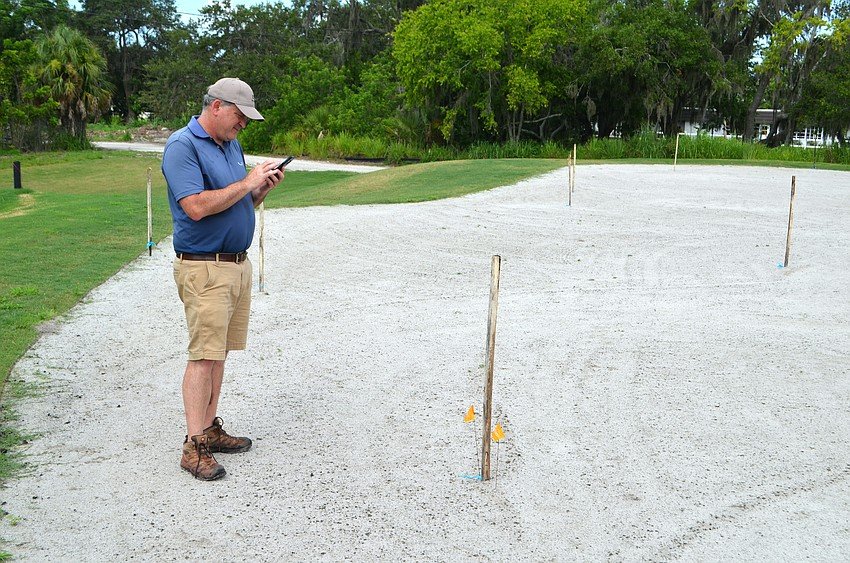
Mandell checks the drainage grid of the 13th green before it is sprigged. Photo by Andrew Warfield.
“The front nine will be sprigged (this week) and we’re not looking at opening until November, so we've got four months of growing in,” Mandell said. “The grass is going to be in great shape.”
Both the Ross course and the Mandell short course, he said, will open simultaneously.
Prior to sprigging, the greens are staked off in grids that allow Mandell to examine and give final approval for the playability of the slopes and effectiveness of drainage. Mandell consults diagrams on his phone while stepping off sections of the putting surfaces to ensure they are as designed. Once planted and grown in, they can’t be changed short of reconstruction.
Once sprigging is complete, work between now and November will shift to cleaning up native areas on the front nine — construction worked its way from 17th Street to Fruitville Road, so the front nine was the last to be shaped and planted — plus manicuring playing and non-playing areas, and growing in fairways and rough. The massive practice range will also be planted.
In addition, the temporary clubhouse will be delivered and installed, on-course restrooms on opposite corners of the property are under construction, the driving range service building has been plumbed and, at the short course, a small service building will be constructed. The existing parking lot will be paved and remaining debris from demolition and construction will be removed. All that work is the responsibility of Jon. F. Swift Construction of Sarasota.
Mandell, who simultaneously balances multiple projects, is gratified to see the course nearing completion, particularly when at times it appeared it may never get started.
“I never thought we wouldn't get to this point,” Mandell said. “I’ve never had a project that just went belly up on me so it was just a matter of time. I just bided my time while the city went through whatever process it needed as this went from 45 to 36 to 27 holes.”
Despite delays in getting the project started, Mandell said he is more than satisfied with the end result.
“There are a lot of features that exceeded my expectations. The short course will definitely exceed my expectations because that one I didn't have a complete vision of when I started,” he said. “The Ross course, like other renovations, you know how it’s going to turn out. If it’s a new course I have a vision of what I'm doing before I start, but the short course here was an opportunity for me to freelance, so that was a lot of fun.”
‘Very Old Florida’
More than a golf course, Mandell set out to create an experience with the restoration of Bobby Jones Golf Club.
While following the Donald Ross original design, the course has been lengthened where it could be, a process that, along with other clearing to remove incompatible vegetation, uncovered some pleasant surprises.
“We cleared a lot of trees, but it's still a nice walk in the park,” Mandell said. “The oaks we were able to save really frame some of the holes. Eighty years ago somebody planted those oaks, but in the area of holes 10 and 11 and 18 there was just about an acre-and-a-half of Brazilian pepper that were 50 feet tall and some of those oaks were buried in that. We got rid of all the Brazilian pepper and, lo and behold, there they were.

Removal of multiple Brazilian pepper trees throughout Bobby Jones Golf Club revealed many stands of previously obscured live oaks. Photo by Andrew Warfield.
“I love the stateliness of the live oaks on the front nine. And I love the ride. I love the ride or the walk that you're going to take from the clubhouse to the driving range, how that path weaves through the Oaks. It's just going to be really serene and picturesque — and very Old Florida.”
That Old Florida vibe may be reflected by the permanent clubhouse should the City Commission approve the latest iteration of a design proposed by contractor Jon F. Swift Construction. Earlier this year, the commission requested the contractor return with an enhanced proposal over the original $2.5 million design. The latest proposal could cost between $7.5 million and $9 million.
That cost is not included in the nearly $20 million budget for the golf course, wetlands creation, temporary clubhouse and accessory buildings, all funded by a $20 million bond and a $3 million grant from the Southwest Florida Water Management District.
Bobby Jones clubhouse may cost up to $9 million
May 25, 2023
Sarasota observer
by andrew warfield
City commissioners abandon the plan for a "bare-bones" $2.5 million facility in favor of a broader community asset and revenue generator.
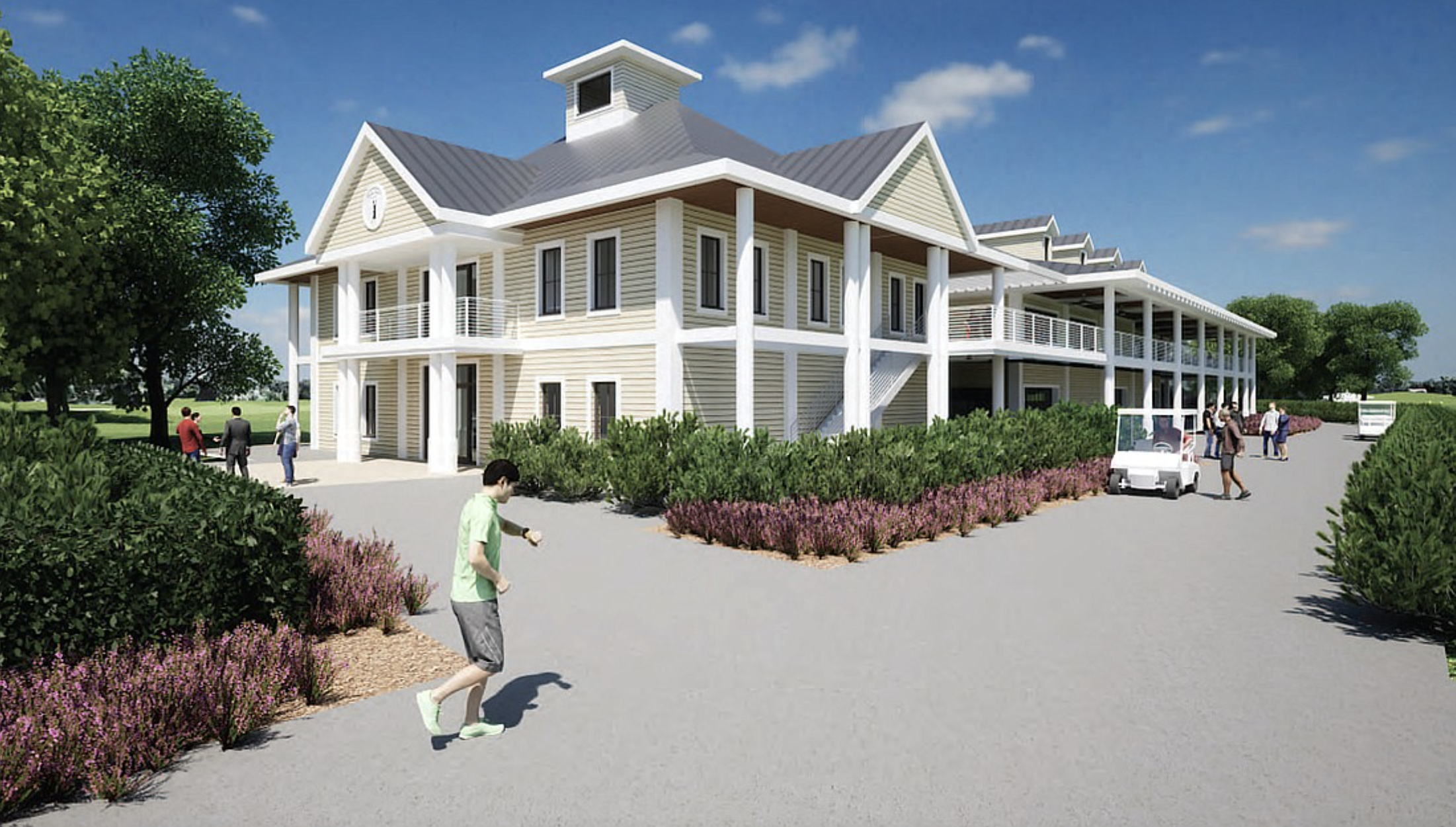
Contractor Jon F. Swift of Sarasota is proposing an Old Florida design for the Bobby Jones Golf Club clubhouse. Courtesy rendering.
Bare-bones basic or invest for success?
With the exception of Jen Ahearn-Koch, it wasn’t much of a debate when the Sarasota city commissioners last week heard a proposal from Jon F. Swift Construction and city staff to consider an investment of $7.5 million to $9 million for the new permanent clubhouse at the city-owned Bobby Jones Golf Club.
As the restoration of the Donald Ross-designed municipal course at the eastern edge of the city limits continues toward a fall completion with construction of accessory buildings underway, the new clubhouse would be the exclamation point of a nearly $20 million investment — plus $9 million if the clubhouse comes in at the top of the proposed budget.
In January, Parks and Recreation General Manager Sue Martin and Swift Construction representatives presented a budget-based proposal for a simple clubhouse and separate cart storage barn, keeping it under a budget of $2.5 million.
Commissioners instead asked to see something that would help Bobby Jones be more competitive with other golf courses and maximize the value of the restored golf course, a 67-bay driving range and practice facilities, proximity to the public park portion of the site and the neighboring county athletic complex. Looking for more than a snack bar and golf shop, they sought opportunities for hosting golf tournaments, meetings and other special events that an upsized venue could support.
The cost of that, they learned last week, is $500 to $600 per square foot for construction. And the longer commissioners wait, the more it’s likely to cost.

The proposed two-story Bobby Jones Golf Club clubhouse as viewed from the ninth green. The two-story structure's golf shop and offices would be to the left and restaurant above the cart barn to the right. Courtesy rendering.
“The design we initially brought to you was mostly budget-based, it was very bare bones,” said Swift Project Manager Justin Williams. “We took the input that we got from the last meeting and we added some of the elements that were asked for, such as two-stories for dining space and having great views out to the site. What we are presenting is a 15,000-square-foot building."
As for the $1.5 million gap in the potential price, “We have not put a detailed estimate together yet because we're not there with this process,” Williams said.
With its old Florida architecture, the clubhouse design pays homage to the original Gillespie clubhouse building with its wrap-around veranda and fiber cement siding. To one side is the golf shop and office space, to the the other a cart barn beneath a full-service restaurant and veranda with outdoor seating that provides elevated views over the property. The two sides are connected at both levels by a breezeway.

The view from the outdoor dining balcony at the proposed new Bobby Jones Golf Club clubhouse. Courtesy rendering.
The elevated design, Martin told commissioners, is the result of commissioners’ input from that January meeting.
“You were looking at about 6,000 square feet for the clubhouse and the rest was going to be cart barn during that meeting,” Martin said. “Individual city commissioners shared their vision of what they would like to see in the permanent clubhouse, which we took in consideration to get back to Swift.”
In the new design, the restaurant alone is 5,000 to 6,000 square feet, including the kitchen.
Commissioners approved 4-1 Vice Mayor Liz Alpert’s motion to instruct Swift and staff to return with a more refined cost estimate and a plan for covering the cost. Ahearn-Koch was the lone opposition.
“I think it’s going to attract more people to use this course because it really makes it look like a world-class course that they're going to want to come to and not a rundown municipal course,” Alpert said. “I think that's a big factor in whether it will be profitable or have less losses than you were anticipating. I think it's probably something we should do because our idea was also to bring in people who are not necessarily playing golf.”
Beyond golfers
The city is already spending money on the unfinished course.
Originally anticipated to be open and operating by the fall of 2022, the course is not yet generating revenue to help cover the debt service of $1.6 million per year on a $20 million bond to cover the capital cost of nearly $19 million. That includes $12.5 million for the golf course restoration and another $5.3 million for accessory buildings — two on-course bathrooms, a starter house for the adjustable par-3 course and a practice range service building — plus parking lot.
Ross course restoration expert Richard Mandell of Pinehurst, North Carolina is leading the project to return the course to its original 18-hole Donald Ross design.
Until the clubhouse is built, a 2,400-square-foot temporary clubhouse will be installed, which will be three connected portable modules that the city may opt to retain for future use or sell when no longer needed.
An upwards of $9 million spend on the permanent clubhouse will bring the total capital investment to as much as $29 million. City Manager Marlon Brown said the money for the clubhouse will be available, but it will require a delay of about 18 months in order to cover the delta between the currently budgeted $2.5 million and the actual cost. That’s when the Surtax IV, the next round of one-cent sales tax revenue to fund capital investments, kicks in.
“If it is the commission's desire is to move forward with this, I am asking that you give us about 18 months for the next penny to come into being. Then we will borrow against that penny,” Brown said. “There’s money set aside for Bobby Jones, and that penny plus Parks and Rec has some additional funding just for general uses, so there is funding that we can use to get us to the delta between the $2.5 million and whatever this comes up to.”
Ahearn-Koch maintained any clubhouse beyond the originally budgeted $2.5 million is an unnecessary luxury. Several meetings with golfers, she said, indicated all they wanted was the best golf experience possible and downplayed the importance of an upscale dining space.
“One of the things that they placed low on their priority list was a fancy restaurant or catering or any of that,” she said. “The numbers really concern me and I was hoping we could stay within our budget of $2.5 million. I was supportive of keeping within that budget and keeping it small. I still feel very strongly that we should stay within our budget.”
The rest of the commission views the clubhouse differently — a community asset to appeal to more than golfers and an essential component to minimize anticipated operating losses if the course does not become profitable.
Commissioner Debbie Trice asked if the clubhouse could serve as a revenue generator for the course.
“We've hired a management company to oversee the operation and I believe that they're going to operate it to the best ability to bring in revenue,” Martin said. “It would be evening and weekend-type events. You also have golf-related events — tournaments and outings — and part of what we were asked to do is to make the space expandable, and that's what we've done with outside balconies. There are sliding doors there that can open and then you can expand to the outside. Beyond that we could always bring in festival tents. There is space outside around the clubhouse where you could bring in larger groups.”
Commissioner Erik Arroyo said the clubhouse should be viewed as a community asset accessible to a wider audience than only golfers, and the potential revenue it could generate.
“We want to make this as successful as possible. We want families to go there, we want this to be an amenity for the community,” Arroyo said. “The alternative is that we have a very nice golf course with no amenities for the public. We set it up to succeed or set it up to fail. We have to give it the resources that it needs to thrive, and I think there's a lot of potential, especially since we're not doing it on our own. We have an expert coming in, an internationally recognized firm that manages golf courses.
“If we're going to be investing in something, I think we should do it right.”
With hope the design will draw more patrons, Sarasota City Commission majority opts for more expensive Bobby Jones clubhouse

Rendering of proposed Clubhouse courtesy Fawley Bryant Architecture.
May 18, 2023
THE SARASOTA NEWS LEADER
By Rachel Brown Hackney, Editor & Publisher
Instead of original estimate of $2 million to $2.5 million, project could cost as much as $9 million
After incorporating into the design suggestions that Sarasota city commissioners made during a January 2022 discussion, the project team responsible for the new clubhouse and golf cart barn at the renovated Bobby Jones Golf Club has come up with a construction estimate that could be close to four times higher than the original figure.
On May 15, as part of the commission’s regular meeting, Justin Williams, vice president of Jon F. Swift Construction in Sarasota, who is managing the project, told the commissioners that, having more than doubled the size of the facility — from 6,000 square feet to 15,000 square feet — and factoring in a price of $500 to $600 per square foot, the estimate has climbed to a range between $7.5 million and $9 million.
City Manager Marlon Brown pointed out that, based on the original concept for the clubhouse, the city had planned on spending from $2 million to $2.5 million.
As shown in renderings that the project team presented this week, the clubhouse would have two sections connected by a breezeway. The smaller part would include the pro shop on the ground floor, with office space, restrooms and operational areas on the second floor. The cart barn would be on the ground floor, with the restaurant on the second floor. The structure would have second-floor verandahs overlooking the grounds.
Williams acknowledged that the first concept “we initially brought to you was mostly budget-based. It was very bare bones.”
He also pointed out that the latest estimate had not been refined, as the team was awaiting a City Commission decision on the new proposal.
Although Commissioner Erik Arroyo first indicated that he would balk at the big jump in the expense, he seconded Vice Mayor Liz Alpert’s motion for the team to proceed with the plans shown to the board members that day.
Alpert included in that motion direction to Brown to bring back to the commissioners a refined estimate of the facility’s expense and proposals about how to cover the cost.
Money will be available through the penny sales tax — or, Surtax IV — program that county voters approved during the November 2022 General Election, Brown said. However, he noted, that program does not begin until Jan. 1, 2025.
“We don’t intend to borrow money to build this at this point in time,” Brown said.
The city’s Parks and Recreation Department also will have funds that could be tapped, Brown pointed out. Given the expected receipt of the Surtax money, plus the money budgeted for Parks and Recreation in coming years, he told the commissioners that the city could issue bonds that would be paid back by those funds.
While the commissioners do not like to see higher expenses for any undertaking, Arroyo said during the discussion, “We want to set this up for success.”
Alpert pointed out that the golf club renovations include a large driving range, along with a nature park, the reconstruction of the original 18 holes designed by famed golf course architect Donald Ross in the 1920s, and a center where both children and adults will be able to take golf lessons. Moreover, the commission hired an internationally known firm to manage the golf club, she said, and the employees of that firm would be expected to know how best to market Bobby Jones after it reopens.
Given the renderings shown to the board that day, Alpert added, she would think that it would be easier to market that design than a scaled-back version of the clubhouse.

Rendering of proposed Clubhouse Entry showing temporary Clubhouse to the right. Courtesy Fawley Bryant Architecture.
Arroyo also mentioned the popularity of pro golfer Tiger Woods’ PopStroke facility near the Mall at University Town Center, close to University Parkway.
“They’re doing crazy numbers out there,” Mayor Kyle Battie added of the PopStroke center, based on what he had been told. One person had indicated to him that that business is bringing in about $100,000 a week, Battie said, even though it is located in a commercial setting.
Later, after further discussion, Battie told his colleagues that someone had just sent him an email, saying, “It’s not government’s job to compete with malls.” He had a different view, Battie continued: “Everything is competition.” The goal should be to maximize the potential of the new facilities at Bobby Jones, Battie added. “Failure can’t be an option.”
Arroyo pointed out, “We want families to go [to Bobby Jones]. We want this to be an amenity for our community,” he said of the golf course. “[The clubhouse] is a very, very expensive building,” he conceded, but the alternative is “a very nice golf course with no amenities for the public … We have to give [the club] the resources that it needs to survive.”
Commissioner Jen Ahearn-Koch was the only commissioner on May 15 to vote against allowing the project team to proceed with the more expensive proposal.
She has noted in the past that she attended many of the community meetings conducted over years to gain public views about how the golf club should be redeveloped.
“One of the things [the golfers] placed low on their priority list,” she stressed, “was a fancy restaurant or catering or any of that. They wanted us to focus on the golf course. … They really downplayed … [a] fancy dining place.”
She reminded her colleagues that she had wanted to keep the new clubhouse small, especially as they — and previous commissioners — “spent so much time anguishing over [the total cost of the golf club renovations].”
Ahearn-Koch also underscored her desire to see Bobby Jones begin to sustain itself financially in the future, so the city no longer would need to subsidize its operations. Having a municipal golf course, she continued, is “of huge value, but it would be nice if that delta between cost and revenue were really much closer. I’m not sure that this well-designed and sensitive [clubhouse] proposal is in keeping with keeping those costs where they really need to be.”
A nod to the past with consideration for the future

Photograph of the Gillespie Sarasota Golf Club clubhouse c. 1905-1923. Rendering of proposed Clubhouse courtesy Fawley Bryant Architecture.
During the presentation, Nicholas Bosman of Fawley Bryant Architecture in Sarasota, which is handling the design of the clubhouse, talked about the inspiration for the look of the clubhouse.
He showed them historic photos of the original Gillespie Clubhouse, which dated to approximately 1905. That building had a cupula, dormer windows and a verandah, as well as a gable roof.
City Manager Brown also reminded the commissioners that they wanted patrons of the restaurant to be able to “get a view of everything from above,” including the nature park. Further, they had directed the team to provide more “of an old Florida feel,” he said.
In response to questions from Arroyo, Williams of Jon Swift explained that the clubhouse would be “a block construction building with some steel elements, as well.” The exterior would be Hardie Board, he added.
As the Russin website explains, “Hardie Board is a fiber cement siding option composed of cement, sand and cellulose fibers. It is durable and long-lasting with classic aesthetics and is resistant to environmental factors.”
The building will have a metal roof and metal sub-decking, Williams said.
The structure will be able to withstand a Category 3 hurricane, he noted.
Yet, Hurricane Ian last year was almost a Category 5 storm when it made landfall in the County, Arroyo responded.
Williams told him that the structure would comply with all of the city’s Building Code standards, which potentially would enable it to withstand a stronger storm than one that was a Category 3.
When Arroyo asked about the estimated lifespan of the clubhouse, Williams replied, “Typically, at least 50 years, but much longer than that with proper maintenance.”
“It’s different than I envisioned in my mind,” Vice Mayor Alpert told the team, “but the more I look at [the design], the more I like it.”
She added, “I think [the clubhouse] is going to attract more people to use this course. … It really makes [Bobby Jones] look like a world-class course … and not a rundown municipal course.”
“Beautiful design; I love it,” Commissioner Debbie Trice said, after noting that she was not on the board when the January 2022 discussion was conducted.
Nonetheless, she expressed concern that a sufficient number of people would be interested in dining in the restaurant. Trice said she believed golfers and visitors to the nature park would mostly be interested in snacks. Still, she conceded, the restaurant could be a revenue generator.
Asked about the dining capacity, Sue Martin, general manager of the city’s Parks and Recreation Department, said she believed that 200 persons could be accommodated within the building, while Williams estimated that the verandah would have room for another 40 to 50.
Martin also emphasized the fact that the management company will be focused on making money.
Fore! Mom alligator spotted with 8 hatchlings at Sarasota golf club
April 7, 2023
Sarasota Herald-Tribune
By Melissa Pérez-Carrillo
A video posted on social media from the City of Sarasota shows a female alligator with her eight hatchlings at the Bobby Jones Golf Club. Alligator mating season is upon us, and this momma alligator got an early start and is taking it easy by watching some golf.

Bobby Jones restoration focus turns to short course
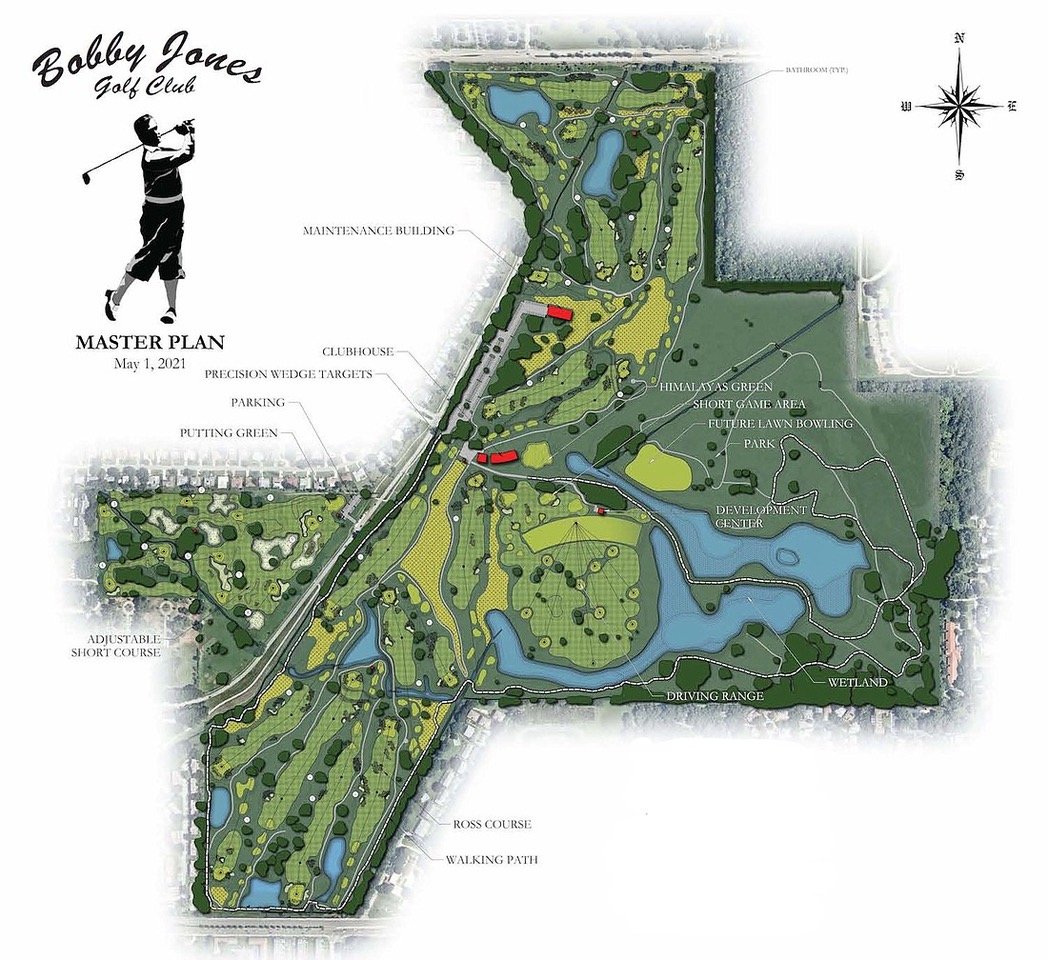
Richard Mandell turns his creativity to a links-like par-3 companion to the Donald Ross design.
March 23, 2023
SARASOTA OBSERVER
By Andrew Warfield
With sod installed around the greens, tee boxes visible from Fruitville Road and fairways sprigged on some of the back-nine holes along 17th Street, the Bobby Jones Golf Course is starting to look like a golf course again.
Now that fine-tuning is underway on the front nine in preparation for sprigging the tees, rest of the fairways, rough and all 18 greens in his restoration of the original 18 holes designed by famed golf course architect Donald Ross, architect Richard Mandell is turning his focus on the nine-hole “adjustable” par-3 course across Circus Boulevard from the golf club’s main entrance at Azinger Way.
Mandell, a Pinehurst, North Carolina-based course architect who specializes in Donald Ross restorations, is enthusiastic about the pitch-and-putt companion course. Heavy equipment is currently shaping the layout on the 25-acre city-owned property across Circus Boulevard from the primary facility.
The main course is Ross, with modifications for modern water management techniques that didn’t exist when it was built nearly 100 years ago. The short course, though, is all Mandell.
“The short course is 100% mine to do what I want with it,” Mandell said. “It strays from the original plans a bit here and there, and I’m working to formulate what its personality is going to be. The original plan had native waste areas and I wasn't really sure how that would shake out until we got into it.”
The short course is described as adjustable because it is intended to offer flexibility in routing. Playing at 1,009 yards, the score card shows the longest hole at 173 yards and the shortest at 78, offering a variety of short-game shot selections. Among the changes from his original vision, Mandell has eliminated traditional bunkers. Instead, the course will be composed largely of native sand areas and grass, resembling a links-style course.
The JOHN HAMILTON Gillespie Course at Bobby Jones Golf Club

The Gillespie Course
at Bobby Jones Golf Club
Unlike the Ross course, which was built atop an urban watershed, the short course site has a sandy foundation that offers effective natural drainage off the site. Mandell speaks about it like a kid in a pro shop.
“This is the first course I’ve been able to design from scratch that is pure sand, so it puts me in another realm where I can do different things,” Mandell said. “If you're building a golf course, you want to build it on pure sand. All of your links courses are on sand, and so you can do more things because it naturally drains.”
There will be retention basins on the course, but otherwise golfers can expect more of a links golf experience on the short course — few if any forced carries with an emphasis on a strong ground game — which Mandell said will appeal to the spectrum of golf skills.
“I think this course is going to be a major attraction for all golfers, but I’ve got to make sure that it's playable for seniors and juniors,” Mandell said. “It will be a great golf course for a low handicapper to have a lot of fun and still make it playable for junior golfers and senior golfers as well.”
Longer from the tips
The main attraction, though, will be the Ross course, designed in 1925 and named Municipal Golf Course and Recreation Grounds when it opened in 1926. It was dedicated in 1927 when Jones, the legendary golfer was already well known in the community as a sales executive for a real estate developer.
It is Mandell’s 12th Ross course restoration, which follows the original 18-hole design with necessary updates to facilitate drainage. Built on a floodplain, soil was removed from the 120 acres of what are now wetlands to elevate the golf course. The routing is the same and the greens follow the original Ross specs, but regular Bobby Jones golfers will likely notice some changes.
Among the differences from the original layout is the length, playing 6,715 yards from the back tees compared to the original Ross course at 6,230 yards. With a set of “Ross” tees, golfers may play the original length.
The Donald Ross Course at Bobby Jones Golf Club

The scorecard with all yardages for the restored Ross course at Bobby Jones Golf Complex. The back tees have been extended nearly 500 yards longer than the original Donald Ross layout. Image Courtesy Richard Mandell
The greens follow the original Ross specs — Mandell found them in the Tufts Archives in Pinehurst — but regulars who played the original layout as part of an expansion that created a 36-hole complex will note some changes between the tees and greens.
“We raised all the playing areas above the 100-year floodplain,” Mandell said. “We have water features that were not part of the original Ross plan, but we had to have them to make sure the course drains properly. We're not going to spend all this money and have it wet like it was before.”
The golf course restoration and wetlands creation was budgeted at $12.5 million, the entire project funded by a $20 million city bond and a $3 million in grant from the Southwest Florida Water Management District. Included in that total are accessory buildings such as two on-course restroom structures, a driving range building, the Gillespie Building at the short course and temporary clubhouse.
Final plans for the permanent clubhouse are still being developed. Currently, there is no time frame set for its construction.
“We have a couple of designs in hand and the plan is to present them to the City Commission, most likely sometime in April, and staff will be asking for direction on which design they want to pursue,” said John Kretzer, the city’s project manager.
Ross vision taking shape
Closed in 2020, prior to excavation the only reminder that remained of the golf course along Fruitville Road was a deteriorating sign as nature reclaimed the property. That sign is gone, and now visible from there are parts of holes 3 through 6.
“It is absolutely daunting, seeing the changes that have taken place there,” Kretzer said. “It’s nice to see Donald Ross' vision take shape in front of us.”
Sprigging on the front nine will begin within a few weeks, according to Kretzer. The contractor is awaiting the arrival of the sprigs from a farm in Georgia, where the weather is not quite warm enough for growing and cutting sprigs.

Workers apply water to freshly sodded areas at Bobby Jones Golf Course. Photo by Andrew Warfield.
Construction moved from the back nine forward to follow the flow of water, both above and below the surface.
“When you drive down 17th Street you can see that there's a large water tank, which is the source of the irrigation for the golf course,” Kretzer said. “All of the infrastructure for the golf course originates from that point. It just made sense to start there and work forward. A lot of excavated soil was needed to build up the front side to a higher elevation to help alleviate some of the flooding problems that we used to have there.”

Irrigation is running on several holes of the back 9 at Bobby Jones Golf Course since some fairways have been sprigged. Photo by Andrew Warfield.
That flooding primarily came from overflows of Phillippi Creek Main B, flows from University Parkway through The Meadows, then beneath 17th Street, across a portion of the back nine and then along Circus Boulevard. That follows the drainage of the entire property from 17th Street to Fruitville Road.
Raising the golf course to create new wetlands serves the dual purpose of mitigating the flooding while naturally filtering the water flowing southward through the site.
“We’ve designed a system that will bring water onto the site during heavy rains,” Mandell said. “From there it will slowly flow through the wetlands where it will be naturally filtered, then it will be slowly released, which protects everybody downstream.”
Bobby Jones Golf Course opening now set for mid-to late 2023
December 8, 2022
Sarasota Observer
By Andrew Warfield
A two-month permitting delay pushed work into the rainy season, forcing an eight-month delay in opening the restored Bobby Jones Golf Course.

Water management is a key factor during reconstruction of the Bobby Jones Golf Course both to prevent the formerly frequent flooding of the course and for the adjacent nature park. The entire project is designed to purify water flowing through the site through natural filtration. Photograph by Andrew Warfield.
When the years-long redevelopment plans of the Bobby Jones Golf Course were finally approved by Sarasota City Commission in February, the ambitious goal was to have restoration of the original 18 holes designed by Donald Ross open to play by November of this year.
Nature had other plans, and a bureaucratic snafu that resulted in a two-month delay opened a cascade of circumstances that have now pushed the opening date to late summer or early fall 2023.
On Monday, golf course architect Richard Mandell, whom the city hired in 2017 to design the restoration of the city facility that was closed in 2020, told city commissioners during a project update that all the difficult work has been completed and, barring a catastrophic disaster, he sees no delays going forward.
The best news, he added, is that the project so far is coming in at more than $250,000 under the $12.5 million budget, thanks to some creative value engineering. The budget for the entire project including the golf course, nature park and wetlands conservation is $18.8 million.
First the reasons for the delay.
“We were hoping that we could start right away and we would get done in November, but that was really only in a situation where everything was good to go,” Mandell said. “That hasn't been the case since we had SWIFTMUD (Southwest Florida Water Management District) slow us down with permitting. The permit was finalized and approved by them, but it sat on someone's desk for six to eight weeks and we had to call to find out why that was the case.”
No good reason, as it turned out, but those critical two months prevented earth moving from beginning well in advance of the wet season. When the rains did begin, construction was as much about moving water around what is otherwise a floodplain as it was about building a golf course.
Then came Hurricane Ian. Then Tropical Storm Nicole.
Finally dry again, contractor QGS Development of Plant City has been progressing at an accelerated pace as grass planting has begun on the back nine, those holes visible from 17th Street.
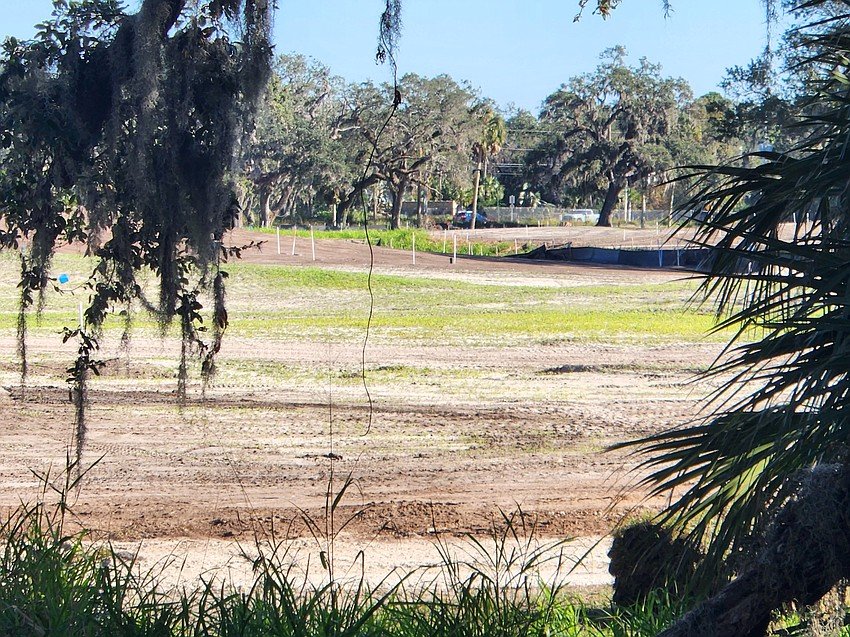
Sprigging of grass has begun in the back nine of the Bobby Jones Golf Course as areas of green are starting to become visible on the portion of the course near 17th Street. Photograph by Andrew Warfield.
“Now that the rainy season has gone, QGS has picked up progress and we're doing very well,” Mandell said.
Challenges brought by the aftermath of the COVID-19 response, he told commissioners, required unanticipated value engineering, which so far has resulted in $253,000 in savings from the original budget.
“We've had major challenges that none of us foresaw, such as the pandemic, which basically added 25% to 30% of cost to the golf course. And despite that we're able to still overcome that by being smart with what we're doing value-engineering wise,” Mandell said.
Among those was the elimination of concrete cart paths in favor of shell paving, which not only is significantly less costly than concrete — both to build and to maintain — but also results in even greater impervious surface, which reduces stormwater runoff. It is made of compacted pulverized sea shells.
Not only is it cheaper, Mandell just likes it better.
“I was never really a fan of concrete cart paths. I always wanted shell screening for the car paths,” he said. “The cost of concrete went up and shell screening did not go up nearly as much, and we were to save a good $500,000 to $600,000 just on that move alone. And when you talk about Sarasota and Florida golf … we really sort of capture that old Florida feel.”
Some of that savings went into bunker liners, which were not originally planned, that will preserve the longevity and integrity of the sand bunkers. Mandell said he also found savings during irrigation installation — which is now fully operational — by identifying areas where fewer sprinkler heads covering larger areas could be used.
But don’t tuck that $253,000 in the savings account just yet, he warned. It could easily be absorbed by other unforeseen circumstances.
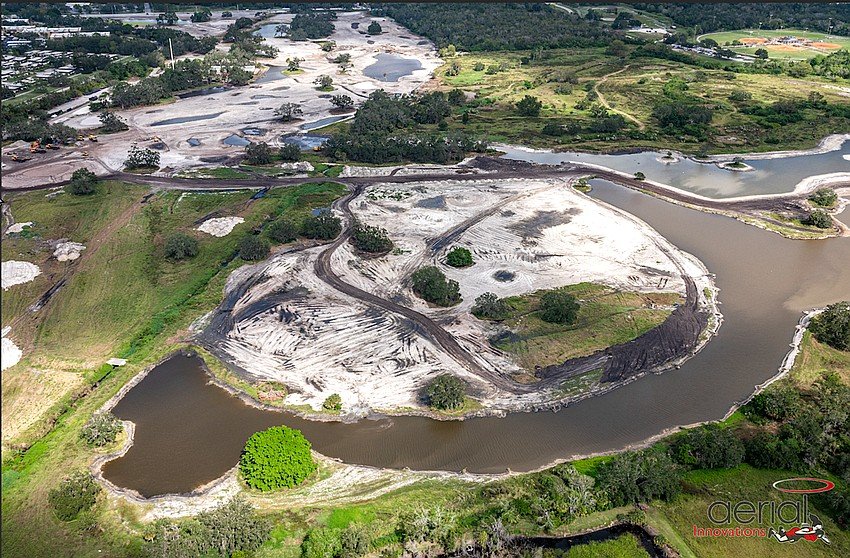
The practice range at the Bobby Jones Golf Course is surrounded by a stream that feeds water into the nature park adjacent to the golf course.
Courtesy photo.
The golf course renovation is only part of the overall 261-acre project. Reducing the course to the original 1926 Donald Ross 18-hole layout from the 36 holes it became in the decades since left 153 acres to create the nature park and wetlands conservation area. Many of the existing cart paths there will be re-used for the nature trail, which will one day connect with Sarasota County’s expanded regional park off 17th street adjacent to the site off 17th street, which is under development, and ideally eventually connect to Nathan Benderson Park.
The nature park will be accessible once the golf course opens, but full development of it, Director of Parks and Recreation Jerry Fogle told commissioners, is still years away.
“From day one in 2017, we've talked about the synergy between golf and nature, and we'd always planned to expand the wetlands and work on flood control for the city with the site. This is a perfect example again of how it works together,” Mandell said. “The dirt we're removing to create the wetlands is being is being transferred to the golf course to build up the fairways to get it out of the floodplain. The five holes along Fruitville Road mostly have always been under the 25-year floodplain, so there's no surprise as to why the golf course would flood.
“Now we've got those fairways and tees and greens above the flood elevations, so when regular floods happen, the golf course won't be down for four or five days.”
Earth moving is also now underway on the par-three “adjustable” golf course across Circus Boulevard from the main course. Mandell told commissioners he expects that to open mid too late next year as well.
Seven years later, Bobby Jones Golf Club is visibly taking shape
September 27, 2022
Sarasota Observer
By Andrew Warfield
Multiple plan changes and a two-year closure later, project leader Richard Mandell says Donald Ross' century-old vision is being restored.
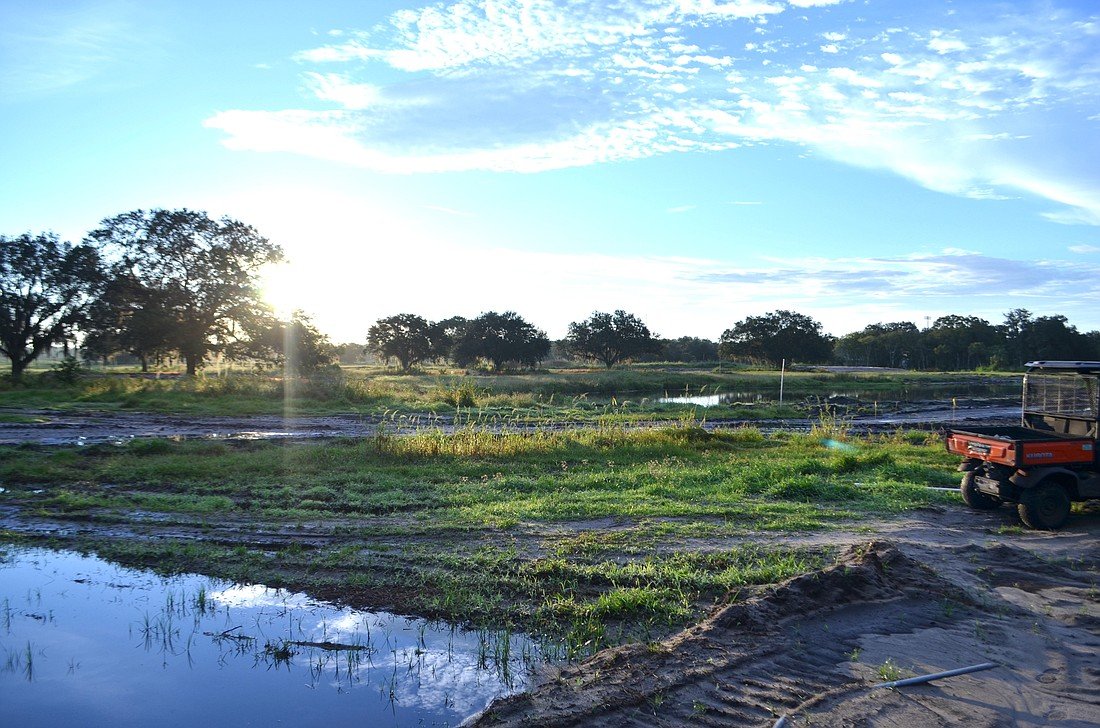
When golf course architect Richard Mandell first toured the Bobby Jones Golf Club complex while preparing to bid on its restoration, he was accompanied by his son, Thomas, who was in seventh grade at the time.
To put into perspective how much time has passed since that first visit, as earthmovers now excavate, haul and push dirt around to reshape Sarasota’s municipal golf facility to its original Donald Ross layout, Thomas is now a college freshman.
“I’m waiting for my five-year pin (from the city),” Mandell joked during a recent visit to the project, one of three he has underway in Florida.
Much has happened since the Pinehurst, North Carolina-based Mandell was tapped to restore the course associated with two of the game’s most iconic names — Jones, the player, and Ross, the renowned architect — attached to it.
As the scope of the project changed multiple times over the ensuing five-plus years, the frequent changes resulting in a series of delays, the club operated as normal until it was closed at the onset of COVID-19. Although golf enjoyed a renaissance throughout the pandemic, the decision was made to keep Bobby Jones closed until it was renovated.
Meanwhile, maintenance operations ceased and the 45-hole property became overgrown.
Back in 2016 when talk of renovating the club began, it had already entered into the death spiral that afflicted many golf courses in the 2010s — declining revenue leading to reduced capital investment resulting in deteriorating conditions prompting reduced play causing declining revenue, and so on.
“When I first visited in 2016, what I saw were declining conditions based solely on a lack of capital being put back into the golf course,” Mandell said. “That is typical of courses that haven't been renovated in 30 years or more. At that time, the newest holes were 29 years old and tired. Yet there were other holes out there that hadn't been touched for a lot longer than that.
“What I saw were lots of drainage issues, outdated golf course features and poor turf conditions.”
Built on a floodplain between Fruitville Road and 17th Street, drainage has always been an issue at Bobby Jones. Water management in 1925, when Donald Ross designed the original 18 holes, was at best guesswork to the extent it was considered at all. Future expansions that added 18 more holes incorporating the original front and back nines into the American and British courses only exacerbated the frequent flooding and persistent wet conditions.
The final iteration of the restoration plan brought Bobby Jones back to the original Donald Ross layout, incorporating modern golf course design, engineering and draining techniques intended to alleviate flooding and waterlogged conditions. Initially scheduled to open this fall, delays in starting work pushed construction into the rainy season causing further delays.
Mandell said he expects to course to open for play in mid-summer 2023, likely followed shortly by the nine-hole short course across Circus Boulevard.
At $12.5 million, the golf portion of the project includes the 18-hole restoration, the adjustable par-3 course, practice facility temporary clubhouse and eventually a new permanent clubhouse and other utility buildings. The golf complex will cover 187 of the 307 acres there, the remainder of the site comprised of a nature park and drainage of canals.
The work is funded by a $20 million city bond, a $3 million Southwest Florida Water Management District grant for wetlands improvement, which requires a 50% local government match; and a $487,500 Florida Department of Environmental Protection grant. Golf revenues are planned to cover course operations and be applied toward the debt service.
The best laid plans
Mandell didn’t have to go far to find the Bobby Jones course layout, which Ross drew in 1925, and the hole-by-hole notes and detail drawings. Just more than two miles from his Pinehurst office is the Tufts Archives, where the drawings are preserved. Mandell is using the sketches to restore the 6,240-yard course as Ross envisioned, but elevations, mounding and shaping will vary from the original in order to facilitate drainage.
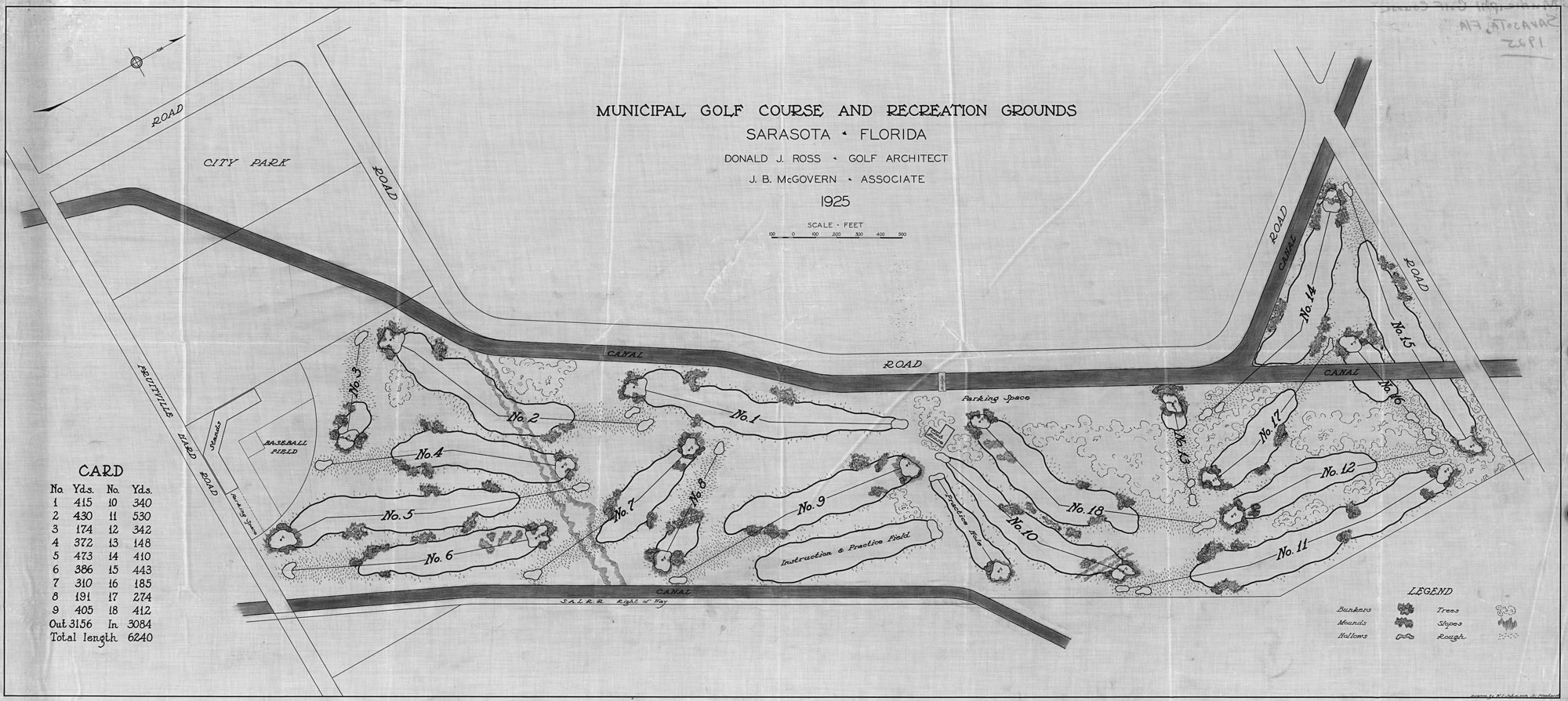
The Donald Ross layout of the Bobby Jones Golf Complex shows the original 18 holes that are being restored by golf course architect Richard Mandell. Image Courtesy of Tufts Archives, Givens Memorial Library, Pinehurst NC.
“The first step is getting dirt in the right spots and controlling the water and the drainage,” Mandell said. “Then it’s the shaping of the mounds and the construction of the drains.”
Once rough grading, irrigation and drainage are installed, Mandell and the construction crews turn their attention to arguably the most importing part of this or any golf course, the greens. Here, the Ross sketches are somewhat light on the details.
His notes for the No.1 green, for example, read: “Body of green raised with 2’ to 2 1/2’ fall from left rear corner to right front corner. Large undulating mound graded very easily on all sides.”

Hole No. 1 layout by Donald Ross. Image Courtesy of Tufts Archives, Givens Memorial Library, Pinehurst NC.
For the par-3 No. 13: “Built-up 3’ at front and 5’ at rear – slight terrace effect. Terrace at left corner 6” below body of green. Terrace effect across front, raise the sides and rear having a slight undulating effect. Long slopes on all sides. Sand pockets 1, 2, 3 on left & right front corner and at rear at edge of canal.”
Mandell mirrored the green shapes and adapted the elevation changes and desired green speeds to the modern game for the recreational golfer. Undulating greens, he said, need not be lightning fast to be fun.
“I will review the slopes every 10 feet both vertically and horizontally to make sure that everything drains properly and they are no pockets and to make sure there are pinnable areas (flat areas where holes can be cut) slope-wise, and make sure there is variety in those slopes,” he said.
Bobby Jones is Mandell’s 11th Donald Ross restoration. He takes personally the task of preserving the legacy of one of the world’s most renowned golf course architects.
“A lot of people aren't aware of Ross, so this is an opportunity to show people why people like me consider him one of the all-time greats,” he said. “I feel almost like I'm a project manager for Ross in this case because I'm trying to implement all the information that we have. Right we only have 26 aerials, which are not that informative, other than it tells us how few trees were out here originally.”

Hundreds of trees planted since the Bobby Jones Golf Complex first opened have been removed, but hundreds of original live oaks and others remain. Photograph by Andrew Warfield
Community benefit
As crews have been removing soil from the nature park area for use at the golf course, they’ve been shaping the wetland as they go.
In addition to drainage from the golf course, the wetland will serve as a natural water purifier as it gradually filters stormwater runoff entering the property from 17th Street and surrounding neighborhoods before it exits at Fruitville Road.
“Within the park, we've created this wetland, and that was always the plan whether it was going to be golf or a park,” Mandell said. “We diverted one of the canals so that we can get the driving range somewhat to the clubhouse, but it also enabled us to divert that water into a pretty expansive wetland. This is where this is a community project in that everyone who's not even a golfer benefits in the sense that his site is a detention for stormwater. Once it comes through the canals and it goes through the wetland and it gets filtered, when it leaves down on Fruitville it's much cleaner. And when it gets to its final destination, Bobby Jones has done its part in cleaning up that water.
“The purpose of a floodplain is to hold water, and it's still going to be that way. The whole front nine was always lower than floodplain, so it’s no surprise as to why it was always wet. Now we're trying to fix that while also providing our service to the city.”
Once areas of the golf course are completed, the fairways, rough, green and green complexes will be sprigged. The grow-in requires six to eight weeks before the course is playable. Areas that can be will be planted this fall, the remainder in the spring. The course will open with a temporary clubhouse and the time frame for a permanent facility remains to be determined.
Bobby Jones Golf Club expects spring 2023 reopening
July 24, 2022
Sarasota Observer
By Andrew Warfield
With site work stretching into the rainy season, planting at the Bobby Jones Golf Club will stretch into fall and likely into early next spring.
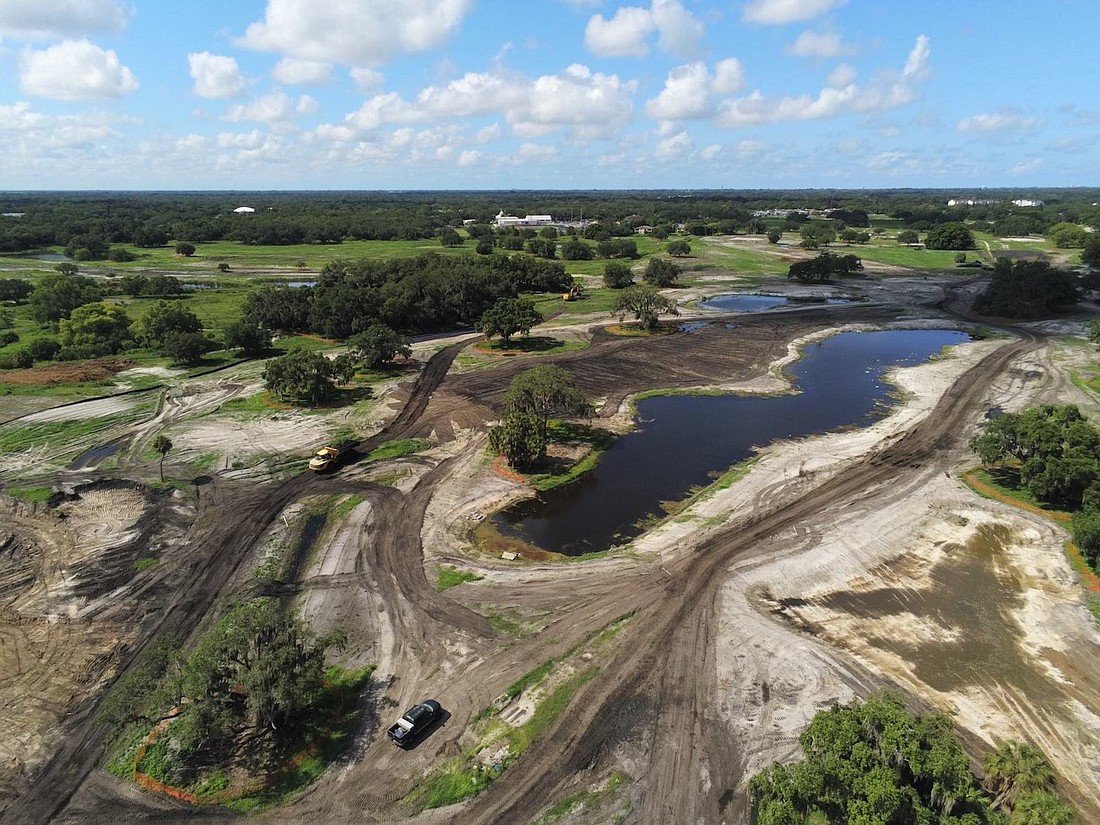
Golfers who were planning to play the rejuvenated Bobby Jones Golf Course this fall are going to miss their tee time. That’s because the schedule of a fall opening of the nearly century-old city-owned property turned out to be a little too ambitious.
The city of Sarasota has rescheduled opening of the course until late spring as delays in getting the project started, resulting in more delays caused by weather, have slowed the progress of restoring the property to its original Donald Ross 18-hole layout.
“The schedule for construction was very aggressive,” said Richard Mandell, whose Pinehurst, North Carolina-based golf course architecture firm is designing the $12.5 million rebuild. “We had almost zero days that we could have sacrificed to the weather in this process.”
Viewed from Fruitville Road, where four parallel holes will play, no real progress is apparent. But along Circus Boulevard and 17th Street, earth movers can be viewed reshaping fairways and returning the Donald Ross-designed greens to their original specs. Because irrigation is being replaced from the water source outward, the holes along Fruitville will be among the last ones graded.
“The irrigation was approximately 45 years old,” said Sarasota Parks and Recreation General Manager Sue Martin, who oversaw operations of the 45-hole Bobby Jones Golf Complex for 14 years prior to its closing two years ago. “We couldn’t get parts for it anymore due to its age.”
Natural irrigation was a problem as well. Predating modern water management techniques, many of the holes were often saturated as the course was built, and over the years expanded, below flood level. Much of the work to date has been mitigation of the persistent swampiness.
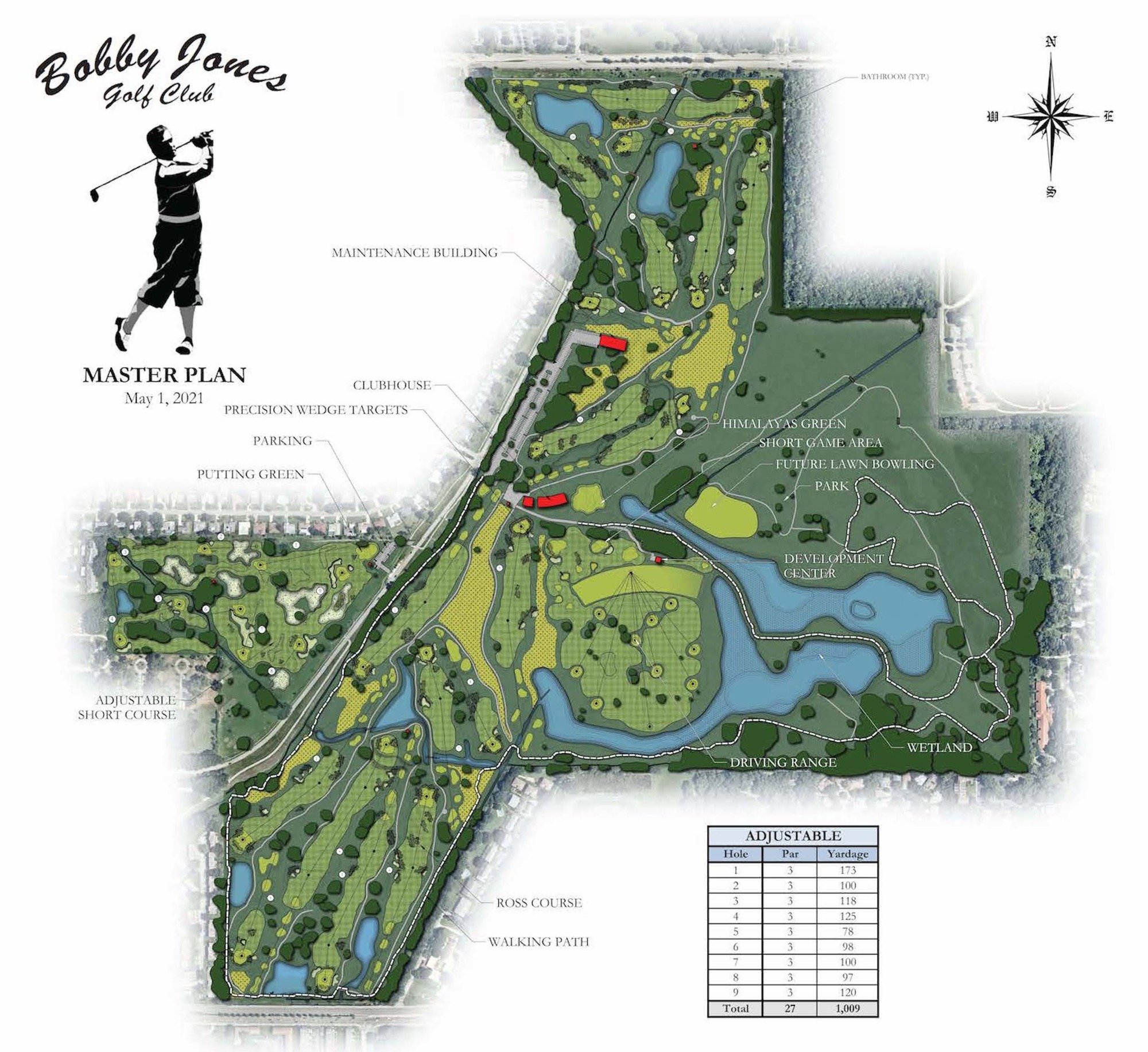
“The golf course never drained properly,” said Mandell. “It was always wet and that was the big downfall. It was built without any regard to floodplain elevations, so it’s no surprise why it was always wet. That's OK because back in the 1920s, and even into the ‘50s and ‘60s, nobody knew about any of that. While we are building fairways we have been creating more conveyances for water so that when we do get this course restored, it’s not going to be wet.”

Although the course is being restored to its original 18-hole layout — the remainder of the property will host a new driving range, a nine-hole “adjustable” par-3 course, public park and wetlands — regular players may notice the contouring changes to facilitate improved drainage. Likewise, the greens are being reshaped to the original Donald Ross putting surfaces. Mandell’s green shaper arrived on site last Monday.
“The shapes were gone. The Donald Ross greens were gone. Who knows for how long? Since the '50s or '60s, certainly since the 1987 renovation,” Mandell said.
Management now on site
To the untrained eye, opening Bobby Jones by next spring — or even next summer — might appear unlikely. Large mounds of dirt are piled in the area that was once a parking lot, alongside bundles of pipes and other pieces of irrigation equipment. The old granite tee markers for the American and British courses lie unceremoniously together in a row like so many tombstones, a macabre reminder of better days gone by.
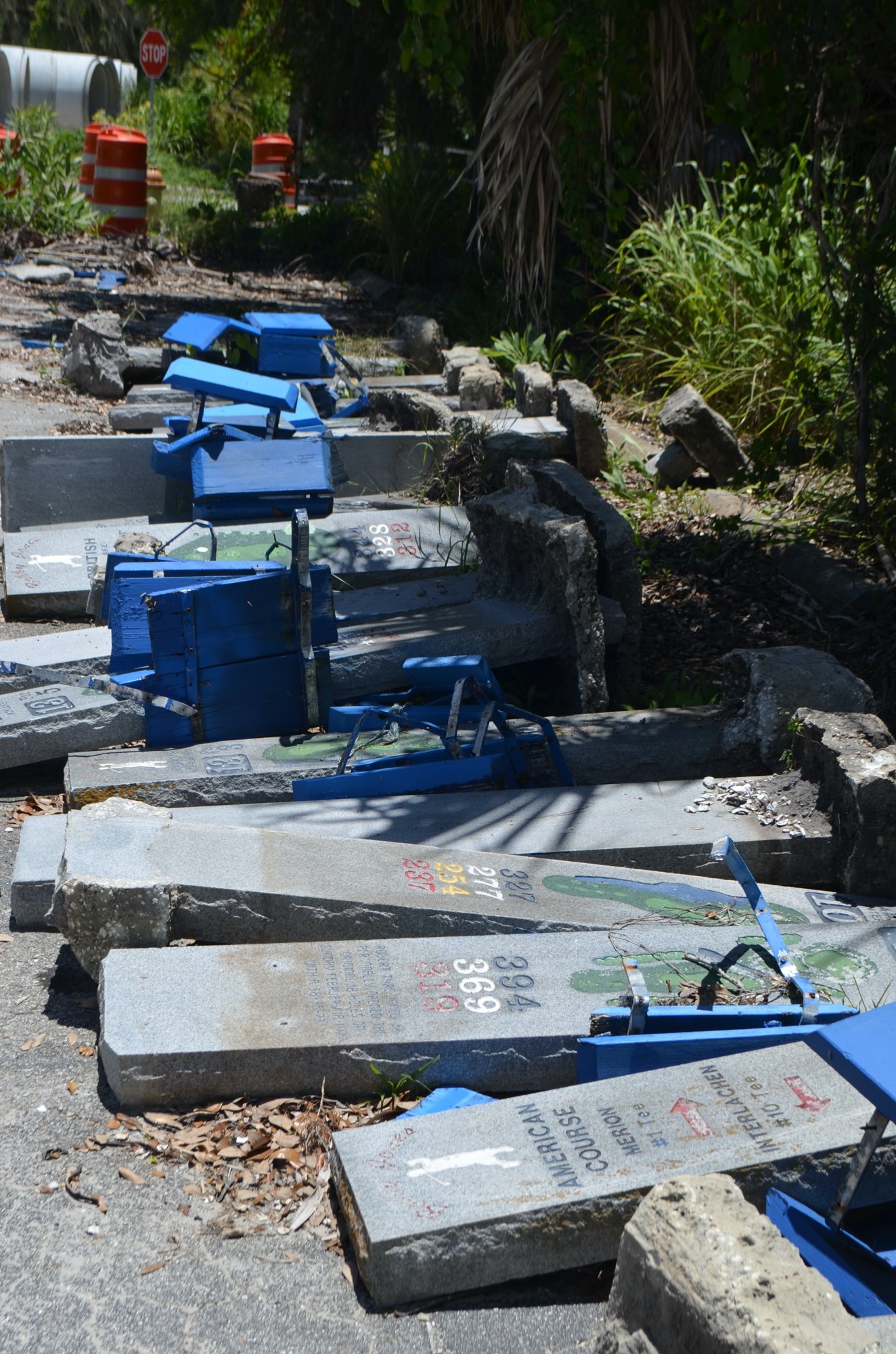
The old granite tee markers from the American and British courses at Bobby Jones Golf Complex have been removed and lie in the parking area. Photograph by Andrew Warfield.
Just beyond the overgrown main entrance to the golf complex off Circus Boulevard, massive pieces of concrete culvert await installation. Dump trucks filled with material scurry back and forth, arriving from far reaches of the property to a staging area near where the clubhouse once stood.
Large culverts await installation as part of the drainage improvements at the Bobby Jones Golf Complex. Photograph by Andrew Warfield.
The roughing in is progressing well, Mandell said, but the late start has pitted the site work against the rainy season, the almost daily afternoon thunderstorms regularly pushing back against progress.
“It’s a little challenging right now because we're having a lot of rain,” Martin said. “Those afternoon rains are kind of setting us back. It's making it wet and muddy out there and you can't move big equipment. They’re trying to get as much done as possible before before the rain.”
Also running behind schedule is the design work for a temporary clubhouse and other temporary buildings — in the absence of the planned permanent facilities — required to operate a golf course. Last week, the City Commission approved a management contract with Indigo Sports, which manages multiple public golf courses and private country clubs throughout the state. Acquired in 2021 by Arizona-based Troon, the combined companies manage 585-plus locations around the world, comprising more than 630 18-hole equivalent golf courses.
The city will rely on Indigo’s expertise to guide the golf course to completion and eventual opening, then manage operations going forward. The city will pay Indigo $123,697 per year over the five-year agreement with an option for two, two-year extensions.
Mandell and contractor Q.G.S. Development will coordinate with Indigo on the timing of planting the greens, fairways and rough as the rebuild continues.
Fast grass
Once the infrastructure is in place, the grassing is the swiftest stage of the golf course reconstruction. Timing, however, is everything. The warm weather grasses of the renewed Bobby Jones Golf Course will be thwarted once the Southwest Florida version of winter weather sets in.
It’s likely not all of the fairways and greens will be ready for planting this year.
“They will probably attempt to get as much planted as they can while we're still in the growing season, and then it's going slow down or go dormant during the winter,” Martin said. “I can't say that they'll have nine holes planted. …. Once you get that first frost, you're done.”
When planting does begin, the grass will be sprigged, not seeded, for faster growth. Greens will be TifEagle Bermuda; the green collars TifGrand Bermuda; and fairways, tee boxes and rough Celebration Bermuda. Depending on the weather, Mandell said all grasses can be ready for play in 8-12 weeks.
That doesn’t mean it’s ideal.
“You need eight weeks of optimal weather, so June to July is the ideal time to plant,” Mandell said. “Eight weeks is sufficient enough, but the later you get, the more those eight weeks don't necessarily hold up because of the weather. Since we're not opening until late spring or early summer, that doesn't matter. We don't want to just say since we're not opening until then let's just not bother now. We're going forward full steam and we're going to grass as much as we possibly can as late as Indigo feels comfortable.
“We'd like to establish as much as possible as soon as possible so we're not starting at zero in April.”

Work underway on Bobby Jones restoration
March 4, 2022
Sarasota Observer
By Eric Garwood
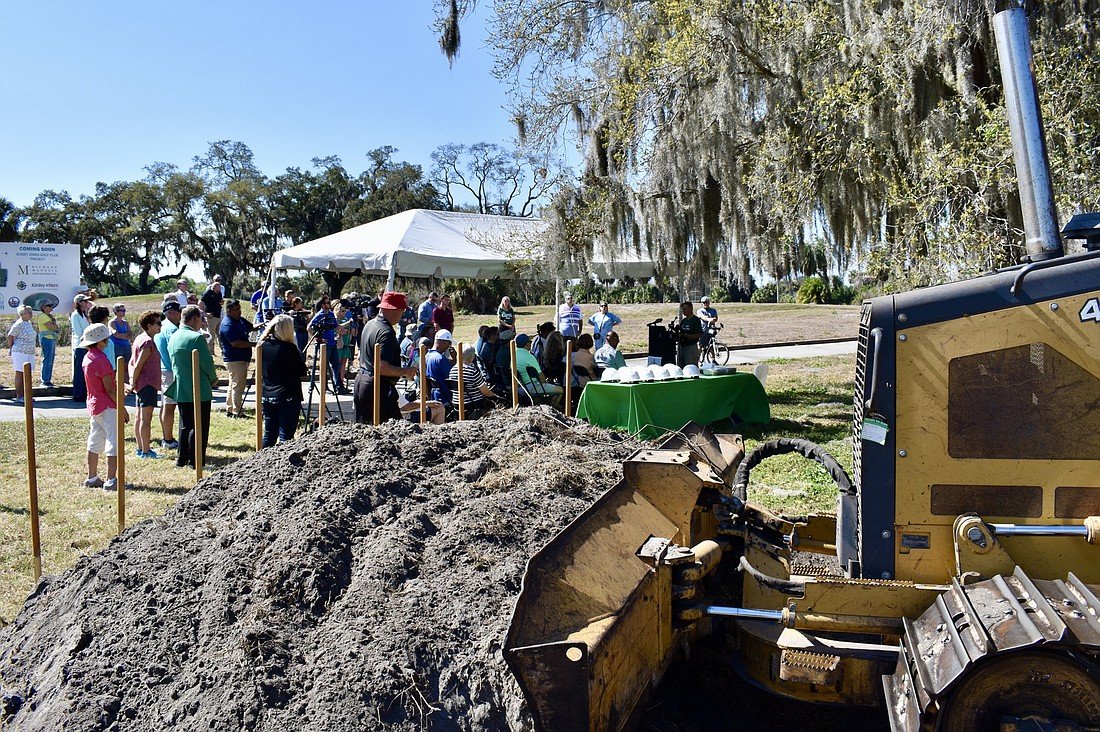
Sarasota city leaders celebrate with the community the legacy of its nearly 100-year-old golf course and its future.
On a day perfectly suited to tee up a Titleist and play 18 holes, city leaders and community stakeholders talked about doing just that, and more, on Friday morning at Bobby Jones Golf Club.
That first drive down the fairway and that first stroll amid a new wetland will have to wait — probably until November — as the municipal course undergoes a renovation into a layout that would look familiar to a golf legend from a bygone era and the equally legendary designer of the nearly 100-year-old original course.
But when it’s completed, the facility will appeal alike to golf enthusiasts and people unfamiliar with woods and irons, birdies and bogeys.
The groundbreaking ceremony under a sprawling oak and adjacent to two of the closed facility’s fairways attracted dozens of residents Friday along with the speakers panel to kick off what will become a new 18-hole golf course, a new nine-hole short course and a natural preserve, set aside as green space in perpetuity.
“I remember my first time riding my bike through Bobby Jones, and I remember thinking two things: first, ‘I’m really out of shape,’ and two, ‘Wow, this is amazing green space,’” Mayor Erik Arroyo told the assembled crowd. “This is amazing for our kids and our kids’ kids. This is truly a legacy property.”
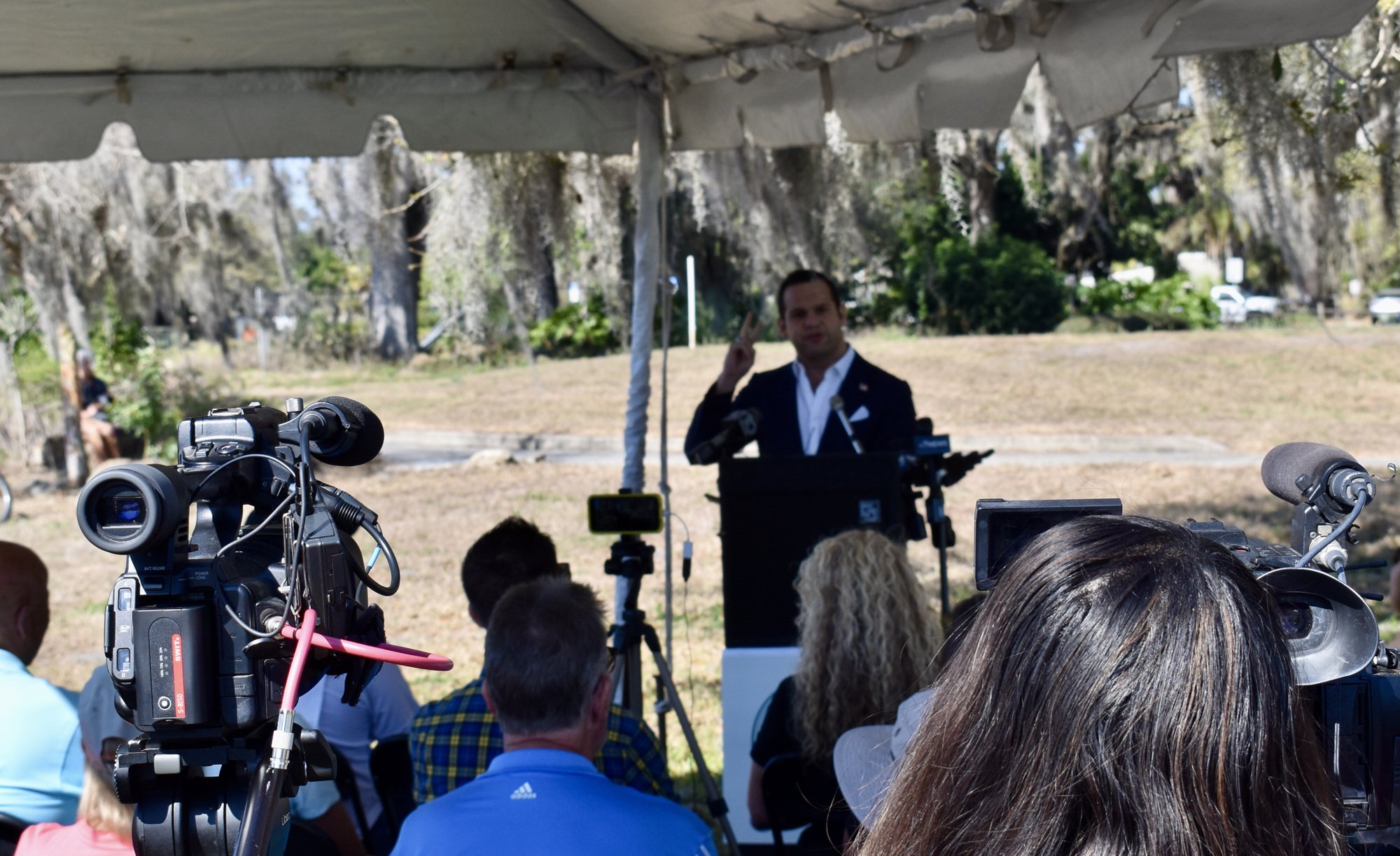
Mayor Erik Arroyo speaks to the assembled crowd.
City commissioners in January approved sweeping plans for the municipal golf facility on Circus Boulevard. In addition to approving a plan to reset the design of the course to a path drawn by famed golf architect Donald Ross in 1924, city leaders also approved an agreement with the Conservation Foundation of the Gulf Coast to hold the 261 acres as a conservation easement forever.
Initially, the city’s $20 million bond will finance the golf course construction and the framework of a wetland. The foundation will raise money to transform that natural landscape into a nature park.
Storm runoff from as far away as the University Town Square area will drain and filter through the wetlands, improving downstream water quality in Phillippi Creek and Sarasota Bay.
The history of Bobby Jones — named for perhaps the greatest amateur golfer to ever play the game — was on full display as city commissioners and other speakers recalled some of the course’s finest moment.
Baseball legend Babe Ruth played there.
Jones himself, a superstar of the sport in 1927, shot 73 in an exhibition round that year to dedicate it.
It was one of the first integrated courses in the U.S. In 1959, four Black caddies asked then-City Manager Ken Thompson permission to play on the all-white course. He granted them permission.
Golf course architect Richard Mandel said the planned park and the restored golf course will complement each other and helping to grow the sport one visitor at a time.

Richard Mandell speaking about himself.
“Golf is a great game, and municipal golf is what brings generations together,” he said. “The park concept is a grow the game initiative. If Mom playing and Dad is out there with the kids on the playground, that park is a window into golf for people who don’t know about golf.
“My plan is that people will see the golf course from the park and say ‘you know, I want to try that game.’”
Bobby Jones’ two regulation courses and its nine hole course have been closed since 2020 but reopened as a nature park later that year, attracting cyclists, runners, walkers and nature lovers. Since early February, the property has been closed again as initial construction work began.
The city’s initial timeline includes the reopening of the 18-hole golf course in November, with the nine-hole course in early 2023. Plans for a clubhouse are in progress.
And although the course’s golfers look forward to trying out the new design in the fall, City Manager Marlon Brown said he also looked forward to a milestone celebration three years into the future.
“I invite you back in 2025 when we celebrate the centennial of Bobby Jones” he said. “What an awesome day that’s going be when we celebrate 100 years of Bobby Jones. A true ‘Central Park’ for the city of Sarasota.”

This City Invitation advertises a “renovation”…that is NOT what the City Commission directed and is NOT what we support.
We advocate for the RESTORATION of the HISTORIC 1925 DONALD ROSS Course at BOBBY JONES Golf Club, in accordance with the ORIGINAL 1925 Donald Ross Plans, Field Notes and Specifications, and in accordance with the Secretary of the Interior’s RESTORATION Standards for the Treatment of Historic Properties.
Sarasota breaks ground on Bobby Jones Golf Club restoration project
March 4, 2022
News Channel 8
By Allyson Henning
SARASOTA, Fla. (WFLA) – Bobby Jones Golf Club has been a part of Sarasota’s history for nearly a century. It’s struggled to bring in profit over the last decade, but now plans to restore the property are underway.
The city broke ground on a multi-million dollar restoration project Friday, less than two months after commissioners voted to protect the 261-acre property from development in perpetuity.
The 45-hole golf club will be downsized to 27-holes, including the original Donald Ross design. The remainder of the property will open to the public as a nature park for bikers, walkers, joggers, and bird watchers. Plans for a playground are also in the works.
Golf course architect Richard Mandell hopes the new, mixed-use property will help grow the game of golf.
“That park is a window into golf for people that don’t know about golf. My plan, not my hope, but my plan is that people will see the golf course from the park and say you know what, I wanna try that game,” said Mandell.
In addition to the nature park and golf course restoration, the city is investing in water quality improvements at the property which serves as a watershed.
“One of the most functional aspects about this project is the water quality improvement. This is a watershed that filters water from about 5000 acres of Sarasota and Sarasota County through this property about 2.6 billion gallons of water makes its way through this property and into Philippi Creek and into Sarasota Bay. As a coastal community, it is just so important that we make sure only the cleanest water enters our bays and estuaries,” said Commissioner Hagen Brody.
As for management at the municipal golf course, things will look different from the past.
“We are bringing in a private management company which means that we will no longer be losing so much money. We will be entering into a big agreement with a private company that does this for municipalities and we will be splitting the revenues,” said Mayor Erik Arroyo. “It is going to have a very minimal impact on the taxpayers and we are finding that the support is overwhelming at the state and federal level and we will find out that the burden on taxpayers in terms of this bond will also be very very minimal,” he continued.
Residents are hopeful the changes will help the golf course see success.
“With the management company, the city still owns the property and will still have their hands in terms of management and what happens at the course, but you will have a professional company who is very good at marketing and I think that is an important part of this whole thing as we move forward,” said resident Norm Dumaine.
Dumaine and other neighbors tell 8 On Your Side they’re excited the large property will have something for everyone.
“I think in the long run, the citizens are going to find it a much more useful property than they did before,” he continued.
In addition to the Donald Ross course restoration, a new 9-hole adjustable course will be constructed as well as a player development center, large driving range, short-game practice area and a clubhouse featuring a restaurant.
The restored Donald Ross course is expected to open to the public for play as soon as November. The new 9-hole adjustable course is projected to be finished in January 2023, according to the city.
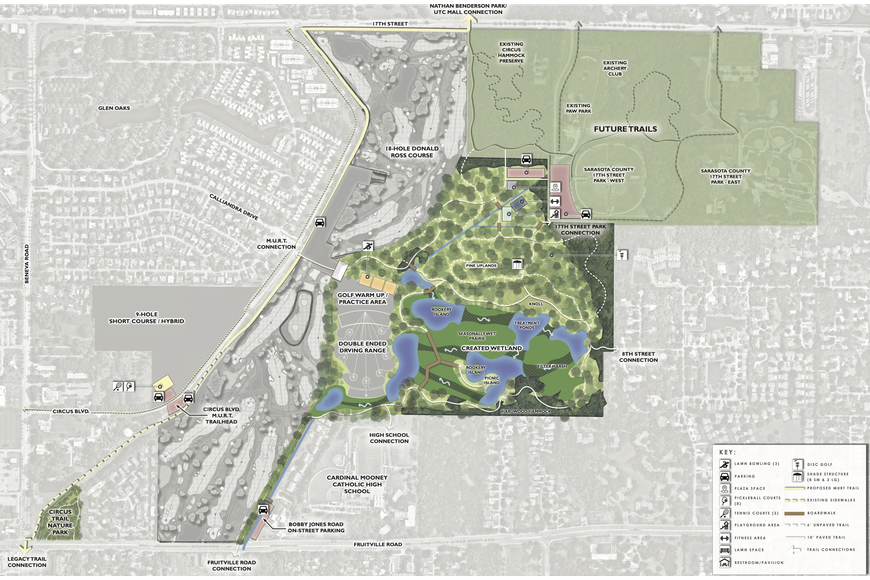
The City has selected a 27-hole design for renovating Bobby Jones, but officials have not yet decided whether to partner with a private management company on operating the facility. File Image Courtesy Sarasota Observer.
Plans to Renovate Bobby Jones Golf Complex Get the Green Light
After years of neglect and delays, the Sarasota City Commission approved plans to move forward with renovations and conservation of the 300-acre property.
January 11, 2022
Sarasota Magazine
By Kim Doleatto
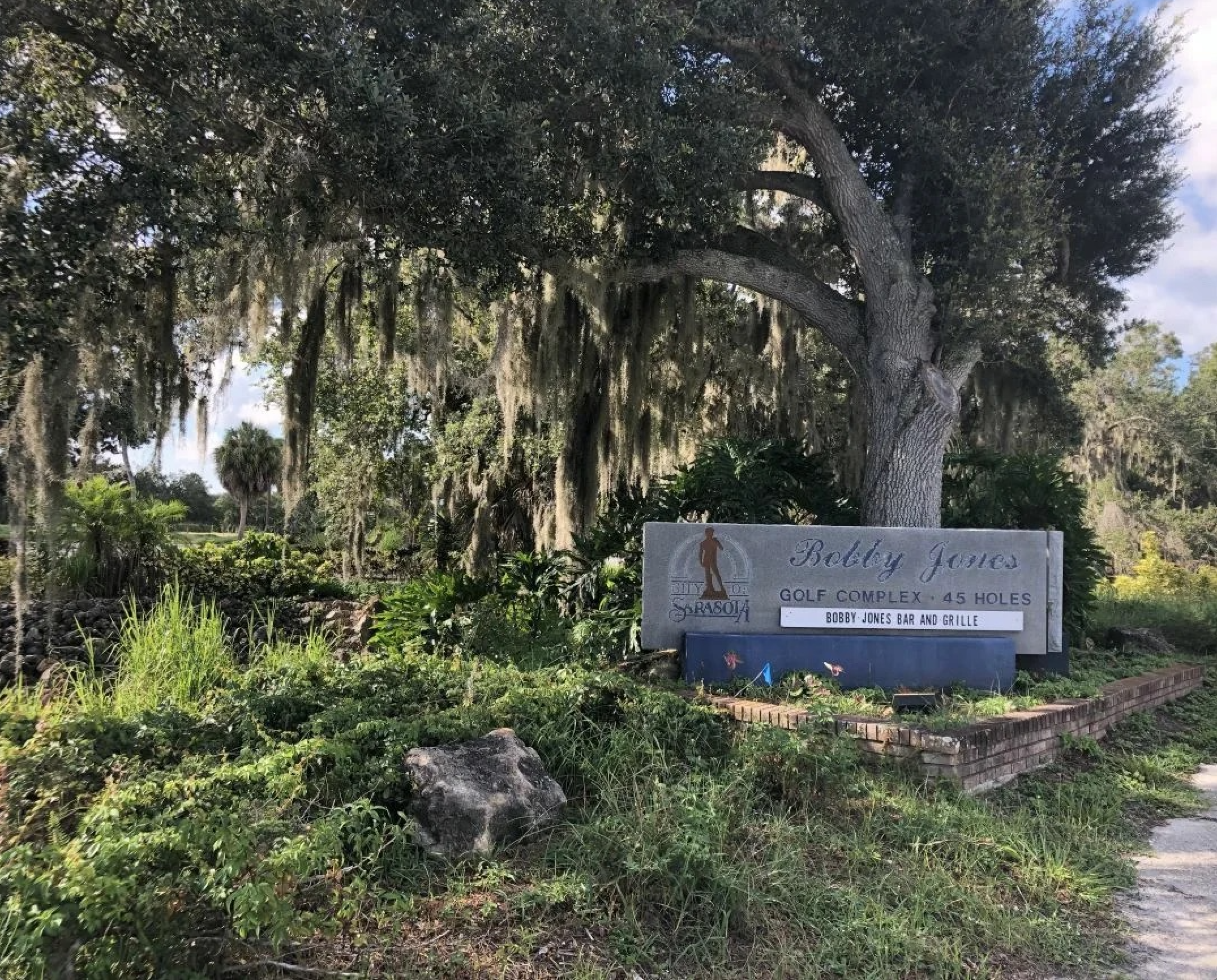
Sarasota’s Bobby Jones Golf Complex. Photograph by Kim Doleatto.
In a 2018 story, we asked, “What’s Going on With the Bobby Jones Golf Complex?” Nearly four years later, we have a bit more detail. The Sarasota City Commission on Monday approved several proposals to protect 261 acres of natural land on the property and to build a series of new golf holes.
Since maintenance of the almost-100-year-old course had been put off for decades, everything from tee boxes to bunker sand to the irrigation system was in bad shape. City commissioners voted unanimously Monday to move forward with an agreement with Q.G.S. Development, Inc. to build 18 regulation golf holes, nine short golf holes and a driving range, for a little more than $12.5 million. Construction could start as early as February, and the first 18 holes could open in November, followed by the short course in 2023 and a new clubhouse in 2024.
To the delight of speakers who wore green shirts that said, “Conserve Bobby Jones Now,” the commission also voted unanimously to work with the Conservation Foundation of the Gulf Coast to create a conservation easement that would protect the property “in perpetuity,” as well as to strike a fundraising agreement with the foundation.
“‘Perpetuity’ is a very big word,” said Conservation Foundation president Christine Johnson. “We’ve been in negotiations with the city for almost three years. The reason we exist is to conserve land and Bobby Jones does that. We’re ready to stand shoulder to shoulder to fundraise for the park and look forward to building something that will last forever and draw tourists and residents alike.”
The historic golf course plays a vital environmental role for the region. Enormous volumes of stormwater runoff, from as far away as The Mall at University Town Center, are retained and filtered by the property before flowing into Sarasota Bay. The golf course also serves as a habitat for more than 45 species of birds and numerous other wildlife species, and the hundreds of trees on the property play a critical role in the area’s air quality.
Richard Mandel, the city’s consultant and course architect for the project, said plans for redeveloping the golf course follow a “faithful restoration” approach that relies on the original plans conceptualized by Bobby Jones, for whome the complex is named. The legendary golfer collaborated on the design of Augusta National Golf Club, founded The Masters and left an indelible mark on the sport and on Sarasota’s history when he opened the course in 1926 and dedicated it to the city a year later.
Also on Monday, city commissioners agreed to hire Jon F. Swift Construction to build a restaurant and clubhouse, which would be paid with a bond not to exceed $20 million. Other plans include a new cart barn, two starter booths, a golf development center, two on-course restrooms and a parking lot. When completed, the property will also be home to a new playground.
As Sarasota finalizes the Bobby Jones Golf Club renovation, advocates want permanent conservation
January 10, 2022
WUSF Public Media - WUSF 89.7
By Cathy Carter
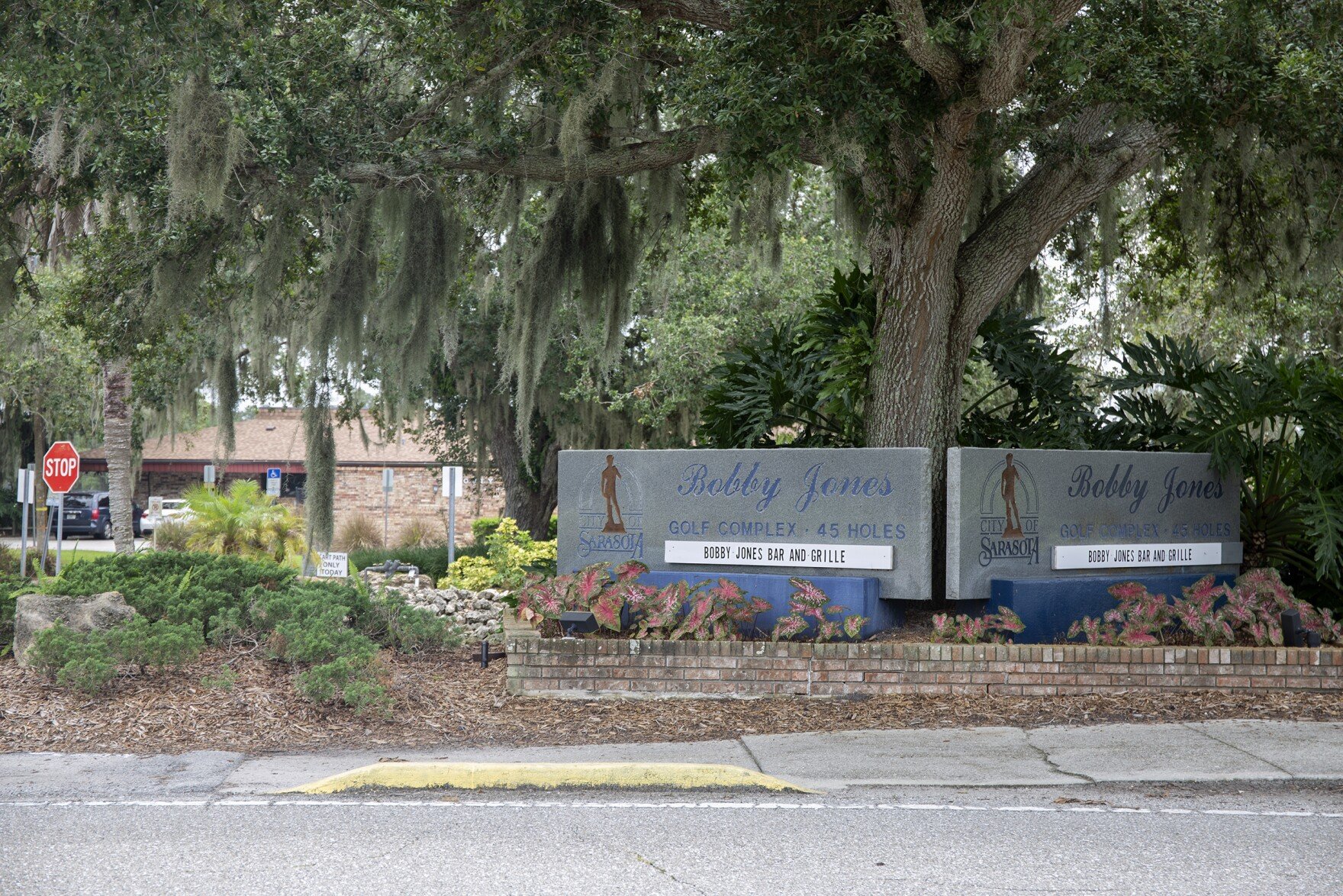
In 2020, Sarasota city commissioners voted for a Bobby Jones Golf Club design that features 27 holes of golf, including the original 1925 course. The new plan also includes nature paths and other outdoor activities. Photograph by Daylina Miller, WUSF Public Media
Nearly three years after the Sarasota City Commission first began talking about renovating Bobby Jones Golf Club, commissioners will finalize agreements for the municipal facility in a special meeting Monday.
At nearly 300 acres, Bobby Jones Golf Club is the largest green space in Sarasota. It is also home to more than 45 species of birds and other wildlife species.
When the city signs off on a newly designed downsized golf course and clubhouse Monday, they will also consider a conservation easement.
Christine Johnson, president of the Conservation Foundation of the Gulf Coast, says the organization has been working with the city to develop a plan to create a place where people can always enjoy nature.
“And the potential to make it into a park that can also store water for preventing flooding downstream,” she said. “And most importantly, clean the water of Phillipi Creek, an impaired water body which is a technical term for saying it’s not clean.”
Johnson said wetlands restoration will reduce phosphate and nitrogen pollution into Phillipi Creek, which feeds into Sarasota Bay.
The city intends to downsize the golf course and create new public park facilities.
Included in the park amenities would be things such as additional nature trails, a playground, disc golf, tennis, and lawn bowling, distributed appropriately across the proper.
“Now they still get to create a new clubhouse,” said Johnson. “They still get to create pathways and a golf course, but they also are saying we're are not going to develop any more than this, committing to ensure that they manage the property for environmental reasons in perpetuity.”
Johnson said if city commissioners approve the plan, restoration of the property's wetlands would begin almost immediately.
The City Commission will hold a special meeting dedicated to Bobby Jones at beginning at 9 a.m. on Monday.
CITY SETS SPECIAL MEETING ON BOBBY JONES
THURSDAY, OCTOBER 21, 2021
SARASOTA OBSERVER
SARASOTA
AHEAD OF PLANNED RENOVATIONS, THE CITY HAS NARROWED ITS SEARCH FOR S CONTRACTOR OR PRIVATE PARTNER TO TWO VENDORS, THOUGH NEGOTIATIONS ARE STILL ONGOING.
BY DAVID CONWAY, DEPUTY MANAGING EDITOR
The city could be in a position to finalize plans for the future of Bobby Jones Golf Club next month, nearly three years after the City Commission first selected a design for renovating the municipal facility.
On Monday, the commission voted unanimously to hold a special meeting Nov. 29 to discuss the options still under consideration pertaining to the renovation project. The board will review a committee-endorsed proposal from a private company interested in taking over management of the property from the city, though the commission has not yet committed to finalizing such a partnership.
In March, the commission voted 3-2 to put out an invitation to negotiate targeted at private operators for the course. Although commissioners Jen Ahearn-Koch and Liz Alpert argued the city should continue to operate the course itself, a majority of the commission said it wanted to keep its options open. Commissioners who supported the invitation to negotiate suggested a private management company could reduce the city's expenditures on the course or even contribute to the cost of the renovations, previously estimated at $12 million.
The city is still in the process of negotiating with two finalists who responded to the invitation to negotiate: Paradigm Golf Management, based in San Clemente, California, and Antares Golf LLC, based in Reston, Virginia. City spokesperson Jason Bartolone said staff intended to have a proposed agreement finalized in time for the Nov. 29 meeting.
Regardless of the outcome of those negotiations, the city could still opt against a partnership with a private operator, instead selecting a contractor to carry out the commission’s selected design for renovating the 293-acre property. The city intends to downsize the golf course from 45 to 27 holes, using 130 acres of the site to create new public park facilities. The city’s favored plan would leave an 18-hole regulation course and a nine-hole short course.
At the Nov. 29 meeting, the city will also discuss financing of the project and the prospect of creating a conservation easement for the Bobby Jones property in partnership with the Conservation Foundation of the Gulf Coast.
If approved, the conservation easement would commit the city to maintain the site as public open space in perpetuity, foreclosing the possibility of developing the land as anything other than golf, recreation or natural lands.
CITY OF SARASOTA NARROWS SEARCH FOR BOBBY JONES TO 2 MANAGEMENT COMPANIES
August 21, 2021
GOLF COAST MAGAZINE
MARK CARDON
The City of Sarasota recently held a committee meeting to discuss proposals received from management companies for Bobby Jones Golf Club. The City narrowed it down to two vendors out of six to invite back for an interview: Indigo Golf Partners and Paradigm Golf Group. Interviews will be held Aug. 30 and are not open to the public.
Indigo Golf Partners is widely respected for its success in full-service management of and consultation to more than 160 public, semi-private and private facilities, communities and resorts in 29 states. Their client base spans private ownership, public agencies, homeowners’ associations, universities and destination resorts with nine-hole layouts to 72-hole facilities. Many contain driving ranges, short-game practice areas and instruction centers; small- to large-scale food-and-beverage and catering operations; tennis courts, fitness centers, pools and other amenities.
Headquartered in Reston, Virginia with regional offices and teams in California, Delaware, Florida, Hawaii, Illinois, New York and Ohio, Indigo Golf Partners’ presence is hands-on. They efficiently manage golf facilities with effective programming and systems alongside custom touches and personalities unique to each operation. This structure and operating philosophy – combined with relatability and complete transparency – earn them frequent praise from clients for outworking other companies while building longstanding, trusted relationships.
According to their web site, Paradigm, based in San Clemente, Calif., is different. Its approach is by no means “revolutionary” but is unique to the golf business. Paradigm is prepared to enter into a short-term training, consulting or a simplified management arrangement whereby compensation to the manager is agreed upon a lower monthly fee combined with a performance-based incentive. In other words, a good portion of the management fee is directly related to revenue and profit results, providing the golf course owner with the option to terminate golf club management services in exchange for only reasonable notice instead of the requirement to pay exit fees as a reward for failure to perform – imagine that!
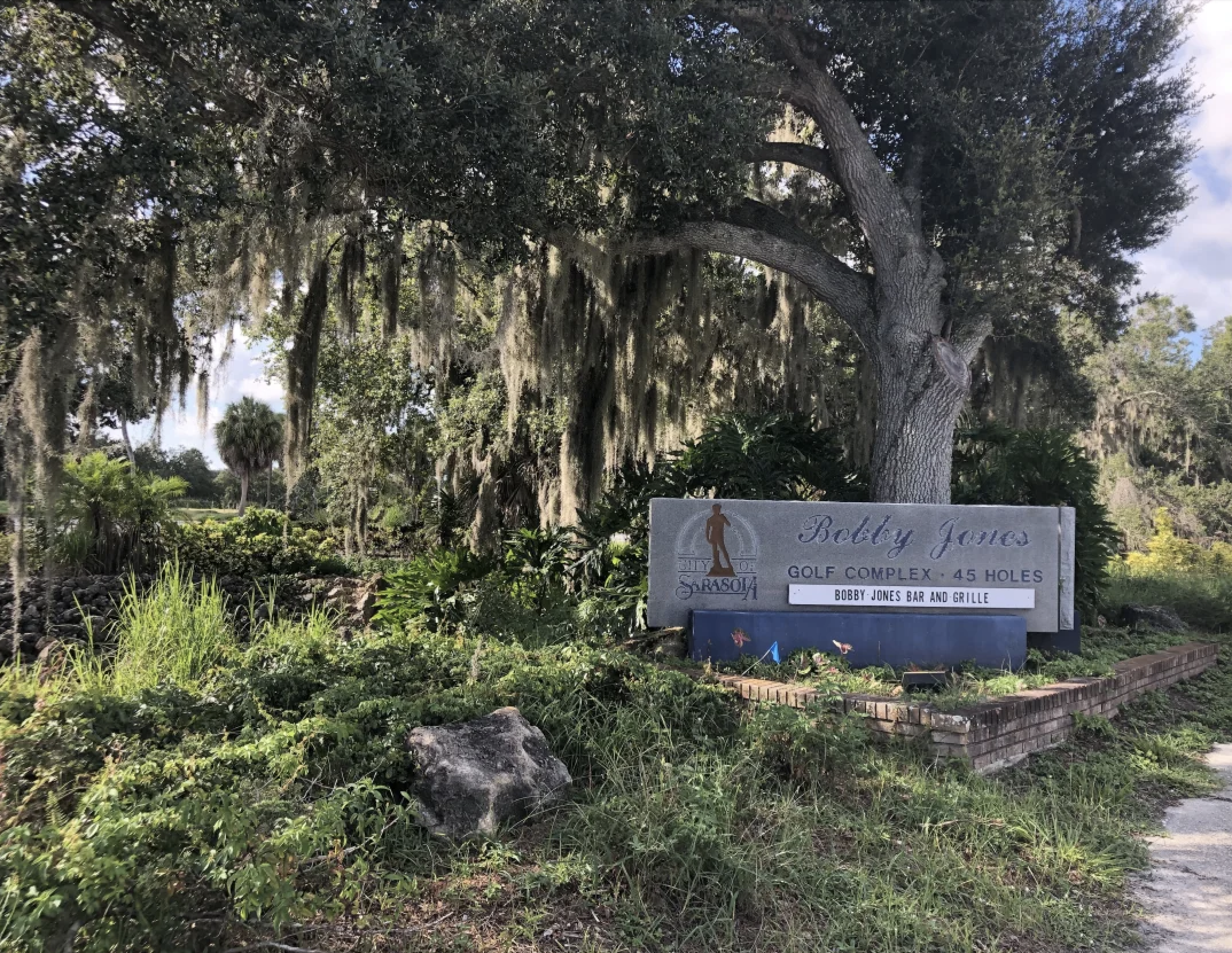
The nature trails at Sarasota’s Bobby Jones Golf Club are open to the public until extensive renovations start this fall.
IMAGE: KIM DOLEATTO
The Bobby Jones Nature Trails Have Reopened
July 22, 2021
The paths are again open to the public now that demolition to make way for future renovations has been completed.
By Kim Doleatto
The seven miles of nature trails at Bobby Jones Golf Club near Beneva and Fruitville roads are now open to the public from 7 a.m. to 5 p.m. daily. Enjoy walking, running, bicycling, photography and observing the wildlife–but golfing is on hold. No fishing, motorized vehicles, picnicking or sports games are allowed, either.
The course was closed for six weeks while demolition crews finished removing structures in preparation for its long-awaited renovation.
Later this year, it will close again for updates. No exact date has been set, but, “We’re aiming for October of 2021,” says Sue Martin, general manager of parks and recreation for the club, which is owned by the City of Sarasota. The city is soliciting interested parties to negotiate a proposal for renovating the property and managing future golf operations and is considering proposals and options.
Current plans include a restored 18-hole course, a nine-hole executive course and a new clubhouse, starter booth and cart barn, plus the addition of a golf development center for teaching golf. The space will also have a nature park with walking and bicycle trails, and a playground.
Martin estimates the renovations of the course, built in 1926, “could cost up to $12 million, and we’re looking for grants and different ways to fund it,” she says.
Bobby Jones clubhouse razed as program on park continues

The clubhouse at the city-owned Bobby Jones Golf Club was torn down recently. Photographs Courtesy of City of Sarasota.
June 23, 2021
SARASOTA, Fla. (WWSB)
By ABC7 Staff
It’s the end of an era.
The aging clubhouse and other building at the Bobby Jones Golf Club were razed recently, as the City of Sarasota continues with plans for the planned municipal golf course and park.
Gone is the iconic clubhouse, which housed a restaurant, bar, locker rooms, a meeting room and pro shop.
The City Commission is expected to discuss future operations and financial management of the golf course this fall.
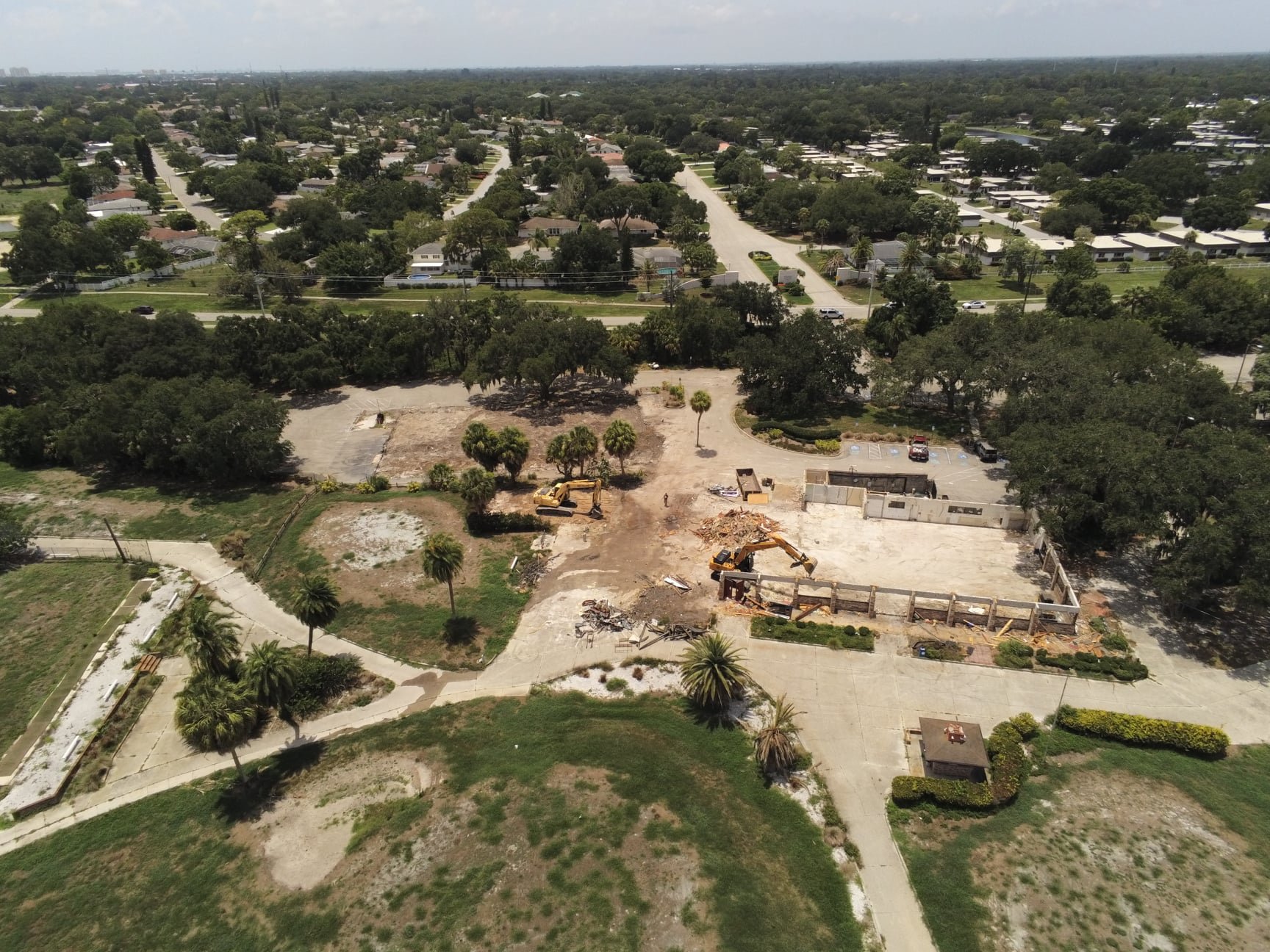
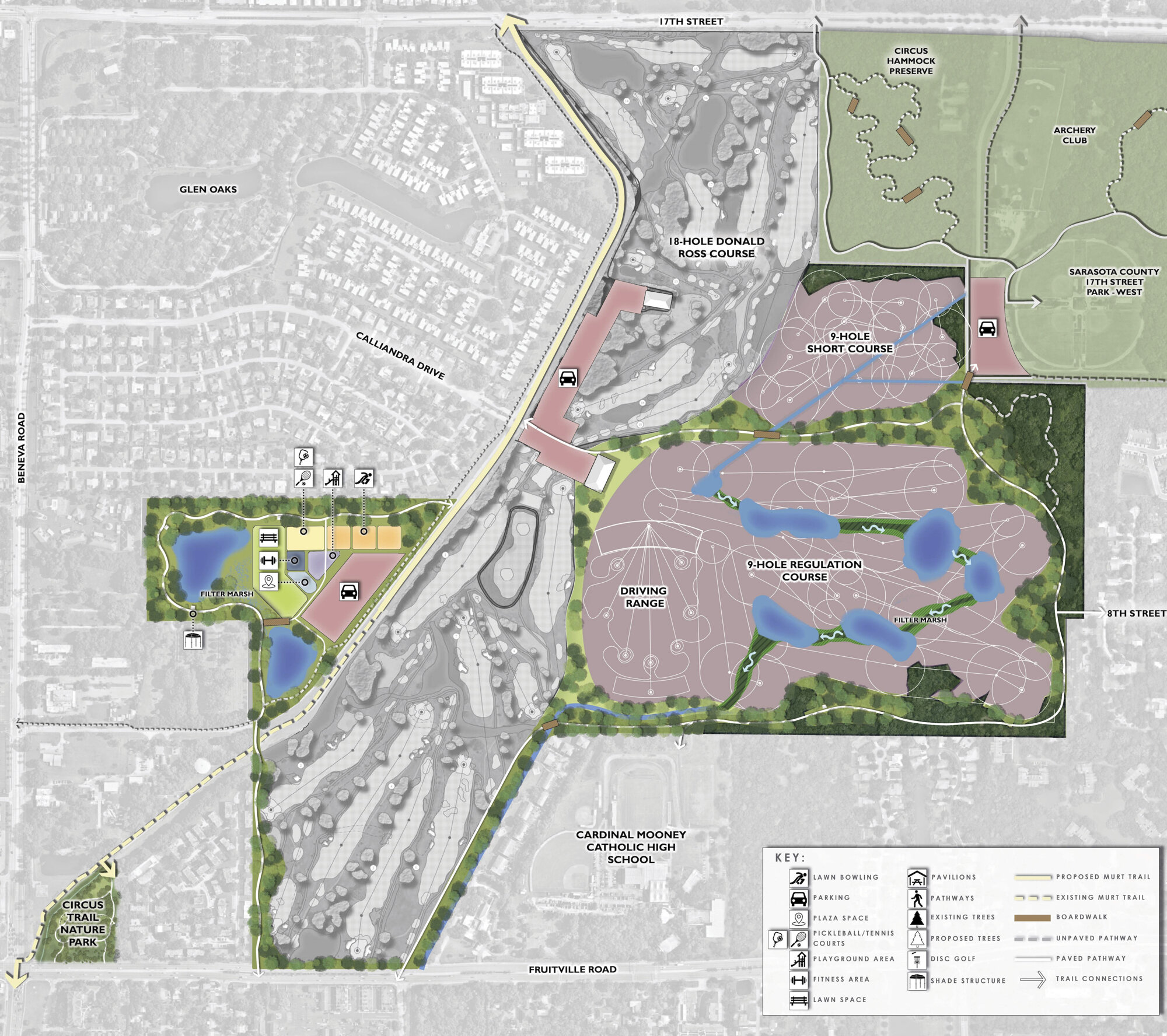
Option 1: Image courtesy City of Sarasota.
Bobby Jones plans back on the table
January 14, 2021
SARASOTA OBSERVER
By David Conway
The City Commission will hold a workshop as it considers altering a renovation project for the municipal golf course.
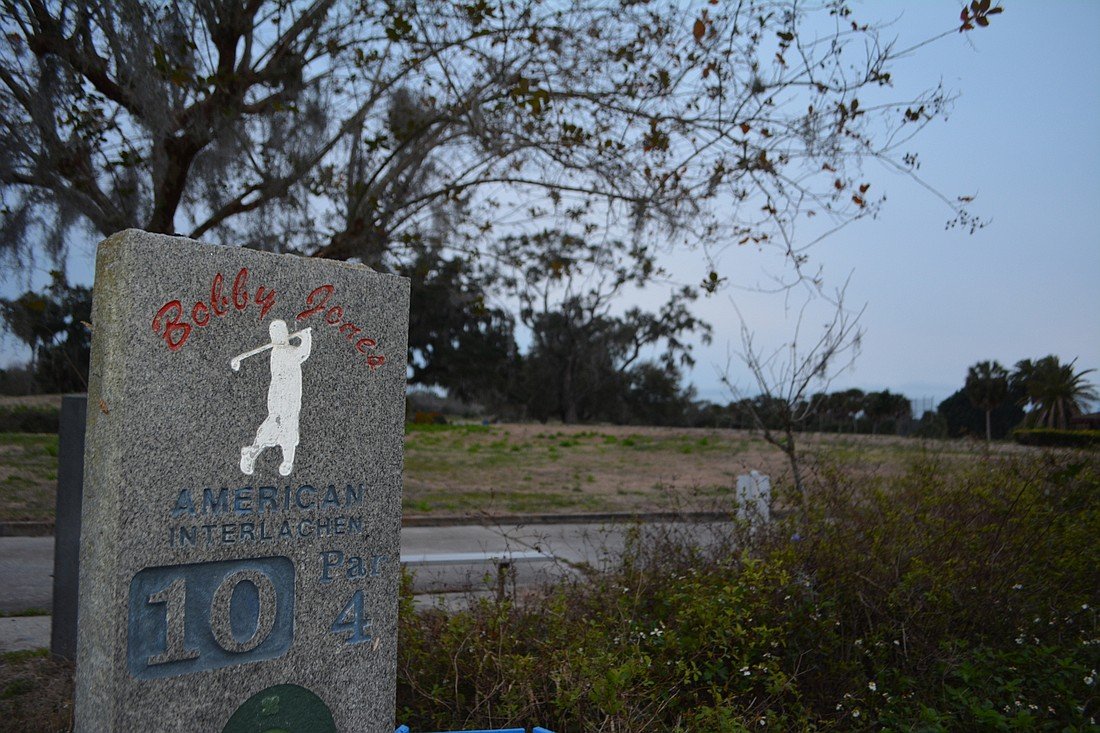
When the City Commission endorsed a plan for renovating Bobby Jones Golf Club in February 2020 — the third design concept the board selected in as many years — officials believed they were making a final decision on a project that had been discussed for more than five years.
Now, after input from a newly elected commissioner, the future of Bobby Jones appears to once again be up for debate.
Commissioner Erik Arroyo placed an item on the board’s Jan. 4 agenda seeking to revisit plans to renovate the city-owned course. In a presentation, Arroyo was critical of the process that led to the chosen design, adding that the city’s financial outlook had changed because of COVID-19.
“We need to adapt to what’s going to be happening in terms of decreased revenues,” Arroyo said.
The city’s plans for Bobby Jones would reduce the footprint of the course from 45 to 27 holes — 18 regulation and a par-3 course of nine holes. The project would include 130 acres of newly created nongolf parkland on the east side of the 293-acre site. The city estimated the cost of the golf improvements and the first phase of the park project at $21.4 million.
Arroyo argued that the city had not sufficiently considered alternatives after selecting golf architect Richard Mandell to make recommendations on renovations and produce detailed designs for the project. Arroyo noted city management had not brought proposals from private operators to lease and manage the course to the commission’s attention. He suggested the city should consider a public-private partnership and reengage with potential stakeholders who could contribute to the renovation effort.
“[This] can cost zero in taxes if we engage a professional golf facility management company that’s willing to invest, and we give them a lease,” Arroyo said.
Commissioners Jen Ahearn-Koch and Liz Alpert noted the city had spent a lengthy amount of time since 2014 researching options for Bobby Jones before settling on the selected project. Ahearn-Koch said she was opposed to the prospect of leasing the land to a private operator.
“We’ve explored that topic in the past and have voted and decided against it,” Ahearn-Koch said.
Both Ahearn-Koch and Alpert questioned whether it was too late to alter the plans for the golf course. The city agreed to pay Mandell just more than $1 million for his design work, with $100,000 still remaining for construction administration. The city is preparing to seek bids to select a contractor for the project, interim City Manager Marlon Brown said.
Commissioners Hagen Brody and Kyle Scott Battie said they were interested in getting more information from staff on the state of the project, but they stopped short of endorsing Arroyo’s call to terminate the contract with Mandell. The commission voted 4-1 to hold a workshop on the Bobby Jones renovations at a date to be determined, with Ahearn-Koch casting the dissenting vote.
That workshop will guide whether the commission ultimately pursues any changes to its plans for the city-owned golf course.
“I think we really need to focus on this issue as a commission and see if a public hearing is actually necessary,” Brody said.
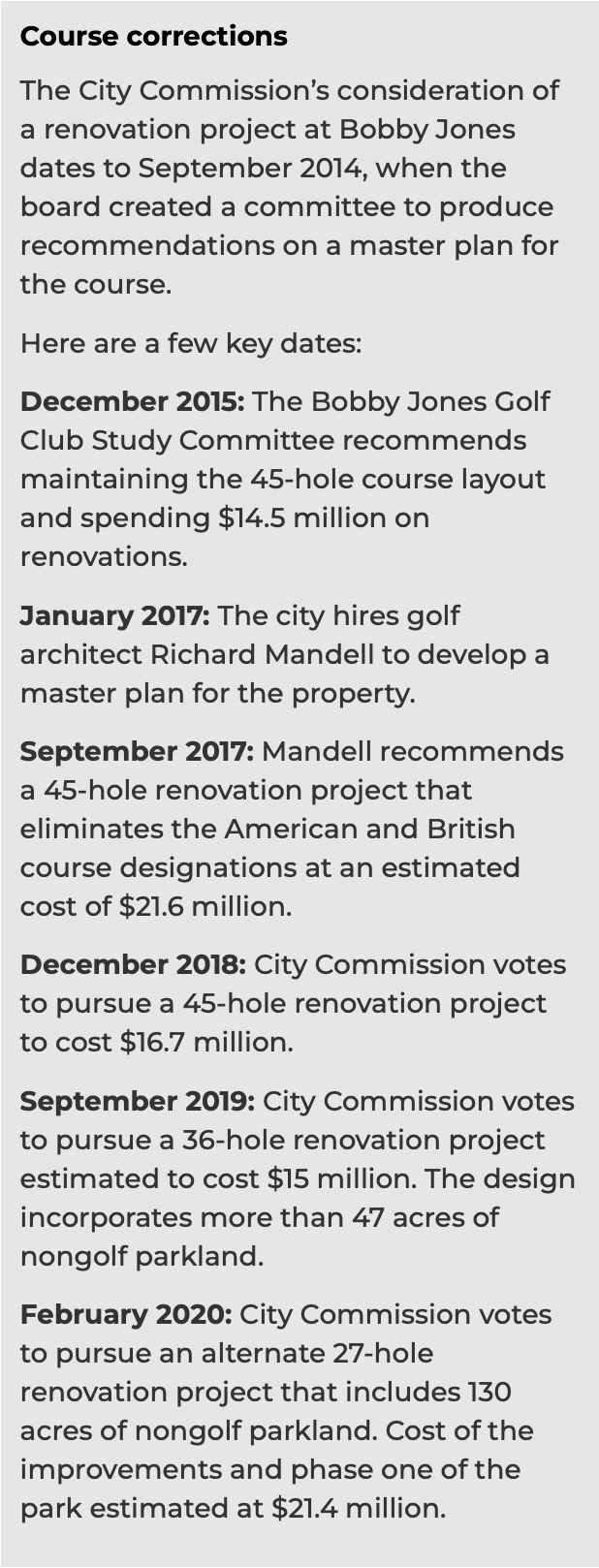
City SHARES PROPOSALS for PARK AT Bobby Jones
WEDNESDAY, NOVEMBER 27, 2019
SARASOTA OBSERVER
SARASOTA
The city is considering three options for adding parkland to the municipal golf course, one of which would require eliminating nine more holes from the property.
By David Conway, Deputy Managing Editor
As Richard Mandell spoke about two different proposed configurations of parkland at Bobby Jones Golf Club, he detailed the nuances of how the plans would affect the layout of the golf facilities on the city-owned property.
Mandell, a golf architect the city hired to design a renovation plan for Bobby Jones, was part of a Nov. 20 presentation at the course’s clubhouse. In conjunction with the effort to overhaul the golf complex — and downsize the facility to 36 holes — the city selected a team that produced three concepts for incorporating public park space into the 293-acre site.
For the first two options, Mandell highlighted key differences in the golf configuration. Although the main 18-hole, Donald Ross-designed course remained unchanged in all of the concepts, Mandell said the third 9-hole regulation course flowed better in option two, which also benefited from the presence of a longer driving range.
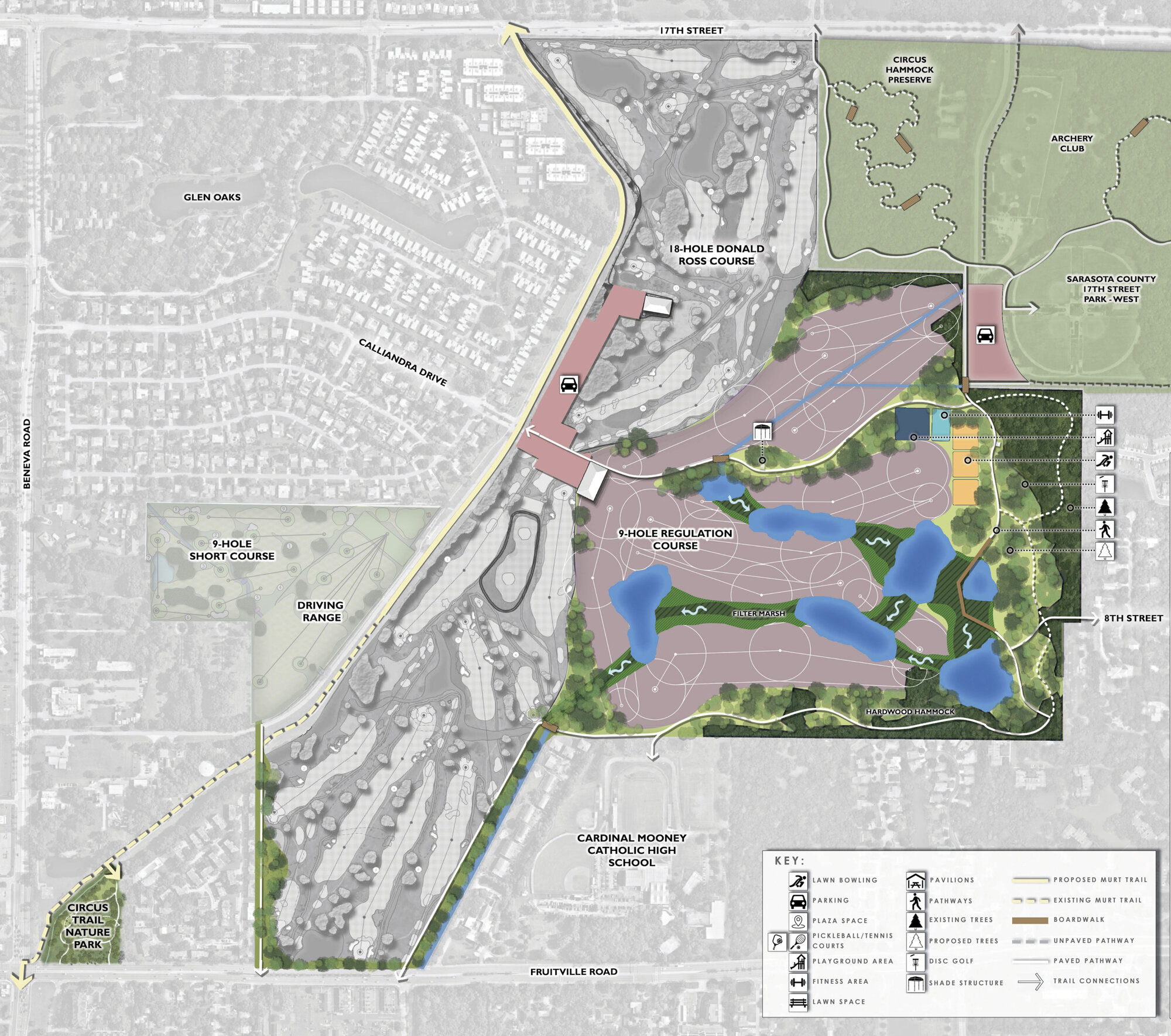
Option 2: Image courtesy city of Sarasota.
For the third, however, his analysis was less intricate.
“Option three has nine less holes,” Mandell said.
From a golfer’s perspective, that was the defining characteristic of the third proposal: eliminating nine regulation holes, which reduces the golf footprint to the 18-hole Ross course and a 9-hole practice course. Whereas the first two options offered different layouts for the same general recreational amenities on a similar footprint, option three went beyond the scope of renovations the City Commission endorsed in September, which specifically called for a 36-hole facility.
For the planners who designed it, the third option represented a different perspective on the right mix of golf, other recreation and natural amenities at Bobby Jones.
Chris Cianfaglione, a landscape architect with Kimley-Horn leading the park planning process, said the history of golf on the site was important. But he noted the property had a history prior to the 1920s; before there was a golf course, there were natural wetlands. He said option three was developed in part to gauge public interest in a plan placing greater emphasis on nongolf uses.
Cianfaglione said all three options were developed in response to input gathered in October and that the public would continue to drive the city’s decision-making. He felt each plan sought to balance golf and parkland.
“I think what we’re trying to do is not make it about one or the other,” Cianfaglione said.
For option three, Cianfaglione used the Celery Fields as a point of reference, another project Kimley-Horn helped design. The centerpiece of the plan includes attempts to reproduce the natural environment that was once on the site: created wetlands with boardwalks and an area for picnicking, an upland pine canopy with hundreds, if not thousands of trees planted, a knoll constructed by terraforming the property.
Cianfaglione said this plan was also born in part out of a sense of financial prudence. He said the project team considered a strategy for trying to attract as much grant money as possible. That meant prioritizing public amenities the entire community could use rather than more golf holes, which would attract a smaller segment of the population and require fees for people to access.
That’s also why option three places an emphasis on natural features. Elements like the created wetlands would serve as water quality enhancements, another bonus for grant consideration. The city is discussing a partnership with the Conservation Foundation of the Gulf Coast to designate the Bobby Jones site as public parkland in perpetuity, and coming up with a financial plan for the future of the property is part of the ongoing negotiations with the nonprofit.
“We’re trying to find something that attracts millions of dollars in funding potential,” Cianfaglione said.
Cianfaglione reiterated that the project team believed all three proposals would represent an improvement for Bobby Jones. All three add at least 63 acres of parkland, 23 acres of created wetlands and more than 2 miles of trails. Similar recreational amenities are included in each plan, such as a playground, lawn bowling and disc golf space. Each proposal links Bobby Jones with county-owned parkland to the northeast, a city-owned park at Fruitville Road and Beneva Road and recreational trails to the east — including, eventually, the extended Legacy Trail at Payne Park.
Option one places the natural features on the east side of the property and creates a more traditional community park on the west side, west of Circus Boulevard. Option two groups those amenities on the east side of the land, which shifts a portion of the created wetlands out of the golf course and into the park area.
Comments on Post-it notes at the Nov. 20 workshop showed a mixed reaction to the different options presented. Cianfaglione said the project team would use the input it receives to continue to refine the plans for a future City Commission presentation, tentatively scheduled for January.
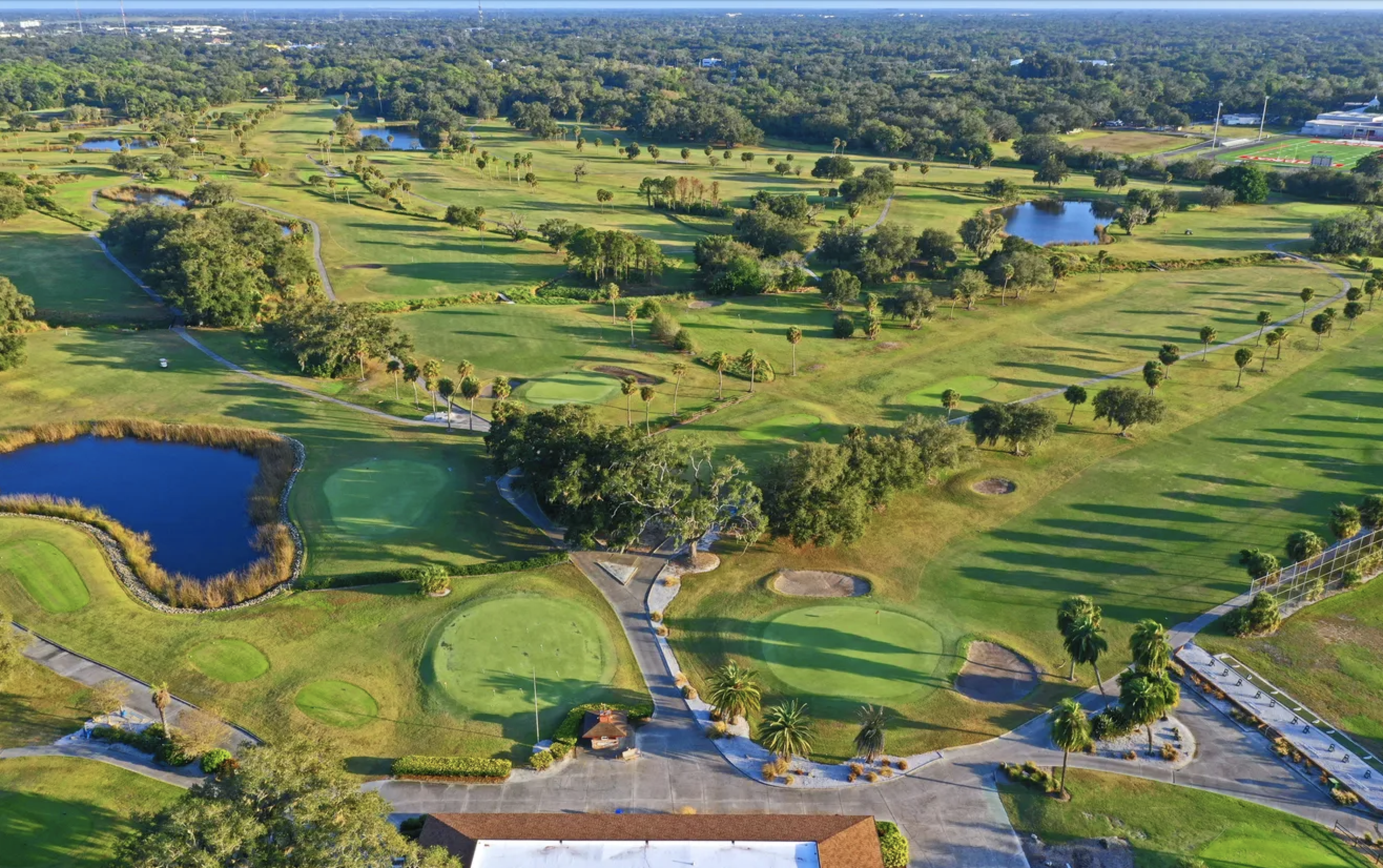
In heated meeting, Sarasota City Commission may decide to revisit Bobby Jones
JANUARY 4, 2021
Sarasota Herald-Tribune
TIMOTHY FANNING
SARASOTA
When a five-year community conversation about the fate of Sarasota’s Bobby Jones Golf Club culminated last year in a plan for a smaller footprint for a historic course, many sighed with relief.
It was finally over.
But that was a different City Commission, and there are strong indications that elected officials plan to revive past controversies.
Leading the charge is newly elected Vice Mayor Erik Arroyo, who notably lives at the southern edge of the 300-acre golf course.
On Monday, he slammed the years-long effort to renovate and modernize the course, suggesting that the process was laced with transparency and accountability problems.
He also suggested that the city should sack the project’s architect.
What followed was a heated commission discussion that threatened previous decisions and that aggravated some current commissioners.
The result was a planned workshop that promises no opportunities for public input but will likely include testimony from several stakeholders. The workshop will focus only on renovation plans for the golf course and not efforts to preserve 130 acres of the 300-acre course under a conservation easement.
On Monday, Arroyo frequently referred to outdated cost estimates and asserted that the city had misdirected $5 million in expenditures for the project. He took issue with the work of architect Richard Mandell, who was hired by the city years ago to develop a plan to restore and renovate the historic course after years of neglect.
Arroyo suggested that the designs for the 18-hole Donald Ross course were inadequate and that the city should instead hire a contractor better known in the golf world. He also said that Mandell shouldn’t oversee the construction of those designs.
“It’s like having the same person that’s designing your home, your interior designer, selling you all of the furnishings,” Arroyo said.
But Interim City Manager Marlon Brown pushed back.
The design is already completed and the city is gearing up to begin searching for construction contractors. The city also has already paid Mandell more than $1 million for his work.
At one point on Monday, Mayor Hagen Brody initially blocked comments by the golf course architect, who wanted to address some of the concerns and “misinformation” lobbed against him.
Mandell, who attended the meeting virtually, looked visibly frustrated when he was finally allowed to speak. Mandell said that he welcomes the workshop and that he will be there, “COVID be damned.”
“I wish that you would just see me as someone trying to help the city of Sarasota,” said Mandell. “Not as someone trying to spend their money.”
Commissioner Jen Ahearn-Koch was the only commissioner to oppose the workshop. Ahearn-Koch said the city already spent hundreds of hours before deciding to renovate and modernize Bobby Jones.
Instead of a workshop, the city should host a special meeting, Ahearn-Koch said. This would allow for public testimony. Her proposal was soundly rejected.
Last February, the city voted 3-2 for a design that features 27 holes of golf, including the original 1925 course. The new configuration would also place more emphasis on natural features such as created pine uplands, wetlands and a conservation easement that will designate the Bobby Jones site as public parkland in perpetuity.
The city has been approached several times to privately lease the course. Over the summer, a group of professional golfers and managers offered to operate the historic course and included a $100,000 check as a token of good faith.
But city administrators concluded it was too late in a years-long city effort to deal with financial and maintenance problems at the facility and rejected the unsolicited offer – without consulting or notifying elected officials.
Arroyo criticized the city administration for rejecting that and similar offers.
Brody said that he has never been satisfied with Mandell’s work. He also said he doesn’t believe that the city has done a good enough job at managing the course and suggested he was open to the idea of leasing it to a private contractor.
Brown said that there have been issues with the past management of the course. His recommendation is to consider whether to turn the management over to a private operator.

Option 3: The proposal for parkland at Bobby Jones with the most radical changes eliminates none regulation holes from the course and places a greater emphasis on natural features. Image courtesy city of Sarasota.
City alters design for Bobby Jones renovations
TUESDAY, SEP. 10, 2019
SARASOTA OBSERVER
SARASOTA
The city will reduce the footprint of the municipal golf course from 45 holes to 36 holes, though some officials are still worried about the cost of the project.
By David Conway, Deputy Managing Editor
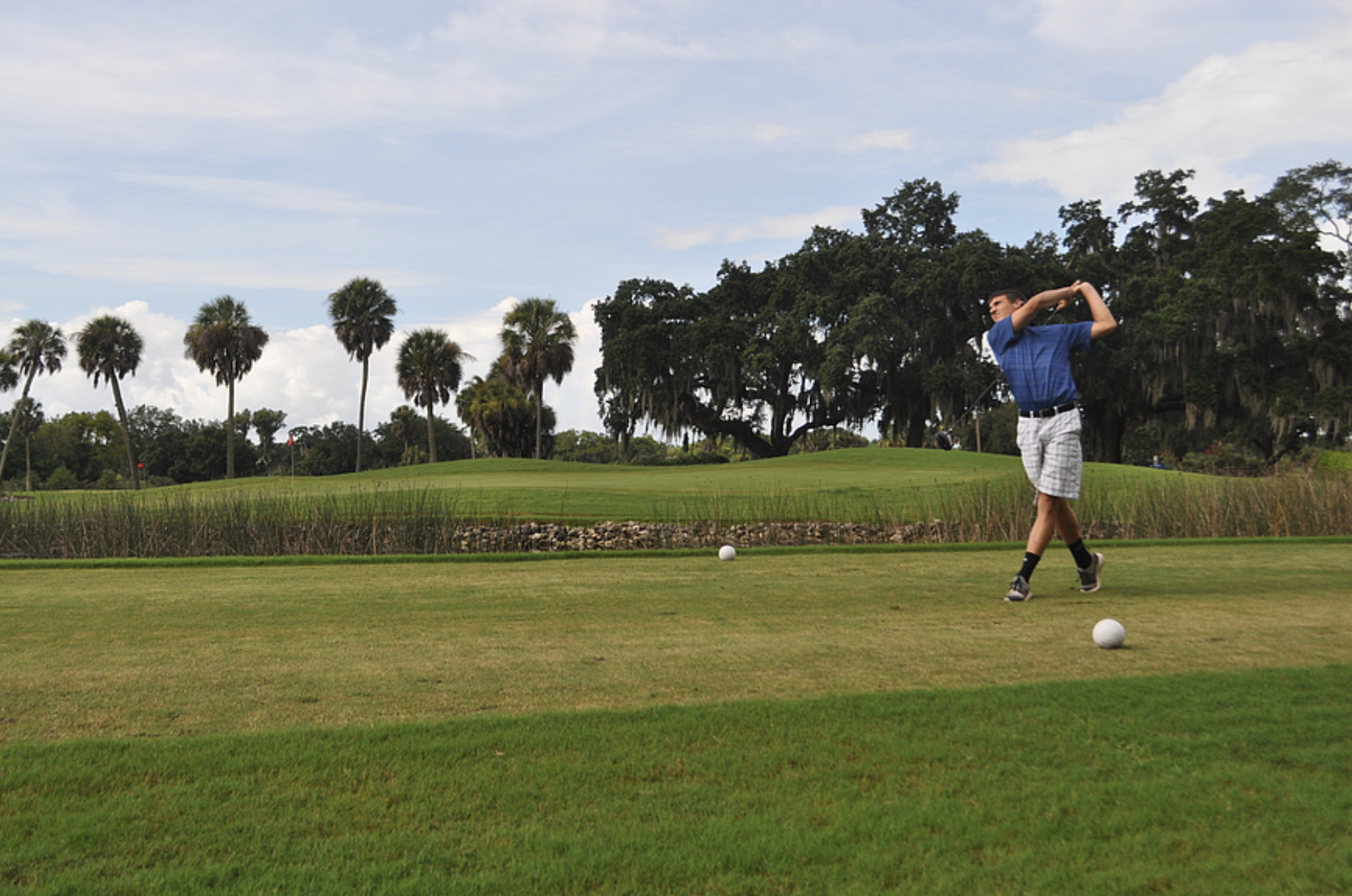
In a 3-2 vote Monday, the City Commission elected to pursue a $15 million renovation project at Bobby Jones Golf Club that would shrink the size of the municipal course by nine holes.
The commission also unanimously signaled its interest in maintaining the entirety of the 293-acre city-owned property as public open space. The commission directed staff to prepare a proposal for a conservation partnership that would only allow the property to be used for nature preservation and light recreation.
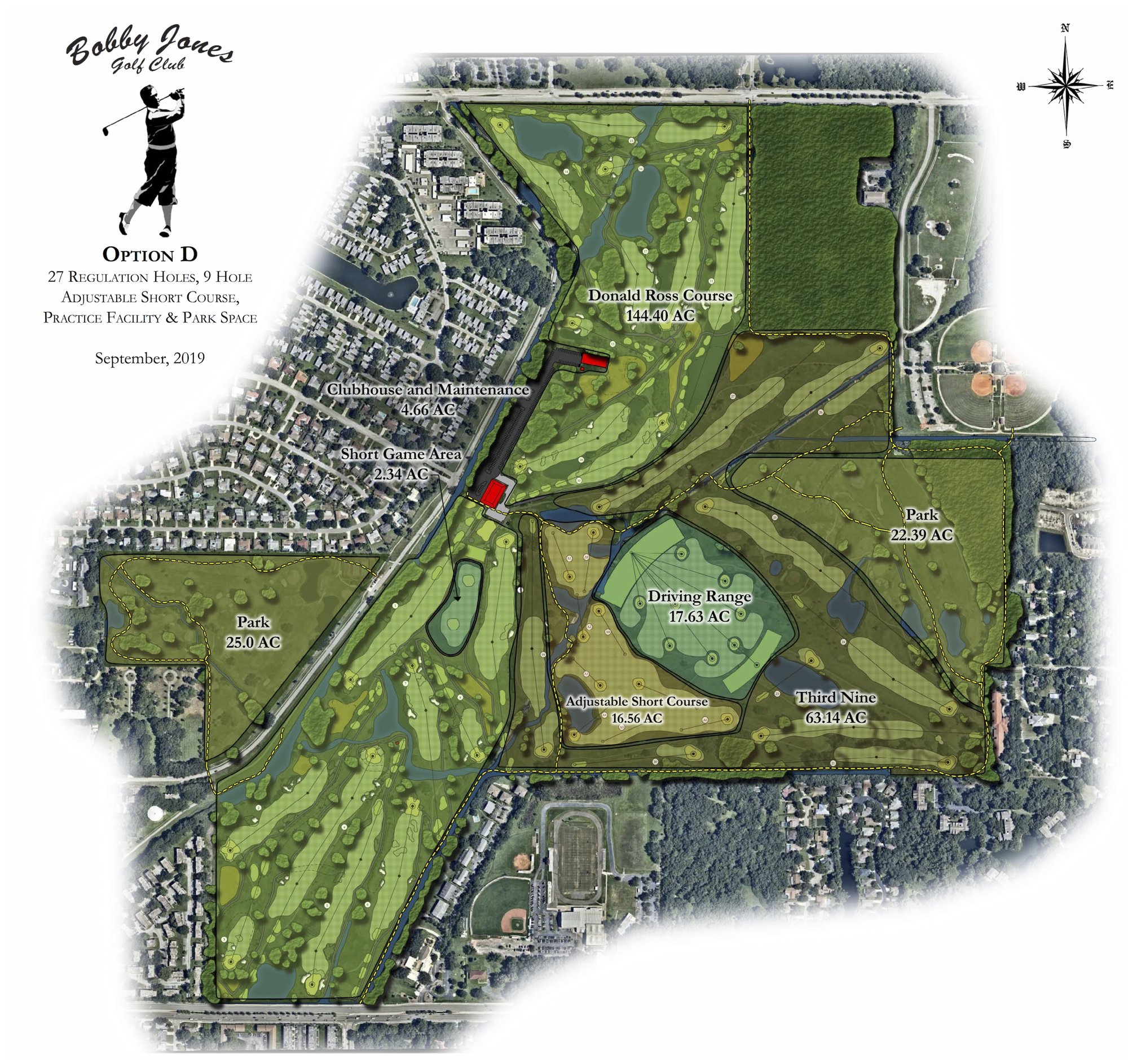
Golf architect Richard Mandell produced this design outlining the potential configuration of a 36-hole Bobby Jones facility. Image courtesy city of Sarasota.
The city’s favored design for Bobby Jones includes 27 regulation holes and a nine-hole short course. City Manager Tom Barwin anticipated construction would begin in spring 2021, a one-year delay from the date officials originally targeted for the renovation project.
The plans are less expansive than the commission’s previous vision for the facility, which called for the renovation of all 45 holes at a cost of about $18 million. Still, the board declined to heed city administration’s recommendation to downsize Bobby Jones to no more than 27 holes.
In material included with Monday’s meeting agenda, administration advocated for an 18-hole renovation and advised the commission to take “extreme caution” when considering any additional work. The agenda documents express concern about the effect a more ambitious project would have on the city’s finances. It states a 27-hole course “minimizes our risk while maximizing our potential benefit.”
But Commissioner Jen Ahearn-Koch said a consultant’s financial projections suggested a 36-hole plan would be the most cost-effective option for the city. The city hired the National Golf Foundation to produce a business analysis of various configurations for Bobby Jones.
In every scenario the National Golf Foundation examined, the city is projected to lose hundreds of thousands of dollars annually on the course as it pays back the debt associated with a bond issued to fund the project. But the 36-hole design showed the least significant losses in the analysis, resulting in average deficits of about $575,000 annually between fiscal years 2022 and 2028.
“If we are just looking at numbers, [36 holes] is the one that has the best numbers,” Ahearn-Koch said.
Staff at Bobby Jones offered their support for the 36-hole proposal. Manager Sue Martin said having 27 regulation holes would allow the city to close nine holes at a time for repairs as necessary and still maintain a full 18-hole course at all times. Staff said the short course represented a valuable alternative for younger and older golfers, as well as individuals who are new to the sport.
Commissioners Liz Alpert and Willie Shaw also voted in favor of the 36-hole configuration. They said the proposal gave the city the most flexibility as it seeks to revitalize the facility, which has been in a state of disrepair for years, according to staff and outside analysts.
“I think the numbers work out better,” Alpert said.
Commissioners Shelli Freeland Eddie and Hagen Brody, who voted against the selected design, both said they were concerned about the cost of the project. Freeland Eddie asked why the city would build a new short course when the city already has the nine-hole Gillespie Executive Course.
Richard Singer, the director of consultant services for the National Golf Foundation, said renovating the existing Gillespie Course would likely offer minimal cost savings compared to building a new short course. Singer said fixing the drainage and irrigation infrastructure at the Gillespie Course would be an expensive process, but Freeland Eddie was still skeptical the city was picking the most cost-effective option.
“I hope you all are right,” Freeland Eddie said. “I feel like we’re going to be spending more money.”
Brody advocated for a design featuring an 18-hole regulation course and a refurbished Gillespie Course. Because of the expenses associated with all of the renovation proposals, Brody thought the city should reduce the size of the golf course and work to create different recreational options on the site to appeal to a broader segment of the community.
“If we turn a large portion of this space into public park space and create these other amenities … that, to me, is justifiable,” Brody said.
The estimated cost for building 18 regulation holes and a nine-hole short course was $12.6 million, though Brody also thought maintaining the existing Gillespie Course could reduce the expenses. The consultant projected an annual loss of $662,500 under that 27-hole configuration.
The 27-hole projections suggested the city would bring in less revenue than the 36-hole model, but it would also face less significant operating expenses and debt service payments. At an August meeting, Barwin said a more expensive renovation project could pose challenges to the city’s budget if Bobby Jones did not achieve its revenue goals.
In the material included with Monday’s agenda, administration cited “golf trends, economic uncertainty and unforeseen circumstances” as reason to pursue a more conservative project.
Park pursuit
The city’s selected design for the Bobby Jones property includes 47.4 acres of parkland to be used for non-golf purposes.
At the commission’s direction, city staff will work with the Conservation Foundation of the Gulf Coast on a potential partnership regarding the design, funding and management of that parkland.
The city and the Conservation Foundation are considering creating a conservation easement for the Bobby Jones property. If the commission approved, the agreement would preserve the land as public open space in perpetuity. Although the city would maintain ownership of the land, the Conservation Foundation would hold the easement to ensure the property was not developed contrary to the terms of the agreement.
City Manager Tom Barwin said staff is interested in creating walking and biking trails connecting the property to the surrounding area. Barwin said staff and the Conservation Foundation could return to the commission by December with the potential scope of an agreement and possible funding strategies.
Sarasota’s Bobby Jones redo moves ahead at 36 holes
September 9, 2019
Sarasota Herald-Tribune
By Barbara Peters Smith, Staff Writer
Scenario for the golf course property would create two parks of more than 20 acres each
After a year of debating the scope and cost of a modernized Bobby Jones Golf Club, the Sarasota City Commission settled on a decision Monday night to downsize the 45-hole course — but not by much.
After looking at five options from golf course architect Richard Mandell, commissioners chose a 27-hole regulation course with a nine-hole short course and enlarged driving range.
Slimming down by nine holes would, according to Mandell’s scheme, allow two carve-outs for parkland. One would be a 25-acre greenspace west of Circus Boulevard where the Gillespie executive course now lies; the other would be a 22.4-acre triangle of land east of the golf course. Walking and biking trails would connect both parks to Fruitville Road and 17th Street, and also to the Bobby Jones clubhouse.

Archive Photograph Courtesy Herald-Tribune
Bobby Jones golf complex’s fate still in the air
August 27, 2019
Sarasota Herald-Tribune
By Barbara Peters Smith, Staff Writer
Consensus on course size or nature preserve eludes city commission
SARASOTA - Pressed to make a decision on the scope of the Bobby Jones Golf Complex renovation project, so that a design can be completed in time to close the course on schedule and begin repairs, Sarasota city commissioners opted Monday night for the equivalent of picking up their balls in mid-play.
After more than three hours of hearing testimony that ranged from the potential environmental benefits of a conservation easement on the 293-acre property to the potential marketing benefits of a “reversible” nine-hole design, they voted 3-2 to adjourn the special meeting without coming to any conclusions on how big or expensive the course overhaul should be.
“We’re missing the information we need,” said Vice Mayor Jen Ahearn-Koch.
City Commission undecided on Bobby Jones renovation
TUESDAY, AUGUST 27, 2019
SARASOTA OBSERVER
Having previously endorsed a 45-hole project at the city-owned golf course, Sarasota officials are now considering a reduction to 36, 27 or 18 holes.
by David Conway, Deputy Managing Editor
At a special meeting held Monday to discuss the future of the city-owned Bobby Jones Golf Club, the City Commission decided to adjourn before reaching a consensus on how to proceed with a forthcoming renovation project for the facility.
As a result, plans for the 45-hole municipal course remain uncertain until the board revisits the conversation. The commission’s indecision — and the prospect of eventually adjusting the scope of the project — could lead to a delay in construction, originally planned to begin in April 2020.
During Monday’s meeting, commissioners signaled some interest in reversing course from the plans the city previously endorsed. In December, the commission backed a project that would improve all 45 holes at the 293-acre facility, an undertaking estimated to cost $18 million.
Since then, the city obtained financial projections that suggested the course would lose millions of dollars in the wake of that project. In July, the commission asked a consultant to produce options for a plan that would reduce the footprint of the golf course. Ahead of Monday’s meeting, City Manager Tom Barwin recommended downsizing Bobby Jones to 27 or 18 holes, a smaller project would minimize the city’s financial risk.
Richard Singer, director of consultant services for the National Golf Foundation, echoed Barwin’s perspective at Monday’s meeting. Singer said that, over the course of a 15-year bond repayment, external factors such as a recession or bad weather could affect the performance of Bobby Jones. If the city went forward with a larger project, Singer said, those external factors could have a larger effect on the municipal budget.
“It all boils down to your risk tolerance as a city,” Singer said.
Singer noted the course is not self-sustaining in any of the scenarios under consideration while the city is still making debt service payments on a bond for the project.
“They’re all in the red,” Singer said. “They’re all significantly in the red.”
Although the commission was open to the possibility of reducing the size of the golf course, board members offered different perspectives on the appropriate number of holes. Commissioner Jen Ahearn-Koch offered her support for retaining 27 regulation holes and a 9-hole short course, the option that offered the least significant losses for the city in Singer’s projections. The estimates said the city would lose $509,000 and $848,600 annually between fiscal years 2022 and 2028 under that scenario.
Ahearn-Koch suggested the city might even be able to make the project budget-neutral if it were able to generate another 15-20% in revenue at the course, but Singer pushed back against that level of optimism.
“I’m not going as far as saying it won’t cost you,” Singer said. “You absolutely could do better than this. You could also do worse.”
Commissioner Hagen Brody, long a critic of the 45-hole renovation plans, suggested the city should reduce the size of the golf course to 18 holes. Brody said the city could use the rest of the site to create a park with walking trails and other light recreation options.
“We can create a property that has a place for everyone,” Brody said.
Other commissioners did not have the opportunity to make their preferences clear. The board discussed the merits of different figurations, debating whether to include 18 or 27 regulation holes and if a shorter nine-hole course should be incorporated into the facility.
The meeting was scheduled to end at 9 p.m. The commission twice extended the length of its meeting — first to 9:15 p.m., then to 9:30 p.m. — but declined to stay beyond that final deadline. Brody and Commissioner Shelli Freeland Eddie voted against adjourning.
Golf architect Richard Mandell, the consultant the city hired to design the renovation project, said plans would have to be overhauled if the commission chose to do anything other than an 18- or 45-hole course. Mandell said adjusting the plans would require the project to start later than currently scheduled.
Because the city planned to close Bobby Jones in April to begin construction, Barwin said keeping the course open would require an adjustment to the 2019-20 budget. Barwin said the course could need a $600,000 subsidy from the general fund if it stays open through the end of next fiscal year, though he was hopeful the city could offset those costs by obtaining grants if necessary.
“I would say the timing is pretty important,” Barwin said.
After the meeting, Brody expressed frustration the commission wasn’t willing to stay later to come to a decision Monday. He noted Singer and Mandell both traveled from outside the city to be present for the meeting, and their attendance isn’t guaranteed when the commission continues its discussion.
“We had everyone in the room,” Brody said.
Ahearn-Koch and Mayor Liz Alpert both expressed some concern about moving too quickly toward a decision on significant changes to a major project. Barwin distributed the latest business plans analyzing the prospect of downsizing to 18 or 27 holes on Aug 16.
Even if the commission came to a decision Monday, Alpert said the city was facing a construction delay if it chose a 27- or 36-hole configuration for Bobby Jones.
“We're already held up no matter what,” Alpert said.
The commission will resume its conversation about Bobby Jones at a future date yet to be determined.
Conservation conversation
Monday’s meeting also featured a presentation from the Conservation Foundation of the Gulf Coast about the prospect of permanently designating the Bobby Jones site as a public open space.
Christine Johnson, president of the Conservation Foundation, asked the commission to allow the organization to work with city staff on a proposal to establish a conservation easement on the property. The agreement would dictate the property remain used only for golf, recreation and as natural lands in perpetuity.
Johnson said the foundation would hold the easement to ensure the land wasn’t used for any other purpose, though it would remain in city ownership and the city would still be responsible for maintenance. In exchange for receiving the easement, the Conservation Foundation would help the city raise funds — both public and private — that could go toward site improvements.
Johnson said the foundation envisioned a Bobby Jones property focused on public recreation and environmental sustainability.
“If we get the natural part right and we get the built part right, it will become an attractor,” Johnson said.
The exact scope of any agreement would need to be negotiated, but Johnson hoped the foundation and city staff could produce a proposal for the commission's consideration by December.
The board took no action regarding the conservation partnership Monday.
Sarasota city manager recommends downsizing Bobby Jones
MONDAY, AUGUST 26, 2019
SARASOTA OBSERVER
In a memo, Tom Barwin said keeping all 45 holes at the city-owned golf course would pose too much financial risk
By David Conway, Deputy Managing Editor
City administration is recommending against spending $20 million to renovate all 45 holes at Bobby Jones Golf Club, instead encouraging the City Commission to reduce the number of holes at the municipal course to minimize “financial risk to city budgets and the general taxpayer.”
City Manager Tom Barwin endorsed shifting to an 18- or 27-hole course in an Aug. 21 memo to commissioners. The City Commission is scheduled to meet today to discuss the future of Bobby Jones. Since 2014, officials have been discussing a strategy for improving an aging facility that has required hundreds of thousands of dollars in subsidies from the city's general fund.
The commission previously committed to a project that would overhaul the entire 45-hole course, optimistic upgrades to irrigation and drainage infrastructure could make the course profitable again. Earlier this summer, however, a consultant estimated the city would lose $7.58 million on the facility between fiscal year 2021 and 2028 if it went forward with that project.
In July, the commission asked the consultant to produce a report on the possibility of reducing the course to 27 holes or 18 holes. The new report projected the city would have to spend $5.04 million on the course between 2021 and 2028 if an improvement project shrunk Bobby Jones to 27 holes.
Under both projections, the consultant said Bobby Jones could be profitable when focused just on an operating budget. Expenses outweighed income when the consultant factored in debt service payments associated with a renovation project, ongoing capital costs and the creation of a contingency fund.
The city is also exploring the possibility of partnering with the Conservation Foundation of the Gulf Coast to designate the entirety of the 300-acre property as public open space in perpetuity. Barwin suggested the city could use portions of the land to offer light recreation and provide opportunities for the public to engage with nature.
In his memo, Barwin emphasized the perceived financial risk to the city if it undertakes a 45-hole project. He anticipated the possibility of some public pushback to the proposed downsizing, but he strongly encouraged the commission to move forward with reducing the size of the city-owned course.
“The city cannot be all things to all people,” Barwin wrote in the memo. “The City Commission will be under pressure from local golfers who understandably are passionate about the course and want as much golf as possible at [Bobby Jones]. However, the economics do not make sense beyond an 18- or 27-hole configuration, especially with new and related opportunities which have been identified opening up the full property for other parks, recreational and outdoor activity.”
The full agenda for today’s meeting is available on the city website.
REPORT CONSIDERS DOWNSIZING BOBBY JONES
Thursday, August 22, 2019
Sarasota Observer
Facing significant expenses, officials are weighing the possibility of shrinking the 45-hole golf course.
By David Conway, Deputy Managing Editor
Reducing the size of Bobby Jones Golf Club won’t eliminate the prospect of future budget deficits for the city-owned course, but it could mean reducing the expenses associated with financing a major renovation project, according to a consultant’s report.
The City Commission has scheduled a meeting Aug. 26 to discuss the future of Bobby Jones. Although the commission previously endorsed a full renovation of the 45-hole course, with construction set to begin in spring 2020, officials have not finalized the scope of the work to be undertaken on the 300-acre property.
In July, the commission signaled a willingness to reconsider its plans for Bobby Jones. If the city were to pursue a $17.5 million project improving all 45 holes, a report from the National Golf Foundation estimated the city would be spending between $800,000 and $1.57 million annually to fund the course over more than a decade.
At a July 9 special meeting, commissioners asked for the National Golf Foundation to produce new projections for the golf course if it were scaled down to 27 or 18 holes. City Manager Tom Barwin distributed the new report to commissioners Aug. 16. The consultant concluded the city would spend, on average, about $480,000 less annually in the first seven years after re-opening Bobby Jones if it pursues a 27-hole plan rather than the 45-hole option.
The course would still fail to generate enough revenue to cover the costs associated with a renovation project, the report states. Accounting for debt service payments, the report projects a 27-hole Bobby Jones would lose $857,800 in the first year after reopening. Projected losses fluctuate between $569,000 and $595,200 each year between 2023 and 2026.
In conjunction with potentially scaling down the size of the golf course, the Conservation Foundation of the Gulf Coast has expressed an interest in partnering with the city to ensure the property remains public open space in perpetuity.
Monday’s meeting will include a presentation on both the updated business plan and the potential for a conservation partnership.
CITY UNDECIDED ON BOBBY JONES PLANS
THURSDAY, JULY 11, 2019
SARASOTA OBSERVER
Facing the prospect of annual expenses exceeding $1.5 million, officials are considering options for renovating the municipal golf course.
By DAVID CONWAY, Deputy Managing Editor
If officials proceed with plans to renovate all 45 holes at Bobby Jones Golf Club, the city could be paying between $800,000 and $1.57 million annually to fund the municipal course over more than a decade, according to a consultant’s report.
Late last year, a majority of the City Commission expressed enthusiasm about investing an estimated $17.5 million into the city-owned facility, optimistic it could restore the financially troubled course to profitability — or at least to a place of greater fiscal stability.
The city hasn’t done anything to officially move away from that plan in the wake of the report, produced by the National Golf Foundation. But on Tuesday, the commission voted unanimously to gather more information on alternative options that would reconfigure the property to 27 or 18 holes instead.
The commission also unanimously directed city administration to schedule a presentation from the Conservation Foundation of the Gulf Coast, which has expressed interest in establishing a conservation easement on the property that would guarantee the land remain public open space in perpetuity.
City Manager Tom Barwin, who expressed fear about the city’s financial obligations if it pursued the 45-hole renovation, said the conservation partnership presented an opportunity to help offset some of the costs associated with the property. Barwin said staff was concerned about funding annual debt payments if the city took out up to $20 million in bonds to fund the project.
“What do you do if you get hammered by a severe storm and hurricane and the course is out of commission for a while, or if there’s still a severe recession?” Barwin said. “We’re still on the hook for those principal and interest payments no matter what.”
Under a conservancy agreement, the Conservation Foundation would assume control of the property in exchange for a financial contribution to the city Barwin said could total “multiple millions of dollars.” The city would retain ownership of the property, but it could not be used for any purpose other than open space and light recreation.
Barwin said the conservancy agreement could still go into effect if the city pursued the 45-hole renovation. He also suggested it could provide an opportunity for the city to downsize the footprint of the golf course and offer other recreation opportunities on the land.
“We could set aside a portion of what is raised for the future management and evolution of whatever acreage is not used for golf,” Barwin said.
The commission’s vote came after a presentation from consultant Richard Singer, director of consulting services for the National Golf Foundation. Singer wrote a business plan analyzing and projecting the future operations of the facility if the city pursues its desired renovations. If it undertakes the 45-hole project, the city estimates it would close the course in April 2020 and reopen in October 2021.
Singer’s report said the city could double the current annual revenue at Bobby Jones by fiscal year 2025, with that revenue covering the expenses associated with operating the facility. But the revenue would not be sufficient to cover other costs, including annual debt service payments of $1.6 million and an average of more than $200,000 annually devoted to contingency and capital funds.
“That’s a big part of this review and a big part of this business plan the city of Sarasota should be prepared for,” Singer said.
City Commissioner Hagen Brody, the lone vote against the initial pursuit of the 45-hole renovation, said the report underscored his fears about the expense associated with a larger project. Sarasota city manager recommends downsizing Bobby Jones
“We have new, credible information this is going to be a very bad business decision,” Brody said.
Although the rest of the commission voted to get an updated business plan based on 18-hole and 27-hole configurations, they did not share Brody’s staunch opposition to the 45-hole project. Mayor Liz Alpert said downsizing the course wouldn’t necessarily produce proportional savings for the city, a point Singer agreed with.
“Both sides are going to change drastically — the revenue and the expense side,” Singer said of a potential smaller project.
On Monday, July 15, the commission is scheduled to set a maximum amount for the bond issues associated with the Bobby Jones project. That amount could be reduced if the commission decides to change the scope of the renovations, city staff said.
Singer said producing new business plans could take around six weeks. Barwin said staff would work to schedule a presentation with Conservation Foundation leaders on a potential partnership relating to the 300-acre site.

If it undertakes the 45-hole project, the city estimates it would close the Bobby Jones complex in April 2020 and reopen in October 2021. Photograph courtesy of Sarasota Observer.
A ‘CENTRAL PARK’ FOR SARASOTA?
TURNING SOME OF BOBBY JONES GOLF COURSE ACREAGE INTO A NATURE HAVEN COULD DO A LOT MORE THAN JUST SAVE THE CITY MONEY
SARASOTA HERALD-TRIBUNE
JULY 11, 2019
BY CARRIE SEIDMAN, COLUMNIST
When I moved to New York City for college after growing up in rural southwestern Michigan, it was an anticipated transition. Manhattan was everything I was looking for – exciting, fast-paced, full of options and free of the provinciality of my childhood home.
It was also dirty, noisy and congested. The steamy summer heat radiating off the mass of asphalt, the stench of garbage overdue for pickup, a swarming sea of pedestrians who always seemed impatient and irritated sometimes left me longing for the quietude and natural landscapes of my home.
I found that refuge within the 800-plus acres of Central Park, a glorious expanse of green, water, recreation and relaxation within a mile of my college dorm on the Upper West side. Here was a place to run without inhaling vehicle exhaust, to spot a squirrel scampering up a tree or a red-tail hawk soaring on afternoon thermals, or simply to plop down in an isolated spot of sun to study.
The park became my solace, but also a source of entertainment and unexpected sociability. In winter, there was ice skating on the Wollman Rick, in summer Shakespeare in the Park or a concert on the Great Lawn. It was there I met people who fell outside my usual demographic – a mom corralling toddlers on a jungle gym, an NBA-wannabe shooting hoops in a pickup game, an elderly man feeding a day-old bialy to the pigeons. The park became central to my quality of life in New York.

City creates a space for rethinking Bobby Jones
SARASOTA HERALD-TRIBUNE
JULY 10, 2019
By Barbara Peters Smith
Commissioners want to hear more about conservation and downsizing golf course
SARASOTA — Faced with unforgiving projections of a negative return on a proposed $17 million investment in revitalizing the Bobby Jones Golf Complex, Sarasota city commissioners on Tuesday opened the door to rethinking their plan to plunge forward with a sweeping redesign of all 45 holes of the historic public course.
The commission voted unanimously to invite the Conservation Foundation of the Gulf Coast to make a presentation on the possibilities of pursuing a conservation easement arrangement that could help defray the costs of maintenance and preserve the city-owned property as an environmental asset.
As part of the same motion, commissioners directed the consultant who delivered a business plan projecting losses from a 45-hole redesign to come back in five or six weeks with an analysis of likely costs and revenues if the course were reopened with 18 or 27 holes instead.
The concept of a conservation easement — first broached publicly by City Manager Tom Barwin and foundation president Christine Johnson on June 28 — would entail raising money from private donors to place the entire 300-plus acres under a pact that would preclude development. A conservation easement is a legal agreement between the owner of a property — in this case, the city — and a land trust like the foundation that permanently limits the property’s use to safeguard its environmental value.
Consider third way for Bobby Jones
July 9, 2019
By the Herald-Tribune Editorial Board
The Sarasota City Commission meets today at 3 p.m. to consider moving forward with a grand renovation project at the Bobby Jones Golf Complex — and pursuing a revenue-bond issue for funding.
As we wrote in an editorial Sunday, the city-owned golf complex has suffered from under-investment, national trends in the sport and competition from other courses. Yet, despite its troubles, the complex — especially 18 holes designed in the 1920s by legendary course architect Donald Ross — and the open space it provides remain valuable assets.
The question before the City Commission has been framed as: Renovate all 45 holes or do nothing.
Improvements are overdue and necessary, but the all-or-nothing approach is risky:
• There is reasonable doubt that, given the volume of courses in the area and downward trends in golf, 45 holes at Bobby Jones are economically sustainable.
• Costs to the city, upfront capital and long-term operational, are high. Renovation costs are estimated at $16.7 million, and a consultant projects that the complex would have a $1 million operating deficit in the first year after the project is completed, followed by negative cash flows in the near future — for example, $830,000 in 2028. Such shortfalls would be subsidized by general revenue, which the city needs for pressing matters, and don’t reflect a sufficient return on investment.
What’s more, according to data in various reports, city residents — who would help pay the capital and operating subsidies — make up only 9 percent of players at Bobby Jones.
So, is there an alternative? Yes, there appears to be a third way.
City Manager Tom Barwin recently floated an idea that deserves full consideration by the City Commission, members of the public and golfers. He proposed pursuing private funding — perhaps through the Conservation Foundation of the Gulf Coast — to create and purchase an easement on the 300-plus acres at and around Bobby Jones.
An easement could be crafted, Barwin said, to ensure that all the land remains public property in perpetuity and provide some revenue to the city.
Whether a conservation easement is the best tool available to the city for a golf course — not the most environmentally friendly use of land — requires examination. But the concept — or, say, water-management district grants that could be used to create stormwater-management features to accommodate both wildlife and passive human recreation — has appeal.
For instance, the city could focus renovation on the historically valuable, Ross-designed holes and modest ancillary facilities while establishing a surrounding wildlife preserve and park-like settings.
That approach could lower the city’s golf-related costs and indebtedness, make the complex more manageable, broaden the land’s appeal to a broader range of city residents and visitors — and help protect the environment.
As we have written previously, there are times when a government body should stay on track. But there are times, especially when new information about appealing alternatives is available, to consider and pursue a different approach. For the Bobby Jones Golf Complex, this is one of those times.
Sustainability Crucial With Bobby Jones Future
SRQ MAGAZIne
SATURDAY JULY 6, 2019
SRQ DAILY SATURDAY PERSPECTIVES EDITION
BY PAUL CARAGIULO
On City
I love Bobby Jones Golf Club. I loved it playing high school golf. I loved playing one of the most important Florida amateur events, the city championship, and I loved playing there in Saturday games with some truly talented players. I also loved serving on the Bobby Jones Advisory Board before I was on the City Commission. I love the place and let me be clear, I am not in favor of the community relinquishing even a square foot of the more than 300 acres. I want folks to play golf on that property ‘til the end of time. So, I want it to be sustainable. That is my whole concern, sustainability.
Borrowing $20,000,000 for a municipal golf course without the required significant attention to sustainability is very concerning. The city’s own consultant predicts a loss of over $1,000,000 in the first year after reinvestment, with annual losses in excess of $800,000 to continue for years. This follows losses already absorbed for a decade. So how does the current plan solve the problems?
It’s time to rethink the entire plan for BJGC. Here is the good news: this is a wonderful opportunity for the community to engage in a true sustainability project. It’s not just about having financially sustainable golf. The Bobby Jones property is critical to the area’s flood control and our water quality, the ultimate sustainability issue for our community.
In short, this should be a Stormwater / Water Quality project first and recreational project second, with the potential to serve recreational pursuits in addition to golf. More good news is that financial resources for water quality projects are readily available from multiple sources. To do this the golf footprint must be scaled down – substantially. This project should include an excellent eighteen-hole course, practice facility and modest clubhouse. The remaining property should be developed into a smaller and even better version of the Celery Fields. Both parts should include Not for Profit partnerships and tenants.
We did it once, we can do it again. That is the affordable plan for a sustainable future.
We’ve touched on the future, now let’s touch on the past. Bobby Jones Golf Club has an amazingly rich history. The original eighteen holes were designed by the legendary Donald Ross in 1925 and Bobby Jones himself dedicated the course in 1927. In ’26, Sarasota gave Jones a Pierce-Arrow and a party at the Mira Mar Hotel on Palm Avenue - I really love that little factoid.
Over many years the facility has expanded to forty-five holes; quite large for municipal golf in a city of our size. However, rounds of golf have gone down steadily and while Bobby Jones most definitely needs attention there is simply no need for a facility of that scale.
Even more good news! The authentically restored historic masterwork, The Donald Ross Course at Bobby Jones Golf Club, can draw additional public and private funding and is all the golf and every bit the brand and the story we need.

PHOTO COURTESY BOBBY JONES GOLF CLUB
Sarasota and Conservation Foundation Discuss Bobby Jones Preservation
SRQ MAGAZINE
MONDAY JULY 1, 2019
SRQ DAILY MONDAY BUSINESS EDITION
Recreation
The City of Sarasota and the Conservation Foundation of the Gulf Coast have begun to discuss ways to preserve the 300-acre Bobby Jones Golf Club property in perpetuity for golf, recreation and as natural lands, exploring the possibility of placing a permanent conservation easement upon the property, to be monitored and enforced by the Foundation. This would ensure permanent conservation and allow compatible future uses, limited to golf, light recreation, natural resource restoration and protection as parkland or open space.
As the City has pursued the renovation of the historic golf course, it has become increasingly clear that the property plays a vital environmental role for the region, including filtering enormous volumes of stormwater runoff, serving as a habitat for more than 45 species of birds and other wildlife, and the hundreds of trees on the property play a critical air quality role by processing carbon from the atmosphere.
It is anticipated that the City Commission will be updated when the Bobby Jones Golf Club master plan is discussed at a July 9 special meeting, which will begin at 3pm at City Hall, at 1565 1st St.
City, Conservation Foundation of Gulf Coast Explore Partnership for Bobby Jones Golf Club
Sarasota Magazine
SUNday, June 30, 2019
By Staff
The historic golf course, which opened in 1926, plays a vital environmental role for the region.
The City of Sarasota and the Conservation Foundation of the Gulf Coast have begun to discuss ways to preserve the 300-acre Bobby Jones Golf Club property in perpetuity for golf, recreation and as natural lands. The city and Conservation Foundation are exploring the possibility of placing a permanent conservation easement upon the entire property that may be held, monitored and enforced by the foundation, a nationally accredited conservation organization that has permanently protected more than 11,000 acres of critical lands. This would ensure the permanent conservation of the green space and allow compatible future uses, including golf, light recreation, natural resource restoration and protection as parkland or open space. The property would be endowed with adequate funding so that it could be maintained indefinitely.
The historic golf course, which opened in 1926, also plays a vital environmental role for the region. Enormous volumes of stormwater runoff, from as far away as the Mall at University Town Center, are retained and filtered by the property before flowing into Sarasota Bay. The golf course also serves as a habitat for more than 45 species of birds and numerous other wildlife species, and the hundreds of trees on the property play a critical role to the area’s air quality.
The City Commission will be updated on the city’s dialogue with Conservation Foundation when the Bobby Jones Golf Club master plan is discussed at its special meeting on July 9, scheduled to begin at 3 p.m. at City Hall.
New life for Bobby Jones?
SARASOTA HERALD-TRIBUNE
Saturday, June 29, 2019
City manager floats concept of using golf course as a nature preserve
By Barbara Peters Smith
barbara.smith @heraldtribune.com
Yet another public-private venture to preserve a large swath of local green space was unveiled on Friday. If this one comes to fruition, it could help resolve the fate of the Bobby Jones Golf Club, while opening up its 300-plus acres for public enjoyment and environmental protection.
The city of Sarasota’s quest to renovate its historic golf complex faces two daunting impediments: a potential cash bleed from a multi-million-dollar renovation investment, according to a consultant’s report, and public sentiment that remains splintered between a passion for golf and indifference to the sport.
Now Sarasota, partnering with the Conservation Foundation of the Gulf Coast, is exploring an ambitious concept that could address both. It would entail raising money from private donors to place the entire city-owned acreage under a conservation easement that would preclude development.
There is no price tag yet attached to this concept, but the millions invested would help cushion the public from bearing the full costs of keeping Bobby Jones open and green.
The designation would still allow low-impact recreational uses such as golf, picnics, and walking and biking trails — but prevent the green space from ever becoming subdivisions, office parks or condos.
“Opening this up to more than just golfers is probably the best thing for everyone,” said Conservation Foundation President Christine Johnson “— and for everything, meaning animals, plants, people, budgets.”
City Manager Tom Barwin said he has spoken with commissioners individually, and they will likely consider the idea at a special July 9 meeting. If the city and the foundation’s board agree to proceed, the next step would be to determine the value of development rights for the acreage, and solicit donations for an endowment that would help maintain the golf course and any future recreational or environmental uses. Barwin said this strategy — preserving the Bobby Jones tract “so it will remain in the public domain and can’t be sold in perpetuity” — could be implemented regardless of whether the city decides to refurbish all 45 holes of the existing courses, or just some of them. And it would not require the golf course to remain if future generations don’t support that. The money from the easement would go to maintenance for any public uses of the park, active or passive.
As the city staff and officials looked into what needs to be done to improve Bobby Jones, Barwin said, “it became very clear that this property serves a tremendous environmental role in the region. Besides open space and wildlife habitat — 45 bird species — the trees do a heck of a job of cleaning the air. The property does flood prevention, and actually filters water all the way clear from the UTC (University Town Center) mall to Sarasota Bay.”
Johnson pointed out that the site is less than a half mile from the projected endpoint of the Legacy Trail extension at Payne Park, and it connects to the small Circus Trail in Fruitville Road Park that could provide a connector for pedestrians and cyclists. The Bobby Jones tract represents about half the city’s green space, and it is vast enough, she said, to accommodate a true central park.
“Over in Scotland where golf started, they see St. Andrews and other golf courses as a park, and people go and have picnics,” Johnson said. “We could do the same thing here. There’s a big clamor for disc golf. There’s a big clamor for trails — people just want to get outside and walk.”
Devil in the details
Barwin noted that amid the talk about the cost of a redesign and upkeep for Bobby Jones — and a business plan from the National Golf Foundation predicting a negative cash flow — members of the public have suggested that the city start selling off portions of the property. Just this week, he said, he received an offer from a developer to buy about 20 acres for $5 million. A conservation easement, he said, would insulate the green space from any future plans to pave it over.
“There’s nothing that prevents the city from doing that,” he said. “I don’t believe the current City Commission is interested in doing that, but you never know. Interpretations change; officials change; circumstances change.”
A conservation easement is a custom-designed legal agreement between the owner of a property — in this case, the city — and a land trust like the Conservation Foundation that permanently limits the property’s use to safeguard its environmental value. The foundation has made similar pacts with private landowners, as well as government entities like Manatee and Collier counties. Although the model is the same, Johnson explained, each piece of land is unique, and requires due diligence on both sides.
Barwin said city commissioners, and potential donors he has spoken with, have been encouraging.
“The devil’s in the details, and we have a lot of work to get there, but I hope to put in on a fast track,” he said. “I’d like to consummate something within a year or less. There is a value exchange here, and the great thing is that it’s going right back in to protect the property.”
Asked where the idea came from, Barwin and Johnson laughed. He had been thinking along these lines for several years, while she had been wanting to approach the city about preserving green space. When she called his office a few weeks ago and asked for an appointment, she was surprised to get one so quickly — not knowing that Barwin had directed his staff to contact her.
At the meeting they each thought they had convened it didn’t take them long to get to the point.
“I would describe it as organic,” Johnson said.
Barwin said the Bobby Jones design process has already uncovered needs for environmental improvements — including a $2.5 million project to filter out the nitrogen that flows into the property with plantings and canal treatments. With an easement, it may even be possible to design a pond-based irrigation system that relies on rainwater rather than reclaimed water.
“That in itself is a pretty significant environmental gain,” he said. “We’re hoping we can do a number of things like that” — perhaps including an aquatic nursery that would help restore the estuaries in Sarasota Bay.
Johnson said that if the city proceeds with a plan to retain and rebuild all 45 holes of the current golf course, there is nothing in the conservation easement that would rule that out. Land preservation, she said, involves balancing an ongoing tension between humans and nature.
“Always, regardless of whether it’s a golf course or a ranch or a farm, that tension exists,” she said. “So we will be, in our discussions, talking about the size of the golf course,” as well as details on the types of plants, soils and wetlands introduced into the design.
The foundation, she said, would also help the city identify federal, state and regulatory agencies that could award grants for land restoration.
“The citizens here should have some help in shouldering this,” Barwin said, “because it does serve a huge regional purpose in terms of the environmental things that it’s doing. Over time, this will be priceless.
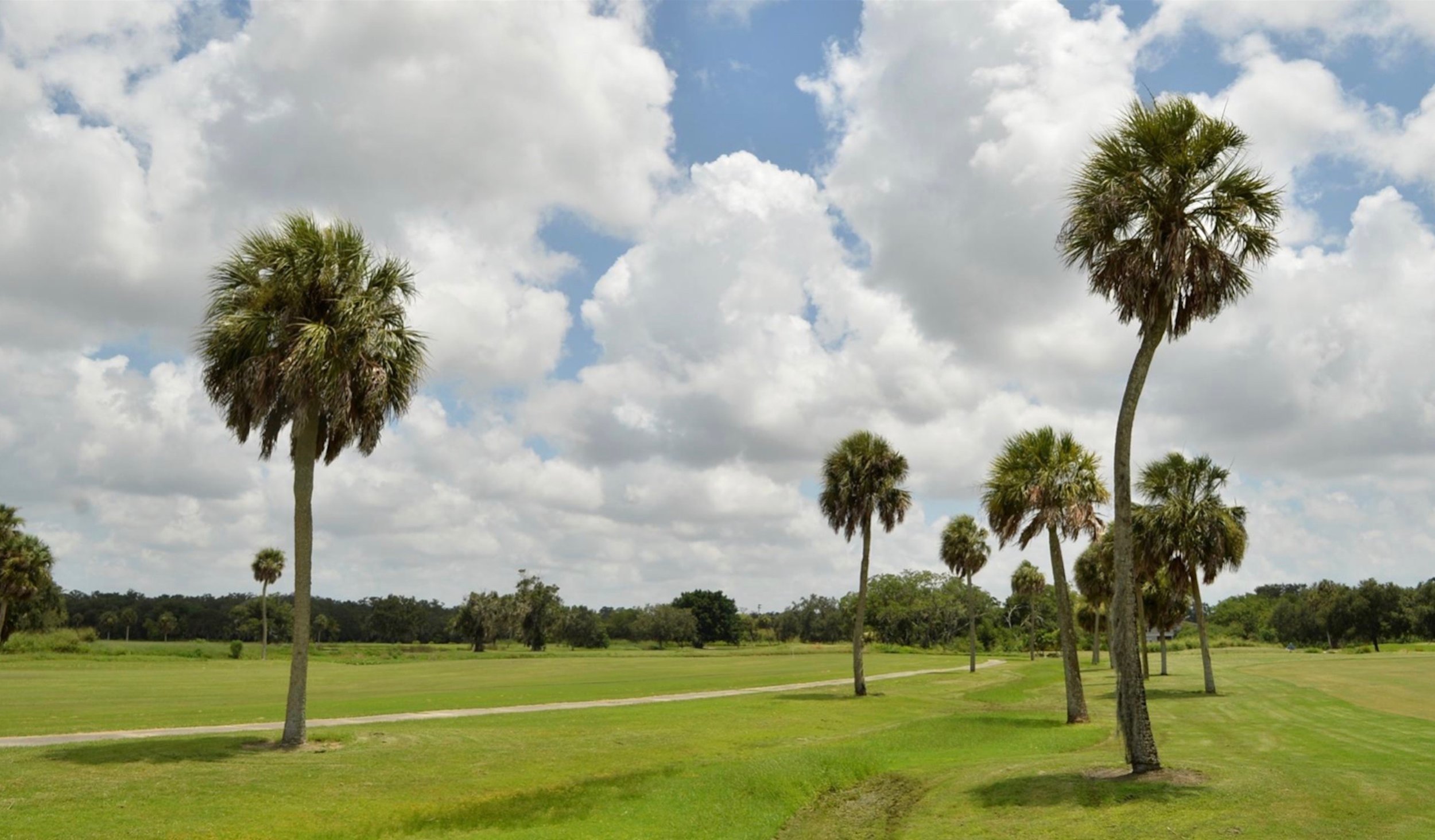
The Bobby Jones Golf Course is a 45-hole municipal golf course operated by the City of Sarasota. The city is exploring with the Conservation Foundation of the Gulf Coast a plan to preserve the 300 acres as open space. Herald-Tribune staff photo / Mike Lang
CITY MANAGER FLOATS CONCEPT OF A BOBBY JONES NATURE PRESERVE
SARASOTA HERALD-TRIBUNE
JUNE 28, 2019
BY BARABARA PETERS SMITH, STAFF WRITER
GOLF COURSES COULD REMAIN, BUT LAND WOULD BE CONSERVED FOR GREEN SPACE
Yet another public-private venture to preserve a large swath of local green space was unveiled on Friday. If this one comes to fruition, it could help resolve the fate of the Bobby Jones Golf Club, while opening up its 300-plus acres for public enjoyment and environmental protection.
The city of Sarasota’s quest to renovate its historic golf complex faces two daunting impediments: a potential cash bleed from a multimillion-dollar renovation investment, according to a consultant’s report, and public sentiment that remains splintered between a passion for golf and indifference to the sport.
Now Sarasota, partnering with the Conservation Foundation of the Gulf Coast, is exploring an ambitious concept that could address both. It would entail raising money from private donors to place the entire city-owned acreage under a conservation easement that would preclude development.
There is no price tag yet attached to this concept, but the millions invested would help cushion the public from bearing the full costs of keeping Bobby Jones open and green.
City explores Bobby Jones conservation partnership
SARASOTA OBSERVER
FRIDAY, JUNe 28, 2019
Ahead of a planned multimillion-dollar golf course renovation, city administration has considered permanently designating the 300-acre property as open space.
by David Conway, Deputy Managing Editor
Next month, city officials will discuss the option of partnering with the Conservation Foundation of the Gulf Coast to preserve the site of Bobby Jones Golf Club as open space in perpetuity.
In a release, the city announced it was exploring the possibility of creating a permanent conservation easement on the property, which the Conservation Foundation would control. Such a designation would dictate that the 300-acre property be used only for golf, recreation and as natural lands, the release said.
Conservation Foundation President Christine Johnson called a potential partnership the opportunity to create certainty the land would remain open space — and allow the city to imagine the possibilities to enhance the site’s natural assets.
“Cities that are vibrant and are places where people want to live, work and play have well designed and thought-out open space,” Johnson said.
City staff will provide an update to the commission on the conservation discussions at a special meeting Tuesday, July 9.
In addition to prohibiting the sale and development of the land, officials believe the conservation partnership could also help the fiscal sustainability of the golf course property moving forward, City Manager Tom Barwin said in a statement. Last year, the City Commission endorsed a renovation plan for the 45-hole municipal course estimated to cost $16.7 million.
Although the majority of the commission expressed optimism the financially troubled course could become profitable following an enhancement project, a May report cast doubt on that outcome. A draft business plan, written by National Golf Foundation Consulting, projected a renovated Bobby Jones would continue to lose more than $800,000 annually in operating expenses from 2024 to 2028.
“This is primarily due to the large debt service estimate and the rareness of public golf courses producing much higher than $1.0 million in net operating income, even after a full-scale renovation as is proposed in Sarasota,” the document stated.
Johnson said there were multiple ways the partnership could help the fiscal outlook of the property. She said enshrining the land as open space could lead to the establishment of more recreational opportunities, which could draw more users and improve the odds of raising the funds necessary to manage the site. She also suggested the city could consider reducing the number of golf holes on the site, though the City Commission has previously rejected that possibility.
The city’s release said that under a conservation agreement, “the property would be endowed with adequate funding so that it can be maintained for decades to come,” but it did not provide additional details on how the designation might affect the financial management of the land.
City spokesman Jason Bartolone said a conservation easement would not preclude the city pursuing the 45-hole renovation the commission endorsed.
BOBBY JONES CONSTRUCTION TO BEGIN APRIL 2020
June 10, 2019
By Mark Cardon
According to Bobby Jones officials, the construction could take one to two years.
Here are some facts in regarding the project:
— When I first covered golf for the Herald-Tribune in 1999, the City of Sarasota Men’s Amateur Championship was the largest and most prestigious amateur tournament in the area. Some 250 golfers competed in the tournament and there was a waiting list. This past May, just 65 players teed it up in the City Championship.
— The City Commission hired golf course architect Richard Mandell in 2017 to develop a plan to restore and renovate the historic golf course after years of neglect. His plan included renovations of all 45 holes of the golf course, an extensive golf development center at the Gillespie course and a new clubhouse totaling an estimated $16.7 million.
— The city has been subsidizing the course through its largely property tax-funded general fund. The course received $425,000 last year and $650,000 this year.
— The National Golf Foundation’s business plan predicts a loss of just more than $1 million in the first year of opening after the renovations have been completed. The expected losses diminish slightly over time, but even by 2028 projected losses are at $830,900.
— Currently, players pay an average of $28 per round.
— Bobby Jones staff reported that city residents made up just 9% of the rounds played at the course in 2017; 33% were county residents, 15% were remaining Florida residents and 43% were non-Florida residents.
— In 2017, 79,228 rounds were played at the course. In 2018, that number dropped to 66,698, following a national trend of decline in golf.
— At a commission meeting last December, it was stated that in order for the course to break even, the city would have to go from charging $28 per round to $50, and from 69,000 rounds played to 100,000. Alternatively, 139,773 rounds played at $35 per round — a little more than double the rounds played last year — would also work.

Photograph Courtesy WTSP News Channel 10.
Sarasota hopes renovations will turn around Bobby Jones Golf Club
WTSP NEWS CHANNEL10
June 10, 2019
The goal is to close in April 2020 to complete the renovations
By Libby Hendren
SARASOTA, Fla - It’s been a part of the Sarasota community for more than 90 years, but the Bobby Jones Golf Club is losing money. The Sarasota course brought in about $500,000 less in 2018 than in 2015. Jupiter-based NGF Consulting is offering a plan that could potentially turn things around, but there could be a deficit in the beginning.
The city is going to spend around $16 million to renovate the 45-hole course with modern amenities including new greens and multiple tee boxes. There’s going to be an expanded driving range and a new clubhouse. The head of the gulf club says adding some features that they don't have right now increases the potential for the course to make some green.
“The business plan only covers the golf portion of the golf course. It does not include the restaurant revenue, the golf shop revenue, the revenue for the new development center that we’re putting in across the street at the Gillespie which we don’t even have any figures on that because we haven’t had that feature before. And the larger driving range - just having that larger driving range will bring in a substantial increase in revenue,” manager Sue Martin told 10 News.
The cost to play is relatively low right now - just $24 for golfers who walk instead of renting a cart. There’s a $5 discount for locals. But after the renovations, they're planning to offer a tiered pricing system for locals, Floridians and out of state golfers and raise the prices a few dollars, in addition to charging premium fees during certain parts of the year.
According to the consultant’s analysis: “The result of this and the expected City of Sarasota bifurcated market positioning strategy, the ideal peak winter season 18-hole green + cart fee of $59 for City residents and $74 for non-residents, and summer walking weekend AM fees of $22.50 for residents ($34 with cart) and $30.00 for non-residents ($44 with cart). This pricing would position the new BJGC well below premium courses like Legacy GC, Stoneybrook, and University Park, but higher than the Preserve, Tatum Ridge and the Meadows CC.”
Martin tells 10 News the goal is to close in April 2020 - for 18 months - to complete the renovations.
EDITORIAL: RETHINK INVESTMENT IN BOBBY JONES COMPLEX
JUNE 10, 2019
SARASOTA HERALD-TRIBUNE
By the Herald-Tribune Editorial Board
There are times when a government body should stick by a decision and move forward.
But there are times when, say, a city commission ought to reconsider – especially when additional information has come to light.
In other words, maybe it’s time for the Sarasota City Commission to take a mulligan on its votes regarding the municipal Bobby Jones Golf Complex.
The commission decided in December to advance a $16.7 million plan to renovate the 45 holes at the city-owned complex and make other improvements – including construction of a clubhouse. A 3-2 vote in February, on paying a well-known golf-course architect nearly $1 million in design fees, suggested that some commissioners and members of the community have reservations about the project.
What’s more, the City Commission has yet to formally authorize a funding source for the overhaul, and this week the Herald-Tribune reported that the business plan procured by the city projects substantial operating losses even after the upgrades. According to an article by Amy Diaz, the National Golf Foundation predicts a loss of about $1 million in the first year after the renovation. The negative cash flow would continue but diminish slightly – to $830,000 in 2028. (Under certain scenarios, which include a doubling of fees and a similar increase in rounds played, the courses could break even.)
The city has subsidized the complex with $425,000 and $650,000 during the past two years, which leads to this question: It the goal of renovations is to attract more paying customers, where is the return on an investment nearing $17 million?
Substantial improvements are warranted at the complex, named after the legendary golfer Bobby Jones and designed, in part, by the accomplished course architect Donald Ross. The courses have played a significant role in Sarasota’s history. The complex offers affordable opportunities for golfers, is part of the city’s civic infrastructure and offers an expanse of open green space on Fruitville Road. (The space’s environmental value could rise with appropriate changes in stormwater management.)
But it is rational to have concerns about the capital costs of the proposed renovations, especially if there are no reasonable assurances that the investment will reduce operating losses in the near term.
Like most sports, golf is subject to trends but participation is on a downswing nationwide and the number of rounds played at Bobby Jones decreased to 66,698 last year from 79,228 in 2017. (Consider that the city of Bradenton, which has a resident population comparable to Sarasota, has only 18 holes on its River Run course. Manatee Country government owns two 18-hole courses that are managed by a private company.)
As proponents of the Bobby Jones project have accurately noted, subpar conditions on the courses surely have contributed to a decline in rounds. And there is no requirement for every public facility to turn a profit. But there are limits to what Sarasota can afford. In 2017 only 9 percent of the players were city residents, yet all city taxpayers will be on the hook for the investment and subsidies. It’s time to rethink this approach.

Bobby Jones Golf Club is a 45-hole municipal facility operated by the city of Sarasota. Officials hope redesigned courses will reverse a trend of fewer rounds being played at the 92-year-old venue. Photograph by Mike Lang Courtesy of Sarasota Herald-Tribune.
SARASOTA’S BOBBY JONES GOLF COURSE UNLIKELY TO BE SUSTAINABLE
June 10, 2019
SARASOTA HERALD-TRIBUNE
By Amy Diaz, Staff Writer
A CITY CONSULTANT’S BUSINESS PLAN FOR THE COMPLEX SHOWS THAT EVEN AFTER PRICEY RENOVATIONS, ITS REVENUES WON’T MAKE IT UP TO PAR.
SARASOTA – The release of a city consultant’s business plan for the Bobby Jones Golf Complex shows that even after pricey renovations, the course’s revenues won’t make it up to par.
The City Commission hired golf course architect Richard Mandell in 2017 to develop a plan to restore and renovate the historic course after years of neglect.
His plan included renovations of all 45 holes of the golf course, an extensive golf development center at the Gillespie course and a new clubhouse totaling an estimated $16.7 million.
But the golf complex that once made the city money, hasn’t for the last decade and isn’t projected to anytime soon.
The city has been subsidizing the course through its largely property tax-funded general fund. The course received $425,000 last year and $650,000 this year.
The National Golf Foundation’s business plan predicts a loss of just more than $1 million in the first year of opening after the renovations have been completed. The expected losses diminish slightly over time, but even by 2028 projected losses are at $830,900.
Supporters of following through on the renovations view the golf course as a site rich with history and tradition that ought to be preserved.
The complex, personally dedicated un 1927 by Robert Tyre Jones, Jr., an influential figure in golf history, has hosted a number of men and women’s golf event, attracting visitors from all around the world.
It is also a public course, which means membership isn’t required to play. Instead, players pay an average of $28 per round.
City Manager Tom Barwin said in a Bobby Jones Committee meeting on May 29 that golf, while not played be everyone, it still an important piece of the community.
“We have tennis courts but not everybody plays tennis. We have swimming pools but not everybody goes swimming. We have playgrounds but not everybody has kids,” Barwin said.
“Golf is just one of those things. It’s embedded in our history and the fabric of our community.”
Multiple members of the committee added that the Bobby Jones Golf Complex is “so much more than just a golf course,” citing wildlife and the potential for other activities in the complex like pickleball.
“Bobby Jones Golf Club is an enormous reflection of the social and economic development of Sarasota, uniquely intertwined with the community since before its physical manifestation in 1925,” said Shawn Pierson, president of the Friends of Bobby Jones Golf Club. “Sarasota was key to the development of golf, and golf key to the development of Sarasota, as early as 1886.”
But opponents of the plan find it hard to argue with the numbers.
Bobby Jones staff reported that city residents made up just 9% of the rounds played at the course in 2017; 33% were county resident, 15% were remaining Florida residents and 43% were non-Florida residents.
In 2017, 79,228 rounds were played at the course. In 2018, that number dropped to 66,698, following a national trend of decline in golf.
In an email to the Herald-Tribune, former Sarasota City Commission candidate Martin Hyde referred to the plan as a “bait and switch,” upon seeing the consultant’s financial projections.
“This is NOT what was stated when the commission voted to move forward,” Hyde wrote. “At the time, it was asserted that it could break even.”
At a commission meeting last December, it was stated that in order for the course to break even, the city would have to go from charging $28 per round tom $50, and from 69,000 rounds played to 100,000. Alternatively, 139,773 rounds played at $35 per round – a little more than double the rounds played last year – would also work.
During that meeting, Commissioner Hagen Brody advocated for a less expensive alternative, keeping 27 holes, rather than 45, and preserving the rest of the park as green, open space.
“To me, the math, it’s pretty simple and it does not work for that size of a renovation,” Brody said. “If we can bring it down to 27 holes and take the rest of the course and put it in our public parks, I just think it’s much, much more feasible to reach that number.”
While Brody cited less expensive golf courses in the area, Mandell argued that people would gladly pay more for a newly renovated course.
“You’re going to have something here in Sarasota that is very rare anywhere else, and people pay a lot of money to play golf courses, a lot more than that from out of state,” Mandell said. “When we get done with this, it will rival anything as far as infrastructure and design goes.”
Another concern is that by the time the course might break even, it will need upgrades again.
Mandell countered this at the Bobby Jones committee meeting.
“We won’t make the same mistakes that were made in the past drainage-wise and we’ll be able to maintain consistently,” he said. “If we all do our job, it shouldn’t look tired and old after 20 years at all.”
Pierson stressed that it is important for city leadership and citizens to understand the plan still has room for improvements and community input.
“We’re at the stage of a still-undetermined scope of work and a developing plan,” Pierson said. “We all desire to arrive at a process and a plan that we can all agree celebrates and strengthens our history and our values and leaves no stone unturned to be the best it can be.”
Bobby Jones golf course will get a partial redesign
February 22, 2019
SARASOTA HERALD-TRIBUNE
By Nicole Rodriguez
Sarasota City Commission to spend $1 million to plan revamp without financing in place for the $16.7 million project
SARASOTA — City leaders don’t know how they’re going to pay for $16.7 in improvements to the municipal Bobby Jones Golf Club. Still, they’ve agreed to shell out roughly $1 million to an architect to design a portion of the major renovation to the aging facility.
In a 3-2 vote Tuesday, the City Commission authorized the payment to golf architect and city consultant Richard Mandell, who recommended the transformation of the 45 holes, which will include replacing the antiquated irrigation system, adding a $3.4 million clubhouse, creating a golf development center, rebuilding all the greens and significantly expanding the driving range. Now the city must determine how to pay for the pricey project. Commissioners Shelli Freeland Eddie and Hagen Brody cast the dissenting votes.
Brody was especially concerned that the city plans to move forward with the project before discussing financing options. When the commission approved the overhaul in December, city staff said the commission at a future date would discuss financing for the transformation — which hasn’t yet happened at a public meeting. One option mentioned in December was borrowing money through bonds. Another was asking voters to borrow the money by adding a referendum on the ballot during an election. That option would likely require a special election at a cost of roughly $100,000 if the commission does not want to wait until the 2020 elections, city officials said.
“Don’t you think it would be more appropriate for us to decide how we’re going to pay for the course — whether it’s going out for a general referendum to the voters, whether we’re just going borrow the money, whether it’s going to be included in the parks district and how we’re going to fund that — and if that is going to impact the budget for next year to the point where we need to be increasing taxes?” asked Brody, who has advocated a cheaper option of keeping 27 holes and using the extra space for other amenities that are less costly to maintain. Brody has said he doesn’t believe the course, which has been losing players annually, will generate enough revenue to be self-sufficient and cover the cost of renovations.
Brody added he’s also uncomfortable moving forward without a business plan. City officials said a 10-year plan is in the works and should be ready in about six weeks.
City staff is operating under the assumption the city would be issuing bonds to cover the cost of the improvements, City Manager Tom Barwin said in response to Brody.
“Those conversations were already had. Those decisions have been preliminarily made,” Barwin answered. “We are organizing to go to the bond market to borrow money to pay for the construction costs.”
Preliminary financing estimates presented to the commission by city staff in December show debt repayments would be approximately $2 million annually for 10 years and about $1.5 million annually for 15 years. City staff plans to pursue grants, but they aren’t a guaranteed funding source. To pay for the renovations, nearly 140,000 rounds of golf must be played each year, coupled with a fee hike most members of the public agree with, Mandell and city officials also have said. It’s not an impossible feat for the improved club to attract that many players, although rounds of golf have decreased nationwide, Mandell said. In 2017, 79,228 rounds of golf were played at the club. The courses in 1997 saw rounds peak at 164,000, according to city documents.
Another issue raised by commissioners and public speakers this week was that a competitive bidding process wasn’t held for the design services. The city’s Purchasing General Manager David Boswell assured the commission the move isn’t unusual.
“We added the additional scope to allow us to reserve the right to select the consultant to do further design if we so deemed necessary if they proved to be a good consultant,” Boswell said of Mandell’s original consulting contract with the city.
Mandell will be paid roughly $1 million for architectural work on the project, but that excludes course shaping and the clubhouse design, officials said. Course shaping is the eventual step of molding the terrain into the shapes decided upon in the initial planning stages, as relayed by the architect. That step is estimated to cost around $785,000, according to city documents. The clubhouse design and food services planning is expected to cost $308,500, city documents state. Those two phases could be contracted by another party aside from Mandell if the commission chooses, city officials said.
The club likely will require a $650,000 subsidy from the city’s main operating fund to close a budget shortfall, city officials have warned in recent months. City officials have blamed the Great Recession for years of neglect to the complex, but city records suggest the inattention to the complex spanned three decades, the Herald-Tribune reported in June.
The recession, which caused the real estate market to collapse and halted new construction 10 years ago, forced city officials to divert money from the once-profitable club to pay for vital city services, Sue Martin, the course’s manager has said. The neglect, however, started well before the recession, city documents suggest. In the past 30 years, the city put roughly $3.2 million in major course investments, according to city documents. That’s an average investment of about $106,600 annually during those three decades.
Tee boxes, which have a typical life expectancy of 15 to 20 years, have not been replaced in more than 30 years. Irrigation heads and pipes, which have a life expectancy of 10 to 30 years, are more than three decades old, city documents show. Bunker sand, which has a life expectancy of five to seven years, is more than 20 years old, documents show.
The American course received $1.9 million in renovations in 1988, and the British course greens were rebuilt in 1994 and 2008 at a cost of $320,959. American course greens were rebuilt in 2000, costing $247,911, city documents show. Recently, $158,750 in drainage work was performed on the courses, which are prone to flooding.
The club was last profitable in 2012 when it generated roughly $2.8 million. Minus expenses of about $2.8 million, the course had a net income of $25,502, city records show.
Records also show the courses have seen a steady decline in play for the past three budget years, which run from October to September. Budget year 2015-16 saw a decrease of more than 7,800 players from 98,315 players the previous year. The city reported about 79,000 players in budget year 2016-17.
Expert: Sarasota paying 2-3 times too much for architectural services at Bobby Jones Golf Complex
February 12, 2019 at 11:35 AM EST - Updated February 13 at 2:48 PM
Suncoast News WWSB Channel 40 ABC7
CITY READY TO SPEND $1M ON GOLF COURSE CONSULTANT WITHOUT COMPETITIVE BID
By Ray Collins
SARASOTA (WWSB) - When Sarasota City Commissioners first chose Richard Mandell to develop a Master Plan for the city-owned Bobby Jones Golf Complex, it was through a competitive bid process.
Mandell eventually suggested $16 million in improvements to the complex. Now City Commissioners are ready to move forward with Mandell and have him make his Master Plan a reality, but that comes with a more than million-dollar architectural services fee to have Mandell head-up the project.
Taxpayer and golf course owner Neal Neilinger, who recently rehabbed “The Palms at Forest Lakes,” says City Commissioners are poised to spend two to three times too much for that fee, based on his knowledge of the golf industry. “The city has an obligation to taxpayers to get the best quality of services at the best price. I’m not disputing if he’s the right or wrong person, but it’s the wrong price. And it’s the wrong price because they haven’t gone out for a competitive bid[for architectural services],” Neilinger said.
But City Spokesman Jason Bartolone came to the city’s defense, saying the original Request For Proposal issued in 2017 for a Master Plan for the Bobby Jones Golf Complex included a section on architectural services, allowing each firm submitting bids to list what their fee would be.
Bartolone tells ABC7 that the proposal allows the city to “continue services with whichever firm was selected [to create the Master Plan]," adding that “continuing services with the same firm that created the Master Plan would allow for continuity and consistency in the project.”
He says that the Request For Proposal went through a competitive bid process and that “all the bidders included information about architectural services and knew that the city might exercise that option.”
Bartolone disputes Neilinger’s assessment that the city is overpaying for architectural services, saying, “Mr. Mandell’s costs for architectural services were relatively reasonable and competitive.”
“The item on next week’sagenda is an amendment to the original agreement with Richard Mandell Golf Architectures, Inc., for architecture services in the amount of $1,053,400," he wrote
FRIDAY, DECEMBER 28, 2018
SARASOTA OBSERVER
CITY COMMISSIONERS DECIDED TO GO ALL IN ON RENOVATIONS TO THE MUNICIPAL GOLF COURSE ALONG FRUITVILLE ROAD - BOBBY JONES GOLF CLUB
CITY ENDORCES EXTENSIVE BOBBY JONES RENOVATIONS

Golf architect Richard Mandell discusses the proposed improvements to Bobby Jones Golf Club at a special City Commission meeting Tuesday. Photograph Courtesy of Sarasota Observer.
WEDNESDAY, DECEMBER 12, 2018
SARASOTA OBSERVER
DAVID CONWAY, DEPUTY MANAGING EDITOR
Will an investment of $16.7 million improve the fortunes of the municipal golf course? Can the city afford the changes?
Like most members of the public who spoke at Tuesday’s City Commission meeting about potential renovations to Bobby Jones Golf Club, Steve Matthews is a golfer.
Like most of those speakers, Matthews recalled a time when the 45-hole municipal course was a great place to play golf. As recently as 2007, golfers played more than 140,000 rounds at Bobby Jones.
But he’s seen a striking decline in the quality of the facility over the past decade. As city leaders opted not to make major infrastructure investments at Bobby Jones, the drainage and irrigation systems began to show their age, leading to patchy fairways, shoddy greens and regular closures due to flooding. The number of players each year dropped. In 2018, golfers played 66,698 rounds at the course.
Still, like most of those speakers, Matthews thinks there’s hope for Bobby Jones to return to its glory days. He encouraged the city to pursue an ambitious plan for improving all 45 holes at the course, certain golfers would come flocking back if the facility was once again in good condition.
“I think you have an obligation to save it,” Matthews said.
The majority of the City Commission shared Matthews’ optimism. On Tuesday, the board voted 4-1 to pursue a 45-hole renovation plan estimated to cost $16.7 million.
In addition to repairing the drainage and irrigation beneath the course, the plans include the construction of new hole designs, a player development center and a new clubhouse.
Commissioners expressed confidence the improvements would allow Bobby Jones to return to self-sustainability after an extended period of financial struggle. In nine of the past 10 years, the golf course has posted a loss, depleting nearly $2 million in reserves since 2009. In the most recent budget, the course received a $650,000 subsidy from the city’s general fund.
But as the city prepares for the first significant investment in Bobby Jones’ infrastructure in decades, some officials were less certain the course would generate enough revenue to cover both operating costs and the expenses associated with improvements.
Teeing off
Although the commission previously expressed a desire to renovate all 45 holes, city staff also presented an alternate plan Tuesday that would have reduced the course to 27 regulation holes and a nine-hole training center.
City Manager Tom Barwin said staff developed that option, priced between $11.9 million and $15.2 million, to make the commission aware of the financial challenges and uncertainty Bobby Jones faces. In a memo, Barwin warned that circumstances beyond the city’s control could limit increases in revenue at Bobby Jones. If the new levels of revenue are insufficient, Barwin said it’s plausible the golf course could continue to demand a general fund subsidy.
Barwin said the 27-hole option would have been a more fiscally conservative approach tailored to the recent levels of play at Bobby Jones, rather than historic activity.
“Now that we have reliable cost information, the decision becomes what level of financial risk is the city willing to take, if any, to continue to own and operate a municipal golf course,” Barwin wrote in the memo ahead of Tuesday’s meeting.
City Commissioner Hagen Brody, the dissenting vote Tuesday, was even more critical of the financial components of the proposed renovations. He said he saw no evidence Bobby Jones would be able to produce the number of rounds necessary to pay for the renovations and future maintenance expenses.
The cost of financing a $16.7 million improvement project would be $2 million annually over a 10-year period, or $1.5 million annually over a 15-year period, according to city staff. Over the past five years, operating expenses at Bobby Jones have averaged $2.7 million annually.
Brody questioned how the city could expect to cover up to $5 million in annual expenses at Bobby Jones without needing to increase taxes or cut services elsewhere. He cited the course’s revenue from 2007, when there were 143,000 rounds played at Bobby Jones. That year, the facility generated $3.4 million.
“Contrary to what our city staff is telling us in the meeting and behind closed doors, what finance is telling us in the meeting and behind closed doors, we just chose to take the grand Cadillac package with no reasonable way to pay for it,” Brody said following the meeting.
Consultant Richard Mandell, who produced the Bobby Jones master plan proposal for the city, said there’s reason to believe the revenue can increase beyond the 2007 levels. Although the number of golfers at Bobby Jones has significantly declined during the past two decades, the popularity of golf in Florida has not. As a result, he believes golfers only left Bobby Jones because the course fell into disrepair.
After the improvements are made, Mandell said the city could charge a higher average price per round and still expect a significant increase in rounds played at the course.
To cover $5 million in annual expenses, the city would need to have 100,000 rounds played at Bobby Jones at an average price of $50 per round each year. In 2017, the average price was $23.
Even considering the substandard state of the course, Mandell said that price was too low. He said the city could create a tiered pricing structure to ensure the facility remains affordable for residents, but he emphasized the historic price points at Bobby Jones have been below market rates.
“You’ve been giving rounds away for years,” Mandell said.
Mandell acknowledged Bobby Jones has more competitors in the golf course market today than it did in the 1990s or 2000s. Still, he expressed confidence that Bobby Jones had attributes that would make it more appealing than the alternatives to dedicated golfers, including its size and location.
“It’s more playable for the average golfer, and you can create strategy to appeal to the more highly skilled golfer,” he said.
Picking priorities
Commissioner Shelli Freeland Eddie decided to support the proposed improvements when she examined the history of the course.
Prior to the late-00s recession, Bobby Jones regularly turned a profit. In 2007, revenue exceeded expenditures by nearly $642,000. Reports the city has received from golf professionals have stated Bobby Jones could significantly increase its revenue if money is invested back into the course.
Eddie said she believes it’s reasonable for the city to make up for an extended period of neglect that aligns with the decline of activity at Bobby Jones. She saw the price difference between the 27-hole and 45-hole renovation options as less significant than the potential for increased revenue if the city maintains the current size of the facility.
Although two critical speakers questioned whether the city should be managing a golf course at all, Eddie said Bobby Jones is an important pubic amenity. The 287-acre property represents about half of the city’s total parkland. As a result, she believes the commission has a responsibility to ensure it is maintained at an acceptable level.
“Our golf course is a public golf course so that residents can have a place to play,” Eddie said.
Staff reported city residents represented 9% of the rounds played at Bobby Jones last year — about 6,000 rounds in total. Still, Eddie was optimistic the renovated course would provide a quality, reasonably priced opportunity for all city residents to play golf, including younger and working-class demographics.
Brody thought the city could continue to provide an affordable golf option and maintain the entirety of the property as public open space while still scaling down the footprint of the course itself.
He criticized the rest of the commission for not focusing more on where improvements to a golf course fall into the hierarchy of priorities for the city.
“Put this out in the public and say, ‘If we had $17 million dropped on our doorstep tomorrow, what should we spend it on?’” Brody said. “I guarantee golf would not be near the top of our choices.”
But, as the commission directed staff to develop more detailed financing options in produce of a finalized improvement plan, Brody remained the lone skeptic on the board about investing significant resources to lure golfers back to the course.
“The reason they are not playing is because of the condition,” Eddie said.
BOBBY JONES UPGRADES APPROVED
December 12, 2018
SARASOTA HERALD-TRIBUNE
SARASOTA CITY COMMISSION DECIDES FATE OF AGING BOBBY JONES GOLF CLUB, WITH MAJOR RENOVATION PLANNED
Nicole Rodriguez, Staff Writer
Courses will need to host 140,000 rounds annually to pay for upgrades
SARASOTA — All 45 holes of the city’s deteriorating and financially troubled Bobby Jones Golf Club will be overhauled with the intention of returning it to the profitable destination it was more than a decade ago, during its glory days.
The Sarasota City Commission on Tuesday voted 4-1 to move forward with a $16.7 million transformation of the golf club, which will include replacing the antiquated irrigation system, adding a $3.4 million clubhouse, creating a golf development center, rebuilding all the greens and significantly expanding the driving range. The overhaul approved by the commission came from the city staff and golf architect and city consultant Richard Mandell, who hosted a series of public workshops earlier this year to gauge what the community wanted for the aging municipal course, opened in 1926.
“The Bobby Jones facility is in such disrepair that our plans call for rebuilding everything on the site,” Mandell said.
Commissioner Shelli Freeland Eddie believes renovating all 45 holes will give the city the best bang for its buck, especially during tourist season, she said.
“If you create the largest number of rounds in the most critical season, which is October to May, you can generate the dollars, you can pay off the subsidy quicker, and you can have an attraction that nobody else has,” Freeland Eddie said.
The dissenting vote belonged to Commissioner Hagen Brody, who advocated scaling down the golf club to 27 holes and maintaining one of the courses as an open recreational green space. Maintaining the smaller golf club would have been a big savings for the city in the long run, Brody said. The cost for a 27-hole club with a new clubhouse was estimated at $15.2 million.
“I’m going to apologize to future commissions for this decision,” Brody said, adding he doesn’t believe the 45-hole club will attract the rounds of golf at a reasonable price to repay the money the city must borrow to perform the renovations.
With the fate of the club sealed, the commission at a future date will discuss financing options for the transformation. One option is borrowing money in the form of bonds. Another is asking voters to borrow the money by adding a referendum on the ballot during an election. That option would likely require a special election at a cost of roughly $100,000 if the commission does not want to wait until the 2020 elections, city officials said. The commission will also discuss potentially raising the average round of golf from $28 to help pay for the renovations, officials said. Commissioners are also considering cheaper rates for residents, since 9 percent of players last year lived in the city, compared to 43 percent of players who lived out of the state, according to city data.
Preliminary financing estimates show debt repayments would be approximately $2 million annually for 10 years and about $1.5 million annually for 15 years. City staff plans to pursue grants, but they aren’t a guaranteed funding source. Staff will begin to negotiate an agreement with Mandell to complete the course renovation plan, construction drawings, construction plans and course build-out, according to city documents. If final design begins early next year, renovations could begin in the spring of 2020, city documents state.
To pay for the renovations, nearly 140,000 rounds of golf must be played each year, coupled with a fee hike most members of the public agree with, Mandell and city officials said. It’s not an impossible feat for the improved club to attract that many players, although rounds of golf have decreased nationwide, Mandell said. In 2017, 79,228 rounds of golf were played at the club, which likely will require a $650,000 subsidy from the city’s main operating fund to close a budget shortfall. The courses in 1997 saw its peak rounds of golf at 164,000, city officials said.
“Policy makers should note any shortfall or gap in annual operating expenses and debt service will have to be subsidized from general fund revenue sources,” City Manager Tom Barwin warned the commission in a Nov. 30 memo. “Even if things go exceedingly well with the renovation and increased starts at the Bobby Jones Golf Club, annual weather patterns, economic conditions, competition, and trends in golf and leisure activity could negatively impact annual revenue potential at the Bobby Jones Golf Club.”
“Any additional and/or significant subsidies to the Bobby Jones Golf Club would require probable reductions, perhaps dramatic reductions, in other city services and/or programs, or require a tax increase,” Barwin added.
City officials have blamed the Great Recession for years of neglect to the financially hemorrhaging complex, but city records suggest the inattention to the complex spanned three decades, the Herald-Tribune reported in June.
The recession, which caused the real estate market to collapse and halted new construction 10 years ago, forced city officials to divert money from the once-profitable club to pay for vital city services, Sue Martin, the course’s manager has said. The neglect, however, started well before the recession, city documents suggest. In the past 30 years, the city put roughly $3.2 million in major course investments, according to city documents. That’s an average investment of about $106,600 annually during those three decades.
Tee boxes, which have a typical life expectancy of 15 to 20 years, have not been replaced in more than 30 years. Irrigation heads and pipes, which have a life expectancy of 10 to 30 years, are more than three decades old, city documents show. Bunker sand, which has a life expectancy of five to seven years, is more than 20 years old, documents show.
The American course received $1.9 million in renovations in 1988, and the British course greens were rebuilt in 1994 and 2008 at a cost of $320,959. American course greens were rebuilt in 2000, costing $247,911, city documents show. Recently, $158,750 in drainage work was performed on the courses, prone to flooding in rains.
The club was last profitable in 2012 when it generated roughly $2.8 million. Minus expenses of about $2.8 million, the course had an income of $25,502, city records show.
Records also show the courses have seen a steady decline in play for the past three budget years, which run from October to September. Budget year 2015-16 saw a decrease of more than 7,800 players from 98,315 players the previous year. The city reported about 79,000 players in budget year 2016-17.
CITY TO DISCUSS BOBBY JONES IMPROVEMENTS
Friday, December 7, 2018
SARASOTA OBSERVER
Plans to renovate the municipal golf course could cost up to $16.7 million, with no guarantee of future profitability
David Conway, Deputy Managing Editor
As the City Commission considers committing up to $16.7 million for renovations at Bobby Jones Golf Club, city administration is warning that the financial future of the municipal course would be uncertain even after any improvements are made.
On Tuesday, the commission will hold a special meeting to discuss its ongoing efforts to implement a master plan for Bobby Jones Golf Club. For more than four years, the city has been examining how to address continued financial losses and deteriorating infrastructure at the city-owned recreational facility.
Working with consultant Richard Mandell, the city developed a report estimating the 45-hole facility needed more than $21 million in improvements. At the direction of the commission, Mandell and staff have worked to refine an improvement plan and provide potential financing options.
Tuesday’s meeting will allow the commission to decide between different levels of financial commitment to improvements at the golf course. The estimated cost of retaining all 45 holes, building a new clubhouse and a player development center would be $16.7 million, according to material included with Tuesday's meeting agenda. The cost for those same improvements without a clubhouse would be $13.4 million.
City staff estimates that level of investment would require between $1.2 million and $2 million in annual debt payments, paid out over a 10- or 15-year period.
In addition to deciding their preferred level of investment, the commission must address questions of long-term financial feasibility, City Manager Tom Barwin said in a memo. If the commission continues to prioritize an affordable course for residents, Barwin said it is possible Bobby Jones will still need to draw a general fund subsidy.
“Any additional and/or significant subsidies to the BJGC would require probably reductions, perhaps dramatic reductions, in other city services and/or programs, or require a tax increase,” Barwin’s memo states.
As a result, city staff produced an alternative renovation plan: reducing the size of the course to 27 regulation holes and a nine-hole development center. The cost for that level of improvement would range from $11.9 to $15.2 million, demanding annual debt repayments between $1.1 and $1.8 million.
If the city begins the course of designing the renovations in early 2019, construction could begin in spring 2020, Barwin wrote. He said the city should be able to keep at least 18 holes open during any construction period.
Barwin’s memo, along with other related material, is available on the city website.
GOLF COURSE UPDATES A DRIVE FOR NEW PLAYERS
November 25, 2018
South Florida Sun SentinelLois K. Solomon
As courses around the country close, South Florida’s links try to modernize
DELRAY BEACH
Golf courses are closing all over the country. But in South Florida, many are opening, reopening and renovating.
In Delray Beach this month, the City Commission agreed at a workshop to invest more than $7 million in the city’s aging course, which opened in 1926 at 2200 Highland Ave.
Delray Beach follows Tamarac, which paid more than $4 million to buy the Colony West golf course and improve it, and Boca Raton, where the Greater Boca Raton Beach & Park District bought the private Ocean Breeze golf course with a $20 million loan from the city and will rename it Boca National Golf Club.
Hollywood commissioners will decide in December whether to hold a special election to borrow money for several projects, including renovating two city-owned golf courses, Orangebrook and Hollywood Beach Golf Course, for $38 million.
These renovations and acquisitions show South Florida golf is at a turning point, said Richard Singer, senior director of consulting services at the National Golf Foundation in Jupiter.
“We’ve got a lot of aging golf courses, and you get to a fork in the road,” Singer said. “In South Florida, land is at a premium and the underlying property is so valuable.”
That’s why some golf courses decided to close down and sell their land to developers. The foundation reports 177 18-hole golf courses in Miami-Dade, Broward and Palm Beach counties, down from 189 in 2007.
Nationally, while more than 200 golf courses closed in 2016, only 15 opened, he said.
In Sarasota, officials are facing challenges of their own with the city-owned and financially troubled Bobby Jones Golf Club. The City Commission has scheduled a special meeting for Dec. 11 to receive a final presentation on the 45-hole club, which like Delray Beach’s, opened in 1926. Golf architect and city consultant Richard Mandell recommended a roughly $17 million slate of priority fixes in May.
It is not clear if the same improvements will be recommended next month.
South Florida’s golf course investments run counter to some national trends, which show golfers as an aging demographic that is not being replaced by a new generation. When Delray Beach golf players came out in force to support renovation of the city’s Golf Club, City Commissioner Ryan Boylston pointed out the makeup of those in the audience: retirees in their 60s, 70s and 80s.
“We need more programs to reach out to the rest of the community,” including youth tournaments and high school clubs, Boylston said.
This aging cohort is a concern across the country. Although there were about 30 million golfers in 2005, there were only 23.8 million in 2017, according to the National Golf Foundation. The number of golfers over age 65 increased 13 percent.
Still, there was some good news for those hoping for a youthful golf surge. The foundation reported 2.5 million beginning golfers in 2017, a 14 percent increase from 2015.
Delray Beach said the city will make efforts to attract these young athletes. Commissioners want the closing of golf courses in South Florida to become a business opportunity. They said they see Palm Beach County’s Osprey Point course in West Boca as a model: Golfers played 93,538 rounds there in 2016, versus only 59,120 in Delray Beach.
“If there are fewer courses, there’s an opportunity to bring more members to our course,” Commissioner Adam Frankel said.
Delray Beach player John Kaelblein agrees. He lives next to the city course and wants the city to emphasize its history, design by legendary architect Donald Ross and accessible location off busy Atlantic Avenue.
“The others don’t have the traditions we have,” said Kaelblein, treasurer of the Delray Beach Men’s Golf Association. “You have to be aware of the competition, but I think we can be every bit the equivalent and more.”
Fort Myers City Council members wonder why the city is subsidizing failing golf courses
November 24, 2018
Fort Myers News-Press
Melissa Montoya
A Fort Myers councilman wants to know why the city is subsidizing failing golf
The issue was raised by Councilman Fred Burson, of Ward 5, during last week's City Council meeting after last year's budget had to be amended to make up for the losses at the Fort Myers Country Club and the Eastwood Golf Course.
"If this was a private golf course, they'd be under," Burson said.
According to city estimates, the Fort Myers Country Club operated at a net loss of $112,000 for fiscal year 2018 that ended Sept. 30. Eastwood Golf Course suffered a $176,500 loss.
The action during Monday's meeting was to move $92,300 in reserve funds from the Parks and Rec division to make up for the loss of money at the Fort Myers Country Club. Meanwhile, $176,500 was transferred from the finance department's expenditure savings to subsidize the Eastwood Golf Course.
Burson said he wanted to make sure that the children of Fort Myers would not be paying for the golf courses because the money was being taken from the savings at the parks department.
"Absolutely not," said Fort Myers City Manager Saeed Kazemi.
In 2014, Fort Myers paid $5.8 million to renovate the Fort Myers Country Club.
But revenues after the renovations have fallen short and business is not what was expected, Kazemi told the council.
"Just as a thought I got to tell you there are golf courses all over this county and they are self-sustaining," Burson said. "They don’t have a city or a county pouring money into them and they seem to make a living on their own."
Councilwoman Gaile Anthony said she hopes the city can turn this around because that's a half-a-million dollars that other departments have worked really hard to save.
A long-time golfer who began playing in high school, Anthony considers the golf courses a burden.
That's why during a May budget workshop for the fiscal year 2018-19, which ends Sept. 30, 2019, Anthony opposed $3 million in renovations included in the capital improvement funds for Eastwood Golf Course.
The five-year capital improvement program shows that Eastwood could need $3 million in renovations.
Rich Lamb, Fort Myers' director of golf, said $3 million is a lot of money but added the city won’t see the potential of Eastwood until the back nine is completed, including irrigation, adding new grass on the putting greens, as well as removing exotic plants and putting in new ones.
However, Lamb said he’d like to speak with the council on a counter of $1.5 million in improvements.
“The state of golf in America is difficult, but there was a great song that only the strong will survive,” Lamb said. “If you want to have a good product, you have to spend but spend the money wisely. This is a going to be a difficult time, but I do feel Eastwood is the best public golf course for 150 miles.”
Golfing has changed, Anthony said during a recent interview with The News-Press.
"It's not the golf I grew up with in the 1970s when we all played golf. It's not that era," Anthony said. "When you’re supporting two golf courses at $500,000, I would rather put that money into mental health and safety and children. I’d love to see us renovate the Stars Complex."
During the Monday meeting, Kazemi told the council the city had hired consultants to look at the city's assets, including its golf courses.
Eastwood, which is off of Ortiz Avenue, has two projects that will affect its future. The front nine was renovated recently for $2.2 million in 2017.
In 2017: ROAD PROJECT SPLITS GOLF COURSE, PAVES WAY FOR MORE TAX MONEY
The extension of Hanson Street, which has been planned for more than a decade, will split the golf course in two.
A small strip of the golf course will be sold for $233,700 to the Florida Department of Transportation to accommodate the expansion of Colonial Boulevard.
"The only right of way we need for the whole project is a little strip of land," said Zachary Burch, a spokesman with FDOT. "It's not going to impact the actual course itself."
The area will be used to widen the right turning lane from Ortiz onto Colonial Boulevard.
The land will also be used for drainage, Burch said.
"The city and state are still in negotiations regarding the sale/transfer of the property," said Fort Myers spokeswoman Stephanie Schaffer.
It's unknown what the city's consultants will say about the future of the Fort Myers Country Club and Eastwood, but the appraisal for the FDOT project concluded that the tract of land was best used for recreational purposes such as a golf course.
Kazemi said this is not just a problem for Fort Myers, but for all of the golf community because memberships are down.
Golf lost almost a quarter of its participants in the U.S. between the decade spanning from 2007 to 2017, according to data from the National Sporting Goods Association. In 2007, there were 22.7 million participants and last year there were 17.9 million.
During that same period, the participation rate in the South Atlantic region, which includes Florida, went from 3.9 million in 2007 to 3.2 million last year.
The reasons why people were playing golf less varied by age, said Nick Rigitano, research and information manager with the National Sporting Goods Association.
For those under the age of 55, the game takes too much time. And those over 65, don't have anyone to golf with.
The world is changing and so is golf, Anthony said.
Anthony said she would be open to seeing Eastwood become a nine-hole course with the back nine being developed another way.
“Why not?” she said. “We need to think out of the box. We are going into a new era. That’s a valuable property, a $37 million piece of property."
But subsidizing golf courses?
"It's not sustainable what we are doing," she said.
Staff writer Craig Handel contributed to this report
Special meeting on Bobby Jones Golf Club slated for next month
November 24, 2018
Nicole Rodriguez, Staff Writer
The Sarasota City Commission could decide the destiny of the financially troubled Bobby Jones Golf Club
SARASOTA
The Sarasota City Commission next month could decide the destiny of the financially troubled Bobby Jones Golf Club.
The commission on Monday set the date for a special meeting on Dec. 11 at City Hall from 5 p.m. to 9 p.m. to receive a final presentation on the municipality’s aging 45-hole golf club from city staff and golf architect and city consultant Richard Mandell. The commission in late May was presented numerous recommended upgrades to the three course by staff and Mandell, but put off a decision on the fixes, opting to reestablish a disbanded golf advisory board and hold a series of public workshops for community input on improvements.
The priority fixes Mandell and staff recommended in May included: replacing the antiquated irrigation system, renovating the deteriorating clubhouse, creating a golf development center, rebuilding all the greens by 2023 and expanding the driving range. It’s estimated to cost nearly $17 million to perform the specified renovations to all 45 holes. Roughly $735,000 of the cost would be covered by an existing one-cent sales tax, and the city identified $3.5 million in possible grant funding, city officials have said.
It’s unclear if the same improvements will be recommended next month.
“Mr. Mandell and staff are still working out the details of what will be included in the Dec. 11 presentation,” city spokesman Jason Bartolone said in an email this week.
City Manager Tom Barwin on Monday hinted to the City Commission that Mandell and staff might present financing options for their recommended improvements at the meeting.
“Richard Mandell is preparing an analysis and a strategy and financing is going to have to be a key and critical part to whatever we do,” Barwin said.
This fiscal year, the facility will likely need a $576,600 subsidy from the general fund to break even, city officials said. Recently, $158,750 in drainage work was performed on the courses, prone to flooding in rains.
City officials have blamed the Great Recession for years of neglect to the financially hemorrhaging complex, but city records suggest the inattention to the complex spanned three decades, the Herald-Tribune reported in June.
The recession, which caused the real estate market to collapse and halted new construction 10 years ago, forced city officials to divert money from the once-profitable club to pay for vital city services, Sue Martin, the course’s manager has said. The neglect, however, started well before the recession, city documents suggest. In the past 30 years, the city put roughly $3.2 million in major course investments, according to city documents. That’s an average investment of about $106,600 annually during those three decades.
Tee boxes, which have a typical life expectancy of 15 to 20 years, have not been replaced in more than 30 years. Irrigation heads and pipes, which have a life expectancy of 10 to 30 years, are more than three decades old, city documents show. Bunker sand, which has a life expectancy of five to seven years, is more than 20 years old, documents show.
The American course received $1.9 million in renovations in 1988 and British course greens were rebuilt in 1994 and 2008 at a cost of $320,959. American course greens were rebuilt in 2000, costing $247,911, city documents show.
The club, which opened in 1926, was last profitable in 2012 when it generated roughly $2.8 million. Minus expenses of about $2.8 million, the course had an income of $25,502, city records show.
Records also show the courses have seen a steady decline in play for the past three budget years, which run from October to September. Budget year 2015-16 saw a decrease of more than 7,800 players from 98,315 players the previous year. The city reported about 79,000 players in budget year 2016-17.
Azinger does not plan on using 'choke' in replacing Miller
Oct 23, 2018, 4:59 PM ET
ASSOCIATED PRESS
BY DOUG FERGUSON, AP GOLF WRITER
Paul Azinger used to say for years that the only thing that made a player choke was cash or prestige.
So he's not afraid to use the word “choke.”
Just don't expect to hear it when he takes over for Johnny Miller on NBC Sports next year. Azinger has pledged to call the shots the way he sees them — that's the advice Miller has given him — but he has a different perspective when it comes to his vocabulary.
“I'm not afraid to use that word, but I'm not going to stick it on somebody because I don't think that's fair,” Azinger said during a conference call to announce his hiring by NBC. “It's irresponsible as a broadcaster to do that. I want to help build their brand, not tear them down, and I want to do it in the way that I do it.”
He also pointed out that Miller, who once said he should have a doctorate in “chokology,,” never called anyone a choker.
“I think he said, 'If there's ever a shot you could choke on, this is it,'” Azinger said.
Azinger has used “choke,” frequently in discussions on golf, mainly his own, and it's always been the same topic. He long has said that only two things cause a player to choke: cash and prestige.
“That's about it,” he said. “I just don't see any value in labeling somebody a choke. I would probably go about it a different way.”
Meanwhile, Azinger picked up a new nickname during negotiations with NBC.
The network first contacted him in 2013 when Azinger was with ESPN, and it was little more than contact. But when Miller began talking seriously this summer about retiring, Azinger was the first phone call.
It reached a point where Tommy Roy, the golf producer at NBC Sports, wanted to meet with him. Roy lives in Ponte Vedra Beach, Florida, and Azinger lives near Bradenton on the Gulf Coast of Florida. They decided to meet in Ocala, a halfway point.
“We found a Ruby Tuesday just off the freeway, so that's where we met,” Roy said, confident that no one would recognize them.
The meeting went well, and Roy believed Azinger would be the right fit. Then, it was up to the NBC executives to work on a deal.
“Whenever we have big-time deals at NBC, we operate in total secrecy,” Roy said. “So from that point forward when we had any internal texts or communications on this, we always referred to Paul as 'Ruby Tuesday.'”

PAUL AZINGER on NBC
Forecaddie: Azinger’s code name, busy NBC golf schedule revealed
October 22, 2018 6:44 PM
Golfweek
By The Forecaddie
Now that Paul Azinger has been officially announced as NBC/Golf Channel’s Johnny Miller replacement, The Forecaddie was intrigued to learn a few things about the new arrangement.
After all, a few eyebrows were raised when it was learned that Azinger gets to keep working Fox’s U.S. Open and U.S. Women’s Open broadcasts, but NBC golf producer Tommy Roy likened it to the network’s previous arrangement with tennis great John McEnroe when the Peacock covered Wimbledon while allowing him to also do CBS’s U.S. Open coverage. The fan is all that mattered and all sides agreed to share Azinger.
The Forecaddie is most impressed with just how much work the 1993 PGA Champion will be doing, including the Masters.
“He’ll be there for the BBC and he’ll also be there working besides Brandel [Chamblee] and Mike Tirico, which I think is going to be a terrific add to our most-watched week,” said Golf Channel Executive Producer Molly Solomon. She also we should expect to see Azinger start off the year at Kapalua and the Sony Open in 2020 for Golf Channel-only broadcasts, as well as “a lot of Paul Azinger on Golf Channel on Thursdays and Fridays.”
Azinger, a cancer survivor who has no problem enjoying his leisure time, has thought about the increased workload.
“I don’t want to have any regrets looking back,” he said. “I think this is the opportunity of a lifetime to share golf with millions of people, a sport that I love, and I want to provide as much insight as possible without being a know it all.”
As for how the deal went down, Roy revealed that once Miller had decided to retire this summer Azinger was called.
“I wanted to meet at a place where there was a pretty good chance we wouldn’t be recognized from people in the world of golf,” Roy said. A Ruby Tuesday’s halfway between Roy and Azinger’s Florida homes was chosen near Ocala. A code name was born.
“Whenever we have big-time deals at NBC, we operate in total secrecy, so from that time forward when we had any internal texts or communications on this, we always referred to Paul as Ruby Tuesday.”
Now The Man Out Front has one more place to check when he suspects a big deal is in the works. And getting Azinger to work so much looks like a very big deal to The Forecaddie.

PAUL AZINGER Photograph Courtesy of Getty Images
AZINGER OFFICIALLY JOINS NBC AS JOHNNY MILLER’S REPLACEMENT
OCTOBER 22, 2018 9:12 AM
GOLFWEEK
BY BILL SPEROS
In a move first reported by Golfweek’s The Forecaddie, NBC Monday officially announced that Paul Azinger will be replacing Johnny Miller as the lead analyst on its golf broadcasts.
Azinger will appear on NBC and Golf Channel and contribute to Golf Central’s “Live From the Masters” coverage.

PAUL AZINGER Photograph Courtesy of the Golf Channel
Miller’s final broadcast will be the Waste Management Phoenix Open ending on Feb. 3.
“I have great admiration for both the quality of NBC Sports’ coverage and commitment to great storytelling, as well as the network’s deep commitment to the game I love,” Azinger said in a release. “It is a great honor to cover a tremendous slate of PGA Tour and marquee events, including The Players, The Open, Ryder Cup and Tokyo Olympics. Additional opportunities to contribute to instructional and historical projects, as well as Golf Channel’s top-notch news platforms, makes this the role of a lifetime.”
Azinger will contribute to Golf Channel in several ways, including the development of instructional content both on-air and via Revolution Golf.
Azinger’s NBC Sports schedule in 2019, which will include all four days of tournament coverage on Golf Channel and NBC, begins at the WGC-Mexico Championship starting on Feb. 21. Azinger will continue to call The Masters for the BBC, as well as the U.S. Open and U.S. Women’s Open on FOX.
JOHNNY MILLER TO RETIRE; PAUL AZINGER REPLACING HIM IN NBC BOOTH, WILL STILL WORK FOR FOX
MONDAY, OCTOBER 15, 2018
GOLFWEEK
After 29 years, Johnny Miller is going to retire as NBC’s lead golf announcer and will be replaced by Paul Azinger, The Forecaddie has learned. In a fascinating twist that may have been inspired by Alex Rodriguez’s split time on ESPN and Fox baseball coverage this year, Azinger will remain on Fox Sports broadcasts of the U.S. Open and U.S. Women’s Open while taking the NBC seat vacated by Miller. An announcement is set for as early as Tuesday.
The Man Out Front is positively delirious at the news on many levels, even as it’ll be hard to say goodbye to Miller. In Azinger, NBC/Golf Channel is getting the one voice in the game with comparable wisdom and ability to launch a hot-take in effortless fashion. Mostly, The Forecaddie is just happy that family man and great guy Miller sounds ready to enjoy less time on the road.
“It’s been 50 years on the road, and part of me is saying, ‘That’s enough,’” Miller, 71, said at the recent Safeway Open media day in Napa where he resides and holds a stake in Silverado Resort.
Azinger, who turns 59 in January and is a 12-time PGA Tour winner, shares Miller’s knowledge of the swing, course setup and an innate ability to unleash criticism that has made him television’s other standout golf analyst. Like Miller, Azinger is never afraid to suggest a player may be feeling the pressure without also feeling the empathy of having been there himself as a former major champion.
Miller’s current contract runs out at the 2019 Waste Management Open, an NBC broadcast this year while CBS is handling Super Bowl 53 in Atlanta. As a former winner in Phoenix who enjoyed some of his greatest moments there, it’s a natural place for Miller to say goodbye. While TMOF will miss the voice of golf’s greatest TV analyst, the perfect replacement will make the transition just a little bit easier.
Sara Bay reopens following restoration of Donald Ross course
Friday October 12, 2018
GOLF COURSE ARCHITECTURE
By Richard Humphries
Golf course architect Kris Spence has completed a restoration of the Donald Ross-designed course at Sara Bay Country Club in Sarasota, Florida, which has reopened for play this month.
“The project was focused on the restoration of the 1926 Donald Ross-designed greens and bunkers using his original drawings for the course,” said Spence. “Previous renovations had eliminated or altered the course to the point where the putting surfaces were one dimensional, repetitive and severely crowned, eliminating all but the centre sections useable for hole locations.
“A trademark of Ross greens is his wide variety of surface contours making each hole unique. His greens should have multiple hole locations in close proximity to the edges, in corner sections and near where the greens fall away into bunkers and down fill pad edges. This critical aspect of his green surfaces has been restored. Construction on greens involved removing 12 inches of excess rootzone and organic build-up, then contouring the underlying rootzone to the features shown on the Ross drawings.
“The greenside bunkers were cut much closer and tighter to green edges,” said Spence. “Fairway bunkers were elevated throughout the course with raised faces as shown on the Ross drawings. The fairway bunkers are again prominent to the golfer’s eye, revealing the strategic edges, angles and side-to-side movement of the holes as Ross envisioned. Bunker construction included all subsurface drainage, Capillary Concrete liner system, and Golf Agronomics’ G-Angle bunker sand for enhanced performance and prolonged bunker life.
“The newly restored and widely diverse green complexes will be some of, if not the most authentic Ross greens in Florida. It was my goal to show a great deal of respect to Ross’s design work and creativity at Sara Bay by restoring his legacy to the property,” said Spence.
Construction started in late-April 2018, greens were sprigged during the summer, bunkers were completed in September and the course officially reopened on 6 October.
“It’s hard to pick stand out holes as they all have such unique character, but the seventh with its eight bunkers stepping down each side of the hole; the three raised cross bunkers short of the eleventh green; or the dramatic six-string of pearl bunkers around the par-three sixteenth certainly will catch the eye of any player,” said Spence. “Greens two, four, nine, twelve, thirteen, sixteen and seventeen have well-defined plateaus, swales, rolls and spines making them standout a bit more than others.
“Our biggest challenge was the careful removal of the organic build-up and excess rootzone from the green tops. Almost every green was lowered 12-to-14 inches in the centre section to reduce the crowning and excessive slope radiating outward. Managing the rootzone depth beneath this operation was time critical in order to leave an adequate and somewhat consistent rootzone depth for the new greens.”
Spence worked alongside his design associate and shaper Jim Harbin and project manager Steve Coe. Sara Bay’s golf course superintendent Bob Gwodz and his staff handled the turf establishment responsibilities and Paul Barone, general manager at Sara Bay, “helped to keep things on budget and on time,” said Spence.
“The timing of the Sara Bay project with other things going on with our schedule in North Carolina allowed me to be very hands on with the shaping of the putting surfaces in particular,” said Spence. “I rarely get to spend this much time on the equipment handcrafting the greens, this one will be near and dear to my heart for that reason!”
BOBBY JONES CONSIDERS RATE INCREASES
THURSDAY, SEPTEMBER 27, 2018
SARASOTA OBSERVER
As the city prepares to discuss significant renovations to the golf facility, advisory board members are focused on a more sustainable business model.
BY DAVID CONWAY, DEPUTY MANAGING EDITOR
Would city residents be willing to pay $54 for 18 holes of golf with a cart at Bobby Jones Golf Club? Would state residents pay $62 for a round? How about $82 for out-of-state golfers?
Members of the city’s Parks, Recreation and Environment Protection Advisory Board think so — and they think a price increase may help steer the municipal golf course on a path toward financial sustainability.
At its Sept. 20 meeting, the parks board discussed potential changes to the fee structure at Bobby Jones. The operations of the 45-hole golf complex have been the subject of extended scrutiny. The facility’s reserves have dried up, requiring a general fund subsidy of more than $1 million in the past two city budgets. And the city is considering embarking on a multimillion-dollar renovation to improve the course’s aging infrastructure.
Decisions regarding long-term improvements at the course are still forthcoming. In the meantime, however, parks board members believe the city could charge more to play at Bobby Jones during peak season. The board discussed a tiered pricing structure that would charge a lower rate to city residents and a higher rate to golfers from out of town.
The price to play 18 holes at the course is already slated to increase $5 beginning Dec. 1, money that will go toward paying for renovations. The city has invested $150,000 into improving drainage on the American Course, which is scheduled to reopen Dec. 1. The city will improve the drainage on the British Course after season.
But, responding to more significant price increases outlined in a proposal from parks board member Leo Fitzgerald, Bobby Jones Manager Sue Martin said she believed golfers would be willing to bear those expenses — in season, at least.
Because Bobby Jones currently has varying price points, it can be hard to draw a one-to-one comparison to existing rates. The $32 18-hole rate — sans cart — for city residents would represent a $3 increase over the city resident rate currently set for Saturdays and Sundays in December and April. It would represent a decrease from the $40 rate set for Jan. 2 to March 31.
The state resident rate of $62 for 18 holes and a cart would be an $8 increase over the current peak rate. The out-of-state rate of $82 would be a $28 increase.
Although Fitzgerald advocated for more straightforward prices, Martin said there would need to be some flexibility built into the rates. Golfers would expect lower rates than Fitzgerald proposed out of season, she said, and courses usually offer discounted prices for golfers who begin their round after midday. The parks board said it was amenable to some adjustments, but the group said Fitzgerald’s proposal should be used as a baseline for a new fee structure for the course.
“The objective is to put a pricing system in, flexible or not, that will move us toward profitability,” parks board member John Tuccillo said. “The number is irrelevant. The goal is not.”
A representative for the parks board will present the proposed price changes to the City Commission for further discussion at at a future meeting. The board suggested the city should be determined to find a way for Bobby Jones to return to profitability. The course has lost money for six straight years.
“Whenever I hear that Bobby Jones is an asset, I cringe internally,” Tuccillo said. “It’s a liability. If you look at the numbers, it’s a liability, not an asset.”
Officials have expressed optimism the course could become sustainable if the city chooses to invest significant resources into improving Bobby Jones. The city has worked with golf consultant Richard Mandell to produce a plan for renovating the course. Improving the entire property could cost more than $16 million, Mandell said.
At a series of workshops this summer, golfers said they’d like to see the city upgrade Bobby Jones — and that they’d be willing to pay more if the course was improved. Martin said staff hoped to return to the commission in December to discuss future investments into Bobby Jones, at which point she hoped there would be more clarity on the long-term plans for the facility.
American Course to close for drainage improvements Aug. 13
august 9, 2018
city of sarasota
SARASOTA — The American Course at Bobby Jones Golf Club, owned and operated by the City of Sarasota, will close temporarily for drainage improvements effective Monday, Aug. 13. The 18-hole course is expected to reopen by Dec. 1.
Due to poor drainage, the course is overwhelmed with water and frequently unplayable following a heavy rain. During the temporary closure, the drainage on all 18 fairways will be corrected.
“The improvements are needed as a stop gap measure,” said Bobby Jones Golf Club Manager Sue Martin. “By eliminating the water and soggy conditions, the American Course will be playable and once again attract golfers who want to spend time playing a round at this urban oasis.”
The City Commission approved limited capital improvements at the municipal golf course last month to help keep Bobby Jones open to the public and playable while a master plan for the golf course is finalized and executed over the coming years.
AZINGER ALLOWS A LOOK BACK AT LIFE-CHANGING PGA
AUGUST 7, 2018
AP NEWS
BY DOUG FERGUSON
ST. LOUIS (AP) — Even with ample reason to think about what might have been, Paul Azinger prefers to wonder what’s next.
This was one time he reluctantly agreed to celebrate the past.
He returned to [Donald Ross designed] Inverness Club over the weekend, his first time at the Ohio club since he reached the pinnacle of his career 25 years ago. He never imagined then that his golf would never be better.
Azinger won his only major at the 1993 PGA Championship with four birdies over the last seven holes for a 30 on the back nine, eliminating the likes of Nick Faldo and Vijay Singh, Tom Watson and Hale Irwin, and then beating Greg Norman on the second hole of a sudden-death playoff.
All five are in the Hall of Fame.
“I loved being back there,” Azinger said. “It’s nice to reminisce, and I remembered a lot about that week. It’s not like me to celebrate, but I did it.”
The celebration 25 years ago didn’t last long.
His right shoulder had been bothering him that year. Orthopedic surgeon Frank Jobe called him Friday night during that PGA Championship to say results from a bone scan were in and it didn’t look good. Azinger asked if it could wait until after the Ryder Cup.
Finding calm in a storm, he won the PGA Championship.
Finding the fight that enabled him to win 12 times on the PGA and twice more in Europe, he battled Faldo to a draw in Ryder Cup singles during a U.S. victory in England.
And then he was told he had cancer.
The diagnosis was non-Hodgkin lymphoma, which required six months of chemotherapy and radiation.
“You don’t ever try to imagine what would have happened without getting sick,” Azinger said. “As you get older, you start to think more about it. I was a pretty confident player. I might not have been No. 1, but in my brain I was. I had a ridiculous run.”
How long would it have lasted? He’ll never know.
“There’s two ways to look at it,” said Curtis Strange, the two-time U.S. Open champion who picked Azinger for his Ryder Cup team in 2002. “Yes, his golf career was cut short. He really was a special player. He did it his way. He believed in his way, and that’s all that matters. On the other hand, you look at what he had to overcome. His life was different. But he came back and won, he played well, and he’s done a tremendous job in the TV world.”
Even with his best golf behind him, cut short by the invasion of cancer at 33, Azinger still managed to leave a mark in golf.
He still does. He always wonders what’s next.
Azinger won for the last time in 2000, a seven-shot victory at the Sony Open that was best remembered for the long putter he stuck into his belly. That was what first brought attention to a new way of putting. A generation later, when Keegan Bradley at the PGA Championship and Webb Simpson at the U.S. Open won majors with the belly putter, the governing bodies decided to ban the anchored stroke.
He also made it back to another Ryder Cup team, primarily off the strength of that victory in Hawaii. Even though he was No. 22 in the standings, Strange picked him. And then the matches were moved back a year because of the Sept. 11 terrorist attacks, and Azinger had fallen outside the top 50 in the world.
He went 0-1-1 for the week, yet both matches were memorable.
Azinger and Tiger Woods combined for a 63 and still lost when Thomas Bjorn, after Azinger had hit 7-iron to 5 inches on the 18th hole, made a 20-foot birdie to win. In singles, with the Ryder Cup very much undecided, Azinger was 1 down to Niclas Fasth and in the bunker left of the 18th green.
“I said to my caddie, ‘I’ve got to hole this, don’t I?’ And he didn’t say one word,” Azinger said. “And then I holed it. That was a moment I’ll never forget.”
Europe wound up winning when Paul McGinley made the winning putt against Jim Furyk. That started a run of European dominance that was stopped by Azinger, who brought a maverick way of thinking to the matches when he was appointed captain.
Azinger demanded an overhaul of the points system and asked for four captain’s picks instead of two, a model now in place. He also broke his team into three units and, using personality models, allowed players who qualified for the team to choose the wild-card selections.
The U.S. won that year at Valhalla in 2008, and Azinger’s model was cited by Phil Mickelson when he criticized Watson after the 2014 loss at Gleneagles, which led to players having more control. The Americans won the next Ryder Cup, and the U.S. team now looks strong as ever.
If it’s not Azinger’s system, his fingerprints are all over it.
Does he get enough credit for it? Maybe in some corners. Azinger really doesn’t care.
Twenty-five years ago, he had reason to believe he would have won a lot more, even more majors. He might be in the Hall of Fame now, just like the players he beat that day at Inverness. The trip to Ohio allowed him to look back, and he found only happy memories.
“I’ve had an exciting life,” he said.
NOT JUST CHILD'S PLAY
CHIP OFF THE OLD BLOCK
JULY 28, 2018
SARASOTA HERALD TRIBUNE
BY JIM BROCKMAN / CORRESPONDENT
Youths take shot at trip to Augusta National in Drive, Chip and Putt competition
SARASOTA
A trio of 10-year-old boys led the charge Saturday as 11 area junior golfers advanced with a chance to play Augusta National Golf Club next April and then stick around to watch the 2019 Masters Tournament.
Jordan Brown of Lakewood Ranch, Jayden Potter of Sarasota and Bradenton’s Ferguson McLeod finished one-two-three to sweep the Boys 10-11 Division at the PGA Drive, Chip and Putt competition at the Bobby Jones Golf Club.
It’s the fifth straight year Sarasota’s historic municipal golf course has played host to the qualifying event. The top three finishers in each of the eight age divisions, four divisions each for boys and girls, will move on to play the sub-regional event slated for Bonita Springs on Aug. 11.
More than 200 young golfers from Miami to Ocala were on hand, vying for one of the 24 qualifying spots as the heat and humidity skyrocketed. Players were awarded points for their distance and accuracy in three of the game’s basic fundamentals.
Brown won his division with a 39 (driving), 55 (chipping), and 55 for putting for a total of 149 points. He’s headed for sixth grade at Nolan Middle School in the fall.
“It was nice to win,” Brown said. “I played well. I hit some good drives and did some good chipping.
“My goal is to continue to get better and win more tournaments. Nolan Middle School has a golf team.”
Making it all the way to Augusta would entail a top two finish in their division at the Bonita Bay Club to earn a berth in the regional qualifier, scheduled for TPC Sawgrass in Ponte Vedra Beach on Sept. 29. The winner there in each division gets the red carpet treatment and a free trip next spring to Augusta, Georgia.
“I have never been to Augusta,” Brown said. “It sounds like it would be fun. It would be awesome to get to go there.”
Potter went 25-60-60 for a total of 145 to nail down second place.
“My putting was very good,” Potter said. “But my chipping was better. I got them all within 20 feet. The hard part is trying to get it close to the pin. I was able to do that today.”
Potter knows a long journey remains to make the trip to Augusta. However, the effort is worth it.
“I would probably think I was dreaming if I got to go there,” Potter said.
McLeod, who will be a fifth-grader at Saint Stephen’s Episcopal School this fall, wrapped up third place with a 36-50-55 for a total of 141. Conlin Bradshaw of Brandon was a distant fourth with 127 points.
The only other area golfer to finish first on Saturday was Tristan Pasch of Parrish, who went 13-36-65 – 119 to capture the Boys 7-9 Division.
Gentry Gauthier of Nokomis and North Port’s Charles Kemble finished second and third, respectively, in the Boys 12-13 Division. Gauthier tallied 146 points and Kemble collected 123 as Jake Ackerman of Riverview in Hillsborough won the division with 151 points.
A pair of Sarasota boys qualified for the sub-regional in the 14-15 Division as Harrison Chojnowski finished second with 158 points and Jackson Septer was third at 145. Tampa’s Saraj Kollegal won the division with 168 points.
The top area finish by a female golfer was Chloe Chang of Sarasota, who snared second place in the Girls 10-11 Division with a total of 138 points. Bradenton’s Natalie Angelo was third at 97.
Hayli Snaer of Venice finished third in the 12-13 Division with 119 points.
[NOTE: FRIENDS OF BOBBY JONES GOLF CLUB SPONSORED THE INAUGURAL DRIVE, CHIP AND PUTT BOOTCAMP AT BOBBY JONES GOLF CLUB.]
WHAT'S GOING ON WITH THE BOBBY JONES GOLF COMPLEX?
JULY 26, 2018
SARASOTA MAGAZINE AUGUST 2018
BY DAVID HACKETT
The City Commission is expected to vote late this summer on whether to fund improvements to the neglected facility.
On a weekday afternoon in mid-June, the air of neglect hangs over the Bobby Jones Golf Complex like the sagging branches of a willow tree. Three cars dot a parking strip that spans the length of a football field. The golf cart attendant sits idly by his stand. I walk into the clubhouse, which was built during the first term of the Nixon administration and has the 1970s-style wood paneling from your uncle’s den to prove it.
“Think you can squeeze me in today?” I ask the fellow behind the register.
“Not a problem,” he replies, looking out over the nearly deserted course. “You’ll almost have the place to yourself.”
The whole scene is hard to fathom. For decades, Bobby Jones has been, like Siesta Key Beach, Selby Gardens or the Ringling Museum, a place that defines Sarasota. The 45-hole facility includes two 18-hole courses, as well as a Par 3 “executive” course, spanning 300 acres and encompassing nearly half the city’s public green space. Players who have battled its challenging contours, part of which were designed nearly a century ago by legendary golf architect Donald Ross, include Babe Ruth, Gene Sarazen, Babe Didrikson Zaharias and former top pro Paul Azinger, who honed his game at Bobby Jones as a teen-ager and still holds the course record of 62.
Yet its true spirit is embodied in innumerable duffers, kids, seniors and minorities who could never afford to tee up at a private club, yet still had access to a championship course in the heart of the city at rates that even in the height of season are roughly half the average for courses in Sarasota County: $49 compared to $82.56. Scores of courses are open to the public in Southwest Florida, but Bobby Jones is the only municipal course from Sarasota south to Fort Myers.
“In its heyday, people from all over the world came to Sarasota to play Bobby Jones,” says Al Woodle, a Sarasota native and retired city police captain who has been playing golf here for more than 40 years. “But now it’s basically unplayable. I can’t recommend it to anyone.”
Since critical maintenance has been put off for decades, everything from tee boxes to bunker sand to the irrigation system is in failing condition. Drainage is so poor that the course is forced to close for days after heavy rains. Strapped for cash during the Great Recession, the city raided Bobby Jones’ reserve funds, which had nearly $2 million.
It should be obvious. If you let a golf course fall apart, people will stop coming. In 1993, 164,000 rounds of golf were played at Bobby Jones. Last year, despite Sarasota’s growth, only 79,000 rounds were played at the three courses.
After more than paying for itself for most of its history, Bobby Jones is likely to need $625,000 from the city to cover its operating costs this year. And that does not take into account the capital improvements, which an architect hired by the city has pegged at between $16 million and $22 million.
This fork in the road for Bobby Jones comes at a time when land values are soaring, as are calls for more affordable housing, trails and parks. All of which would seem to make a vast golf complex in the heart of the city vulnerable to being sold off or converted to other use.
Yet public sentiment has been strong for preserving Bobby Jones as a golf center, says Vice Mayor Jen Ahearn-Koch. “Bobby Jones is such a big part of our heritage,” she says. “Young people, seniors, snowbirds, tourists, it’s there for everyone. It doesn’t need to be a cash cow, it just needs to pay its own way. If we make the necessary improvements, it can do so again.”
One of the biggest things Bobby Jones has going for it has nothing to do with sand bunkers or tee boxes. It’s the city’s comprehensive plan, which calls for 100 acres of public green space for every thousand residents. The city’s population is swelling toward 60,000 and Sarasota has about 600 acres of green space, of which Bobby Jones constitutes half. That means selling the golf course for development, even for affordable housing, would put Sarasota at odds with its own mandate. In addition, under the golf course are four aquifers, part of the city’s reserve water system.
Course manager Sue Martin says the low end of the capital improvement plan—$16 million—is enough to revive Bobby Jones. It includes a new training center and clubhouse, both of which would boost revenue. She’s confident that with those changes and course improvements Bobby Jones could get back to 125,000 rounds a year.
In addition, Bobby Jones is home to such a vast variety of birds and land animals, Koch-Ahearn says a birding trail could be part of the renovations if it does not infringe on the golf courses.
Bobby Jones opened in 1926 and, a year later, its namesake, then the world’s most famous golfer (who was in Sarasota selling real estate), dedicated it. Because Bobby Jones was an amateur, he could not accept payment, so the city gave him a Pierce-Arrow automobile.
It will cost far more than that to restore Bobby Jones to its former luster. The City Commission is expected to vote late this summer on whether to fund the improvements.
STRUGGLING BOBBY JONES COURSE USED TO RAKE IN CASH
JULY 26, 2018
SARASOTA HERALD TRIBUNE
BY NICOLE RODRIGUEZ
The financially floundering municipal course — which requires nearly $17 million in renovations to transform the dilapidated club into a destination again — boasted fund balances that fluctuated between roughly $1.3 million to nearly $2 million from budget years 2005 to 2009, city documents show
SARASOTA
Financially depleted Bobby Jones Golf Club was once self-sufficient, profitable and at one point had a lofty fund balance capable of covering some of the pricey renovations the deteriorating city-operated club needs today, city records dating back more than three decades show.
The cash-strapped municipal course — which requires nearly $17 million in renovations to transform the dilapidated club into a destination again — boasted fund balances that fluctuated between roughly $1.3 million to nearly $2 million from budget years 2005 to 2009, city documents dating back to 1983 show.
During its most profitable stretch from budget years 2004 to 2006, the club generated approximately $1.5 million after expenditures, according to city documents. The 45-hole club — which received a $425,000 subsidy from the general fund this year and could require a $650,000 subsidy next year — now has a fund balance of $102,280, incapable of contributing to basic repairs it needs.
Declining rounds of golf played at the club, neglected renovations and the city funneling more than $333,000 from Bobby Jones from 2008 to 2011 during the Great Recession to cover vital city services contributed to the drain, according to city officials and documents.
An additional $295,000 a communications tower on club grounds generated was siphoned from Bobby Jones from 2009 to 2016 because of the recession, course manager Sue Martin said. Even more money for city employee pensions was subsidized by the course, said Martin, who began running the course in 2008.
In 2017 alone, roughly $48,400 from Bobby Jones was transferred to a post-employee benefits fund. The number fluctuates annually, records show.
Regardless of how profitable the course was, Martin maintains the major renovations required today were not needed during the course’s boom years before the economic downturn.
“Over the years, we’ve had to dip into those fund balances to do minor repairs just to keep going,” Martin said. “Now we’re at the point where we don’t have the fund balance anymore.”
In the past 30 years, the city has invested roughly $3.2 million in major course improvements, according to city documents. That’s an average investment of about $106,600 annually during those three decades. Tee boxes, which have a typical life expectancy of 15 to 20 years, have not been replaced in more than 30 years. Irrigation heads and pipes, which have a life expectancy of 10 to 30 years, are more than three decades old. Bunker sand, which has a life expectancy of five to seven years, is more than 20 years old.
The American course received $1.9 million in renovations in 1988 and British course greens were rebuilt in 1994 and 2008 at a cost of $320,959. American course greens were rebuilt in 2000, costing $247,911, city documents show.
But you’ll hear a different story if you ask Jay Fink, a former member of the now defunct Bobby Jones Advisory Board. Fink says the nearly 50-year-old clubhouse, which currently needs a new roof and air conditioning system, had the same problems during the profitable years. Fink also recalls hundreds of thousands of dollars being funneled out of Bobby Jones to support other city funds and projects.
“It seemed like every month when we went to the meetings, there were always major issues with the clubhouse,” Fink said.
“Based on studies, they said we would actually be better to have that building torn down to build a brand new clubhouse,” Fink added.
According to a 2004 Herald-Tribune story, commissioners at the time agreed to spend about $3.5 million to replace the 7,720-square-foot clubhouse, which had a leaky roof, aging plumbing and an outdated air-conditioning system. The new clubhouse, however, never materialized because the course never recovered from the loss of tourism after the Sept. 11 attacks and the city wanted to avoid raising rates at the municipal course to cover the price of the project.
Questions swirled the following year about the potential mismanagement of money at Bobby Jones.
A 2005 city audit of the course criticized deals city officials made with private contractors and detailed a variety of violations. In one instance, then-City Manager Michael McNees signed a $438,000 contract to lease global positioning equipment for Bobby Jones golf carts without seeking competitive bids or City Commission approval.
McNees also sealed the deal before the City Commission budgeted money for it — a violation of city ordinances. Another contractor, hired to run the restaurant in the Bobby Jones clubhouse, was consistently late on rent payments and didn’t pay a penalty. At the same time, the city was charging the restaurant too little for its electricity and too much for water and cable.
Martin and golf architect and city consultant Richard Mandell in May recommended a slew of upgrades to the club — which opened in 1926 — including: replacing the antiquated irrigation system, renovating the deteriorating clubhouse, creating a golf development center, rebuilding all the greens by 2023 and expanding the driving range. It’s estimated to cost nearly $17 million to perform the specified renovations to all 45 holes, which would include a new development center and a clubhouse. Roughly $735,000 of the cost would be covered by an existing one-cent sales tax, and the city identified $3.5 million in possible grant funding.
The City Commission is considering the proposal.
Bobby Jones fund balances
FY 1983-84: $20,810
FY 1984-95: $137,606
FY 1985-86: $107,645
FY 1986-87: $213,749
FY 1987-88: -$240,050
FY 1988-89: -$301,269
FY 1989-90: -$449,378
FY 1990-91: -$566,564
FY 1991-92: -$503,210
FY 1992-93: -$464,717
FY 1993-94: -$338,769
FY 1994-95: -$257,999
FY 1995-96: -$236,717
FY 1996-97: -$62,673
FY 1997-98: $63,526
FY 1998-99: $170,407
FY 1999-00: $63,301
FY 2000-01: $585,808
FY 2001-02: $491,505
FY 2002-03: $465,426
FY 2003-04: $469,597
FY 2004-05: $740,198
FY 2005-06: $1,301,085
FY 2006-07: $1,942,806
FY 2007-08: $1,979,926
FY 2008-09: $1,979,459
FY 2009-10: $1,294,205
FY 2010-11: $393,894
FY 2011-12: $332,797
FY 2012-13: $202,608
FY 2013-14: $914,043
FY 2014-13: $505,386
FY 2015-16: $48,564
FY 2016-17: -$183,034
May 2018: $102,280 (with the help of a subsidy)
SARASOTA CITY COMMISSION WANTS TO AVOID A PROPERTY TAX INCREASE
JUNE 28, 2018
SARASOTA HERALD TRIBUNE
BY NICOLE RODRIGUEZ
SARASOTA
City commissioners want to trim fat from the proposed budget to avoid a potential property tax hike.
The Sarasota City Commission on Wednesday voted 3-2 to have city administrators re-evaluate the proposed $229 million 2018-19 budget to find areas to cut expenditures or hires to spare property owners from a suggested 2.85 percent property tax increase that staffers have recommended. City administrators on Tuesday asked the commission to consider a tax hike from $3.17 per $1,000 of assessed value to $3.26 to cover a roughly $914,000 deficit to the $73 million general fund budget — which is the main operating fund of the $229 million budget — they say was created by the transfer of five parks from Sarasota County. The potential tax increase would cost a homeowner with a taxable value of $200,000 an extra $1.51 per month or $18.10 a year, city officials said. The dissenting votes belonged to Vice Mayor Jen Ahearn-Koch and Commissioner Willie Charles Shaw.
A revised budget is expected to be presented to the commission sometime next month.
“We’ve got to look at this a little bit more conservatively,” Commissioner Shelli Freeland Eddie said during a special meeting about the budget. ”... We can’t fund all of this now. We just can’t.”
Commissioner Hagen Brody, who fiercely opposed a property tax hike, questioned how the city could blame the budget shortfall solely on parks.
“You’re labeling this ‘the parks tax increase,’ but I just want you to know I’m not buying it,” Brody told administrators.
City administrators, however, insist the unanticipated costs with taking over the parks has created the deficit. The transfer will require 14 new full-time and 14 part-time employees, officials said. Beginning Oct. 1, the city will retain ownership of Arlington Park and Aquatic Center, Centennial Park, Ken Thompson Park, Payne Park Tennis Center and the Sarasota Lawn Bowling Club.
The proposed budget includes several items classified by staff as “budget issues” that city staff characterized as new costs the city had to assume. The parks transfer is listed as an issue in addition to personnel and equipment requests from the police department, human resources, the planning department, housing and community development and financial administration. The requests, which also include street and highway maintenance costs, total $2.1 million.
Financially depleted Bobby Jones Golf Club is projected to require a subsidy of $650,000 next budget year. The 45-hole golf club could also require $375,000 in subsidies this budget year in addition to a $425,000 subsidy the commission already approved this year. Just recently, part of the nearly 50-year-old air conditioning unit in the aging clubhouse broke and drainage issues on parts of the course have become so bad a temporary fix is required, course manager Sue Martin said.
“We just keep getting more surprises,” Martin said.
City officials have attributed the need for a subsidy for the second consecutive year to neglected improvements to the course and declining revenues because of a diminishing golf industry. Golf architect and city consultant Richard Mandell last year identified $21.6 million of improvements needed for all 45 holes. The city recently held a series of public workshops to help the City Commission at a later date determine which of Mandell’s recommendations to undertake. It’s estimated to cost nearly $17 million to perform the specified renovations to all 45 holes, which would include a new development center and a clubhouse. Roughly $735,000 of the cost would be covered by an existing one-cent sales tax, and the city identified $3.5 million in possible grant funding.
The upcoming budget, however, did not set aside funding for the significant renovations that will require commission approval.
“Inevitably, some supplemental additional funding is going to be necessary,” City Manager Tom Barwin said. “And with the kind of history it has, and its potential, we’re going to work real hard to market it and keep it a fun experience and hopefully have it come very close to breaking even or returning to being a positive cash flow over time.”
SARASOTA MULLING A PROPERTY TAX INCREASE
JUNE 26, 2018
SARASOTA HERALD TRIBUNE
BY NICOLE RODRIGUEZ
ADMINISTRATORS SEEK ADDITIONAL REVENUE TO MAINTAIN FIVE PARKS TRANSFERRED FROM COUNTY
SARASOTA
Property owners in the city of Sarasota could face a slight tax rate increase to cover costs associated with extra park maintenance.
City administrators have asked the Sarasota City Commission to consider approving a 2.85 percent property tax hike — from $3.17 per $1,000 of assessed value to $3.26 — to cover a roughly $914,000 deficit to the $73 million 2018-19 general fund budget created by the transfer of five parks from Sarasota County. The potential tax increase would cost a homeowner with a taxable value of $200,000 about $1.51 per month or $18.10 a year, city officials said at a budget workshop on Tuesday.
Beginning Oct. 1, the city will retain ownership of the Arlington Park and Aquatic Center, Centennial Park, Ken Thompson Park, Payne Park Tennis Center and the Sarasota Lawn Bowling Club. The city had an agreement with the county that the county would maintain the parks until September 2021, unless the county gave the city a year’s notice it no longer wanted the parks. The county gave proper notice last year. The transfer also requires the city to hire 14 new full-time positions next budget year to handle the added maintenance, Finance Director Kelly Strickland said.
“The operation of the city-owned parks is not something that we had anticipated, and it’s an additional expense for the city — that’s why we’re proposing a tax increase,” Strickland said.
Commissioner Hagen Brody was skeptical that parks are solely to blame for the shortfall, adding he hopes that city staffers could find fat to trim off the budget to avoid a rate hike.
“In my mind, presenting a balanced budget doesn’t mean presenting a budget that requires us to raise taxes,” Brody said.
Officials anticipate the city will collect roughly $35.6 million in property tax revenue for the general fund — the city’s main operating fund — should the commission approve the tax rate increase, city documents show. The projection is also based off preliminary taxable property value estimates released earlier this month by Sarasota County Property Appraiser Bill Furst that show the city experienced an estimated 8.49 percent jump in values from $9.7 billion in 2017 to $10.5 billion this year.
The city last raised property taxes in 2013, according to city documents. The commission next month will set a tentative property tax rate and will approve the final budget in September.
Next year’s budget — which is about $6.2 million larger than the current 2017-18 general fund budget — requests 22 new hires for the Sarasota Police Department, Parks & Recreation and human resources, according to city documents. The police department requested seven positions and allocated $250,000 toward launching a body camera program — should the commission desire to equip officers with them. The program would require two new hires and would outfit 100 officers with body-worn cameras and equip patrol cars with 100 cameras, documents show.
The commission was reluctant to approve the expenditure Tuesday without holding a workshop on the issue.
“We have been very conservative about adding any positions at all, so we can be prepared for the next downturn — whenever that comes,” City Manager Tom Barwin said.
The beleaguered Bobby Jones Golf Club is projected to require a subsidy of $650,000 next budget year. The 45-hole golf club could also require $375,000 in subsidies this budget year in addition to a $425,000 subsidy the commission already approved this year. City officials have attributed the need for a subsidy for the second consecutive year to neglected improvements to the course and declining revenues because of a diminishing golf industry.
FORUMS FIND SUPPORT FOR BOBBY JONES UPGRADES
THURSDAY, JUNE 21, 2018
SARASOTA OBSERVER
AFTER GATHERING PUBLIC INPUT, THE CITY IS PREPARING TO ONCE AGAIN TO DISCUSS OPTIONS FOR RENOVATING ITS 45-HOLE GOLF COMPLEX
BY DAVID CONWAY, DEPUTY MANAGING EDITOR
One of Richard Mandell’s major takeaways after four public workshops about the future of Bobby Jones Golf Club: Sarasota residents still believe the course can succeed.
“I feel like everyone’s pretty supportive of our efforts,” said Mandell, a golf architect working with the city on plans to renovate the municipal golf course. “They recognize something needs to be done — on a large scale, not just Band-Aids.”
On June 13 and 14, the city held a series of meetings designed to gather community feedback as officials debate the best path forward for Bobby Jones. In 2017, Mandell wrote a report stating the 45-hole complex needed more than $20 million in comprehensive renovations.
Following the production of the report, the city has demurred on how much it should actually invest in the golf course.
The course hasn’t turned a profit in the past five years. It needed a $425,000 subsidy in the previous budget and is projected to need a $600,000 subsidy in 2018-19. Concerned about the financial state of Bobby Jones, the City Commission wanted to hear what residents envisioned as an appropriate renovation plan.
Based on the input at the final workshop, those who chose to attend the meeting were enthusiastic about investing significant money into the course. Golfers said they would use the course more if it were improved. They believed the larger golf community felt the same way.
“Nobody wants to go play because of the condition,” said Steve Matthews, a golfer who spoke at the June 14 workshop. “I’m totally in support of spending this money to go fix it, because it’s a gem we as a city and a county should be really proud of.”
Matthews said he would be happy to pay $40 or $50 to play at Bobby Jones if it was in good shape, potentially double the existing fees. Other golfers shared the same sentiment, Mandell said, which could radically change the financial equations for the course.
Mandell suggested a tiered-fee system could generate additional revenue. The commission expressed a desire to keep Bobby Jones affordable for residents, so Mandell said the course could charge its lowest rates for city residents. But after examining other local golf course rates, Mandell said the city could potentially charge tourists more than $100 to play a round and still draw them.
“That’s a game-changer, from a revenue standpoint,” Mandell said.
Some golfers suggested a gradual approach to renovating the course — perhaps an initial smaller investment designed to improve 18 holes before proceeding to improve the rest of the course and clubhouse.
Other attendees suggested the county should be responsible for contributing funds to Bobby Jones, arguing the course is a regional amenity.
“The city is a part of the county,” resident and golfer Bill Coughlin said. “The county should share the costs.”
Mandell said that, because he was hired by the city and the city owns the course, he does not plan to broach that subject as part of a conversation about renovating the course.
At a May meeting, city commissioners made clear they hoped the workshops would include more than just the golf community. Mandell estimated that 40% of the attendees were nongolfers. He believed that group was largely of the opinion that Bobby Jones is an open-space asset that needs to be maintained.
“We did not hear from any nongolfers saying, ‘Tear it up and build condos,’” Mandell said. “I think they understand the benefits of that beyond just the golf itself.”
Mandell intends to return to the commission later this summer with more detailed financing options for a potential final decision on Bobby Jones renovations.
Despite the financial challenges the course is facing, Mandell said he thinks the general consensus is that Bobby Jones can turn its situation around with the proper investment.
“A majority of people want to preserve all 45 golf holes,” Mandell said.
DECADES OF NEGLECT AT SARASOTA'S BOBBY JONES GOLF CLUB
JUNE 14, 2018
SARASOTA HERALD TRIBUNE
BY NICOLE RODRIGUEZ
CITY OFFICIALS BLAME RECESSION FOR YEARS OF NEGLECT, BUT RECORDS SUGGEST DELINQUENCY SPANNED DECADES
SARASOTA — City officials blame the Great Recession for years of neglect to the financially floundering Bobby Jones Golf Club, but city records suggest the delinquency spanned three decades.
The recession, which caused the real estate market to collapse and halted new construction 10 years ago, forced city officials to divert money from the once-profitable club — which could require a $650,000 subsidy next budget year — to pay for vital city services, Sue Martin, the course’s manager said Thursday.
The neglect, however, started well before the recession, city documents suggest. In the past 30 years, the city has invested roughly $3.2 million in major course investments, according to city documents. That’s an average investment of about $106,600 annually during those three decades.
“It really had to do with the recession. Our city commissioners are faced with having to balance a budget, and notoriously, recreation is one of the things that kind of goes to a lower priority in any city, any state, any county,” Martin said. “Because you have to pave your roads, you have to fix your water lines, you have to have sewers and police protection.”
Tee boxes, which have a typical life expectancy of 15 to 20 years, have not been replaced in more than 30 years. Irrigation heads and pipes, which have a life expectancy of 10 to 30 years, are more than three decades old, city documents show. Bunker sand, which has a life expectancy of five to seven years, is more than 20 years old, documents show.
“There was some money put into it,” Martin said of the years preceding the economic downturn. The life cycle of many of the club’s components began to “age out” and needed replacement when the recession hit, Martin added.
The American course received $1.9 million in renovations in 1988 and British course greens were rebuilt in 1994 and 2008 at a cost of $320,959. American course greens were rebuilt in 2000, costing $247,911, city documents show.
The club, which opened in 1926, was last profitable in 2012 when it generated roughly $2.84 million. Minus expenses of about $2.82 million, the course had an income of $25,502, city records show.
Records also show the courses have seen a steady decline in play for the past three budget years, which run from October to September. Budget year 2015-16 saw a decrease of more than 7,800 players from 98,315 players the previous year. The city reported about 79,000 players in budget year 2016-17.
Golf architect and city consultant Richard Mandell last year identified $21.6 million of improvements needed for all 45 holes. The City Commission recently agreed to hold a series of public workshops to help it determine which of Mandell’s recommendations to undertake.
Mandell and Martin were on hand Thursday during a workshop at City Hall where they heard suggestions from Sarasota residents. Those in attendance suggested upgrading all 45 holes, maintaining only 36 or 27 holes and using the rest of the space for other recreational activities, forming a foundation to sustain the course and implementing Florida resident rates.
Priority fixes Mandell and city staff have recommended: replace the antiquated irrigation system, renovate the deteriorating clubhouse, create a golf development center, rebuild all the greens by 2023 and expand the driving range. It’s estimated to cost nearly $17 million to perform the specified renovations to all 45 holes, which would include a new development center and a clubhouse. Roughly $735,000 of the cost would be covered by an existing one-cent sales tax, and the city identified $3.5 million in possible grant funding.
“The infrastructure at Bobby Jones is pretty much shot, and that’s why conditions are the way they are,” Mandell said.
The findings from the public workshops will be presented to the City Commission at a future date.
Sarasota's 91-year-old Bobby Jones Golf Course faces closure without improvement
June 13, 2018
WTSP CHANNEL 10 LOCAL NEWS
Isabel Mascareñas, Author
The golf course played by the likes of Babe Ruth and Bobby Jones is quickly deteriorating.
SARASOTA
91 years of golf on 300 acres in the city of Sarasota have seen better days.
“It can look like a lake,” said Sue Martin, general manager of the Bobby Jones Golf Course. “We flood we can lose 2-3 days of golf drainage is so poor.”
Ponds will easily overflow in summer rains.
“It goes all the way up over this into the ditch, across the ditch into the other fairway and behind. It literally makes the golf course unplayable,” described Christian Martin, head professional golfer and assistant manager.
It’s not just the drainage; the golf course irrigation system is 40 to 50 years old.
“We can’t even get parts anymore,” said Sue Martin.
The golf course played by the likes of Babe Ruth and Bobby Jones is quickly deteriorating, and so is the clientele putting the city-owned course in the red, said Martin. Attendance is down 19 percent, she said.
“When I first came here 10 years ago, 120,000 to 130,000 rounds were played. Last year, they played 80,000 rounds,” said Martin.
The course could be in danger of closure without help, she said.
"Eventually it would close itself in 3 to 4 years’ due to a lack of revenue. Golfers will not go off a golf course that is not in good condition," she said.
“I have three generations of family come play golf here. My grandfather in the '60s, my father in the '70s and '80s, and now we’re here. Love to see it keep going,” said golfer Eric Reed.
The city is getting community feedback on how to improve the course and may invest up to $20 million over the next few years.
“The hitting area here needs to be wider, more space,” said Reed. “I’d keep the course the way it is. It's a beautifully designed course and fun to play, challenging yet easy enough. I love that the public can come. It's a great place to come play golf.”
The city was to hold a meeting Wednesday and two more Thursday to get feedback from golfers and non-golfers. The architect who is designing the master plan also will be there to answer questions. The group hopes to have a presentation ready for city commissioners in 60 days.
Thursday's meetings will be at 10 a.m. and 5:30 p.m. at City Hall.

Bobby Jones Golf Club has received $3.2 Million in investments in the last 30 years, staff said, but deteriorating infrastructure and drainage issues persist. PHOTOGRAPH COURTESY of The Observer.
BOBBY JONES ISSUES REMAIN UNSETTLED
THURSDAY, JUNE 7, 2018
SARASOTA OBSERVER
THE CITY HOPES COMMUNITY WORKSHOPS AND AN ADVISORY BOARD WILL HELP ESTABLISH A STRATEGY FOR ADDRESSING THE GOLF COURSE'S FINANCIAL WOES.
BY DAVID CONWAY, DEPUTY MANAGING EDITOR
It’s been six years since Bobby Jones Golf Club last turned a profit.
Fiscal year 2012 is the lone blip in what has been a long downward trend for the municipal golf course, which had previously been a self-sustaining entity. Other than the $25,502 the golf course made that year, the city has lost money operating the course every year since 2009.
Typically, the losses have been substantial — at least $140,000 every year since 2010, and an average of $364,331 annually over the past five years. The course depleted its reserves, which necessitated a $425,000 subsidy from the city’s general fund in this year’s budget. Preliminary staff estimates say that subsidy could increase to $600,000 next year.
Still, at the latest in an ongoing series of meetings regarding the future of Bobby Jones, city officials expressed optimism the golf complex could once again become financially stable.
“We have seen Bobby Jones be sustainable,” Vice Mayor Jen Ahearn-Koch said at a May 31 meeting. “Bobby Jones had $2 million, almost, in reserves. When you take care of it and you invest in it, it’s going to be profitable. It’s not pretend.”
Even though the city continues to believe in the viability of Bobby Jones, it’s still unclear how, exactly, the City Commission wants to improve the course. At the May 31 meeting, held specifically to discuss Bobby Jones, the city declined to make any substantive decision regarding the complex itself. Instead, the commission directed staff to hold public workshops on potential improvements and to create a new advisory board for Bobby Jones-related topics.
Last year, the city received a recommended renovation plan from consultant Richard Mandell. In total, the report estimated the improvement needs of the facility at $21.6 million. Even a less intensive overhaul could cost more than $18 million, he said.
After discussing the report in October, the commission directed staff to research strategies for funding and implementing changes to Bobby Jones.
Staff, including Mandell, presented updated financing strategies for improving the course. Renovating all 45 holes, including a new player development center and clubhouse, would require an additional $16 million in funding, staff said. Staff has identified $3.5 million in potential grant opportunities to pay for that project.
The presentation also included smaller alternative scopes of work. Renovating just 36 holes, ignoring the clubhouse and development center, would require an additional $12 million. Renovating 27 holes would require $10 million, and 18 holes would require $6.4 million. Shrinking the number of holes at the golf course would require fewer rounds played to pay off the debt service from any renovations, staff said.
A majority of the commission expressed interest in maintaining 45 holes at Bobby Jones.
“There’s strong evidence, if we bring this course back up to its ability to be enjoyable and playable, we will see the returns,” Ahearn-Koch said. “I believe it’s an investment the community wants.”
City Commissioner Hagen Brody was the lone vote against the city’s actions May 31. Already a critic of the state of Bobby Jones, Brody said finding a less expensive plan was even more crucial in the wake of a recent lawsuit that has the city facing a payment of nearly $50 million in damages.
“I think pursuing the ‘best Christmas ever’ package is — to me, it’s crazy,” Brody said.
The city has scheduled meetings June 13 and June 14 to gather input on the facility’s future. Brody said he wanted the discussion to expand beyond just people who use the course, a sentiment the rest of the commission echoed.
“This is not only a golf issue, but it’s a taxpayer issue,” Brody said. “I want to hear what the people in all three districts think.”
SARASOTA SOLICITS COMMUNITY INPUT ON BOBBY JONES GOLF CLUB
JUNE 6, 2018
SARASOTA HERALD TRIBUNE
BY NICOLE RODRIGUEZ
SARASOTA
The city is holding a series of public workshops next week to garner community input on the future of the deteriorating Bobby Jones Golf Club.
The Sarasota City Commission has called for the meetings to solicit input on which improvements it should undertake of an estimated $21.6 million overhaul that golf architect and city consultant Richard Mandell recommended late last year. The 45-hole flood-prone complex in recent years has been a financial strain because of neglected improvements and declining play at the course, city officials have said.
This budget year, for the first time, the club received a $425,000 subsidy. City staff previously estimated the course would need $1 million more next budget year, but that figure is closer to $600,000, city officials said. Administrators in March predicted a roughly $1.5 million deficit in the upcoming budget year despite an anticipated rise in property values — the nearly 100-year-old Bobby Jones Golf Club is a contributing factor to that shortfall, city officials have said.
Meetings will take place on June 13 at 2 p.m. at Payne Park Auditorium, 2100 Laurel Street and at 5:30 p.m. at the Robert L. Taylor Community Complex, 1845 John Rivers St. A second round of meetings will be held on June 14 at 10 a.m. and 5:30 p.m. at City Hall in the SRQ Media Room, 1565 First St.
“We pride ourselves on customer service and listening to feedback from our patrons and neighbors,” course manager Sue Martin said in a statement Wednesday. “We appreciate all the opinions we’ve heard so far about our historic course, and we look forward to receiving even more community input that will help guide Bobby Jones Golf Club into its next 100 years.”
The City Commission last week put off making renovation decisions on the course until after the public meetings. It also voted to reestablish a Bobby Jones advisory board — disbanded in 2010 — to advise the commission as to which upgrades it should undertake.
Priority fixes that Mandell and city staff have recommended: replace the antiquated irrigation system, renovate the deteriorating clubhouse, create a golf development center, rebuild all the greens by 2023 and expand the driving range. It’s estimated to cost nearly $17 million to perform the specified renovations to all 45 holes, which would include a new development center and a clubhouse. Roughly $735,000 of the cost would be covered by an existing one-cent sales tax and the city has identified $3.5 million in possible grant funding.
CITY ESTIMATE OF SUBSIDY NEEDED FOR GOLF COURSE DROPS
JUNE 1, 2018
SARASOTA HERALD TRIBUNE
BY NICOLE RODRIGUEZ
SARASOTA
The financial hemorrhaging of the city’s Bobby Jones Golf Club isn’t as extensive as city staffers initially thought — a development mentioned fleetingly Thursday during a lengthy City Commission workshop on the course’s deteriorating condition.
The financially depleted golf course needs a $600,000 subsidy rather than the $1 million previously estimated to sustain it in the 2018-19 budget year, city officials say. Course manager Sue Martin cited the revised figure about three hours into the workshop in which commissioners discussed needed upgrades and renovations to the facility that opened in 1926. The city has not kept up with needed improvements and the course has seen declining play, contributing to the financial problems.
In the meeting, Commissioner Hagen Brody, referred to the $1 million shortfall figure, at which point Martin interjected: ”$600,000 ... preliminary numbers.”
Neither Brody nor Vice Mayor Jen Ahearn-Koch were briefed on the new figure prior to Martin’s cursory revelation, they said Friday.
“I did notice the correction when Commissioner Brody said ‘$1 million’ and she said ‘$600,000,’” Ahearn-Koch said.
City spokeswoman Jan Thornburg on Friday acknowledged commissioners were never briefed about the update.
“The City Commission will be updated on all department budgets during budget workshops later this month,” Thornburg said in an email.
City officials on Friday were unable to provide the Herald-Tribune with an itemized list of needs the course requires to justify the subsidy.
“It was a projection based on trends,” Thornburg said in an email.
“It never was a firm $1 million subsidy. It was a projection,” Thornburg wrote. “Projections change, as this one did. The golf course manager corrected misinformation at the table.”
Brody wants “straight answers and verifiable math” from staff about the fluctuating subsidy, he said Friday.
“Something to me stinks. I think people are going to see through this fuzzy math and we need honesty, not only from our staff, but also honesty with ourselves about how we’re going to move forward with Bobby Jones,” Brody said. “I want to save Bobby Jones and I want to make decisions that are going to ensure it’s viability for years to come. And if we’re not honest with ourselves about the reality of the Bobby Jones situation, then we’re never going to move forward and put it on a path to viability.”
Ahern-Koch is expecting the breakdown of course needs and how much they’ll cost at the workshops later this month.
“I’m sure we’ll get one. We usually do get an itemized breakdown,” Ahern-Koch said. “We usually get details when we ask. I’m not worried they can’t provide it.”
This budget year, for the first time, the club received a $425,000 subsidy. City staff previously estimated the course would need $1 million more next budget year. Administrators in March predicted a roughly $1.5 million deficit in the upcoming budget year despite an anticipated rise in property values — the Bobby Jones Golf Club is a contributing factor to that shortfall, city officials have said.
The commission on Thursday called for the reestablishment of a Bobby Jones advisory board — disbanded in 2010 — to advise it as to which improvements it should undertake of an estimated $21.6 million overhaul of the 45-hole complex golf architect and city consultant Richard Mandell recommended late last year.
Priority fixes Mandell and city staff have recommended: replace the antiquated irrigation system, renovate the deteriorating clubhouse, create a golf development center, rebuild all the greens by 2023 and expand the driving range. It’s estimated to cost nearly $17 million to perform the specified renovations to all 45 holes, which would include a new development center and a clubhouse. Roughly $735,000 of the cost would be covered by an existing one-cent sales tax and the city identified $3.5 million in possible grant funding.
FINANCIAL TRAVAILS CONTINUE AT MUNICIPAL BOBBY JONES COURSE
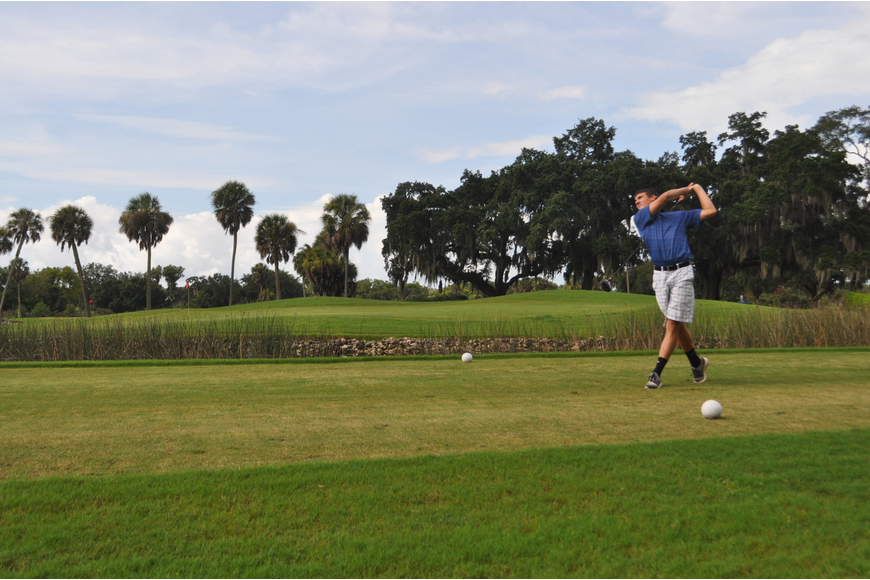
MANAGING AN AGING BOBBY JONES AND CONTINUING TO DRAW GOLFERS HAS PROVEN CHALLENGING, CITY STAFF SAID.
Photograph courtesy YourObserver.com
BOBBY JONES GOLF CLUBS'S FINANCIAL WOES CONTINUE
THURSDAY, MARCH 8, 2018
SARASOTA OBSERVER
The municipal golf course could need another $400,000 subsidy before the end of the fiscal year — and a $1 million subsidy next year.
BY DAVID CONWAY, DEPUTY MANAGING EDITOR
Sue Martin, the manager of Bobby Jones Golf Club, can tell you a long list of challenges the city-owned facility faces.
The infrastructure of the 45-hole complex is in disrepair. A 2017 report from an outside consultant said the course could use more than $21 million in renovations.
There are lots of other competitors in the region, many of which are able to offer competitive rates and courses that are in better condition. And, in general, the golf industry throughout Florida is seeing fewer rounds played.
During the past three years, these issues have been reflected in the city’s budget discussions. Ahead of approving the 2017-18 budget, staff requested a $425,000 general fund subsidy for operations at Bobby Jones. Although the course is intended to be self-sustaining, its reserves had run out for the first time staff could recall.
Now, as the city looks ahead to the 2018-19 budget, the issues appear to be deepening. A preliminary estimate suggests Bobby Jones could need a $1 million subsidy in the next fiscal year. And, before this year is over, staff could come back to the commission to ask for another $400,000 to fund Bobby Jones in the 2017-18 fiscal year — the $425,000 subsidy proving insufficient to buoy operations.
Despite all those challenges, Martin seems confident there’s a path to restoring Bobby Jones to a more sustainable place.
“It’s a gem,” Martin said. “It just needs some polishing right now.”
The City Commission expressed more trepidation about the future of Bobby Jones. At a Feb. 26 budget meeting, the board directed staff to come back with additional information about why the course appeared to be faring worse than originally projected.
“That’s really outrageous,” City Commissioner Hagen Brody said. “I think the community is going to agree that subsidizing that golf course to that extent is really ludicrous.”
Martin stressed that the figures presented at the budget meeting were preliminary. She said they were based on conservative projections from the city's financial staff, though she acknowledged the numbers were variable in either direction.
She couldn’t identify a single reason as to why the course was faring worse than expected. The issues with the course’s infrastructure are daunting, Martin said. When it rains, the drainage is so poor that sometimes the course is closed for multiple days afterward.
The course was particularly hard hit in the wake of Hurricane Irma last year, which closed at least a portion of the course for two weeks.

That’s one reason why the number of rounds played at the course continues to decrease. In other cases, Martin said, golfers are looking elsewhere, opting to play at better-maintained facilities.
Whatever the factors may be, the decline is stark. Through the end of February in 2015-16, there had been 46,794 rounds of golf played at Bobby Jones. Through the same point in 2017-18, there have been 35,723 rounds played.
This, Martin argues, underscores the need for significant improvements.
“Until we fix the infrastructure out there, we’re not as competitive as we could be in the market for golf,” Martin said. “If you’re not competitive, you’re not going to attract the golfers. It all hinges on the rounds of golf.”
The city has spent an extended period of time considering what improvements it should make at Bobby Jones. In early 2015, a resident advisory committee began examining the needs of the golf facility. In early 2017, the city hired golf architect Richard Mandell to produce a master plan for renovating the course.
After receiving Mandell’s report in October, the commission directed staff to engage with the public about potential improvements and research possible funding mechanisms. Martin said staff hopes to present that information to the board in April or May.
Brody said he wants to see Bobby Jones remain public space — and for the city to continue to offer a municipal golf operation — but he thinks the city should consider all its options as it searches for a way to reverse the financial status of the facility. That includes potentially reducing the number of holes and re-examining the management structure.
“It’s clear something has to change,” Brody said. “I’m not prepared to continue having Bobby Jones absorb that amount of taxpayer dollars.”
He suggested the course should be looking for a way to at least break even. Martin agreed, and said beyond selling the facility, staff was not ruling out any possibilities as it prepared to present options to the commission for consideration.
“Pretty much everything’s on the table,” Martin said.
SARASOTA CITY COMMISSION FACES BUDGET Choices
SATURDAY, MARCH 3, 2018
SARASOTA HERALD TRIBUNE
BY NICOLE RODRIGUEZ
SARASOTA
The City Commission might face the tough decision of raising taxes, cutting services or dipping into reserve funds to balance an anticipated budget shortfall of nearly $2 million for the next fiscal year.
Administrators predict a roughly $1.5 million deficit in the 2018-19 budget year despite an anticipated rise in property values, Finance Director Kelly Strickland told the commission during a special budget workshop last week. The Bobby Jones Golf Club will require a $1 million subsidy and the city must cover roughly $2 million in costs associated with taking over six county operated parks — two factors that put the general fund in the red.
“We could use our reserves to balance the budget (but) that’s not ideal depending on where we’re at,” Strickland said. “Another option is to raise taxes and another option is to look at the services that we provide. Do we really need to increase? Maybe not. Or maybe we even have to decrease.”
The estimated budget of $66.8 million — about $5.1 million larger than the current budget — factors in a 7 percent increase in property values, which should generate $31.6 million for the general fund, but won’t be enough to balance the shortfall, Strickland said. Strickland, however, said she believes property values could rise by 9 percent. The state estimates an increase of 6.3 percent in taxable property value and will announce the figures in June. Last year the city saw a 9.8 percent rise in assessed property values.
Some commissioners were incensed by the news, with Mayor Shelli Freeland Eddie calling for a review of the municipal golf club’s finances, rounds of play and rain days.
Commissioner Hagen Brody decried the proposed subsidy for the club.
“Bobby Jones is really outrageous, and I think that community is really going to agree that subsidizing that golf course to that extent is really ludicrous,” Brody said.
“The economy goes up and down, but when we’re in an up economy, we really should be in the position to lower taxes for people, not have to decide whether we’re going to raise them or not every time,” Brody later added. “If we spent a little smarter, I think that we would be in that position. It’s hard to see us being in that position this year.”
The city has not raised taxes since 2014, Strickland said.
Bobby Jones course manager Sue Martin attributes the need for a subsidy for the second consecutive year to neglected improvements to the course and declining revenues due to a diminishing golf industry. This budget year, for the first time, the club received a $425,000 subsidy to prop up its $2.8 million budget.
The commission last year approved a $21.6 million overhaul of the club, which consists of three courses with 45 holes total, but agreed the fixes will be carried out in phases. The $21.6 million iteration includes every upgrade that every stakeholder wanted, including renovating both 18-hole courses, a new clubhouse and driving range, extensive stormwater upgrades and constructing a new player development center with an innovative “adjustable” nine-hole course at the site.
“We’ve been putting very expensive band-aids on the facility to keep it going during these years of deciding what’s going to happen,” Martin said.
Records show the courses have seen a steady decline in play for the past three budget years, which run from October to September. Budget year 2015-16 saw a decrease of more than 7,800 players from 98,315 players the previous year. The city reported about 79,000 players in budget year 2016-17.
Rainy days typically wash out the course for several days, Martin said. The club’s irrigation system was installed in the 1970s and needs to be replaced, she said.
“When (players) leave because we’re closed due to weather, they find a different golf course and they start to think, ‘Well I’m kind of comfortable here,’” Martin said.
Adding to the deficit is $2 million the city must spend to take over six county parks. Beginning Oct. 1, the city will retain ownership of the Arlington Park and Aquatic Center, Centennial Park, Harts Landing, Ken Thompson Park, Sarasota Lawn Bowling Club and the Payne Park Tennis Center. The city had an agreement with Sarasota County that the county would maintain the parks until September 2021, unless the county gave the city a year’s notice it no longer wanted the parks. The county gave proper notice last year, Strickland said.
The commission will hold several budget workshops and hearings this year before approving the final budget in September.
CITY LOOKS AHEAD TO 2018-19 BUDGET
WEDNESDAY, FEBRUARY 28, 2018
SARASOTA OBSERVER
PRELIMINARY ESTIMATES SHOW A NEARLY $1.5 MILLION GENERAL FUND BUDGET DEFICIT. COMMISSIONERS HAD DIFFERENT APPROACHES ON A SOLUTION.
BY DAVID CONWAY, DEPUTY MANAGING EDITOR
The city isn’t even halfway through fiscal year 2017-18, but the City Commission is already looking ahead to next year’s budget.
On Monday, the City Commission held a special meeting to get a preliminary outline of the 2018-19 budget. The meeting was designed to discuss basics, outline challenges and identify opportunities in the coming year, as well as give the commission a chance to direct staff as it prepares budget proposals.
Much of the attention at Monday’s meeting focused on an overview of the general fund budget. Although staff currently projects revenues to increase from $66.8 million to $69.6 million, expenditures are expected to rise from $68.5 million to $71.1 million.
The early gap in next year’s budget was a source of concern for some commissioners. City staff identified several sources of increased expenditures in the preliminary 2018-19 budget. One of the largest ones was $1.9 million to assume control of parks the county currently operates, a change expected to occur later this year.
Kelly Strickland, the city’s director of financial administration, said the 2018-19 budget projections did not incorporate information regarding potential revenue from those parks. Still, the responsibility for the parks is likely to negatively affect the city’s balances.
Another major expense is a projected $1 million subsidy for Bobby Jones Golf Club. The golf complex is designed to operate as an enterprise fund, where the revenues fund the expenditures. But last year, Bobby Jones exhausted its reserves and required a $425,000 general fund subsidy.
That was the first time staff could recall the golf course requiring a subsidy, but Bobby Jones has continued to struggle. Mayor Shelli Freeland Eddie and Commissioner Hagen Brody both directed staff to provide more information on why Bobby Jones was faring poorly enough to demand such a large cash infusion.
“That’s really outrageous, and I think the community is going to agree that subsidizing that golf course to that extent is really ludicrous,” Brody said.
GOLFING MAYOR PUT EARLY SARASOTA IN THE SWING OF THINGS
FRIDAY, DECEMBER 29, 2017
SARASOTA HERALD-TRIBUNE
BY JEFF LA HURD, CORRESPONDENT
In 1902, upon hearing the hoped-for news that legitimate train service was coming to Sarasota, 53 men gathered in Harry Higel’s office on the wharf at the foot of lower Main Street and voted to incorporate as a town. For the town seal they chose what was described as “A mullet with a rising sun over palmettoes with shells at the base.”
The town motto was the hopeful, perhaps prayerful, “May Sarasota Prosper,” and John Hamilton Gillespie was elected mayor.
Gillespie was well-suited for the role. He had arrived in 1886 at the behest of his father, Sir John Gillespie to reverse the fortunes of the failed Ormiston Colony of the Scottish Florida Mortgage and Investment Company. This syndicate had purchased 50,000 acres — at $1 per acre — in what was a veritable wilderness, and after the colony disbanded in despair, the company wanted to dispose of their property.
Gillespie was a large, gregarious man of wealth, and well-liked by the locals. As Alex Browning, one of the original colonists put it, “The natives and early settlers came to look upon him as a great big boy who could take a joke and was always ready to do a good turn for his neighbors.”
It was left to Gillespie to put into the fledgling community the infrastructure that should have already been in place upon the arrival of the Scots.
Gillespie, who today is considered the Father of Sarasota, knew that to be successful, a community needed ease of transportation, accommodations and activities to attract and to keep the visitors occupied.
For the first, he established rail service from Braidentown with his often derided Slow and Wobbly train, which made the journey only when the conductor felt that enough cargo and passengers were available to make the short trip worthwhile. It was not a successful venture.
For accommodations, he constructed the 35-room De Soto Hotel on Palm Avenue and lower Main Street at the bayfront.
His third and most important achievement was the construction of a golf course — the first in Florida.
Gillespie had long been an avid golfer. He recalled that his grandfather left him a set of McEwan and Philip golf clubs when he was 8 years old and played the sport regularly thereafter. It was a real passion for him, and early on he saw its potential as a tourist draw. Later he would lay out courses for the Plant System in Kissimmee, Jacksonville, Winter Park, Tampa and Cuba. He became known as the “golfing mayor.”
The Sarasota Times noted, “It was not until Bellaire became famous as a golf course that Tampa waked up to its responsibilities and now what a change we do find.”
On one of his forays around the state extolling the virtues of golf for a successful community, he was reported as a miscreant to law enforcement as he slapped the ball around with a stick. In another community he was nearly shot by “an excited and inebriated cowboy who spied me as I passed the saloon in my red (golfing) coat.”
Shortly after he arrived here in 1886 he laid out a two-hole practice course near his home. Alex Browning, a youngster who arrived with the Scot Colony, recalled seeing Gillespie practicing his swing there.
Gillespie asked if he played. When Browning replied that he did not, Gillespie said to him, “Mon, y’re missin’ half ye life.” (Young Browning later became an architect and designed the Frances-Carlton Apartments and also worked on the Tampa Bay Hotel.)
Years later, Leonard Reid, Gillespie’s manservant and friend, told the Sarasota Herald-Tribune the story of how he and Gillespie laid out the first nine-hole course in the area. They walked for miles through the palmettos and brush, while Gillespie sketched. According to Reid’s account, 50 men grubbed the palmettos and set up the fairways. He indicated the fairways were 30 to 40 feet wide and stated, “That’s why the Colonel (honorary title) was so good. He’d always win his match because he could shoot straight. Colonel Gillespie only took a half a swing and the other men could always out hit him. But they would end up in the woods while Colonel got in the hole.”
His nine-hole course went from Links Avenue east toward today’s Sarasota County Terrace Building, the second further east, the third near Ringling Shopping Center, the fourth near Tuttle Avenue, then the fifth, sixth, seventh, eighth and ninth all headed back west, with the ninth hole directly in front of the Gillespie’s house, Golf Hall. A clubhouse was completed in 1905. (The seven-hole, near what is today the Kane Building, had a swampy water hazard and Reid remembered that Gillespie liked it, calling it his “sporty” hole.)
Clubs in this era were given names instead of numbered woods and irons. They were dubbed niblick, lofter, mashie, mashie niblick, midiron, cique. The shafts were made of hickory wrapped with sheepskin. Wood T’s were yet to be used; instead the ball was put on top of some sand, and the smaller British size ball was played.
The Sarasota Times reported Gillespie was “Perhaps the most ardent of golfers ... and spends many hours every day in the winter season practicing difficult hazards and making famous shots.” The paper noted “His judgement is the criterion to which all disputes are taken for settlement.”
Writing under the name The Colonel, Gillespie was a regular contributor to New York Golf and The Golfers’ Magazine.
Among the changes to golf, Gillespie mentioned an article in an 1867 periodical: “As for his (the golfer’s) wife, she must amuse herself as best she can; she cannot even accompany him in his game as a spectator, the presence of ladies being by no means regarded with favor ... the links is not the place for women; they talk incessantly, and they never stand still, and if they do, the wind won’t allow their dresses to stand still.”
Gillespie sold all of his holdings to Owen Burns in 1910, including the golf course. Sometime later, as the course began to deteriorate, a group of citizens met to decide its future. Perhaps echoing Gillespie, someone was quoted, “A resort town without golf is like the play Hamlet without the main character.”
On the morning of Sept. 7, 1923, Gillespie left Golf Hall to give instructions to his workers, and as he was returning he collapsed on the links and was carried to his home, where he died.
He was eulogized in The Sarasota Times: “The Colonel was a great man. His passing leaves us lonely, mournful, filled with grief... Now his voice is still forever and the light of his eyes are gone, but his memory is imperishable.”
TOP 100 STORIES OF 2017
A NEW PLAN FOR BOBBY JONES
FRIDAY, DECEMBER 22, 2017
SARASOTA HERALD-TRIBUNE
BY DAN WAGNER
Sarasota city officials embraced a multimillion-dollar plan for the municipal Bobby Jones Golf Club.
Sarasota city leaders endorsed a plan for a $21.6 million overhaul of the municipal Bobby Jones Golf Club in October, despite balking at the price tag.
The full project includes renovations to both 18-hole courses, a new clubhouse and driving range, extensive stormwater upgrades and construction of a new player development center with an innovative “adjustable” nine-hole course.
But city leaders are unlikely to fund all of those ideas, instead suggesting they might phase in pieces of the master plan to revamp the historic municipal golf course originally conceived by legendary course designer Donald Ross in the 1920s.
That is exactly how golf architect Richard Mandell designed the plan for the course that sought and received, for the first time, a $425,000 subsidy from the city’s general fund this year to prop up its $2.8 million budget amid declining revenues.
BOBBY JONES PLAN APPROVED
SARASOTA ENDORSES NEW BOBBY JONES GOLF PLAN
tuesDAY, octoBER 3, 2017
SARASOTA HERALD-TRIBUNE
BY ZACK MURDOCK, STAFF WRITER
ZACH.MURDOCK@HERALDTRIBUNE.COM
CITY COMMISSION EMBRACES $21.6M OVERHAUL, HINTING THAT PRICE MAY DROP
CITY LEADERS ARE LIKELY TO PURSUE ONLY PIECES OF A $21.6 MILLION PLAN.
SARASOTA - City leaders endorsed a plan for a $21.6 million overhaul of the municipal Bobby Jones Golf Club on Monday night, despite balking at the price tag.
Instead, city commissioners hinted they do not intend to spend anywhere near the entire cost of the whole project, likely favoring a plan that combines individual elements that could be eligible for grant funding into a smaller-scale upgrade for the facility.
That is essentially how golf architect and city consultant Richard Mandell designed his new master plan to revamp the historic municipal golf course originally conceived by legendary course designer Donald Ross in the 1920s.
The $21.6 million iteration includes every upgrade that every stakeholder wanted, including renovating both 18-hole courses, a new clubhouse and driving range, extensive stormwater upgrades and constructing a new player development center with an innovative “adjustable” nine-hole course at the site.
Mandell has broken it down further to provide costs for each of those elements, suggesting the city could mix and match its priorities depending on how much it wants to spend and pointing to potential grants that could help defray those costs.
“We all know in life we don’t get everything we want,” Mandell told the City Commission. “So I went back and created a less involved alternative, something that would get the job done.”
For example, Mandell’s plan includes extensive stormwater improvements for the site that is a critical piece of the Phillippi Creek watershed that helps control water quality and flooding in that area of the city and county.
It could pursue those projects and upgrade tee boxes for about $9 million and likely would be eligible for several grants, including a match of up to half from the Southwest Florida Water Management District, according to the plan.
Those grant opportunities particularly interested Mayor Shelli Freeland Eddie, who asked the city to accept the plan and have staff begin to pull it apart to identify what pieces could be reasonable based on available city and grant funding opportunities. After staff identifies those possibilities, she has directed the city to host workshops to present several reasonable options the commission could begin to fund and construct over the coming years.
The workshops will give golfers an “opportunity to tell us what they want, whether it’s all, nothing or some combination of the options” and the commission can make final funding decisions from there, she said.
More than a dozen avid golfers, some of whom served on the original study committee that led to the new master plan, spoke in support of the improvements. But some have suggested Mandell’s plan strays too far from the original Ross designs, which some hoped to restore exactly and fear anything otherwise could jeopardize grant funding.
Only Commissioner Hagen Brody voted against the plan, extending his ongoing criticism that the commission is not being conservative enough financially. He echoed the frequently heralded numbers that “golf is dying” as courses close and fewer players hit the links.
This year, for the first time, the club sought and received a $425,000 subsidy from the city’s general fund to prop up its $2.8 million budget amid declining revenues.
Brody suggested crafting several options that actually scale back the golf club, potentially dropping one or more of the courses or facilities entirely in an effort to save money. None of the other commissioners supported and neither do the groups that helped develop the master plan, which did at least briefly consider that option.
“We have to be realistic here. The facts are that golf is in decline,” Brody said. “We’re not trying to save golf and I don’t see us creating a world-renowned destination. We’re trying to provide a public course at an affordable price that’s a quality course people can enjoy playing on.”
Mandell disagreed. He has argued that as long as the city wants Bobby Jones to remain a golf facility, it will have to pony up for at least some upgrades, which will be expensive no matter how minimal.
“There is a core of golfers and there are a bunch of them right behind me,” he said. “The game of golf is strong, but once golf decided to become an industry ... people started losing money. It’s not a dying sport at all; it’s a bubble.”

Golf architect Richard Mandell said most of the infrastructure at Bobby Jones's long outlived its recommended lifespan.
Photograph courtesy of The Sarasota Observer.
BOBBY JONES IMPROVEMENT NEEDS TOP $20 MILLION
THURSDAY, SEPTEMBER 28, 2017
SARASOTA OBSERVER
A consultant says Bobby Jones Golf Club is in need of major renovations — and that there’s no guarantee the course will ever turn a profit.
BY DAVID CONWAY, DEPUTY MANAGING EDITOR
Throughout his 169-page business plan recommending renovations for Bobby Jones Golf Club, golf architect Richard Mandell repeatedly states the 45-hole, city-owned facility has fallen into disrepair.
Nearly all of the course features have outlived their recommended lifespans. The lack of infrastructure investments has diminished the reputation of Bobby Jones.
“Public perception of Bobby Jones Golf Club … is of an old and tired, rundown (municipal course) with terrible conditions compared to surrounding semi-private courses,” Mandell wrote.
Mandell, hired in January to develop a master plan for improvements at Bobby Jones, presented his finished report to the Parks, Recreation and Environmental Protection board Sept. 19. In addition to detailing hole redesigns and drainage upgrades, Mandell also provided an estimate for the work needed to restore Bobby Jones to a high-quality public course.
Major Recommendations
In his plan for renovating Bobby Jones Golf Club, Richard Mandell attempts to maintain the elements of the course players like while emphasizing the history of the facility and improving the infrastructure.
Mandell’s recommendations include:
Transforming the Gillespie Course into a player development center
Removing the “American Course” and “British Course” designations, creating four nine-hole groupings that can be configured into two different 18-hole courses
Redesigning the 18 Donald Ross-designed holes to capture the spirit of the original layout
Building a new two-story clubhouse
Replacing the irrigation system
Expanding the drainage system
Re-grassing the entire course
The full report is available on the city website.
The total price for a comprehensive renovation of Bobby Jones is $21.6 million, Mandell estimates. Recognizing the significance of that expense, he also shared a “less-involved” plan — with a price tag of $18.7 million.
The city commissioned Mandell’s report because of declining revenues and activity at Bobby Jones. In the budget for 2017-18, the municipal course will receive a $425,000 subsidy from the city’s general fund. Bobby Jones is supposed to be a self-sustaining operation, but after six consecutive years of losses, the facility’s reserve fund has run dry.
Mandell said most of the investments he recommended are the only way that Bobby Jones could become a successful long-term golf operation. But, questioned by members of the parks board, he said there would still uncertainty about the course’s profitability.
“If the city of Sarasota wants Bobby Jones to stay as Bobby Jones, they have to rebuild these features,” Mandell said. “Will it be self-sufficient? I can’t answer that.”
Hitting the green
That uncertainty didn’t sit well with John Tuccillo, a member of the parks board.
He was complimentary of Mandell’s work, but felt the city wasn’t in a good position to make a decision about the future of Bobby Jones without an equally thorough analysis of the business operations after any upgrades were implemented.
“We are operating here under the ‘Field of Dreams’ assumption — if you build it, they will come,” Tuccillo said. “Golf is a dying sport; golf courses are a dying business. There really isn’t any kind of guarantee that the financial performance of Bobby Jones Golf Course is going to be improved even by implementing your full plan.”
Mandell said some expenses could be offset with grant funding. Still, Tuccillo feared the prospect of the city investing upward of $10 million only for the course to keep losing money.

Mandell has objected to the characterization of golf as a dying sport. Instead, he says golf went through a 30- to 40-year period of bloat, with the bubble bursting recently. As a result, there is more competition among golf operations.
He admits that’s a challenge for Bobby Jones. But he believes the municipal facility has its own advantages. It has history in the community. It bears the name of a legendary golfer, and renowned golf architect Donald Ross designed the course. It’s not surrounded by residential properties, and it’s priced competitively.
And he thinks the city benefits from maintaining 425 acres of open space. The idea of the city cutting ties with the golf operation at Bobby Jones was not part of his analysis.
The City Commission is scheduled to discuss Mandell’s report Monday, Oct. 2. Mandell has itemized his recommended improvements, anticipating some fiscal concerns from officials. He’s also presented a four-year phasing plan for the renovations.
He knows the scope of the upgrades is jarring. But based on the current status of Bobby Jones, he said there’s no reasonable way to keep operating the facility without a major overhaul.
“Forget everything this report says — the bottom line is, at some point, these features need to be rebuilt in order to function as a golf course,” Mandell said. “That’s no matter what.”
BOBBY JONES RENOVATION TO COST UP TO $21.6 MILLION

A golfer plays on the American course at Bobby Jones Golf Complex. A consultant's plan to improve the 1920s municipal golf course comes with a $21.6 million cost and various suggestions on how to proceed with some of the improvements. Photo Courtesy Sarasota Herald-Tribune
SATURDAY, SEPTEMBER 23, 2017
SARASOTA HERALD-TRIBUNE
BY ZACK BURDOCK, STAFF WRITER
ZACH.MURDOCK@HERALDTRIBUNE.CoM
CITY CONSULTANT SUGGESTS DIVVYING UP IMPROVEMENTS INTO SERIES OF MINI-PROJECTS
SARASOTA
A completely renovated and improved Bobby Jones Golf Club could cost the city of Sarasota more than $21.6 million, according to the final master plan finished this month.
The long-awaited plan has been in the works since the beginning of the year and represents a best-case proposal to revamp the historic municipal golf course originally conceived by legendary course designer Donald Ross in the 1920s.
But the price tag for the full project is $7 million more than a study committee estimated the project could cost several years ago and will raise eyebrows at the City Commission, which just concluded a contentious budget process with lingering questions about future obligations.
Members of the city’s parks board, who have helped develop the plan with city consultant and golf course architect Richard Mandell, struggled with the sticker shock, too. They unanimously approved the plan last week and lauded its recommendations, but they conceded it is a steep price with no guarantees.
To help, Mandell has broken the project into a series of mini-projects from which the city can pick and choose its favorites — greens and tees, a practice facility, a clubhouse, drainage and environmental improvements can all be mixed and matched.
Parks board member John Tuccillo praised Mandell’s vision for the course but offered a grim warning.
“We are operating here under the ‘Field of Dreams’ assumption: If you build it they will come,” he said. “Golf is a dying sport, golf courses are a dying business and there really isn’t any kind of guarantee that the financial performance of Bobby Jones golf course is going to be improved, even by implementing the full plan. For people who golf, it’ll be delightful. Will it bring more people? I don’t know.
“My problem is, are we going to get, with the redesign and with the renovation, sufficient traffic on an operational basis to keep Bobby Jones solvent?”
But Mandell challenged that thinking, arguing much of the course and its facilities are long past their expected 30-year lifespan. There is no disagreement that the area should remain a golf club, it’s just a matter of choosing how to invest in it, he said.
“If the city of Sarasota wants Bobby Jones to stay as Bobby Jones, they have to rebuild these features,” he said. “Will it be self-sufficient? I can’t answer that. If the city sees this as open space and there are all these environmental benefits and they see it as a recreational opportunity, they’ve got to improve the infrastructure no matter what.
“I can’t guarantee you you’re going to make money at it, but if you’re in, you’ve got to be in.”
Course design
At the center of Mandell’s plan for the three-course, 45-hole complex are course renovations, a new clubhouse and the re-imagining of the nine-hole executive course on the west side of Circus Boulevard there. He envisions turning the area into an "adjustable course," driving range and extra practice facilities as a learning center for new or young golfers.
The final recommendation for the two 18-hole courses, the British and the American, is to revamp them as four, nine-hole segments. During part of the year, they could play as the existing British and American courses. But during another part of the year, the city could open the north and west nines as a new 18-hole configuration and the south and east nines as another, essentially turning the complex into four distinct courses.
The entire project also would include extensive improvements to the course’s capacity as a stormwater site.
The proposal includes increasing the important wetland’s floodplain capacity by almost 20 acres with additional canals, pond storage and dry hollow. It also includes planting another 18 acres of native pond buffers to help water runoff and sites for 10 additional wellhead locations to expand the city’s capacity to draw drinking water from underneath the course in an emergency.
“We start with one basic estimate, which is what I would call a comprehensive renovation option, for the whole site that satisfies all desires of all stakeholders,” Mandell explained. “So if we took everything that everybody wanted and we did our ‘Bewitched’ little nose thing — all desires of all stakeholders as best we can — here’s what we’re going to do and here’s our cost.”
But Mandell is the first to admit the entire project likely is too expensive to bite off at once, or even at all.
Nearly a quarter of Mandell’s almost 170-page report details more than a dozen funding options, from spreading projects over several years to breaking them into individual pieces the city could choose from and schedule at will.
For example, it would cost about $4.25 million to rebuild bunkers and greens on the British and American courses. It would cost about $9 million to pursue just the drainage improvements and remake the tee boxes, Mandell offered.
As much as $10 million in various local, state and federal grants also could be available for the project, which could help at least partially fund nearly every type of improvement the city might choose, Mandell added.
Golf’s future
Any option the City Commission ultimately might choose for Bobby Jones is likely to come with a cost-benefit analysis of the future of the municipal club.
This year, for the first time, the club sought and received a $425,000 subsidy from the city’s general fund to prop up its $2.8 million budget amid declining revenues.
The golf course is projecting a $287,000 loss in the coming year. It has turned a profit once since 2009 — of $25,000 in 2011 — in the heart of the economic downturn, according to city documents. From 2007 to 2013, total rounds at the club annually dropped from a high of 143,000 to 102,000, Mandell reported.
“It’s all about attracting rounds and getting more rounds,” Mandell said. “That’s the challenge.”
Mandell’s plan does not address how upgrades could affect the courses’ prices — that is a policy decision city leaders would have to weigh against their goals for the club, he said.
When the study committee recommended upgrades for the facility, it estimated a $14.5 million project would require at least a $5 increase to per-round costs to help defray the expense, said parks board member Shawn Pierson, who leads the Friends of the Bobby Jones Golf Club and has passionately worked for years on plans for the course.
Parks board members agreed it will be critical to keep Bobby Jones an affordable golf option, particularly compared to other private courses competing for many of the same players.
That must be part of the discussion with the City Commission about the plan and how or when to implement any of it, Bobby Jones General Manager Sue Martin said. She hopes to bring the plan to the full commission at its Oct. 2 meeting.

A golfer chips onto the green with the clubhouse in the background at Bobby Jones Golf Club. Consultant and golf architect Richard Mandell said much of the municipal course and its facilities are long past their expected 30-year lifespan. Photo Courtesy Sarasota Herald-Tribune
IRMA'S WINDS 'FIND' DOZENS OF LOST GOLF BALLS AT BOBBY JONES
THURSDAY, SEPTEMBER 21, 2017
SARASOTA OBSERVER
BY ERIC GARWOOD, MANAGING EDITOR
The city of Sarasota announced that the American course at Bobby Jones is expected to open for play Saturday, Sept. 23. The British and Gillespie courses were already open for play.
In golf, the cardinal rule is simple: Play it where it lies.
In the sand, in the mud, in the long grass. Just take your medicine and hit it. And hit it again, if necessary.
Except in the case of a palm tree on the par-5 sixth hole of Bobby Jones Golf Club’s British Course. And a few more similar palms around the course.
When Hurricane Irma struck over the weekend, that particular palm gave up at least a dozen reasons for violating golf’s most basic tenet -- they had been stuck there after errant shots. Plenty of other balls turned up similarly below other palm canopies around the course, as they often do after high winds.
“It’s kind of like an Easter egg pick-up out there,’’ said Sue Martin, the golf manager at the city-run course, adding the staff probably collected 150 balls that tumbled from the tightly packed palm fronds atop the trees that line the fairways.

The Sixth Hole at the Bobby Jones Golf Course in Sarasota gave up about a dozen balls in Hurricane Irma's winds.
Photograph courtesy of Bobby Jones Golf Club and the Sarasota Observer.
The course on Fruitville Road came through the storm fairly well, according the city of Sarasota. Martin said 17 trees fell, but none of them are in play. Crews are in the process of removing them and clearing debris from around the property. Martin said the course’s 6-inch rain gauge filled up between Saturday and Tuesday, so at least that much rain fell, but the water is receding.
She said she hopes the British course will be ready by Friday morning, but the American might take a little longer.
Oh, and the penalty for hitting a ball semi-permanently into a tree?
It’s either a lost ball (if you can’t see it) or an unplayable lie (if you can). Either way, It’s one stroke.
NEW BOBBY JONES PLAN NEARING COMPLETION
THURSDAY, JULY 13, 2017
SARASOTA HERALD-TRIBUNE
BY ZACK MURDOCK
ZACH.MURDOCK@HERALDTRIBUNE.CoM
SARASOTA
With a plan to revamp Sarasota’s Bobby Jones Golf Club just a few weeks from completion, city officials and their consultant on the project are still fine-tuning every last detail.
That means what the city is affectionately calling the 100 percent master plan for its historic municipal course is unlikely to remain that way, joked city consultant and golf course architect Richard Mandell.
“This is the plan, and it will be the basis of what I present to the City Commission next month along with my full report,” he said. “But once that goes out, I know people are going to have a field day with it. I expect plenty of new suggestions and ideas after that presentation, and that’s what this process is all about, and we can keep adjusting; we’ve just got to get it right.”
At the center of Mandell’s plan for the three-course, 45-hole complex are course renovations, a new clubhouse and the reimagining of the nine-hole executive course on the west side of Circus Boulevard there. He envisions turning the area into an "adjustable course," driving range and extra practice facilities as a learning center for new or young golfers.
He and the city’s parks advisory board spent almost two hours on the would-be complete master plan on Thursday night, trying to workshop ideas for possible alternative locations for the planned new driving range and entirely rebuilt clubhouse — each with a smattering of pros and cons.
Moving the driving range to the eastern end of all the courses could be a problem with the canals running across the property or could leave one of the two 18-hole courses a few yards short of regulation, Mandell said. But leaving it along Circus Boulevard would require a shorter range and netting, both of which raised red flags with golfers and the course’s Glen Oaks neighbors, he admitted.
The city also could consider inching the new clubhouse closer to the road or farther north to make more space behind and around it, depending on their preference or worries about a temporary clubhouse structure, Mandell added.
The course’s representative on the parks board, Shawn Pierson, who leads the Friends of the Bobby Jones Golf Club and has passionately worked for years on plans for the course, advocated strongly for further tinkering on the driving range’s location. But the idea got little support from the parks board, and Bobby Jones General Manager Sue Martin said City Manager Tom Barwin also favors the current design.
“I think we’re still in the solving-the-puzzle phase, versus selecting from among one of three or four options,” Pierson said. “We’re just now looking at the options and starting to digest them.”
Mandell is scheduled to present his final recommendations to the City Commission for review on Aug. 21. The city hired Mandell at the beginning of the year for $115,000 and will receive a lengthy, technical report along with the conceptual design.
“There are limitations to this site that, no matter what we choose, will keep it from being what everybody wants,” Mandell told the parks board. “The solution I’m showing, because we’ve studied all this, is the better solution.”
Golfers’ yearslong hopes of upgrading the course lie under the cloud of financial uncertainty, though.
Mandell has not yet presented cost estimates for his concept, but the price tag is expected to be a multimillion dollar investment. His final report to the commission, to be made available shortly before the meeting, will include specific cost figures, he said Thursday.
The recommendations will land in the middle of ongoing discussions about the city’s budget, including a first-ever subsidy to the golf club.
Bobby Jones has struggled financially since the economic downturn and has asked for a $425,000 transfer from city coffers in 2018 to prop up its $2.8 million budget.

City staff thinks officials have to spend money to make money at Bobby Jones. Photograph courtesy of the Sarasota Observer.
IN THE ROUGH: BOBBY JONES FACES REVENUE CHALLENGES
THURSDAY, JULY 13, 2017
SARASOTA OBSERVER
IS AN INFUSION OF CASH INTO BOBBY JONES GOLF CLUB ENOUGH TO TURN THE MUNICIPAL COURSE INTO A MONEYMAKER FOR THE CITY?
BY DAVID CONWAY, DEPUTY MANAGING EDITOR
If the City Commission approves staff’s proposed budget for fiscal year 2017-18, taxpayers will fund a $425,000 subsidy to Bobby Jones Golf Club — a facility whose reserves have run dry for the first time officials can recall.
The deterioration of Bobby Jones is an oft-discussed subject at City Hall. City staff say the 45-hole municipal facility, located on the east end of town, is suffering because its infrastructure dates back to the 1980s. The irrigation is bad. The drainage is bad.
As a result, the course tends to be in rough shape, too. The city replaced the greens on both 18-hole courses at Bobby Jones, and General Manager Sue Martin said that $500,000 investment has more than paid off. But golfers still grouse about the conditions of the fairways, and the estimated income from greens fees declined by about $20,000 over last year.
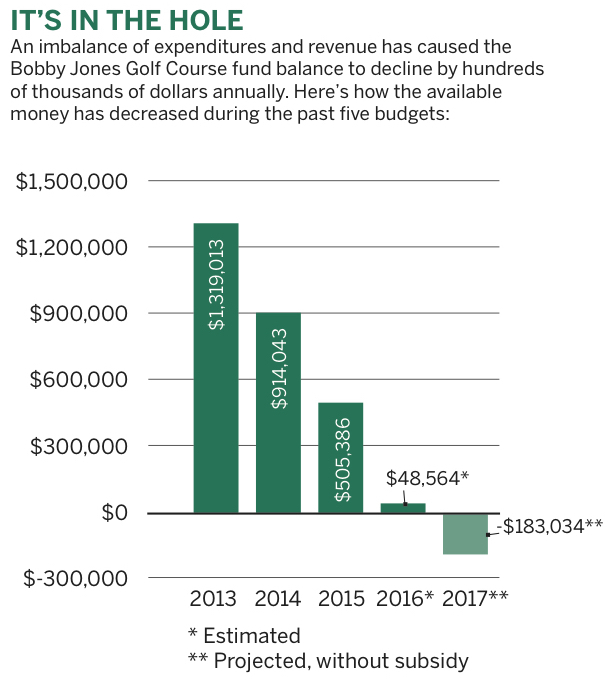
City staff isn’t denying there are problems with the way the course has operated during the past decade. As they asked for that $425,000 subsidy from the city’s general fund at a budget workshop in June, they made clear that Bobby Jones will continue to struggle if nothing changes.
“Over the last 10 years, the golf course has been in decline, and the capital influx hasn’t been there to compete with the golf courses in the area,” Martin said.
That capital influx, officials hope, is the key to turning around the fortunes of Bobby Jones. On Thursday, golf architect Richard Mandell will unveil his complete master plan for improving the facility at a Parks, Recreation and Environmental Protection Board meeting.
The city hired Mandell in January, paying $115,000 to get advice on how the golf club could be brought up to par. That contract came after a citizen study committee spent nearly a year assessing the needs of Bobby Jones and said the city should invest $14.5 million to improve the facility.
Mandell isn’t making his plans public before Thursday’s meeting because he wants to incorporate input from the advisory board before sharing it with a broader audience. During seven walkthroughs with golfers during his planning process, he’s gotten positive feedback to his vision for Bobby Jones, which is built around maintaining the existing character of the courses while improving the quality.
One thing that won’t be included in Mandell’s plans? A model for how to make Bobby Jones a financially stable business in the wake of any improvements.
Mandell said his expertise is in the physical conditions of the course, and the scope of his contract with the city doesn’t include the operations of the facility.
So, if Bobby Jones gets the “capital influx” staff says it needs, how sure can the city be that the club will stop losing money? Martin said it’s hard to understate the impact of the aging infrastructure the courses use. A rainy day could cost facility two or three days of revenue because the courses are so slow to drain.
“It doesn’t help that there’s a lot of attention being given to the decline of the facility,” Martin said. “There could be golfers out there saying, ‘Let’s wait for them to improve it before we go.’”
Martin said staff has begun discussing the need to have a formal business plan in place to go along with any improvements, but she described that as the next step in the planning process.
“We can’t get a business plan until we know where we’re going with the master plan,” she said.
Although Mandell didn’t want to get into the specifics of managing the course financially, he shares Martin’s optimism about the club’s ability to succeed following the right improvements. He dismissed a narrative that calls golf a declining sport.
What has happened, he said, is a burst bubble. The number of golf courses expanded beginning in the 1980s, mostly private courses that anchored residential developments. The number of casual golfers increased around that time, and has drawn down since.
Mandell said that has created a real problem for the golf business. Those private courses, struggling to stay afloat, are opening up to the public — and offering rates competitive with municipal facilities.
“That all of a sudden does become competition for Bobby Jones, but Bobby Jones has a lot more going for it than these courses,” Mandell said.
The history of the course in the community is a legitimate asset, Mandell said. So are the names associated with it: golfer Bobby Jones and architect Donald Ross, both influential figures in the early history of the sport in America. Both residents and visitors want to golf at Bobby Jones — just not in the current conditions.
“People are finding Bobby Jones,” Mandell said.
“What they’re finding is a golf course that’s in decline.”
Nearly six months after Mandell began his master planning work, many questions remain unanswered. How much will the improvements cost? How long will it take to overhaul the facility? And what, exactly, does a thriving Bobby Jones Golf Club look like from an operations standpoint?
Despite those questions, officials have not shown any signs of wavering in their belief that Bobby Jones is an asset for the city. And Mandell is confident that a high-quality municipal golf facility can succeed in Sarasota.
“If the country hears that Bobby Jones has been completely renovated and rebuilt, they’re going to flock,” Mandell said.
LETTER TO THE EDITOR
July 11, 2017
SARASOTA OBSERVER
This is being referred to as a bailout of Bobby Jones, but we know that Bobby Jones has generated funds that have been rerouted by the City over the years to other areas. So let's look at this as the City repaying the golf course for monies it borrowed from the club.
There was no mention of taxpayer dollars to fund the capital improvements in discussions other than from misinformed individuals. What has been discussed was Florida Department of Environmental Protection and Florida Historical Preservation grants which protect the environment and protect the history of Florida. The rest of the funds were proposed to come from a REVENUE bond secured by the future revenues of the golf course which industry data for municipal golf courses show would support this. Certainly a public private partnership should be explored but only with the right companies.
Troon, for instance, struggled with Legacy Golf Club and there are other instances of private management failures in the area. These companies are profit driven and it is important to find the right fit, especially in a municipal golf course environment.
Environmentally, as we have mentioned many times before, this project will result in significant improvements to the water quality of Phillippi Creek and Sarasota Bay.
From a historical standpoint this golf course is the most significant historical asset the City has and is a key destination on the Florida Historic Golf Trail when operating properly. If you are truly vested in your community this history should be important to you!
Municipal courses in Coral Gables, Miami Shores, Ft Myers, Orlando and other areas have gone through major improvements to great success. These are the examples we should be looking at not major cities in other regions that really aren't comparable to Sarasota. Florida municipalities have the same basic characteristics, are located in the same region of the country and have the same need to attract golfing retirees.
People have no problem with taxpayers funding parks that generate no revenue but when it comes to one that does, the largest park which happens to be a golf club, its "oh no we can't do that", even though it would pay for itself. Seriously??
The answer maybe with private management but make no mistake the answer is yes we need to move forward with this project but as part of the plan demand that the City fixes the many operational problems that are beating the club in to the ground.
Dan M. Smith, Chairman, Bobby Jones Golf Course Study Committee, Sarasota; and Treasurer and Trustee, Friends of Bobby Jones Golf Club, Inc.
BOBBY JONES COURSE NEEDS CHANGE, NOT BAILOUT
THURSDAY, JULY 6, 2017
SARASOTA OBSERVER
BY ADRIAN MOORE, CONTRIBUTOR
The city-owned Bobby Jones Golf Club has been going downhill for years. Unable to compete with many much nicer and similarly priced golf properties around Sarasota, it just can’t bring in the golfers needed to pay for running it, let alone improving it.
The course has only brought revenue above operating costs one year out of the past eight, losing over $1.3 million in recent years and consuming all of its reserves. So it’s no surprise that this year they have come to the City Commission to “humbly ask for a subsidy out of the general fund.” They anticipate a loss of $287,000 in the coming year unless they raise fees or get a bailout from the non-golfing taxpayers.
Note this comes after the city spent $115,000 to hire a golf architect to propose a multimillion dollar plan to upgrade the complex. Those millions will come, you guessed it, from the non-golfing taxpayers.
Given that Bobby Jones hasn’t been able to compete against other golf courses for many years, it makes no sense for city taxpayers to bail them out or spend millions to rebuild a losing competitor. The Bobby Jones Golf Club was once nice, but it lost the competition with rivals. Making it nice again, but keeping the same management, is repeating the same thing and expecting a different result, and we all know what that is the definition of …
So I am going to repeat what I said a year ago. The city should look into a private golf company to take over management of Bobby Jones under contract. Let a company that runs golf courses all over the nation, and makes money with them, invest its money in the improvements, rather than gambling taxpayer dollars. They would do the marketing to bring in more golfers and reap the rewards if they succeed — but also bear the costs if they fail. This kind of arrangement puts the risk of success or failure on the private firm, where it belongs, not on city taxpayers. But the city retains ownership of the course and control of rates and policies through the contract.
Cities like Chicago and Phoenix have done exactly this a few years ago and have experienced great success. The City Commission should look at this winning idea instead of spending millions on a failed formulaFORE! BOBBY JONES NEEDS $425,000
FOR THE FIRST TIME, HISTORIC 45-HOLE COMPLEX REQUIRES HELP FROM THE CITY'S GENERAL FUND
THE MUNICIPAL COURSES ARE PROJECTING A $287,000 LOSS NEXT YEAR AND HAVE ONLY TURNED A PROFIT ONCE SINCE THE RECESSION
MONDAY, JUNE 26, 2017
SARASOTA HERALD-TRIBUNE
BY ZACK MURDOCK
ZACH.MURDOCK@HERALDTRIBUNE.CoM
SARASOTA
The Bobby Jones Golf Club needs $425,000 in city subsidies to prop up its $2.8 million budget next year as golfers and city leaders await a final master plan to revamp the historic municipal complex.
It will be the first time the three-course, 45-hole complex requires help from the city’s largely property-tax funded general fund while it grapples with the same declines facing the entire golf industry, said Sue Martin, the club’s general manager.
“This is the first year we’ve had to come in front of the City Commission and humbly ask for a subsidy out of the general fund,” Martin told the commission during budget workshops last week. “Over the last, probably 10 years, the golf course has been in decline and the capital influx has not been there to compete with our neighbor golf courses.”
The golf course is projecting a $287,000 loss in the coming year and has only turned a profit once since 2009 — in 2011 — and the heart of the economic downturn, according to city documents.
“If we don’t keep our golf course in playable condition — and that is our product, the golf course is our product — we can’t get the price point in order to cover all of our expenses,” Martin said. “Basically it’s come down to, we are looking at the general fund.”
The first subsidy will allow the club, which hosts roughly 115,000 golfers each year, to forgo large jumps in green fees and cart rentals to try to make up the difference, Martin said.
“I think a municipal golf course really serves a purpose,” she said. “We invite and welcome any and all golfers, at all levels, all economic status and we’d like to keep our price point so that it is available for just the normal person to come golf. But the tradeoff is that we will need a subsidy.”
In an effort to reduce costs further, Parks and Recreation Director Jerry Fogle is working with the course’s landscaping and maintenance company to cut about $100,000 out of its contract without reducing maintenance of the courses themselves.
The subsidy request comes just ahead of the unveiling of a new master plan to overhaul the 90-year-old club following two years of review and debate.
Golf architect Richard Mandell is expected to present his final recommendations to the city’s parks board, which helps oversee Bobby Jones, and the City Commission in mid-to-late July. The commission hired Mandell for $115,000 earlier this year.
So far Mandell has detailed parts of his planned proposals at several workshops, including redesigning the nine-hole Gillespie Course as an "adjustable golf course" with a learning center for new or young golfers.
Although the plans have received some positive feedback, the price tag for major changes to the club remains to be seen.
Once the commission hears Mandell’s pitch, it will have to determine how much of his plan to implement and how to pay for it. That could mean spreading the changes out in phases over several years, Martin suggested.
The project also would have to be added to a growing and expensive to-do list, which now includes the potential purchase of the Players Centre for Performing Arts and the eventual big ticket costs of the Bayfront 20:20 plan.
But Fogle and Martin agreed the recommendations should be implemented, however possible, to try to restore course.
“Obviously the main thing is getting the master plan hopefully approved and trying to figure out a way to fund this master plan, so we don’t throw it on the shelf and do nothing with it,” Fogle said. “Bobby Jones is a historic golf course and ... I want it to be the world class golf course that it once was, that the city could be proud of.”

A Master Plan for Bobby Jones Golf Club attempts to maintain the character of the two 18-hole courses. PHOTOGRAPHY COURTESY OF YOUROBSERVER.COM
GOLF ARCHITECT OUTLINES BOBBY JONES OVERHAUL
THURSDAY, MAY 25, 2017
SARASOTA OBSERVER
Richard Mandell says Bobby Jones Golf Club needs major infrastructure upgrades, but the character of the courses don’t have to change for the facility to succeed.
BY DAVID CONWAY, DEPUTY MANAGING EDITOR
After completing 90% of the design work for a Bobby Jones Golf Club master plan, golf architect Richard Mandell’s vision for the course doesn’t involve too many radical changes — on the surface, at least.
Most of the more significant alterations he’s recommending are contained to the Gillespie Executive Course west of Circus Boulevard, which he wants to transform into a training area with a larger driving range. But on the American and British courses, Mandell wants to preserve the character of the 36 holes while improving the conditions for golfers.
In the past week, Mandell has provided a series of updates on his master plan for the city-owned facility. On Tuesday, he held a pair of workshops at Bobby Jones, where the public could provide feedback on the plans.
The city has expressed a desire to reinvigorate Bobby Jones as both revenue and the number of rounds played at the course have declined annually. In 2015, a citizen advisory committee recommended $14.5 million in improvements. In January, the city approved a $115,000 contract with Richard Mandell Golf Architecture to develop a master plan.
Mandell has affirmed one of the findings of the study committee: Bobby Jones is in need of major structural improvements. One of his priorities is improving drainage on the course, which includes adding five acres of flood control to the 325-acre site. He recommends achieving that by building ponds and dry basins that, in conjunction with raising some of the low-lying holes, is designed to redirect water away from the playing area.
Beyond the natural drainage improvements, Mandell said the course needs to be rebuilt from the ground up, for the irrigation and drainage systems at Bobby Jones have outlived their useful lifespan. He thinks infrastructure upgrades would address many complaints about the facility.
“They don’t like the drainage problems, the lack of sand in some of the bunkers,” Mandell said. “They like the general character of the golf course.”
Mandell repeatedly referred to the distinct characters of the two 18-hole courses at Bobby Jones. Golfers told him the American Course is shorter, designed for “target golf” with a lot of water throughout. The British Course, by contrast, is longer, sleepier and has relatively little water.
Within these 36 holes, he’s recommending a change that would allow staff to dynamically arrange two 18-hole courses on a day-to-day basis. Dividing them into four nine-hole segments, Mandell suggests staff could have golfers play the front nine of the American and the back nine of the British, or other combinations.
Beyond that, the changes are minor. He recommends lengthening both courses, and creating seven different tee boxes for each hole to accommodate golfers of various ability levels. He wants to make sure the holes are more clearly defined, too, for both safety and playability reasons.
The golfers at Tuesday’s workshops shared largely positive feedback. Sheila Schwabl plays at Bobby Jones twice a week, and she said the proposed changes strike a good balance between preserving what’s good about the course and making much-needed improvements to a deteriorating facility.
“It’s been a tough year for the fairways, that’s for sure,” Schwabl
Mandell said he’s strived to keep the public engaged.
“If you listen to what people want and try to figure out how to accommodate them, the rest of the process is a breeze," he said.
There’s no solid estimate on the cost or timeline of the improvements at this point. Mandell said it should take no more than a year to improve an 18-hole segment of the facility, and that any improvements would likely be conducted in phases. He said the budget figures he’d seen thrown around in the past — including the $14.5 million the committee presented — were probably “somewhat in the ballpark.”
Mandell is scheduled to present a final report to the City Commission in July. On its own, he said even a major investment won’t be enough to secure the facility’s long-term success.
“Once this is done and the shot in the arm is there, the key is for the city to stand behind it and give people the resources to keep it from slipping like it had in the past,” Mandell said.

The City is exploring the possibility of making significant improvements to the municipal golf course. PHOTOGRAPH COURTESY OF YOUROBERSERVER.COM
CITY TO BRIEF GOLFERS ON BOBBY JONES PLANS
MONDAY, MAY 22, 2017
SARASOTA OBSERVER
A consultant is 90% done with a master plan for Bobby Jones Golf Club. On Tuesday, he’ll present his ideas to the public during two workshops.
BY DAVID CONWAY, DEPUTY MANAGING EDITOR
Before golf architect Richard Mandell lays out his vision for the future of Bobby Jones Golf Club to the City Commission, you’ll have a chance to share your thoughts on his master plan for the city-owned course.
On Tuesday, Mandell will lead two presentations about the master plan at Bobby Jones. The plans are approximately 90% complete.
If You Go
What: Bobby Jones Golf Club master plan discussion
When: 9 a.m. and 1 p.m. Tuesday, May 23
Where: Bobby Jones Golf Club conference room, 1000 Circus Blvd.
Mandell has provided two public updates on his work in the past two months. In April, at a City Commission workshop, he shared a plan for the land on which the nine-hole Gillespie Executive Course sits. The proposed changes focused on adding practice facilities while maintaining a short nine-hole course.
On Thursday, Mandell made a presentation to the city’s Parks, Recreation and Environmental Protection Board. The update included a discussion of potential drainage improvements and changes to the layout of the 18-hole American and British courses.
In January, the city agreed to a $115,000 contract with Richard Mandell Golf Architecture to develop master plan for the course. As the annual number of rounds played at the course has declined, the commission has expressed an interest in refreshing the property.
A citizen study committee suggested the city should invest as much as $14.5 million to update the course.
GOLF: FOX COMPLETES COMEBACK FOR CITY TITLE
MAY 7, 2017
SARASOTA HERALD-TRIBUNE
He closes with 71 to edge Knight by a stroke
BY JIM BROCKMAN, CORRESPONDENT
SARASOTA
K.C. Fox found himself nine strokes off the lead following the first round of this year’s City of Sarasota Men’s Golf Championship.
A lesser competitor might have quietly faded away and waited until next year.
But the 57-year-old came roaring back with sizzling rounds of 66 and 68 after a dismal opening round of 77 to trail co-leaders Bradley Knight and Scott Cox by a single stroke, heading into Sunday’s final round.
Fox fired a solid 1-under par 71 on Sunday to finish 6-under for the tournament at 282, edging the 26-year-old Knight, who played his high school golf at Riverview, by a single stroke.
Knight’s 1-over 73 on Sunday was his only round of the tournament, held annually on the British Course at the venerable 90-year-old Bobby Jones Golf Club, that wasn’t under par.
Cox, who fired a third-round best 5-under 67 on Saturday, finished with a 78 Sunday to wind up at even-par 288.
Three-time City champion Phil Walters and Ray Wenck were tied at 286, four shots behind Fox.
“It’s a tough tournament over 72 holes, on a tough golf course,” Fox said. “There are a lot of good players. You’ve got to be patient. I think patience was my main virtue out there today. I didn’t get frustrated about anything.”
Fox’s patience was certainly tested when he shot his disappointing first-round 77 nine days ago. He suffered a quadruple bogey on the par-4 fifth hole.
“You need to have a good attitude,” Fox said. “I’ve been working on my attitude and mental game a lot more the past few years since I turned a senior. That as much as anything has helped my game.
“You need to know your game. What you can do and what you can’t do. Staying in the moment, those type of things help you with any victory.”
Fox, who has lived in Sarasota the past 20 years, was playing in his 17th City of Sarasota tournament. It was his first victory.
“This is a pretty big win,” Fox said. “I’ve had some big wins in my career. I just try to keep the same thought process the entire 18 holes.”
Fox birdied three of the course’s four par-5′s on Sunday. His key shot of the day was saving par with a clutch six-foot putt on No. 17.
“You’ve got to stay in shape, and I work on my flexibility a lot,” Fox said. “That is what helps me to keep hitting the ball long. After playing competitive golf for 45 years, maybe I’m finally getting the hang of it.”
Ryan Jaso shot a final-round 74 to finish the tournament with a 5-over 293 to win the first flight on Sunday. Brandon Johnson was second, three shots behind Jaso after shooting a 74.
Jiri Curzydlo’s tournament total was 303, winning the second flight by three strokes over Tim Judy and Nicolas Schwenger.
Mike Miller shot an even-par 72 on Sunday to win the third flight at 313, four strokes better than Rob Manoogian.
Tyler Redmond ran away with the fourth flight, finishing with a total of 329. It was 10 strokes better than Toby Snelson, Nick Exarhou and Ted Roberts.
BOBBY JONES IMPROVEMENTS COULD EXPAND PRACTICE SPACE
THURSDAY, APRIL 6, 2017
SARASOTA OBSERVER
During the Bobby Jones Golf Club master planning process, a golf architect has located space to build a larger training facility.
BY DAVID CONWAY, DEPUTY MANAGING EDITOR
The driving range at Bobby Jones Golf Club is so short that staff encourages some golfers not to use their driver.
It’s not even technically called a driving range — it’s a “practice range,” Bobby Jones General Manager Sue Martin said.
The practice facilities at the city-owned golf course have been a target of criticism. Even City Manager Tom Barwin was surprised by the conditions when he visited the range with his sons.
“I thought one of them was going to hit me with their stick,” Barwin said.
As the city works with a master planner to develop a new vision for Bobby Jones, improving and expanding the practice options has become a priority. On Tuesday, golf architect Richard Mandell presented an update on that master planning process at a City Commission workshop.

Richard Mandell is finalizing a master plan for the entirety of the city-owned golf facility. PHOTOGRAPH COURTESY OF YOUROBERSERVER.COM
Mandell has honed in on the nine-hole Gillespie Executive Course, the one segment located west of Circus Boulevard, as a location for training facilities. He presented three options for reshaping that segment of the property. All three options include a larger driving range — 270 yards long instead of 235 — putting and chipping greens, and a short nine-hole course.
The three options mainly differ in the scope of that course:
Option 1 would create a standard par-3 course.
Option 2 would create a shorter pitch-and-putt course.
Option 3 would create an adjustable par-3 course.
The adjustable course would allow staff to create different configurations for the course on different days. Mandell said this type of adjustable course is not unheard of in golf design, but he hasn’t heard of a facility like Bobby Jones using the concept.
“It’s not often utilized,” Mandell said. “I have no idea why that is.”
He said the idea would help Bobby Jones stand out as it competes for customers with other local golf facilities. Members of the City Commission — although professed non-golfers — were excited by the potential marketability of the adjustable practice course.
“I don’t play a lot of golf, but if I did, it would be appealing to me,” Commissioner Liz Alpert said.
Mandell said the adjustable course would come with more maintenance, because there would be more fairway space.
The planning process for Bobby Jones is still ongoing. The city approved a $115,000 contract with Mandell in January, with a deadline to complete a plan by May.
LETTER TO THE EDITOR
THURSDAY, APRIL 6, 2017
SARASOTA OBSERVER
I was very pleased with the time I spent with Richard and the progress report he gave displayed his great talent and could create a very special piece to the overall restoration of the Club.
As he focuses now on the main 36 holes expect designs that will be enjoyable to play yet challenging, give you several options for length, be aesthetically pleasing, respectful of the natural surroundings and very practical for maintenance purposes and dealing with the awful storm water issues they now have. With Bobby Jones's connection to Phillippi Creek and the local fisheries an exciting piece to this will be natural systems that filter the water that dumps in to the creeks and will ultimately enhance the quality of our waterways.
Dan M. Smith, Chairman, Bobby Jones Golf Course Study Committee, Sarasota and Treasurer and Trustee, Friends of Bobby Jones Golf Club, Inc.
Bobby Jones architect calls for ‘adjustable’ course
TUESDAY, APRIL 4, 2017
SARASOTA HERALD-TRIBUNE
Proposal is part of a redesign of the 90-year-old Sarasota course.
BY ELIZABETH DJINIS, STAFF WRITER
SARASOTA - Sarasota could become one of the first cities to have an adjustable municipal golf course, should the initial designs of the city’s golf architect come to fruition.
At a City Commission workshop Tuesday night, architect Richard Mandell updated the group on his progress since being hired in early January for $115,000 to draw up plans to redesign the 90-year-old Bobby Jones Golf Club. In his presentation, Mandell focused primarily on the changes he would make to the Gillespie Course, the property’s nine-hole course. There, he proposed a new learning center, a building for newcomers to the sport and experienced players alike to learn new aspects of the game, the driving range and additional parking, with one notable addition: a nine-hole golf course that Bobby Jones staffers could adjust depending on the day or type of player.
“People have done adjustable golf courses before in the world, but I don’t think it’s ever been used as a practice facility in such a prime piece of property,” Mandell told the commission. “This is something that would really make the city of Sarasota stand out as a golf facility that rivals anything.”
While the commission does not vote on any decisions at workshops, most of the board seemed pleased with Mandell’s early results. Commissioner Suzanne Atwell asked whether this strategy had been tested before.
“I wouldn’t call it a new concept, but it’s a rare concept,” Mandell said. “This is rare but it’s not infeasible, and it’s something that, for all golfers, you’re going to capture their attention.”
Before his designs, Mandell conducted a series of golf course walkthroughs with interested parties and heard from almost 75 people regarding their thoughts on the course. The feedback he received ranged from a desire for better fairways to restoring the course to the original plans of 1920s designer Donald Ross.
The course’s assistant general manager, Christian Martin, sat in the chambers as Mandell showed the commission his initial plans. Martin had been consulted throughout the process and noted previously that one of his key priorities was an improved practice facility. As the presentation finished, Martin was practically beaming.
“We’re really excited — you can feel the excitement in the air,” Martin said. “Bobby Jones needs a rebranding.”
Mayor Willie Shaw noted that the adjustable golf course would be an asset to new and old golfers, another way to both introduce people to and keep people interested in a game that has been dwindling in popularity in recent years.
“I think that the Gillespie addition brings new energy to the conversation and going forward with this renovated Bobby Jones,” Shaw said. “I always say, we got what nobody else has, and that is Bobby Jones.”
Fix bobby jones
letter to the editor
SaturDAY, MArch 4, 2017
SARASOTA HERALD-TRIBUNE
Fix Bobby Jones
Award-winning golf-course architect Richard Mandell is working on a long-awaited master plan for Bobby Jones Golf Club. I spent some time with Richard and I am very pleased with his approach.
This historic and cherished municipal club desperately needs a major overhaul to restore its past prominence. Unfortunately this facility has been overlooked for years and the time has come to make the investment that will create a thriving center for golf activities in a community suffering a decline in its reputation as a top golf destination.
A 2015 City Commission-appointed committee studied material that clearly demonstrated the path to success is a capital improvement plan that will overhaul the courses, establish a golf training center and build a new modern and more functional clubhouse. The financial data supports the plan.
There was some support for what I believe is the best move, to restore the original Donald Ross course making it more playable and more interesting and to give a strong nod to a glorious history that most golfers don't know about. With 36 holes we have the opportunity to pair it with a modern design to give players a wonderful experience of playing two unique layouts.
A question lingers in the minds of local golfers about Bobby's future. Because of this sentiment I believe that, if the city means business, it owes a strong statement of commitment to all who have waited so long. We want our cradle of golf back!
Dan M. Smith, Chairman, Bobby Jones Golf Course Study Committee, Sarasota and Treasurer and Trustee, Friends of Bobby Jones Golf Club, Inc.

Richard Mandell PHOTOGRAPH COURTESY OF YOUROBERSERVER.COM
AWARD-WINNING GOLF ARCHITECT TALK HIS PLAN for BOBBY JONES
THURSDAY, FEBRUARY 9, 2017
SARASOTA OBSERVER
PROSE AND KOHN: RYAN KOHN.
BY RYAN KOHN, SPORTS REPORTER
If you have been out to Bobby Jones Golf Club lately, you’ve probably noticed that things could do with an upgrade, both on the club’s 45 total holes and in the clubhouse.
Well, your prayers have been answered, and something of a holy figure in the golf architecture world is the one answering them.
Richard Mandell has been hired to completely re-do the course. Mandell’s courses have won Golf Inc.’s Municipal Renovation of the Year award two years in a row, and won a similar award from Golf Magazine in 2014.
Legendary designer Donald Ross laid out the original 18 holes in 1925. For anyone worried about what Mandell might turn the course into, fear not.
"I don't want to turn it into anything,” Mandell said. “I want to return it to its peak of greatness. Part of that is rebuilding the infrastructure of the site so that it’s more functional, and improving conditions, and recapturing some of the great strategic charm of the golf course. Bunker locations, hazards that challenge golfers more than penalize golfers.
“In the world of golf, people have lost their way as it relates to fun and strategy and focused more on aesthetics. I want the place to look great, and that is part of my vision, but I don’t want it to just be a place to get great views. Form follows function. It has to serve a purpose of creating an activity. We don’t want to create something that is an art piece at all, really. We want something that is about playing golf.”
Mandell identified two main areas where the course needs improving the most: The fairway grass, and drainage. He seemed excited at the prospect of that last issue, though. There are lots of ways to get creative with drainage, including habitats for wildlife and storm water retention for surrounding communities, Mandell said.
It’s not just the course itself that is getting a makeover. The entire clubhouse is getting built from scratch. Michael Bryant, a subcontractor on Mandell’s team who works mainly as a clubhouse architect, will be assisting with that job. Bryant previously worked on The Lodge at Country Club East in Lakewood Ranch, which was awarded the Golden Fork second prize by Golf Inc. in the “new, private” category.
At a morning Feb. 7 meeting with Mandell and Bryant, golfers gave their opinions on what they would like to see in the new clubhouse. While none of the ideas are official (and will not be for at least a few months), it is clear that people want Bobby Jones to be more of a community center than it has been in the past. Even if you don’t play golf at all, you should be able to head to the center once or twice a month and find something fun to do, whether that be grabbing dinner, taking a class in a classroom or dancing at a party.
There is also a fervor for showing off the course’s history and place in Sarasota golf’s heart.
“The locals feel that this is the center of Sarasota golf,” Mandell said. “There has been talk long before I showed up that maybe this could be the spot for a Sarasota golf Hall of Fame. I think it’s a great idea. I think the history should permeate throughout the building, but I also think there should be some sort of permanent display.”
Mandell won’t have the final word on that decision, but his opinion carries a lot of weight. There is certainly Bobby Jones history worth telling, not just of the player, but of the course — Even George Herman “Babe” Ruth teed off there, after all.
The master plan process, or the renovation business plan process, as Mandell calls it, has a notice to proceed deadline of May 1. That’s the date when the full master plan and its hard numbers will be revealed to city officials.
Until then, Mandell and Bryant will stay hard at work on implementing all the changes the public wants to see while revitalizing the spirit that made Bobby Jones so special. Get excited, golf fans.
GOLF ARCHITECT ADDRESSES BOBBY JONES PRIORITIES
MONDAY, FEBRUARY 6, 2017
SARASOTA HERALD-TRIBUNE
Golfers and management are looking for better fairways and a new practice facility.
BY ELIZABETH DJINIS, STAFF WRITER
SARASOTA - As the city's newly hired golf architect considers a master plan for the Bobby Jones Golf Club, he's faced with two key priorities based on feedback from golfers and the complex's management: better fairways and a new practice facility.
In a series of tours recently, architect Richard Mandell led golfers around parts of the 45-hole municipal facility, asking for feedback on the general environment and architecture as well as specific holes. From these six tours and meetings with various staff, Mandell said one thing was resoundingly clear.
"Without a doubt, the quality of the fairways and the surfaces of the fairways, as far as smoothness and grass, was No. 1, along with drainage," Mandell said. "And everybody noted how the course is pretty unplayable in the summer because of drainage."
Hired by the city in early January for $115,000 to create a new master plan this spring for Sarasota's historic 90-year-old golf complex, Mandell is very early in the planning process. He said he is collecting his notes and getting a sense of his limitations with the course. Then he will begin drafting a preliminary design. Either way, it is clear that he's interested in a proposal for a better practice facility, which may mean better golf for everyone in Sarasota.
Mandell will present his final report this spring. The City Commission will then consider how to move forward and at what potential cost.
Reviewing the holes
On a bright afternoon, at least 10 people, mostly men and many dressed in the golfer's uniform of a polo shirt and khakis, traversed nine holes of the American Course with Mandell, noting what they liked and disliked about each hole.
In a meeting before the tour, many of the golfers noted their love of the course, with one even saying, "One of the reasons I moved to Sarasota was because I enjoyed playing here so much."
But most agreed that the course has suffered since its heyday, deteriorating to the point that one man said he would be embarrassed to bring his friends. While many of the golfers pushed for the improved fairways, the complex's assistant general manager, Christian Martin, said there's one major initiative on his mind: getting a better practice facility.
"That would be a place where people get introduced to the game," Martin said. "Right now, we don't have a world-class short game, but it's something we've aspired to."
Although much of Mandell's tour focused on the course, he said later that the practice facility would certainly be under his purview and is definitely something he is considering, especially given the complex's current facility.
"The facility that Bobby Jones has commensurate with the 45 holes is just poor," Mandell said of the course's current practice facility. "It's too poor and the number of golfers that have been through there and that will go through there cannot be accommodated by the 12 or 15 stations they have on that driving range facility. They need something; plus it's an eyesore. To have a world-class practice facility would really be a good boost to the city economically as well."
New generation?
One of the reasons golf courses have declined in recent years is because of the dwindling popularity of the game.
But Bobby Jones managers hope an improved practice facility would bring more would-be golfers out to the course, allowing for a whole new set of custumers to populate the property.
Mandell said this has become somewhat of a national trend.
"Practice is big in golf right now, because of time constraints more than anything," he said. "People don't have the time to play 18 holes, but they have the time to hit a bucket of balls."
Mandell said the course should be an asset that attracts people to the game.
"That's what Bobby Jones golf course is all about," Mandell said. "It should be a place where juniors can come and learn the game and a place for them to spend time and play the game.
"It's a city park, and they look at it as a city park with golf on it."
A LETTER TO THE CITY OF SARASOTA FROM THE DONALD ROSS SOCIETY

SOURCE: THE COST OF UPGRADING SARASOTA'S GOLF COURSE COULD GO INTO THE MILLIONS
WedneSDAY, JANUARY 4, 2017
WWSB My SUNCOAST ABC CHANNEL 7 NEWS
BY RAY COLLINS
SARASOTA - Golf course consultant Richard Mandell will have a busy 12 weeks. The City of Sarasota is paying him $115,000 to draw up suggestions to improve the Bobby Jones Golf Complex. He realizes when you work on a course that dates back to the 1920's, chances are there may be some issues.
"Left and right of many holes there are ditches that no one worried about in the '30s and '40s. It was wet in the summer because nobody played here. That's different now. When you're running 100,000 [golfers] through here [per year], you have to think drainage, drainage, drainage," Mandell said.
Despite the complex hosting a 100,000 rounds a year, a source close to the complex says it hasn't turned a profit since 2008. Complex General Manager Sue Martin is quick to point out the course doesn't use tax dollars but rather user fees.
"We are still covering our own costs because we've had a fund-balance or a savings account. So we've not needed taxpayers money," Martin pointed out.
However many believe major improvements to the complex will run into the millions of dollars, and at this point, it's not clear where that money would come from. Some go as as far as to question why the city is in the golf course business at all, especially with other pressing needs in the city.
"I understand their point of view, [but] they have to look at it as a recreational facility, and it's not just a business of running a golf course, it's a quality of life issue. But there's always going to be people who suggest we sell off all different auditoriums, or any of the amenities we offer," Martin said.
We asked the City Hall Spokesperson, Jan Thornburg if she could help us find anybody in city government who we could interview about whether there has been discussion about the City getting out of the golf course business, but she deferred questions back to the person running the golf complex.
GOLF COMPLEX MASTER PLAN
BOBBY JONES GETS AN ARCHITECT
CITY APPROVES HIRE TO BREATHE LIFE INTO 90-YEAR-OLD FACILITY.
TUESDAY, JANUARY 3, 2017
SARASOTA HERALD-TRIBUNE
BY ZACK MURDOCK
ZACH.MURDOCK@HERALDTRIBUNE.COM
Correction: An earlier version of this story incorrectly stated which recommended projects the city funded last year. The city spent almost $240,000 to re-grass the greens on the American course at the municipal complex.
SARASOTA - Golf course architect Richard Mandell has been hired to create a new master plan this spring for Sarasota's municipal Bobby Jones Golf Course complex.
The project is more than two years in the making as the city, parks leaders and avid golfers have worked to draw up new plans for the course that has struggled through declining popularity and aging infrastructure.
Now Mandell - based in Pinehurst, North Carolina - will spend the next 12 weeks trying to breathe new life into the course through a series of recommendations, wish lists and competing agendas for the historic 90-year-old complex.
The City Commission unanimously approved his hiring Tuesday afternoon for $115,000.
"There are a lot of ideas already to work off of, and we'll do our first course walk-through tomorrow morning," Mandell said after the meeting. "Everyone's trying to work toward making the course the best it can be, so it's all going to come together."
Mandell's plan will include short, mid- and long-term projects and goals for the course and will incorporate recommendations from the citizens' ad hoc committee that suggested the master plan be created in the first place.
That ad hoc committee was formed in late 2014 to study the complex's current and future needs. It recommended last year a spate of improvements estimated to cost $14.5 million, including the renovation of the British and American courses, construction of a new clubhouse and a new master plan for the complex.
The city paid to re-grass the greens on the American course last year and reviewed requests for proposals for the master plan throughout the fall.
Some parks leaders have objected to the plan, though.
Shawn Glen Pierson is the founder of the Friends of Bobby Jones Golf Club and has repeatedly asked the commission to reconsider its master plan process since early last summer.
He instead wants the course restored using the original plans drafted by legendary course designer Donald Ross in the 1920s, arguing that playing historic course designs would attract more avid golfers who appreciate the history of Ross courses, which are all across the country.
Pierson also serves as the Bobby Jones representative on the city's Parks, Recreation and Environmental Protection board, known as PREP. The group voted unanimously in July to ask the city, to no avail, to withdraw its request for proposals for the master planner amid questions about how it was drafted and whether city administrators were trying to interfere with what plans would ultimately be made. City leaders denied that suggestion.
Mandell has discussed the master plan process with Pierson and will consider those ideas for the final report, which will set out what kind of improvements could be made in certain price ranges. They and other stakeholders will walk the course and discuss potential recommendations throughout the process.
Mandell will present his final report later this spring. The City Commission will then consider how to move forward and at what potential cost.
BOBBY JONES' GREENS PROBLEM
THE DETERIORATING COURSE HAS PUT STAFF IN A ROUGH SPOT AS THE CITY SEEKS TO DIP INTO AN EARMARKED FUND TO PAY FOR NEW GREENS AT BOBBY JONES
THURSDAY, JUNE 23, 2016

The City has budgeted $300,000 to replace the American Course greens at Bobby Jones Golf Club, dipping into funds reserved for replacing the facility's aging clubhouse. Photograph Courtesy of the Sarasota Observer YourObserver.com
CLASH ON THE COURSE: bobby jones improvements raise questions about funding
SARASOTA OBSERVER
CITIZENS AND CITY OFFICIALS AGREE THAT BOBBY JONES GOLF CLUB IS IN NEED OF SERIOUS UPGRADES
THEY JUST HAVE A DIFFERENT IDEA OF THE BEST COURSE TO TAKE
BY DAVID CONWAY, NEWS EDITOR
The city of Sarasota is preparing to search for a master planner to help guide the future of Bobby Jones Golf Club after a citizen committee suggested the course needs as much as $14.5 million in improvements.
In the meantime, city staff is responsible for managing and operating a public golf complex that needs as much as $14.5 million in improvements.
These two notions - that Bobby Jones is in dire need of substantial upgrades and that the city must also keep it open on a day-to-day basis - are a source of tension. This was highlighted at the June 6 City Commission meeting, when staff asked to free up money reserved for the replacement of the facility’s aging clubhouse.
When Sarasota voters agreed to renew the 1-cent infrastructure sales tax in 2007, the city included $1.5 million to replace the Bobby Jones clubhouse on the list of projects it intended to complete with that money. Now, staff wants to reallocate some of those funds, which had already been reduced to $1.1 million.
In the hole
As the number of rounds played annually at Bobby Jones has continued to decrease, so too has the public golf course’s reserve fund. Here's how the money available for the facility has declined during the past five years:
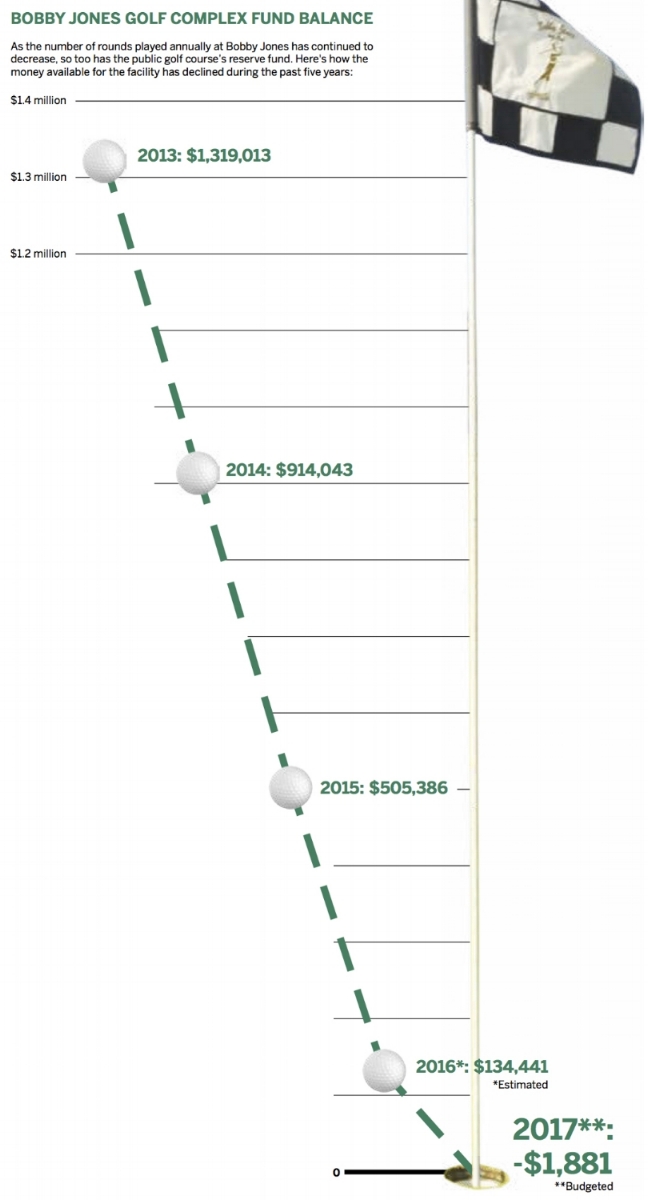
GRAPHIC COURTESY OF YOUROBSERVER.COM
About $300,000 would go toward installing new greens on the American course. Additional money would be allocated toward the master planning effort, a cost estimated anywhere between $25,000 and $100,000.
Sue Martin, general manager of Bobby Jones Golf Club, said the current conditions of the course — both physical and fiscal — are forcing the city to prioritize its needs.
“Golfers will stop coming if you don’t have a good golf course,” Martin said. “They won’t necessarily stop coming only because we have a dated clubhouse.”
Although the commission voted 4-1 to approve staff’s request to reallocate the clubhouse funding, the move didn’t come without questions. Bobby Jones Assistant General Manager Christian Martin said replacing the American greens is in keeping with the recommendations of the Bobby Jones Golf Club Study Committee, a citizen board that spent 10 months studying the needs of the facility.
Dan Smith, the chairman of the study committee, disagreed with Martin’s assessment. He thought investing in greens was a short-sighted move, because the course could be overhauled in the not-so-distant future.
“Our recommendations called for a complete rebuilding of the golf course, which means the tees, greens and everything would get bulldozed,” Smith said. “Regrassing them now, to me, would be similar to putting carpet in a building you’re going to knock down anyway.”
Martin contested Smith’s assertion. She said that even if the course’s drainage and irrigation systems were replaced, the new grass should remain usable.
There are additional questions about the lifespan of the greens. Staff asserted the new grass could last between eight and 12 years, but when the city undertook a similar effort to replace the British course greens last year, Martin described it as a “short-term (three to five years) solution.”
Surveying the course
George Martin is the secretary of Friends of Bobby Jones Golf Club, a nonprofit group that is advocating for significant upgrades to the public facility. Although he opposes the use of clubhouse funds to replace the American greens, he understands that the city is in a bind because of the deteriorating course.
What really troubles him, he said, is that there seems to be no consideration of why the city needed to dip into a capital reserve to pay for what he considered fairly standard maintenance.
“You can say, ‘We gotta put some money in, or else nobody will go there for the next two years, and that would be stupid,’” Martin said. “But it’s very dangerous to keep doing it without saying, ‘How the hell did we get to this point?’ And nobody seems to be doing that.”
Although Bobby Jones staff used to keep a distinct operating and capital budget, dwindling reserves ended that practice in 2015. In preliminary budget documents for fiscal year 2017, the city projects a negative fund balance for the Bobby Jones Golf Complex.
There’s a belief — among both city officials and the public - that Bobby Jones can become a positive asset again. Those critical of the decision to reallocate the clubhouse money think the city is committing one of the last pots of money available to a model that isn’t working.
“I think what’s happening today is just a symptom of this larger problem we’ve been dealing with at Bobby Jones for a long time,” said Jay Logan, another member of the Bobby Jones Golf Club Study Committee. “It’s a business that is failing and that’s in dire need of large capital improvements and better management.”
The city hopes to complete a request for proposals for a master planner for the course by early July. Even when that search formally begins, City Manager Tom Barwin estimates the master planning process could take two to three years.
With a 10-month study of the course recommending a comprehensive overhaul, critics of the city’s approach are distressed by what they see as a lack of urgency. Considering the position the facility is currently in, the need for a new paradigm at Bobby Jones should be obvious, they say.
“Every move the city makes is in defense of the status quo - which is the last thing we need,” said Shawn Pierson, the founder of Friends of Bobby Jones.
Pierson and other citizen advocates for the course remain hopeful the city is committed to significant investments. In the wake of the decision to spend the clubhouse money, they’re pushing to make a reinvigorated Bobby Jones a higher priority for officials.
“Repairs aren’t going to get it done,” Smith said. “If you build a building on a crumbling foundation, it’s eventually going to topple over.”
ESTUARY PROGRAM
MOTE DIPS NET INTO CANAL FISH SURVEY

Mote Marine researchers from left, intern Marzie Wafapoor, staff scientist Jim Locascio, staff scientist Nate Brennan and intern Greer Babbe, close a seine net as they sample fish in the Main B Canal, alongside Bobby Jones Golf Course on Tuesday in Sarasota. Mote researchers are conducting a survey of fish in man-made canals in the Phillippi Creek drainage basin in Sarasota County. Mike Lang Photograph courtesy of Sarasota Herald-Tribune.
TUESDAY, APRIL 12, 2016
SARASOTA HERALD-TRIBUNE
BY THOMAS BECNEL
THOMAS.BECNEL@HERALDTRIBUNE.COM
SARASOTA - In a canal that runs between Circus Boulevard and the Bobby Jones Golf Club, Mote Marine Laboratory researchers pulled up a seine net and peered in to see what they’d found.
“Well, we got a bass,” said Dr. Nate Brennan on Tuesday morning. “We caught a largemouth — two largemouth bass. Who’d have guessed, huh?"
Mote researchers are conducting the first scientific survey of fish in the canals of Sarasota. The question is how these drainage ditches, which were built for flood control, might be enhanced to benefit fisheries and add to the natural beauty of Sarasota County.
“That’s the value of this,” said Dr. James Locascio, manager of the Fisheries Habitat Ecology Program at Mote. “What is the value of these ecosystems and what can we do to enhance that value?"
Recommendations for the canal system could include everything from building small pools to adding marshy plants and shade trees.
The canal survey, funded by the Sarasota Bay Estuary Program, began a month ago and will take another month to complete.
There are more than 100 miles of canals that drain into Phillippi Creek and Sarasota Bay. Tidal waters are an important habitat for sport fish such as snook.
Canals run through popular parks and preserves such as the Celery Fields and Red Bug Slough. For the public, they’re already an amenity.
“People walk along and they say, ‘Oh, I saw an otter’ or ‘I saw a blue crab — isn’t that amazing?’ ” said John Ryan, environmental manager for Sarasota County’s Stormwater Environmental Utility. “I hear that all the time."
On Tuesday, at the Main B Canal, Mote researchers demonstrated devices that measure water temperature, salinity and oxygen levels.
Their seine nets pulled in bass, green sunfish and mosquito fish, along with clams, mussels, grass shrimp and a host of other native and exotic species.
“I’m looking for a crayfish, but I don’t see any,” Brennan said. “This is a fun project. We always find something new.”
CITY TO PROCEED WITH BOBBY JONES RENOVATION

The starter's shack for the American and British courses at Bobby Jones Golf Club in Sarasota. Herald-Tribune Archive Photograph courtesy of Sarasota Herald-Tribune.
TUESDAY, FEBRUARY 16, 2016
SARASOTA HERALD-TRIBUNE
BY EMILY LE COZ
EMILY.LECOZ@HERALDTRIBUNE.COM
The city will proceed with plans to renovate the Bobby Jones Golf Course as recommended by a citizen-led committee that had studied the municipal complex for nearly a year.
Commissioners on Tuesday unanimously adopted the committee’s full recommendations, which they had first received in a report the committee had submitted last November.
City commissioners formed the group in late 2014 amid concerns about the facility’s “tired” infrastructure and waning popularity. They directed members to study the current status and operation of Bobby Jones and devise a master plan for its long-term future.
Among the group’s recommendations are to hire a master planning firm with experience in professional golf course architecture to consult on the following improvements: the renovation of the British and American courses, the creation of a player-development center and construction a new clubhouse.
The commission also voted to start the process of hiring the master planning firm.
In all, the report calls for $14.5 million in capital improvements. The renovation of both golf courses represents the biggest cost, estimated at $3.75 million each — $7.5 million combined.
It will cost an additional $3.5 million to construct a new clubhouse, which the committee recommends be relocated from the footprint of the original course and placed somewhere else on the property. And a new player development center is estimated at $1.5 million, with contingency costs coming in at $1.75 million.
“Bobby Jones needs attention after years of neglect,” committee member Norman Dumaine told commissioners during the public comment period.
Dumaine was joined by other study committee members, many of whom hinted at rumors the city might sell the golf course by reminding commissioners what a jewel they believe the property to be.
“It is the largest land asset that the city owns,” said committee vice chairman Rich Kyllonen.
City Manager Tom Barwin acknowledged the uniqueness of the grounds, which occupies more than 300 acres near the city’s northeastern boundaries. He said he wants to make sure the municipality retains ownership of the land in perpetuity.
Because the current commission can’t prevent future commissions from selling the property, Barwin said, the city must find an alternative way to keep the golf course public for years to come.
Commissioners directed staff to look into the matter.
FOX NAMES AZINGER AS LEAD GOLF ANALYST
THURSDAY, JANUARY 28, 2016
SARASOTA HERALD-TRIBUNE
[Sarasota High School alumnus] Paul Azinger has been selected as the lead golf analyst for Fox Sports as it enters the second year of televising the U.S. Open and other USGA championships. Azinger will replace [World Golf Hall of Fame member and former World No. 1] Greg Norman. Fox signed as 12-year deal with the USGA that started last year, and the first big test was the US Open at Chambers Bay. Among the criticism of the broadcast was Norman going flat during the decisive moment when Dustin Johnson three-putted from 12 feet on the last hole for Jordan Spieth to win his second straight major. Azinger is a former PGA champion - he beat Norman, of all people, in a playoff at [Donald Ross designed] Inverness in 1993 - who led the Americans to a rare Ryder Cup victory at Valhalla in 2008. It was the only Ryder Cup the U.S. has won since 1999. Azinger, a Manatee County resident, has made his mark as an analyst for his candor and blunt observations. Azinger, who won 11 times on the PGA Tour, will work with lead announcer Joe Buck at the U.S. Open at Oakmont, along with other USGA events such as the U.S. Women’s Open, U.S. Senior Open and the U.S. Amateur.
OPINION
$14.5 MILLION FOR BOBBY JONES?
THURSDAY, DEC. 17, 2015
SARASOTA OBSERVER
BOBBY JONES GOLF CLUB WILL CELEBRATE ITS 89TH ANNIVERSARY ON FEB. 13
BY OBSERVER STAFF
Surely you’ve heard that business admonition about real estate: Never fall in love with the property.
Sometimes it is difficult not to, especially when it’s a legacy piece of land — like Sarasota’s city-owned Bobby Jones Golf Club.
Its history is almost priceless.
In two months, Feb. 13, the club will celebrate its 89th anniversary. On that day in 1927, legendary golfer Robert Tyre Jones Jr. personally dedicated the opening of the original course designed by the famed golf course architect Donald Ross.
During its nearly 90 years, Bobby Jones’ courses have hosted such golf luminaries as Walter Hagen,Tommy Armour, Gene Sarazen, Patty Berg, Babe Didrikson Zaharias and Louise Suggs. Even Babe Ruth. And it has served as an affordable golf venue for hundreds of thousands of Sarasotans and visitors.
It’s a landmark property.
So it’s understandable how an appointed study committee can see value in recommending $14.5 million worth of renovations to the deteriorating golf club.
But that’s a lot of other people’s money. And a lot to spend on a persistently money-losing recreation venue.
In Charles Koch’s recent book, “Good Profit,” he wrote how CEOs constantly confront the challenge of how best to deploy their limited resources. When faced with a money-losing venture, Koch wrote, CEOs evaluate their choices and tradeoffs: whether they have the capital and people to turn the venture to profitability; whether to sell it to someone who may have the wherewithal to revive the venture; or whether to shut it down.
This is the same process city commissioners face with Bobby Jones. They must ask themselves: Even if they had $14.5 million of unborrowed money sitting in front of them, how would they deploy it? To renovate a historic golf club? To pay down employee pension debt? On facilities for homeless? Upgrade infrastructure?
Further: If that money were spent or invested, what would produce the highest or best return on the investment?
What are other options? Here are two that should be on the list: What would be the consequences — pro and con — of shutting down or selling Bobby Jones?
As best you can, try not to fall in love with the property.
PANEL PITCHES $14.5 MILLION OVERHAUL FOR BOBBY JONES GOLF COURSE
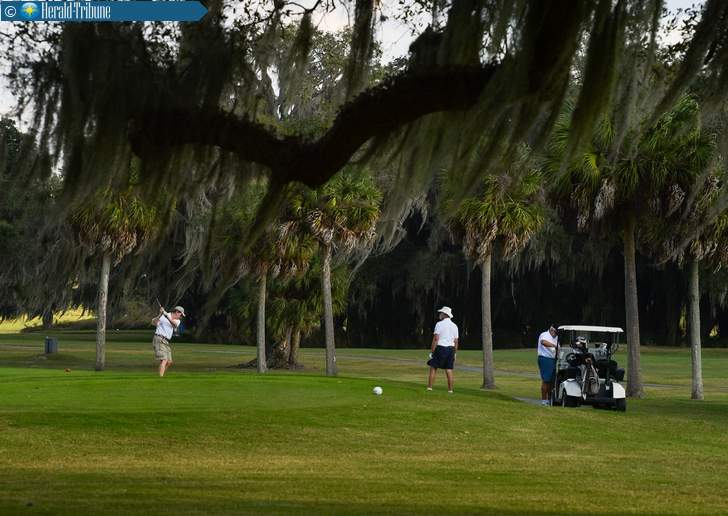
Golfers play on the American course at Bobby Jones Golf Complex on Monday. Photographer: Dan Wagner Photograph courtesy of Sarasota Herald-Tribune
MONDAY, DECEMBER 14, 2015
SARASOTA HERALD-TRIBUNE
By EMILY LE COZ
EMILY.LECOZ@HERALDTRIBUNE.COM
Time is critical for a series of sweeping improvements recommended for the Bobby Jones Golf Course, according to a city-appointed study committee that presented its report Monday at City Hall.
The group pitched $14.5 million in capital improvements to the municipal facility described as “tired” by the National Golf Foundation after a review of the grounds last year.
“We are highly recommending that you move quickly on this,” said Bobby Jones Golf Club Study Committee leader Dan Smith during the presentation. “If we felt we could fix this with just some minor repairs, we wouldn't be here today. It's way beyond time.”
City commissioners formed the citizen-led group late last year amid concerns about the facility. They directed members to study the current status and operation of Bobby Jones and devise a master plan for its long-term future.
Members took the mission to heart, holding 30 meetings, listening to 20 experts and studying thousands of pages of research, said Susan Dodd, assistant to the city's finance director.
Among their recommendations are that the city should hire a master planning firm with experience in professional golf course architecture to consult on the following improvements: the renovation of the British and American courses, the creation of a player-development center and the construction a new clubhouse.
The group also suggested the facility raise its fees by $7.50 per round of golf to generate more revenue and that it implement a professional marketing plan.
Commissioners will mull the proposal over the holiday season and could decide how to proceed sometime in January. They generally praised the group's work and voiced support for improving the golf club.
“We are not competing with others; others are competing with us,” said Mayor Willie Shaw. “We are Bobby Jones."

The clubhouse restaurant at Bobby Jones Golf Complex. Photographer: Dan Wagner. Photograph courtesy of Sarasota Herald-Tribune.
But they also peppered Smith with questions during the two-hour meeting. Commissioners asked how the committee arrived at its recommendations and cost estimates, if it had buy-in from the golf community and why it appeared to deviate from the National Golf Foundation's 2014 report, which had suggested a less comprehensive improvement plan.
“The NGF report really missed the big picture that the physical plant has deteriorated so quickly that you've lost 30 percent of your business over a 10-year period,” Smith said.
Annual rounds at the complex dropped from a high of 143,066 rounds in 2007 to less than 102,000 last year, statistics show. The faltering economy spurred some of the decline, as did golf's waning popularity over the years.
“I look at the numbers, and I see the drop in play,” Smith said. “I drive by there, and I see the parking lot is not as full as it once was.”
Bobby Jones could recapture some of its glory — and its earnings — if the city proceeds with the recommended improvements, Smith said. If not, it will continue its slow decline.
Among the most controversial aspects of the plan is the redesign of the two 18-hole golf courses to “capture the spirit” of the original architect, Donald Ross. Some citizens and committee members had warned against returning the courses to the nearly 90-year-old designs, while others supported the move.
“The question of whether it should be Donald Ross or Donald Duck or anybody is one that should not be answered now,” said former study committee member Clarence Rogers. “It's something the master planner will get to after all of the facts have been unearthed.”
The renovation of both golf courses represents the biggest cost, estimated at $3.75 million each – or $7.5 million combined.
“Building a golf course is building a golf course,” Smith said. “We know a big part of the cost is going to be irrigation” and drainage.
It will cost an additional $3.5 million to construct a new clubhouse, which the committee recommends be relocated from the footprint of the original course. A new player development center is estimated at $1.5 million, with contingency costs coming in at $1.75 million.
The group predicts the facility will lose $250,000 during improvements because of closures.
The committee also identified several funding sources, including the optional local sales tax, a revenue bond and a grant from the Florida Department of Environmental Protection.
Vice Mayor Suzanne Atwell raised concerns about creating more bond indebtedness for the city, saying taxpayers are ultimately liable for the repayment.
Not pursuing the bond will be worse, countered study committee member Jay Logan.
“If you take the trend of where the business is going at moment, we'll be running a deficit that will equate to the bond debt service,” Logan said. “Doing the bond and reconstructing the golf course should be something that happens.”

The clubhouse at Bobby Jones Golf Complex. Photographer: Dan Wagner courtesy of Sarasota Herald-Tribune.
BOBBY JONES REPORT SCHEDULED FOR MONDAY
SUNDAY, DECEMBER 13, 2015
SARASOTA HERALD-TRIBUNE
BY EMILY LE COZ
EMILY.LECOZ@HERALDTRIBUNE.COM
SARASOTA - The Bobby Jones Golf Course Study Committee will recommend $14.5 million in capital improvements to the municipal facility, according to a long-awaited report scheduled for presentation at a special City Commission meeting Monday.
City commissioners formed the citizen-led group late last year, directing members to study the current status and operation of the golf course and devise a master plan for its long-term future.
Among its recommendations are that the city should hire a professional golf course architect or master planning firm to reconstruct the British and American courses, create a player-development center and build a new clubhouse.
The renovation of both golf courses would cost $7.5 million combined and the two new buildings would cost a total of $5 million, the group estimated in its report.
The committee also identified several funding sources, including the revenue from the optional local sales tax, a bond and a grant from the Florida Department of Environmental Protection.
It also recommended raising the fees by an average of $7.50 per round of golf to generate an additional $750,000. Fees to play an 18-hole round there currently range from $19 to $47, depending on the season.
The city has considered improvements at Bobby Jones before. It hired National Golf Foundation Consulting in 2008, and again in 2014, to study the golf club, built in 1926 off the northeast corner of Fruitville and Beneva roads in Sarasota.
A LETTER FROM PAUL AZINGER
what does the future hold for BOBBY JONES golf club?
JULY 29, 2015
SARASOTA OBSERVER
Amid privatization talks, the committee tasked with mapping out a plan for the long-term viability of Bobby Jones is keeping all its options on the table
BY DAVID CONWAY, NEWS EDITOR
Vice Mayor Suzanne Atwell may not be an avid golfer, but that hasn’t stopped her from teeing off on the status quo at Bobby Jones Golf Course.
At a July 13 budget meeting, Atwell read a strongly worded message regarding the future of the city-owned golf course. The Bobby Jones Golf Club Study Committee, tasked with researching a path to better management for the course, plans to complete its research toward the end of the year, but Atwell wants to see more immediate results.
She also wants to be clear with her expectations for the course, which she thinks must earn a profit to justify its operation by the city.
“City taxpayers should not subsidize the golfing costs of a clientele, most of whom are not city residents, and where many local golf courses are available to non-members,” Atwell said.
For years, Bobby Jones has drawn criticism for its increased maintenance and capital costs and lack of corresponding rise in revenue. The commission officially formed the golf club study committee in February, assigning seven area residents with the task of researching the best practices for the municipal course, possibly in advance of a formal master planning process.
When budget talks began this summer, Atwell was frustrated with what she saw as unrealistic revenue projections for the course — and the lack of substantive progress from the study committee as the city made its financial plans for the next year. Atwell stressed that she is a big fan of the course and wants to see it succeed, but also wants to make sure it’s operating in the black, either on its own or by a partnership with another entity.
If, by the beginning of 2016, the city has developed no clear plan for the future of Bobby Jones, Atwell suggested a private vendor could be the best option for managing the operations of the club.
“I want the advisory committee to come up with some very creative, responsible decisions that are not on the backs of the taxpayers,” Atwell said.
In addition to the missive from Atwell, the board has been working without its original chairman following John Bondur’s resignation in April. Still, the group is confident that it’s proceeding in the right direction, and plans to consider all options available.
Clarence Rogers, the new chairman of the committee, said it was too early to comment on Atwell’s comments regarding the best management structure for the course. Still, in the five months the committee has been operational, the group has heard first-hand accounts that municipal courses can still run efficiently.
“We've certainly received information from folks who have testified from other venues that it certainly is and has been the case in other places,” Rogers said. “We know it can be done.”
In addition to the capital and infrastructure improvements the course has needed for years, Bobby Jones is also suffering from an increased amount of competition from other local courses. With some public courses offering lower rates than the municipal club — and well-equipped private courses opening up their facilities to the public to generate more revenue — Bobby Jones needs to create its own niche in the market.
“The business of golf these days is very tough,” Rogers said. “You have to consider all aspects of competition. That's reflected in the pricing and the amenities and so on.”
At the golf club study committee’s July 23 meeting, the board began a dialogue with one potential partner to help reshape the future of Bobby Jones: Visit Sarasota County. Virginia Haley, the tourism group’s president, agreed that despite the popularity of recreational golf in the region, the municipal course needed to first develop its own distinct identify before tourism funding and marketing could enter the equation.
“I think you have to create that unique proposition,” Haley said.
PROPOSED CITY BUDGET KEEPS TAX RATE FLAT
TUESDAY, JULY 14, 2015
SARASOTA HERALD-TRIBUNE
BY ZAC ANDERSON
SARASOTA - Boosting city commissioner’s salaries, privatizing the city-owned Bobby Jones Golf Club and deferring payments on a troubled new lift station were among the financial issues discussed Monday at a Sarasota City Commission budget workshop.
…[Vice Mayor Suzanne] Atwell was much less pleased with the budget proposed for Bobby Jones, which she slammed for continuing to run deficits. In a prepared statement Atwell noted that the golf course has relied on taxpayers to cover deficits totaling $1.3 million over the last six years.
“City taxpayers should not subsidize the golfing costs” for Bobby Jones patrons, Atwell wrote.
If a viable plan for balancing Bobby Jones budget does not materialize by Jan. 1, Atwell said the city “should consider leasing the facilities to a private operator."
Other commissioners expressed concerns about Bobby Jones but there was no formal action taken Monday.
SPECIAL CITY COMMISSION MEETING
MONDAY, JULY 13, 2015
CITY OF SARASOTA
Vice Mayor Suzanne Atwell's prepared comments:
“Over the past six years, the Bobby Jones Golf course has run deficits totaling $1.3 Million dollars, $400,000 last year alone, as a result of declining numbers of rounds with resulting revenue losses coupled with expenditure increases. We’re in a course this year for another deficit, optimistically projected at about $100,000.
“During these years, the staff has projected unrealistically high revenue estimates, same for golf rounds and cart rentals, which are not realized, and hence the deficits. This is the real ball game here.
“We have a situation here right now in which the Friends of Bobby Jones [Golf Club] has lost confidence in the staff’s financial management, and where the Friends do not appear to be working well with the advisory committee appointed by us.
“What I fear is that we now are getting a dysfunctional situation in which Bobby Jones may be spiraling out of control, with as yet no plan for dealing with the vast capital needs. Year after year, the City Commission has kicked the can down the road (I take a lot of responsibility for that) while not insisting until the appointment of the advisory committee with the need for long-range planning, including how to pay for it.
“I give staff credit for keeping this going. And, and I understand it. I was part of it for all these years. But it’s not sustainable anymore.
“I think a good starting principle which should guide the planning and implementation is that city taxpayers should not subsidize the golfing costs of a clientele, most of whom are not City residents, and where many local golf courses are available to non-members, albeit at prices somewhat higher than those at Bobby Jones.
“So what to do? This is just my thinking, my forecast.
“[No. 1:] Ask the advisory committee for an interim report within a month. I don’t want to wait ‘til December…if it’s possible. It’s just my view. And that report should include but not [be] limited to how to pay for capital requirements.
“[No. 2:] The advisory committee should be asked to work with the Friends of Bobby Jones [Golf Club] on these reports.
“[No. 3:] Reduce the staff estimates of revenue for $2.85 Mil to $2.6 Million which is still, still higher than just under $2 Million last year and probably optimistic staff estimate for this year for $2.6. Perhaps Mr. Lege could refine these estimates. My quarrel at this point is not with expenditures but with revenue.
“The result of the above would be a deficit of about $150,000 assuming staff recommendations for expenditures.
“No. 4: The Friends of Bobby Jones [Golf Club] perhaps should be asked to cover the deficit, whatever it turns out to be, in the interests of a Public Private Partnership.
“No. 5: If there’s no viable plan that we can see by January 1, 2016, the City Manager and all of us should consider perhaps leasing the facility to a private operator under conditions that would allow for profitability.
“These are my concerns.”
City Commissioners' additional comments:
“One final recommendation is that we look into what it would cost from a staff funding perspective to help assist with the funding of a master plan for the Bobby Jones Golf course. We’ve been talking about it for years, and that’s been a recommendation that’s come from both the advisory side and the Friends side, and looking at how much that might cost even as a portion of an investment going forward. That’s going to be the first step in us getting Bobby Jones back to its glory days.”
- City Commissioner Shellie Freeland Eddie
“I really would like to look at how we can perhaps sit at the table with the County on their Master Plan for Parks. They’ve hired a consultant to come in and do a master plan for Parks and Rec. Can we, and I’m just throwing this out there, I know we talk about what want to do with Parks and Rec and whether we go with a parks district and whatever, but can we sit at the table and would that reflect the money that we’re going to put into a consultant, can we do it that way, I’d just like to know if that’s an option to have place there, and make this a regional consolidation of Parks.”
- City of Sarasota Vice Mayor Suzanne Atwell
“I would like to see a status report from the Bobby Jones Committee. I would like to know where they’re standing on it. On the other issues I’d want to defer judgment about Bobby Jones but I would like to know if they are making progress, what direction they’re heading for, to. I would just like to know where they stand, because we haven’t heard from them since the previous Chair left.”
- City Commissioner Susan Chapman

Friends of Bobby Jones Golf Club approached the City of Sarasota with an offer to sponsor children's golf camps at Bobby Jones Golf Club, and sponsored the first-ever Drive, Chip & Putt Boot Camp for Boys and Girls Ages 7 to 15.
SANTARELLI WINS SARASOTA MEN'S CITY GOLF CHAMPIONSHIP
SUNDAY, MAY 3, 2015
SARASOTA HERALD-TRIBUNE
BY JIM BROCKMAN
SARASOTA - Antione Santarelli blazed through the final round of the Sarasota Men’s City Golf Championship with a 3-under-par 69 on Sunday to claim the crown at the tournament held annually at the Bobby Jones Golf Club.
Santarelli, 21, finished the tournament, which began with the first two rounds of play last weekend, with an 8-under total of 280.
Santarelli, who currently trains at the Missing Link Golf Academy at Lakewood Ranch, finished seven strokes ahead of 55-year-old longtime Sarasota resident K.C. Fox.
Tononari Fukyama, 21, who is in his second year of training at IMG Academy in Bradenton, took third place after a disappointing round of 74 on Sunday. The former resident of Okinawa, Japan, was eight strokes back with an even-par 288 for 72 holes.
“It is always great to win,” Santarelli said. “I took it as a personal challenge.
“I knew I was playing good, so I had a feeling it was going to be a great day. I just went out and tried to play as well as I could.”
Santarelli seized the lead with a tournament-best 67 in the second round and never relinquished the top spot.
Fox trimmed Santarelli’s lead to two strokes following a Saturday-best 68 in the third round.
“I thought his course management was really good,” Fox said after playing in the same foursome with Santarelli on Sunday. “He got in trouble on No. 7 and got a double bogey. But he came back to make some putts, some six- and eight-footers for par. That’s what you’ve got to do.
“We had to chase him a lot. It’s a lot harder to chase than stay in the lead.”
Santarelli believes he played even better during the first weekend of the event played on the British Course at the 45-hole municipal facility that first opened in 1927.
“Last weekend I putted really well,” he said. “I didn’t putt as well this weekend, but I was still hitting it good. My putter wasn’t as kind this weekend.”
Santarelli, originally from Corsica, plans to play in a U.S. Open prequalifier at TPC at Prestancia in Sarasota later this month.
It was the second runner-up finish at the Sarasota City Championship for Fox in the 15 years he has played in the tournament.
“The golf course was set up much more difficult today,” Fox said. “It was playing long. They used every inch of this golf course. I have never seen it like this.”
Sarasota resident Brandon Johnson shot a final-round 73 to finish fourth with a one-over total of 289.
There was a three-way tie for fifth place between Mike Calomeris, Michael Butler and Ray Wenck at 292.
Two-time defending champion Phil Walters, who also won the crown in 2008, finished with a 76 to wind up with a 7-over par 295.
David Perna won the first flight championship with a total of 296. Matt Berube (299) won the second flight and the third flight title was a tie between Jeff Haire and Ken Kigongo at 320.
Richard Baran won the fourth flight at 319 and Al Anderson won the fifth flight at 337.
SARASOTA'S FIRST MAYOR LIVED AND BREATHED GOLF
SUNDAY, MAY 3, 2015
SARASOTA HERALD-TRIBUNE
BY JEFF LAHURD
When John Hamilton Gillespie was 8 years old, his grandfather gave him a set of McEwan and Philip golf clubs. This was about 1860, those long ago days when golf was a man's game and clubs, or sticks, were handcrafted and bore names like niblick, lofter, mashie, midiron and cique.
(Gillespie recalled that a magazine article in 1867 addressed the issue of women on the golf course: “As for his wife, she must amuse herself as best she can; she cannot even accompany him in his game as a spectator, the presence of ladies being by no means regarded with favor...”)
From the day of his grandfather's gift forward, the Scot who is considered the Father of Sarasota never put the clubs down. In fact, he made a name for himself throughout Florida as the “Golfing Mayor,” an ambassador for the sport when few people in this country had even heard of it.
When his father, Sir John Gillespie, bid him to go to Florida and rekindle the failed Scot Colony in Sarasota for the Florida Mortgage and Investment Co., his clubs were in tow. To keep his game sharp and his passion for it alive, he roughed out a two-hole practice area near the site of today's post office building on Ringling Boulevard. That was in 1886, a year or so after the town of “Sara Sota” had been platted.
The Sarasota Times called him “perhaps the most ardent of golfers... (who) spends many hours every day in the winter season practicing difficult hazards and making famous shots.” The paper also noted that “his judgment is the criterion to which all disputes are taken for settlement.”
Colonist Alex Browning recounted coming upon Gillespie practicing his game. Gillespie asked the young man if he had ever played. When Browning replied that he had not, Gillespie said to him, “Mon, y're missin' half ye life.”
Gillespie was a large, good-spirited man with a ready smile who made the success of Sarasota his life's work.
To that end, he began a building campaign that saw the completion of the dock at the end of Main Street, the construction of the DeSoto Hotel at Main Street and Palm Avenue and two rusticated block buildings, one at Five Points the other on Gulf Stream Avenue. He also was involved in beautifying the downtown area and laying tracks for a minor railway line from Braidentown, derided as the Slow and Wobbly during its short lifetime. Later he would help establish the Church of the Redeemer.
In 1902, when a legitimate train line announced its intention to come to Sarasota, the citizens of the small community held a meeting at the pier and voted to incorporate as a town. Gillespie was the obvious choice to become its first mayor.
The importance of golf to the success of a community seeking newcomers was obvious to Gillespie. He noted, “It was not until Bellaire became famous as a golf course that Tampa wakened up to its responsibilities and now what a change we do find.”
Gillespie traveled throughout Florida developing golf courses and forever extolling the benefits of golf to the communities that supported it.
According to Historian Karl Grismer, in 1905 Gillespie laid out the first 9-hole course in Sarasota.
Gillespie's manservant and friend, Leonard Reid, recalled in a Herald-Tribune article how he was invited by Gillespie to walk with him through the palmettos and brush. They walked for miles as Gillespie sketched what would become Sarasota's first golf course.
Reid remembered that 50 men grubbed the palmettos and set up the fairways, which were only 30 to 40 feet wide. He stated, “That's why the colonel was so good. He'd always win his match because he could shoot straight. Colonel Gillespie only took a half a swing and the other men always could outhit him. But they would end up in the woods while the Colonel got in the hole.”
The first hole of his course went east from Links Avenue toward today's Sarasota County Terrace Building.
The second was further east, the third near today's Ringling Shopping Center and the fourth near Tuttle Avenue. The course then took a dog leg to the fifth, and the rest of the holes all headed back west, with the ninth hole directly in front of Gillespie's house, Golf Hall.
Writing under the name “The Colonel,” Gillespie was a regular contributor to “New York Golf” and “The Golfers Magazine.”
The local realization that Gillespie's pitch that golf could be a tourist magnet was amply demonstrated after Gillespie's clubhouse burned down in in 1915 and the course fell into disrepair. A town meeting to decide how to remedy the situation revealed how much golf had been embraced by the community.
The Sarasota Times wrote: “A golf-less tourist resort in Florida is in much the same class as a production of Hamlet with the star character left out.” Siesta Key developer Harry Higel chimed in, “The tourists will not come to Sarasota because every town in Florida is getting golf links.” Property owner Joseph M. Downey from Chicago added that it would be no use building a good tourist hotel without a golf course.
On the morning of Sept. 7, 1923, Gillespie left Golf Hall to give instructions to his workers, and as he was returning he collapsed on the links. He was carried home, where he passed away.
The Sarasota Times eulogized him: “The Colonel was a great man. His passing leaves us lonely, mournful, and filled with grief.”
In the grip of their loss, the townspeople promised that a bronze statue of the Golfing Mayor would be cast, and both a life mask and a full-length body mold were made. But the passage of time seemed to have diminished the sentiment and the project was forgotten. When the new Municipal Golf Course was dedicated in 1927, it was not to Gillespie but to golf's great amateur, Bobby Jones.
BOBBY JONES COMMITTEE PITCHES VISION FOR FUTURE
IN AMBITIOUSLY EXAMINING THE COURSE'S PROBLEMS, THE BOBBY JONES GOLF CLUB STUDY COMMITTEE HOPES TO DISCOVER A REALISTIC SOLUTION

The municipal facility has become an issue for the city as revenues decline and cost of managing aging infrastructure grow. The study committee will research potential solutions to that problem. Photo Courtesy YourObserver.com
APRIL 23, 2015
THE OBSERVER
BY DAVID CONWAY, NEWS EDITOR
SARASOTA - After a whirlwind — and occasionally tumultuous — first two months, the city’s Bobby Jones Golf Club Study Committee is finally getting its bearings and preparing to take a big swing at the challenge it’s facing.
The city established the committee late last year to help create a long-term plan for the golf course, which is facing structural issues and ran up an operating deficit of more than $100,000 each of the past two years. The goal, commissioners said, was to review various options for improving the facility and to gauge the financial viability of those options. At some point after that, they said, a full master plan might be developed.
When the City Commission appointed seven members to the board in February, commissioners praised candidates for having reasonable and realistic outlooks on the future of the course — driving home that cost would be a driving factor in any eventual improvements.
To familiarize itself with the subject matter, the group held seven meetings in its first five weeks, all of which were more than two hours long. The most intensive was a site visit held in February, a crash course on the operations and infrastructure at Bobby Jones.
Over those first five weeks, they became acutely aware of many of the problems facing the course — most of which have been raised in past studies, but which have been difficult to address financially.
“Excellent drainage and efficient, reliable irrigation are really necessary,” committee member Norm Dumaine said. “Bobby Jones is crying out for that. The very structure of the course — the way the banks are built up the canal — really forms a kind dish that drops water into Bobby Jones.”
At the March 16 City Commission meeting, the committee provided an update on its early work to the commission. To do its job right, compiling the report would take 3,000 to 4,000 hours, the group said. That meant not only maintaining a busy schedule, but also working until the end of the year to compile a report rather than the initial summer deadline.
At that meeting, the commission gave its blessing to the committee to extend the timeline.
However, at an April 7 committee meeting, city administration informed the board that it could not commit the staff hours needed to that work schedule. Although most board members were fine with scaling back, Chairman John Bondur was not — and so he tendered his resignation immediately.
“I understand the approach,” Bondur said at his final meeting. “I don’t agree with it, and I think it’s unfortunate that there’s an unwillingness from whomever the parties may be.”
Still, the board is charging forward. Now that it’s identified obstacles to address, the group is focused on gathering more public input and developing a work plan for completing its directive. At a meeting earlier this month, members of the committee took one last preliminary look at the big picture, sharing their personal visions for the future of the facility.
VISION BOARD
On April 2, the Bobby Jones Golf Club Study Committee gave its members a chance to offer their outlook on improving the course.
Norm Dumaine
There are so many golf courses in this area, even within five miles of Bobby Jones, that if Bobby Jones can’t somehow create some kind of niche in this market, some kind of thing that makes it really special, I’m not sure in the long run that we would be doing Bobby Jones a great favor if we just simply focus on budget. I think, at some point, you may have to spend a little bit of money to make more money. … It seems to me, over a long period of time, you might accomplish what you can’t do at this very moment.
Millie Small
My vision for Bobby Jones Golf Club starts with a question: How can we effectively create a plan for the future if we don’t face the reality of the present? It starts with the reality of the current condition of all three courses. … It is apparent that the courses and buildings have not been maintained for several years as they should have been, but budget cuts and other policies enacted by past commissions have created the present situation of replacements rather than repairs and regular maintenance. I have never envisioned dramatic changes to either of the 18-hole courses — just do what is needed.
Dan Smith
If we don’t deal with the really big issues, making a few changes to greens and tees is going to get us back to square one in two, three, four years. It’s an unfortunate situation. We all were there, took the tour and saw the condition of the property and the dysfunctional nature of the irrigation system and the drainage and the bathrooms and all the problems there. … To think there’s $8 (million) to $10 million to do a whole bunch of work — we all know that’s not there. But to be fiscally responsible, we have to acknowledge maybe minor isn’t the answer, either.
adam schenk takes bobby jones open
SUNDAY, FEBRUARY 15, 2015
SARASOTA HERALD-TRIBUNE
BY Tom Balog

Bobby Jones Open 2015 Champion Adam Schenk flanked by club Assistant Pro Dan Bailey and Head PGA Pro Christian Martin. Photo courtesy Sarasota Herald-Tribune
SARASOTA
Adam Schenk seized upon a break that kept the 23-year-old Purdue University graduate alive on the first hole of the Bobby Jones Open three-way playoff to win his second West Florida Golf Tour title Sunday.
Schenk birdied the par-4 No.10 hole with an eight-foot putt to defeat Don Leafstrand and Spence Fulford and take home the $4,000 first place money of the $25,000 tournament at Bobby Jones Golf Club. It wouldn’t have been possible had Schenk’s drive not hit a rock on the fringe of a pond, out of bounds, and caromed back onto the fairway, 33 yards from the pin. “Lucky,” said Schenk, who is from Vincennes, Ind. “I swung a little too hard and I pulled it and it was heading for the water and I figured it was in. But it apparently hit the rocks and kicked out. I got it up-and-down to win. “I was lucky enough to roll it over the front edge - last roll,” Schenk said.
“He hit it in the middle of a lake and ended up winning the golf tournament,” said Christian Martin, the tournament director and head golf pro at Bobby Jones. “It hit the rocks and came back. He got the break of his life.” “If I wasn’t there, I wouldn’t have believed it,” said Christian Bartolacci, the president and director of the West Florida Tour.
Schenk, Leafstrand and Fulford each finished the 36 holes of regulation tied at 11-under par 133. “I’ve actually been on the unlucky side of things,” Schenk said. “The biggest one was the round of 32 at the U.S. Amateur at Cherry Hills. I was in a playoff, 21st hole. I was 10 feet for birdie and the guy was I don’t know, 50 yards for birdie, and he made it against me. So it’s nice to have it come back my way once.” The first-round leader, Samuel Chavez, who shot 8-under par 64 Saturday, fizzled with a 2-over 74 Sunday. Michael Visacki (68-68) of Sarasota and Adam Hogue (67-69) of Lakewood Ranch ended tied for fourth at 8-under 136.
“Just couldn’t make any putts coming down the stretch,” said Visacki, who watched a few roll in and out. “I had a couple ‘burnouts,’ ‘lipouts,’ almost like 360s. You make those, I’m right there.” Thirty-five of the tournament’s 115 entrants (93 pros and 22 amateurs) broke par.
This event completes the second year of a five-year contract that the West Florida Golf Tour has with the City of Sarasota to stage an event at Bobby Jones. Bartolacci expects the Bobby Jones Open to continue indefinitely.

Adam Schenk watches his $4,000 putt roll toward the cup. Tom Balog Photo Courtesy Sarasota Herald-Tribune
CITY OF SARASOTA COMMISSION RECAP
FEBRUARY 2, 2015
ACCESS SARASOTA
MILES LARSEN, CITY OF SARASOTA
A look back at the Regular City Commission Meeting of February 2, 2015. The Commission went to Board appointments, and there was one to take care of: The Bobby Jones Golf Club Study Committee. The Commission appointed the following members to that Committee: John Bondur, Jay Logan, Millie Small, Clarence Rogers, [Friends of Bobby Jones Golf Club Charter Friend] Rich Kyllonen, [Friends of Bobby Jones Golf Club Trustee and Treasurer] Dan Smith and Norman Dumaine.
COMMISSIONer's CORNER
DECEMBER 18, 2014
PAUL CARAGIULO, CITY OF SARASOTA
City Commissioner Paul Caragiulo sits down with Shawn Pierson, the President of Friends of Bobby Jones Golf Club to discuss the past, present and future of our very own municipal golf course.
Sarasota City Commissioners Identify Top Legislative Priorities
November 4, 2014
BRADENTON HERALD
BY CLAIRE ARONSON
SARASOTA - On Monday, the city commissioners also approved the formation of an ad hoc committee to address improvements to the Bobby Jones Golf Course, 1000 Circus Blvd., Sarasota, to remedy deterioration. The Bobby Jones Golf Club Study Committee would be made up of at least five citizen volunteers. Appointments to the committee will be made at the commissioner's first meeting in January and applications to be on the committee be accepted later this month
At the meeting, Commissioner Suzanne Atwell asked that the committee's members be residents of the City of Sarasota and if there are not qualified people within the city, then could look outside the city into Sarasota and Manatee counties. The other commissioners approved the clarification.
"I think everyone is in agreement that the city is to retain control of the operation," Commissioner Paul Caragiulo said.
Sarasota resident Millie Small told the commissioners on Monday, "Let's keep it simple and do what needs to be done."
Sarasota resident Norman Dumaine said an ad hoc committee should be formed.
"I want it to become the best municipal golf course that it can be," Dumaine said. "We are all invested in the success of Bobby Jones (Golf Course)."
Sarasota may form committee for Bobby Jones golf course
Saturday, November 1, 2014
SARASOTA HERALD-TRIBUNE
By Ian Cummings
SARASOTA – A committee for improvements at the Bobby Jones Golf Club may be appointed next month, if the City Commission creates it on Monday.
The Bobby Jones Golf Club Study Committee would be asked to look into, among other things, reports of deteriorating conditions at the public golf course. Advocates have long pushed for more investment in the golf club, and a consultant’s report recently caused a stir at City Hall by calling the the practice facilities “substandard.”
The City Commission responded by drawing up plans for a golf course committee, but shied away from giving the group power to create a master plan. The group would have wide latitude to make recommendations on capital improvements, fees, and management, but city commissioners made clear in October that they wanted advice on fixing bridges and irrigation systems.
City Commissioner Paul Caragiulo, once a competitive golfer, played at Bobby Jones in his youth and still does occasionally. It is obvious to him, he said, that the course is in decline
“It’s not what it was,” Caragiulo said.
Everyone agrees Bobby Jones needs work, but exactly what should be done, and at what cost, is less clear. “I hear all kinds of different things. Different people want different things,” he said.
The city has considered improvements at Bobby Jones before. It hired National Golf Foundation Consulting in 2008, and again in 2014, to study the golf club, built in 1926 off the northeast corner of Fruitville and Beneva roads in Sarasota. Meanwhile, the club has continued to do a higher volume of business than other courses in the area, averaging 135,286 rounds of golf per year. Fees to play an 18-hole round there range from $18 to $49, depending on the season.
Some advocates for the golf course pushed for a master plan to overhaul the golf club. But Vice Mayor Susan Chapman and Mayor Willie Shaw, concerned about talk of “best use” real estate studies and potential threats to the public nature of the golf club, insisted that the committee be narrowly mandated.
The Bobby Jones Study Committee would be composed of five members appointed by the City Commission. They would have to be residents of Sarasota or Manatee counties, though commissioners said they would give preference to city residents.
Shawn Pierson, the president of the Friends of Bobby Jones Golf, urged city commissioners to include people with golf course expertise.
Prospective members could begin submitting applications on Nov. 10, and the committee would be appointed on Nov. 17. The committee would hold public meetings and then present its recommendations to the City Commission in April.
Better Ball Open Signals Revival
SATURDAY, OCToBER 11, 2014
sarasota herald-tribune
by tom Balog
SARASOTA – Erica Fitzpatrick-Kathy Westlund shot an even-par 72 to take the first-round lead in the low gross category of the Women's Better Ball Open at Bobby Jones Golf Club.
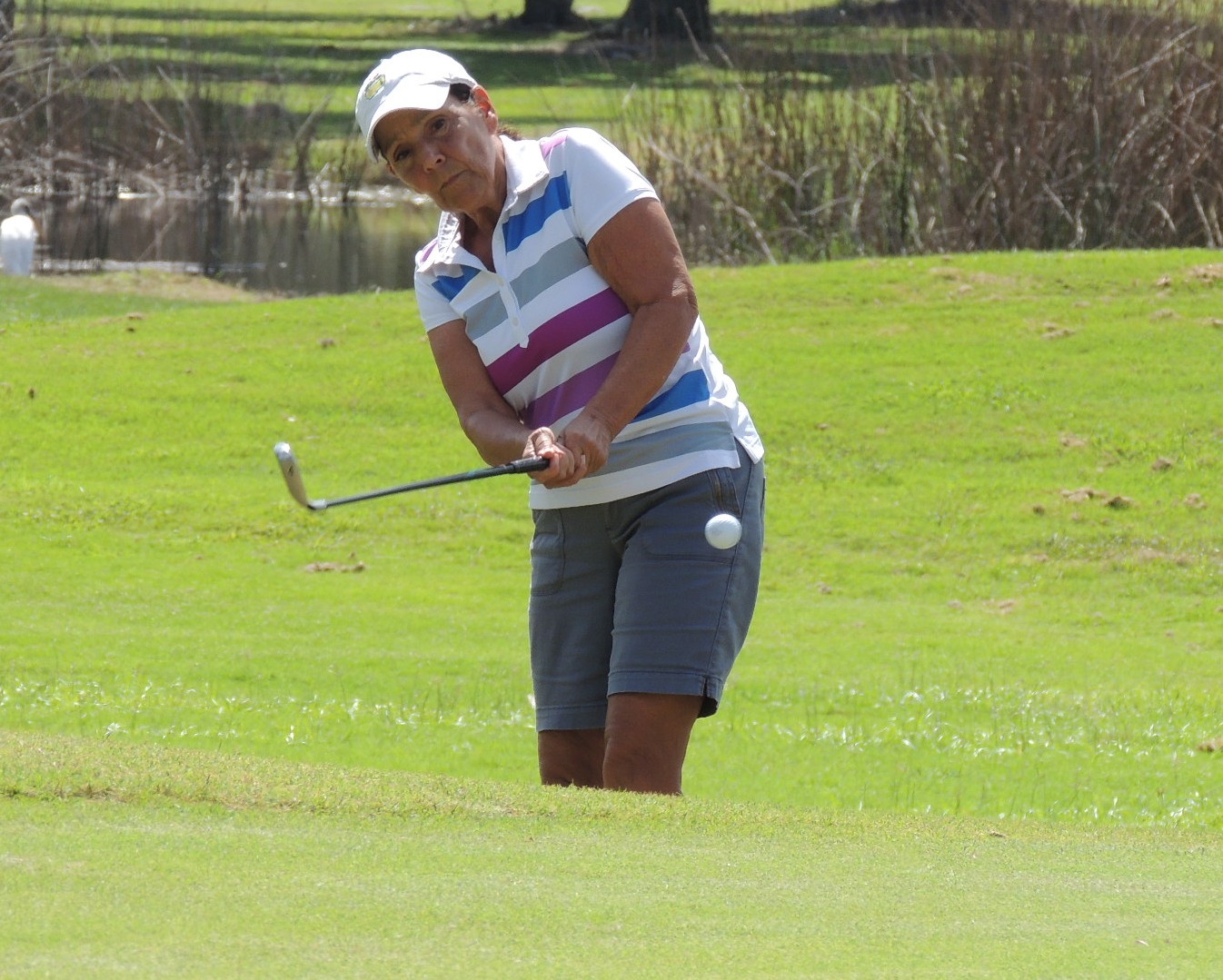
Daniele Liddell chips onto the 15th green at the British Course of Bobby Jones Golf Club Saturday. Photograph by Tom Balog Courtesy of Sarasota Herald-Tribune.
Joyce Gunby-Cynthia Cordova are the low net leaders in the first flight going into Sunday's final round.
Abby Vanderwood-Vicki Dehaai are the low gross leaders in the second flight and they are also tied for low net with Colleen C. Keeler-Ida Remmers.
The tournament, staged by the Bobby Jones Women's Golf Association, replaced the City of Sarasota Women's Championship, which was cancelled after last year due to only 12 players participating.
Keith Miller, the president of the Bobby Jones Women's Golf Association which staged the event, and Christian Martin, the head golf pro at Bobby Jones, the host site, were both happy with the field of 36 golfers.
"It's a small turnout, but considering where we were a year ago, it's very successful," Miller said. "I know that Sue (Martin, Bobby Jones general manager) and Christian and Daniel (Bailey, assistant pro at Bobby Jones) worked really hard with us to get the word out and get everything done."

Joyce Gunby. Photograph by Tom Balog Courtesy of Sarasota Herald-Tribune.
"Our goal was 40 and we accomplished it," Christian Martin said. "One lady had a detached retina and had to drop out. Somebody had a medical emergency. We had an odd number of teams so we had to cut back. I think we'll easily hit 60 players next year."
Miller said that the event tripled the entry list of the 2013 City Women's Championship despite a conflict with a Greater Sarasota Women's Golf Association event that was also played Saturday, and an Area Council Women's Golf event scheduled for Monday at Plantation Golf & Country Club, that had been rescheduled from last Monday.
"We're all competing for the same players," Miller said. "I think we need to coordinate our tournaments better so we can all support women's golf. I think it's sad when women don't support other women's golf events. We put out a 'save the date' in May for this weekend."
Martin said women like team tournaments better.
"I talked to several ladies throughout the area and it seems to me they all would prefer a team event over an individual event," Martin said. "Because they don't have to carry the burden that way. You got a partner that can pick you up when you're down. To have an individual championship you need a lot of ladies that are single-digit handicappers. Although there are some very good ladies in the area, it's hard to get them all together at the same time with everybody's busy schedule. So a team event works much, much better for the ladies."

Kathy Westlund hits her tee shot on No.16. Photograph by Tom Balog Courtesy of Sarasota Herald-Tribune.
Half of the proceeds from the tournament will benefit the Florida Suncoast affiliate of Susan G. Komen for the Cure.
"The good thing is the money stays here in the area, which we think is important," Miller said. "We have a lot of (breast cancer) survivors in our association. Right now we have a member that is up north battling breast cancer. So tomorrow we're going to all try to wear pink, so we can send her a picture."
WOMEN'S BETTER BALL OPEN
SATURDAY'S FIRST ROUND RESULTS
FIRST FLIGHT
Rank Gross Scores Net Rank Net Scores
1 Team 18 72-72 T4 67-67
E. Fitzpatrick / K. Westlund
2 Team 17 73-73 2 65-65
P. Handley / A. Palladino

Amy Palladino. Photograph by Tom Balog Courtesy of Sarasota Herald-Tribune.
T3 Team 1 75-75 1 64-64
C. Cordova / J. Gunby
T3 Team 15 75-75 3 66-66
C. Martin / K. Byle
5 Team 13 81-81 T4 67-67
D. Wiley / S. McGee
6 Team 16 83-83 6 73-73
G. Kolbe / D. Liddell
FLIGHT 2
Rank Gross Scores Net Rank Net Scores
1 Team 3 80-80 T1 64-64
A. Vanderwood / V. Dehaai
2 Team 14 82-82 3 65-65
K. Gunning / L. Cecil
3 Team 12 84-84 T5 68-68
B. Pecor / M. Mansour
4 Team 11 85-85 T1 64-64
C. Keeler / I. Remmers
5 Team 2 87-87 4 67-67
K. Miller / P. Lefrancois
6 Team 8 92-92 T5 68-68
A. Larrabure / J. Foss

Chris Martin. Photograph by Tom Balog Courtesy of Sarasota Herald-Tribune.
Commissioners hash out details of Bobby Jones committee
October 7, 2014
Sarasota Observer
By David Conway, News Editor
Although the future look of Bobby Jones Golf Club is still in question, the Sarasota City Commission affirmed its interest in maintaining the course as an affordable municipal attraction for residents at a meeting Monday.
The commission worked on defining the scope and parameters of an ad-hoc advisory committee that will help guide the future of Bobby Jones. Commissioners unanimously voted to create the ad-hoc committee following a September workshop and commission meeting, but there was some tension between the resolution presented by City Attorney Robert Fournier and the vision that some commissioners had.
Rather than simply tasking that group with developing a request for proposals for upgrades at Bobby Jones, commissioners expressed a desire to make the ad-hoc committee a forum by which the community at large could express its vision for the future of the golf club. Vice Mayor Susan Chapman said she was worried the committee could be overpowered by voices interested in a particular vision for the golf club — such as the Friends of Bobby Jones [Golf Club] who advocate restoring the club's historic Donald Ross course.
“We need to make sure that, whatever we do, there are public meetings and an opportunity to bring clear public input without skewing the outcome,” Chapman said.
In addition to the scope of the work, commissioners discussed the selection process for members of the Bobby Jones committee. The commission ultimately indicated an interest in fielding applications and favoring city residents in the selection process, although expertise in the field was a leading priority for some commissioners.
The ad-hoc committee will be tasked with outlining the possible options for maintaining or upgrading the facility to the commission, making recommendations for the future growth and management of the golf club. The commission will continue its discussion regarding the makeup and purview of the committee at its next meeting.
City wants tighter focus on golf course review
October 7, 2014
Sarasota Herald-Tribune
By IAN CUMMINGS
iancummings@heraldtribune.com
SARASOTA – A committee for improvements at the Bobby Jones Golf Club may be created with a sharply limited mandate, according to the wishes of city commissioners on Monday.
The City Commission, after determining last month to act on reports of deteriorating facilities at the public golf course, shied away from a resolution calling for a Bobby Jones Golf Club Master Plan Committee. The committee would have been tasked with a broad review of the golf club's operations, and could have been charged with making a contract for a sweeping master plan.
Instead, the commissioners discussed creating an ad hoc board of citizens and golf experts to consider golf course improvements such as irrigation fixes and bridge repairs. A consultant recently caused a stir at City Hall by reporting that the club's practice facility was substandard, the practice range was too short, and that the golf club needed a long-term strategy.
But on Monday, Vice Mayor Susan Chapman and other commissioners said tentative outlines for a Master Plan Committee, drawn up by city staff, went too far. A draft resolution called for the committee to review “best use” real estate studies, changes to club management, and a market analysis.
“These are things that start to have a wiggle room that is sort of scary,” Chapman said. She said such a broad mandate could threaten the public nature of the golf club, and the city's priority should be maintaining reasonable fees, accessibility for the public, and preserving green space.
Mayor Willie Shaw even worried about somehow losing the golf course. “I'd hate, one day, to see some great hotel have it's own private golf course here at the expense of taxpayers,” Shaw said.
The city has considered improvements at Bobby Jones before. The city hired National Golf Foundation Consulting in 2008, and again in 2014, to study the golf club, built in 1926 off the northeast corner of Fruitville and Beneva roads in Sarasota. Meanwhile, the club has continued to do a higher volume of business than other courses in the area, averaging 135,286 rounds of golf per year. Fees to play an 18-hole round there range from $18 to $49, depending on the season.
On Monday, commissioners had difficulty articulating what they wanted to see happen at Bobby Jones. Shawn Pierson, the president of the Friends of Bobby Jones Golf [Club], urged city commissioners to include people with golf course expertise in whatever committee they create.
City commissioners asked city staff to return at a later meeting with plans for an ad hoc group that could begin recommending some improvements to the golf course and answer basic questions. “How much is this going to cost us?” asked Commissioner Shannon Snyder. “It should not be that difficult. Other communities have done this.”
If the City Commission votes to create the ad hoc group, members of the public may apply to serve on it. City commissioners said they will likely give priority to city residents.
GOLF CLUB IS TEED UP FOR CITY
October 6, 2014
Sarasota Herald-Tribune
BOBBY JONES: City Attorney has prepared options for the board’s consideration
By IAN CUMMINGS
iancummings@heraldtribune.com
SARASOTA – A committee responsible for the future of the Bobby Jones Golf Club may begin to take shape today with a vote by the City Commission.
The ad hoc group, the Bobby Jones Golf Club Master Plan Committee, will be tasked with charting a course for the maintenance and development of the golf course, including improvements some club members have been seeking for years.
Commissioners decided to form the committee last month, after hearing a report from the National Golf Foundation that said the practice facility at Bobby Jones was substandard, the practice range is too short, and that the club needed a long-term strategy. Local golfer Paul Azinger, a former pro and 1987 PGA Player of the Year, told commissioners that he’s heard the course dismissed as a “goat ranch,” because of its disrepair.
The commissioners will likely discuss how to select people for the master plan committee. City Attorney Bob Fournier said the resolution he will give to the commissioners will not be final but will include alternatives that must be narrowed down.
“This is an opportunity for the commissioners to be more specific about what they want,” Fournier said. “Sometime’s it’s easier to have a discussion if you have options in front of you.”
The commissioners could require members of the committee to be city residents, or accept residents of Sarasota and Manatee counties. The commissioners may also set a deadline for a plan.
The committee will be asked to review the club’s finances and market position, and consider the golf course’s design and possible changes to the club’s management and fee structure.
The committee will first be asked to create a request for proposals to solicit contracts for a master plan, but also might later be charged with selecting a contract for a master plan.
The committee will be required to operate according to the Sunshine Law, Fournier said, and members of the committee would be disqualified from bidding on contracts.
The meeting will not be the first time the city has considered improvements at Bobby Jones. For years, the city-owned golf course, built in 1926 off the northeast corner of Fruitville and Beneva roads, has been the subject of studies and criticism. Nevertheless, the club has continued to do a high volume of business, averaging 135,286 rounds of golf per yea for the last 19 years.
That is more, club staff said, than any other course in the area. Fees to play an 18-hole round at Bobby Jones are relatively economical, ranging from a high of $49 in the winter months to $18 in the summer.
In recent years, annual figures have declined from a high of 143,066 rounds in 2007 to 102,283 rounds in 2013. Financially, the course broke even in 2013, according to city staff.
Teeing off at Bobby Jones
Private sector could help restore public course
Friday, September 19, 2014
Sarasota Herald-Tribune
After years of criticism, complaints and consultations, the Sarasota City Commission took an important step toward renovating historic Bobby Jones Golf Club.
At the urging of Paul Azinger, a Sarasota native and 12-time winner on the PGA tour, the commission on Monday unanimously agreed to appoint a committee to create a long-term plan for the city-owned course.
The main objective for the committee will be to determine what the golf club needs to, as Azinger put it, “bring it up to standards.” What those needs will cost and how to pay for them will the next questions.
The club's flaws - from a dilapidated clubhouse to a course worn by time and the traffic of more than 100,000 players a year - have been cited for years by players and consultants. Needed improvements have been placed on hold to see what the City Commission would do.
Monday's action starts the ball rolling.
The commission's decision follows a recommendation in January by National Golf Foundation consultants for a “comprehensive master plan” to “help establish how municipal golf fits into the City's overall recreation.” The plan, they said, should include proposed improvements to Bobby Jones' facilities, operations and marketing.
The big picture
“We have to figure out what the whole big picture is, what we need to do, what should we do and how can we do it?” said Commissioner Paul Caragiulo, the chief proponent of the master plan.
“The bigger question,” he added, “is whether the city should be in the golf business and in what capacity?”
The city has been in the golf business since 1925, when the original 18-hole course was designed by famed course architect Donald Ross. The club was named for legendary golfer Bobby Jones, who personally dedicated the facility in 1927. Nine more holes were added in 1952 and another nine in 1967. A nine-hole "executive course" was completed in 1977.
Bobby Jones' courses have been played by such golf stars as Walter Hagen, Tommy Armour, Gene Sarazen and Babe Didrikson Zaharias as well as baseball legend Babe Ruth. Azinger played there as a boy, and in 1980 shot a 62 to set the club's British Course record (there's an American Course, too).
Besides its rich history, the Bobby Jones club has been a successful business. It's self-supporting despite a fee structure that is among the lowest in the region, and hasn't needed a subsidy from the city in decades.
Christian Martin, assistant manager and head golf professional, told the Herald-Tribune's Tom Balog that Bobby Jones is the busiest public or private course in the area.
But all that traffic takes a toll. Like any business, Bobby Jones Golf Club needs periodic renovations not only to revitalize course and other facilities but to adapt to today's golfing market.
While the costs have yet to be determined, restoring or replacing the clubhouse alone would run into the millions of dollars.
That's too much for the club to afford through fees and other revenues, even with reasonable increases.
The city - already struggling to fund basic services plus pension costs - might not be able to shoulder all of the added expense either, though some money for clubhouse renovation was raised through county's added "penny tax."
A friend in need
Consequently, the private sector - current players, former patrons of the club, and anyone who sees the value in a municipal course accessible at reasonable costs to young and old alike - will probably need to chip in.
A local group, the Friends of Bobby Jones Golf Club, that has pushed for the commission to take action, is a likely resource for private fundraising.
Azinger appears ready to help. "I'm 100 percent behind whatever it takes,” he told the City Commission. “I put my hat in the ring now, to see that this facility has a legacy that will last forever.”
That's the type of support - from the golfing community and the city - that will help keep Bobby Jones Golf Club part of Sarasota's history for years to come.
The 2008 U.S. Ryder Cup captain, Major champion and 12-time winner on the PGa Tour who grew up in Sarasota, Paul Azinger speaks with Friends of Bobby Jones Golf Club President Shawn Pierson to the City Commission in support of the Four Initiatives.
Commission moves toward Bobby Jones master plan
September 16, 2014
Sarasota Observer
By David Conway, News Editor
The Sarasota City Commission, capitalizing on the presence of a local golf icon, committed itself to developing a new plan to guide the future of Bobby Jones Golf Club at a meeting Monday.
Still, the bold vision endorsed by several individuals in attendance was tempered with pragmatic concerns, most notably questions surrounding the cost of revitalizing the aging facility.
The commission unanimously directed staff to draft a resolution that would create an ad-hoc committee regarding a master plan for Bobby Jones. The precise details of the committee are still to be finalized, but commissioners indicated that the citizen board would help determine the scope of such a document, which would then be written by an outside agency.
The board took up the topic following a Sept. 3 workshop about the Bobby Jones Golf Club. A 2014 study by the National Golf Foundation said the city is in need of a comprehensive plan for managing the future of the course, and the Friends of Bobby Jones Golf Club has created a four-part vision to improve the facility and grow the game locally.
One of those initiatives is named after Paul Azinger, a Sarasota High School graduate who played at Bobby Jones before going on to success as a professional golfer. Azinger appeared at Monday’s meeting, urging commissioners to capitalize on the chance to improve the facility.
Azinger said that, although the current state of the golf club is suboptimal, it has the potential to become a serious draw. He pointed to Pinehurst Resort in North Carolina, which like Bobby Jones features a course designed by Donald Ross, and which hosted this year’s U.S. Open tournament following a 2011 renovation.
Were the city willing to address some of the problems that plague the course — drainage issues, aging infrastructure — several speakers said Bobby Jones could become a significant attraction.
“Every golf course gets old, not unlike cars or houses,” Azinger said. “There comes a time when you just have to have a facelift.”
Although the commission moved toward the creation of a citizen committee to help guide the master planning process, some commissioners encouraged a more cautious approach when considering the possible improvements. Commissioners Shannon Snyder and Susan Chapman both emphasized that cost would be an issue for the city, with Chapman expressing concern that pro-golf interests could take the master plan in a direction the city could not afford.
“I'm really reluctant to go to the ad-hoc committee point of view, because we do have such strong passionate interest groups for whom it seems cost is no object,” Chapman said. “For us, cost is an object, and we're going to have a financing plan for whatever we do.”
Deputy City Manager Marlon Brown said the eventual master plan would offer a variety of options for commissioners to pick and chose from depending on budgetary constraints and the will of the board.
Shawn Pierson, president of Friends of Bobby Jones Golf Club, said he was encouraged by the commission’s action, and that he hoped that the eventual master planning process would allow for broad citizen input.
“What it does is it allows for the widest possible community input,” Pierson said about the potential ad-hoc committee. “They’ll all be able to come and offer their experience and vision.”
City hears plea to restore Bobby Jones Golf Course
Monday, September 15, 2014
Sarasota Herald-Tribune
By Tom Balog
After Paul Azinger told the Sarasota City Commission that a friend told him the deteriorating Bobby Jones Golf Club is becoming as a “goat ranch,” commissioners unanimously agreed to appoint an ad hoc committee to develop a long-term plan for the historic course.
Commissioner Paul Caragiulo, who made the motion Monday night for a resolution charging the committee with crafting a course plan, said he would like to see it in place by July 2015.
Azinger, who played the course as a teenager at Sarasota High School, went on to become a 12-time winner on the PGA Tour. The 1987 PGA Player of the Year said he welcomes the opportunity to have input into the process.
“My hope is that Bobby Jones will get the facelift that it needs,” said Azinger, who lives in Bradenton. “It's truly a 'diamond in the rough' for us. I'm 100 percent behind whatever it takes. I put my hat in the ring now, to see that this facility has a legacy that will last forever. There is so much potential for it to be a destination location. We can draw people from all over the world to play this facility — if it's up to standards.”
Azinger told the commissioners that some of America's most famous courses, such as Augusta National and Pinehurst, in North Carolina, routinely require facelifts.
“It just has to happen,” Azinger said. “It's time for this facility to raise its bar a little bit.”
He told the commission that hearing his friend, Rich Kyllonen, refer to it as a “goat ranch” is “such a shame.”
He said he would favor tearing down and rebuilding the clubhouse.
“If that's what they decide, then I'm behind it,” Azinger said. “I'm going to lobby for a re-do of the clubhouse and everything.”
There are skeptics that have seen, as Commissioner Suzanne Atwell noted, the topic of restoring Bobby Jones being kicked down the road all too often.
“I'm hesitantly optimistic,” said Kerry Kirschner, a former city commissioner who spoke to the commission about the need for updating the facility.
But money will be the issue. Commissioners Susan Chapman and Shannon Snyder acknowledged that the commission will wrestle with how much it can afford to spend on Bobby Jones.
Twice over the past six years, the city hired National Golf Foundation Consulting — in 2008 and again in 2014 — to conduct a thorough review of the Bobby Jones Golf Club, built in 1926 off the northeast corner of Fruitville and Beneva roads in Sarasota.
The review came back with a report of a dire need for upgrades after examining the operations, management, marketing and physical condition of the Bobby Jones Golf Complex, which includes 36 championship holes, 18 named the British course and 18 holes the American course, along with a smaller, nine-hole executive length (par 30) course.
The National Golf Foundation determined in 2008 that the aging clubhouse has “poor curb appeal” and “a number of design issues that contribute to operational inefficiencies as well as lost revenue opportunities.”
The parking lot also is not appealing, and the locker rooms are not well-utilized, the report said.
In 2014, NGF said the golf operation had improved considerably, but that the city needs to formulate a “comprehensive master plan” to “help establish how municipal golf fits into the City's overall recreation offering,” including “prioritizing capital needs . . . improving some of the operational technology and marketing at the facility.”
Befitting an aging structure, earlier this year the city spent $80,199 to repair plumbing in the clubhouse and rent temporary restrooms for a four-month period, starting from December, during the peak of the tourist season.
Funding has been approved to replace a bridge on the 15th hole of the American course.
But those were just “Band-Aids” that don't address the long-range future for the complex.
“The facility is in desperate need of some type of master long-term plan,” said Caragiulo. “We have to figure out what the whole big picture is, what we need to do, what should we do and how can we do it? The bigger question is whether the city should be in the golf business and in what capacity?”
The city budget for the coming fiscal year starts Oct. 1.
“This timing is perfect to make this assessment,” Caragiulo said.
The National Golf Foundation report also stated that the practice facility was substandard, the lowest quality in the area and the practice range is too short.
Nonetheless, Bobby Jones does a substantial amount of business, especially in the winter months.
Christian Martin, assistant manager and head golf professional at Bobby Jones for four and half years, said the course is the busiest public or private course in the area, mainly because of its economical fee structure, which ranges from a high of $49.00 for an 18-hole round in the winter months to $18 in the summer.
Bobby Jones has averaged 135,286 rounds of golf per year for the last 19 years.
“We do significantly more rounds than the Meadows, which has three 18-hole courses, and Lakewood Ranch Golf and Country Club, which also had three 18-hole courses, just to name a couple,” Martin said. “We try to be something for everybody. That's the role of a municipal golf course.”
But the annual figures have declined from a high of 143,066 rounds in 2007 to 102,283 rounds in 2013.
With two weeks left in the 2014 fiscal year, which ends Sept. 30, Bobby Jones has totaled 101,095 rounds of golf.
Martin said that in the high season months of January, February and March, the course operated at capacity during the week, with 550 rounds played per day.
In those three months, Bobby Jones took in $298,708, $450,326 and $436,773. In 2013, those three months totaled $330,000, $389,551 and $395,309. In 2012, the figures were $329,168, $435,872; and $278,062.
Operating revenue at Bobby Jones was $2,382,372 in 2013, $2,701,294 in 2012, $2,663,769 in 2011 and $2,628,088 in 2010, according to the city's Comprehensive Annual Financial Report.
However, the course broke even in 2013, according to Sue Martin, the general manager of Bobby Jones.
The city did make a cost-saving move by contracting with an outside maintenance company to care for the course, at $1.4 million per year.
BOBBY JONES GOLF CLUB $25 MILLION CASH COW
SUNDAY, SEPTEMBER 14, 2014
SARASOTA HERALD-TRIBUNE
BY TOM BALOG
SARASOTA - City Commissioner Paul Caragiulo stated that Bobby Jones Golf Club has brought in more than $25 million in revenue to the City of Sarasota over the last 10 years, estimating there might have been one million rounds of golf played there.
“You're talking about a place - $25 million going through there - it's a busy facility,” Caragiulo said. “But revenue almost always equals expenses.”
Its maintenance contract costs $1.4 million a year, meaning that $1.1 million per year from Bobby Jones is funneled to the city coffers, after expenses, each year. Except when emergencies arise.
“We had a fund balance, but administrative costs (at Bobby Jones) deplete funds out of there,” Caragiulo said.
That's because the course's infrastructure is antiquated and repairs have cut into that profit figure recently.
“The facility is in desperate need of some type of master long-term plan,” Caragiulo said. “We have to figure out what the whole big picture is, what we need to do, what should we do and how can we do it? The bigger question is whether the city should be in the golf business and in what capacity?”
The city budget for the coming fiscal year starts Oct.1.
“This timing is perfect to make this assessment,” Caragiulo said.
Azinger to address City Commission
Saturday, September 13, 2014
Sarasota Herald-Tribune
By Tom Balog
SARASOTA - Paul Azinger will address the City of Sarasota Commission meeting on Monday night in support of the Friends of Bobby Jones Golf Club, a non-profit organization with initiatives that it hopes the city will ultimately adopt to address the future of the historic municipal course.
Azinger, who grew up playing at Bobby Jones where he once won the City Men's championship, has taken an active role in the push for improvements there since being approached by Shawn Pierson, the president of the Friends of Bobby Jones Golf Club, a year and a half ago.
Pierson said Monday is the night that Azinger, for whom the street leading into Bobby Jones, Azinger Way, has been named after, chose to make himself available to speak to the City Commission. “He doesn't have any script from us,” Pierson said. “We want the City Commission to be introduced to Paul Azinger in a more formal way.”
The Friends of Bobby Jones hope that Azinger, a 12-time winner on the PGA Tour who was the captain of the U.S. Ryder Cup team in 2008, will have some influence on how the City Commission prioritizes the facility.
“I haven't talked to Paul about what he wants to say,” Pierson said. “He has a pretty clear idea of what he thinks Bobby Jones is to him, its place in his development and his career. His is one of those stories of a kid who wasn't introduced to golf through membership in a country club, but through public high school education and a municipal course."
“The course he played is not the course it is today.”
Pierson said the city was forced to spend nearly $100,000 last winter to construct temporary outdoor restrooms while repairs were being made to plumbing in the clubhouse at Bobby Jones Golf Club.
“That's one example of money spent on a way you wish you didn't have to,” Pierson said. “We're being forced into a corner of management by crisis and it's time to turn that around and manage in accordance with a plan. We 're spending money on a facility (clubhouse) we've already determined we want to demolish.”
He also pointed out that bridges on the course need replaced.
“We have bridges that are starting to fall apart that cross waterways on the golf course,” Pierson said.
Pierson said the city first hired the National Golf Foundation in 2008 and again in 2014 to make recommendations to upgrade Bobby Jones Golf Club, but no action has been taken by the city to develop a comprehensive master plan to move forward.
He also pointed out that the Bobby Jones Advisory Board has been disbanded due to budget constraints.
“There hasn't been very much opportunity for the City Commission to have a discussion among themselves about the future of Bobby Jones Golf Club and about what all their experts and consultants agree is a requirement for reinvestment in the infrastructure,” Pierson said. “They are all in agreement it needs attention and that kind of attention can only come at the commission level.”
Paul Azinger's reaction to the Friends of Bobby Jones Golf Club Azinger Initiative proposal to the City of Sarasota to rename one of the courses at Bobby Jones Golf Club after him.
Friends of Bobby Jones draws its vision from the club’s past
April 3, 2014
Sarasota Observer
By David Conway
News Editor
To Shawn Pierson, the first hole of Bobby Jones Golf Club represents both the untapped potential and the improper management of the course.
Photographs from the 1920s capture legends such as Babe Ruth and Bobby Jones hitting off the tee box of that first hole. Pierson, founder of the Friends of Bobby Jones Golf Club, wants the city to build on that historic legacy to attract more people to the course.
Today, however, the land where that first tee box sat is in front of the clubhouse, right next to a rack where golfers can leave their bags. Nearby, the cart shack sits atop a segment of the original first fairway.
Pierson views these additions as missteps that could have been avoided if there were an overarching vision for the future of the course.
“We’re negating our city culture when we’re building new facilities needlessly on top of historic facilities,” Pierson said. “Coming from a career in historic preservation, that is a historic preservation don’t.”
The Friends of Bobby Jones [Golf Club], formed last March on Jones’ birthday, is placing a priority on creating that sort of a vision for the club. More than a year into the group’s efforts — with more than 40 supporters of the golf club on board — it has developed a four-part strategy for the future of the facility. Pierson believes the group already has made an impact on the way the city runs the golf club, but that there’s room for even more improvement.
Pierson’s work began more than two years ago, when he joined the city’s Parks, Recreation and Environmental Protection Board as the “Bobby Jones seat.” That position was the consolidation of the nine-member Bobby Jones Golf Course Advisory Board, which folded in 2011 due to budgetary issues.
As a result of the decreased advisory focus on Bobby Jones, Pierson believes, there was a communication breakdown between the golf course staff and city administration. Pierson asked Bobby Jones employees why they had not yet gone to the city to ask for changes recommended in a 2008 study, and they’d tell him it was because the city hadn’t asked them about it. When he went to city commissioners to ask why they hadn’t gone forward with those changes, he received a similar response.
“They’d say, ‘Well, because our staff isn’t recommending this,’” Pierson said. “There was a missing conversation.”
Friends of Bobby Jones Golf Club is focused on filling the gaps in that conversation. Already, the city has begun to move in the direction envisioned by Friends of Bobby Jones [Golf Club]. Public Works Director Doug Jeffcoat, who Pierson said only visited the course a couple of times a year before 2013, has established a more regular presence at Bobby Jones, meeting with golfers and hosting a public forum to discuss the development of a long-term strategic plan.
Bobby Jones Golf Club Manager Sue Martin said the club has already implemented some recommendations from the Friends of Bobby Jones, such as tying the history of the course to discounts offered to golfers. The long-term goals of Friends of Bobby Jones [Golf Club] are playing into the city’s work toward a master plan for the course, too.
“Many of the recommendations have long-range impacts and are being considered as part of the strategic plan process currently underway,” Martin said.
Although the long-range planning is still in its preliminary stages, funding will be an issue as the group’s plans move from conception to reality. Pierson is confident the city will be dedicated to enhancing the course.
The club has taken in just about as much revenue as it costs to operate over the past three years. Pierson believes smartly upgrading the facilities can produce both decreased maintenance costs and increased revenues; he’d like the city to reduce the overall amount of green space while improving the more essential elements of the course.
Certain upgrades — a new clubhouse, new greens and a new irrigation and drainage system — are necessary to keep the course functioning, Pierson said. Above all, Friends of Bobby Jones [Golf Club] sets out to guide the city as it implements those improvements so that — unlike in the past — more thoughtful consideration is given to the overall final product.
“We have this wonderful history of relevance and national import in golf, and we sort of let that go,” Pierson said.
COURSE WORK
Friends of Bobby Jones Golf Club has developed four initiatives designed to guide the future of the municipal facility.
• The Jones Initiative — Named after Bobby Jones; designed to create a master plan and strategic vision for the park.
• The Ross Initiative — Named after course designer Donald Ross; designed to preserve the historic aspects of the park.
• The Azinger Initiative — Named after professional golfer and Sarasota High School graduate Paul Azinger; designed to create a more challenging course out of the 18 holes added in 1952 and 1967.
• The Gillespie Initiative — Named after John Hamilton Gillespie, Sarasota’s first mayor; designed to grow the game, add training facilities and promote youth participation.
A year after founding the Friends of Bobby Jones Golf Club, Shawn Pierson has helped develop a plan for the future of the course that embraces its history.
Overhaul proposed for Bobby Jones GC
January 29, 2014
Sarasota Herald-Tribune
By Mark Cardon
A promising strategic plan was discussed at the public meeting at the Bobby Jones Golf Club Tuesday night but many golfers in attendance had immediate issues.
A presentation by Shawn Pierson, President of Friends of Bobby Jones Golf Club, Inc., outlined an impressive plan for a new and improved complex, including a learning center and driving range where the Gillespie Executive Course is located and renovation and renaming of the British and American championship courses that sit on a 291-acre site near Fruitville and Beneva Roads in Sarasota.
If the City of Sarasota approves the massive overhaul, the two current courses will be renovated and renamed the Donald Ross Course, in honor of the legendary original designer, and the Paul Azinger course, in honor of 2008 Ryder Cup Captain and 12-time winner on the PGA Tour.
Azinger, who now lives in Bradenton, was raised in Sarasota and graduated from Sarasota High School. Years ago, Azinger Way, the entrance to Bobby Jones, was named in his honor.
There hasn’t been a renovation of this magnitude at Bobby Jones since Andy Anderson redesigned the complex in 1967.
General manager Sue Martin said the City of Sarasota would have to approve the project and timeline could be as long as five years.
Sarasota public works director Doug Jeffcoat opened the meeting and told the room full of interested golfers and friends of Bobby Jones that none of the proposals had been presented to the City of Sarasota Commissioners - officially. He said the purpose of the meeting was to get the input from the community.
Pierson believes the City of Sarasota needs to make the improvements if it expects Bobby Jones to survive. In the past decade, many semi-private clubs in the area have closed their doors for economic reasons.
However, some of the concerns of the golfers in attendance centered on the on-going plumbing problems of the men’s clubhouse rest room and the archaic irrigation system on the courses.
According to Martin, those problems rank the highest on her agenda.
For complete information on the proposals by the Friends of Bobby Jones, visit www.FriendsofBobbyJonesGolfClub.org.
PGA Champions Tour player Scott Dunlap talks about his introduction to golf as a boy playing at Bobby Jones Golf Club.
CHAMPIONS TOUR: Dunlap qualifies
Saturday, November 23, 2013
Sarasota Herald-Tribune
By Mark Cardon
Scott Dunlap has found yet another tour to play on in 2014.
The former Sarasotan, who started playing golf 42 years ago, qualified for the 2014 Champions Tour Saturday.
He won one of the final two fully-exempt spots in a Champions Tour National Qualifying Tournament playoff at TPC Scottsdale, Ariz.
Five exemptions were available at the start of the four-day tournament and three were decided Friday. But Dunlap bogeyed the last hole Friday and found himself in a five-way playoff for the final two positions.
The last two fully-exempt spots, as well as several conditionally-exempt positions, were decided in playoffs on Saturday morning. Dunlap, who now lives in Duluth, Ga., and Jeff Hart (Solona Beach, Calif.), secured the fourth and fifth positions after both made pars on the first playoff hole.
Dunlap, who played most of his junior golf at Bobby Jones Golf Club, graduated from Sarasota High School and was an All-American at the University of Florida.
He turned pro in 1985, has won tournaments in six countries and has played on the PGA Tour and the Web.com Tour.
Greg Bruckner (Phoenix, Ariz.) earned the sixth position with a par on the third extra hole while Willie Wood (Edmond, Okla.) secured the seventh spot after making a bogey on the third playoff hole.
Doug Garwood (Stevenson Ranch, Calif.), who three-putted the final green on Friday to make bogey and drop back into the five-way playoff, ended up eighth after hitting his drive out of bounds and making double-bogey on the second playoff hole.
Several other conditional spots were decided on the first playoff hole when Mark Mouland (Kenilworth, England) made a par for the ninth position, Ben Bates (Pensacola, Fla.) made a bogey for the 10th spot and Jeff Coston (Blaine, Wash.) got the 11th position after making a double-bogey when his drive landed out of bounds.
Anders Forsbrand (Ponte Vedra Beach) did not participate in the playoff as a result of a partial exemption in 2014 from finishing 44th on the 2013 money list.
The remaining players who finished among the top 30 this week will be eligible to compete for spots in open qualifiers at all co-sponsored events on the Champions Tour in 2014.
Golfer Bobby Jones was Sarasota's star
September 22, 2013
SARASOTA HERALD-TRIBUNE
By JEFF LaHURD, Correspondent
SARASOTA - The Roaring 20s was a singular era, freewheeling in so many ways — from Jazz music, to the Charleston dance, to bootleg whiskey, to a skyrocketing stock market and the frenetic Florida land boom.
In addition to that unbridled merriment, the 1920s is also considered the Golden Age of Sport.
Jack Dempsey, the menacing Manassa Mauler, was fearsome in the boxing ring. The mighty Babe Ruth (the Bambino) redefined baseball with his tape-measure home runs. The elusive Red Grange (the Galloping Ghost) was running riot on the football field. Graceful Bill Tilden was master of tennis.
And a handsome young gentleman named Robert Tyre Jones II was the amateur king of the links.
“Bobby” to his legion of fans, was the undisputed amateur golf champion. His 13 major championship victories rank him still, over 80 years after he retired from the sport in 1930, as one of the greatest golfers of all time. He capped his stellar career by winning all four major golfing championships in a single year, earning the Sullivan Gold Medal as the country's outstanding amateur athlete.
He was 25 when he returned to Sarasota in 1927 to dedicate the municipal golf course which would bear his name.
Jones and Sarasota were a natural match. The community took pride in claiming to be the birthplace of golf in America, although it turned out that they were not, although in 1886 John Hamilton Gillespie may have smacked the first ball in America here. And the importance of golf to the city's future had been recognized in the Sarasota Times, which declared “a golf-less tourist resort in Florida is in much the same class as a production of Hamlet with the star character left out.”
For his part, Jones was the quintessential sportsman; self-effacing and polite, his temper a thing of the past. He was known to penalize himself for a foul whether it was seen by others or not. The Sarasota Herald proclaimed: “After 10 years he has placed his name among the immortals of American sports as one of the finest, cleanest and most attractive figures this country has produced.”
The paper reminded that as an amateur he “derives nothing but joy of the sport.”
Match of the Century
Sarasota's claim to Bobby was deeper than his connection to the new golf course bearing his name, and indeed, the city did stake a claim, conferring on him the equivalent of hometown status and giving the city, however tenuous, bragging rights to him as one of its own. Jones sold property for the Atlanta-based Adair Realty Company in Whitfield Estates and played regularly on the Donald Ross-designed Whitfield Estates golf course. He was “Sarasota's star.”
Although as an amateur Jones could not accept cash, for his appearance at the Bobby Jones Golf Course dedication he was presented with a new Pierce Arrow, one of the finest cars of the day. Affixed to the front grill in large silver script was written “Sarasota.”
His play that windy February day netted him a 38 out and a 35 in with the Herald reporting that he “played his prettiest golf on the short thirteen. He was on in one and with his putter, Calamity Jane, sank a 20-foot putt for a birdie two.”
While Jones dedication of the Bobby Jones Golf Course is fairly well remembered here, it was his match against professional star “Sir Walter” Hagen, the best match player of his day, that was more important to the sporting world — the best amateur pitted against the best professional.
The 1926 contest was tagged the “Match of the Century,” a 72-hole event with 36 to be played at the Whitfield Country Club course and the remainder at the Pasadena course in St. Petersburg. Both matches were well attended and nationally reported, ending with Jones being trounced by Hagen, “the greatest money player that walks a golf course.”
Retiring early
Even though Jones “putter possessed it's magic” and some of his “tee shots were splendid” the irons let him down and he lost. It was this loss that may have altered history, for if Jones had won, it has been conjectured he might have turned pro.
According to Shawn Pierson, President of the Friends of Bobby Jones Golf Club, “Had Jones prevailed against Hagen and decided to turn pro, Jones would never have gone on to win the 1930 Grand Slam, a feat that required winning the United States Amateur and British Amateur along with the countries' two Open championships in the same year.”
When Sarasota's adopted son retired from the sport he dominated, it was headline news in the Sarasota Herald: BOBBY JONES QUITS GOLF WAR, adding “Jones, having no more worlds to conquer in the royal and ancient sport, made known his decision...” He was only 28 years old and as the Herald colorfully put it “stands astride the golf world like the Colossus of Rhoades.”
He signed a contract with Warner Brothers motion picture company to make a dozen one-reel films “purely educational in character,” demonstrating all facets of golf. They can be viewed today on YouTube.
Jones went on to practice law in Atlanta and helped establish the Augusta National Golf Club and the Masters Tournament there. In 1948, he contracted syringomyelia, a brutally painful disease that destroys sensory and motor nerves, leaving him in constant pain for the remainder of his life.
In a 1958 Saturday Evening Post interview he remarked rather heroically, “I will tell you privately it's not going to get better, it's going to get worse all the time, but don't fret. Remember 'we play the ball where it lies'. And now let's not talk about this ever again.”
He died on Dec. 18, 1971.
Sarasota Open welcomes disc golfers
Friday, May 20, 2011
Sarasota Herald-Tribune
By Thomas Becnel
This weekend, some of the best disc golfers in Florida will compete in the Sarasota Open. Next weekend, some of the most enthusiastic disc golfers will compete in the Sarasota Amateur Championships.
What does this mean? This means that casual and curious disc golfers can go out watch this weekend - admission is free - and then apply what they’ve learned next weekend. Both tournaments are sponsored by the Sarasota Sky Pilots, the local disc golf club.
In disc golf, players throw discs toward chain-link baskets that serve as holes. Scoring is the same as regular golf, with pars and birdies and bogeys.
The Sky Pilots have several hundred members – too many for one tournament weekend. “We’ve had to split it up for about 10 years now,” said Tim Willis, a former club president, “because it fills up.”
On Saturday, the Sarasota Open will begin at 9 a.m. on the executive course of the Bobby Jones Golf Club, 1000 Circus Blvd., off Fruitville Road. This will be a treat for the disc golf crowd. “It’s such a nice place to play,” said Willis. “The rough there is as good as the fairways at North Water Tower Park.”
On Sunday, the Sarasota Open will continue at 9 a.m. at North Water Tower Park, 4700 Rilma Ave., off 47thStreet. This woodsy course used to be famous – or infamous – for holes surrounded by thick tangles of brush. “The park is much more cleared out than it was in the past,” Willis said. “And we have regular work days.”
The best Sarasota players include Bryan Moore and Gregg Hosfeld, who has won senior national championships.

BRITISH COURSE FINALLY REOPENS AT BOBBY JONES
October 9, 2008
Sarasota Herald-Tribune
The renovated British Course at Bobby Jones Golf Club opened Oct. 1 and City of Sarasota dignitaries teed it up in an official opening day tournament. Then, the fun begins on the weekend.
More than 100 members and friends of the Sarasota Bay Parrot Head Club got into the swing of things with cold beverages, costumes and Jimmy Buffett tunes to jazz up its Alzheimner’s charity tournament.
In the first week, everyone wanted to get a glimpse of the $250,000 new greens on the British Course, which had been closed since May.
Bobby Jones may be the only club in America with a municipal price tag, but a country club feel. It costs $7 to walk nine holes and $11 to walk 18 on the two courses, and right now that is a deal, especially for the British.
The one major change on the British on the par-3 fourth hole, but it only affects low handicappers, who play from the back/blue tees.
The tee box was moved back and considerably to the left. It plays about 175 yards and is all carry over a lake. The good news is that there is no angle and a direct shot takes a right greenside bunker out of harm’s way.
Play the course on a weekday in the mid- to late-afternoon, and you won’t have anyone in front or behind you. Normally, that’s a perk reserved for country clubs. Enjoy it while it lasts.
Upcoming events
The City of Sarasota Junior Tournament will be held Oct. 18-19 at the Bobby Jones Golf Club. This is a nationally ranked tournament. To enter, call Paul Michaud at 955-8097, Ext. 4. Entry fee is $35.
Susan Martin has been promoted to Manager of Bobby Jones Golf Course, replacing Ray Grady
JULY 10, 2008
By RadioSRQ
RADIO SRQ
Sarasota, FL - Susan Martin has been promoted to Manager of Bobby Jones Golf Course, replacing Ray Grady who resigned this week. “I’m excited and looking forward to getting to know the golfers here at Bobby Jones,” said Sue Martin, Bobby Jones Golf Course Manager. “It’s a wonderful facility. I look forward to working with the employees and moving the golf course forward.” Martin has been employed by the City of Sarasota since 2005 as the Manager of Recreation and Sports. Her duties have focused on the smooth operation of Ed Smith Stadium and the Skate Park.
Bobby Jones is the 45-hole municipal facility operated by the City of Sarasota. The course opened with 36 holes in 1927, and another nine hole course was added in 1977. Bobby Jones Golf Club has received 1st place Readers Choice Awards from the Herald Tribune for Best Public/Semi-Private Golf Course eleven times in the past twelve years.
SEND US YOUR STORIES!



1657 BROOKHOUSE CIRCLE Sarasota Florida 34231 FriendsoBJGC@icloud.com
FRIENDS OF BOBBY JONES GOLF CLUB INC. IS A PROUD MEMBER OF CITY PARKS ALLIANCE

FRIENDS OF BOBBY JONES GOLF CLUB INC. IS A PROUD MEMBER OF FRIENDS OF THE LEGACY TRAIL

FRIENDS OF BOBBY JONES GOLF CLUB INC. IS A PROUD MEMBER OF NATIONAL GOLF FOUNDATION